Batavia Shipwreck Mutiny: The Massacre Nobody Warns You About
Batavia shipwreck mutiny: a coral reef, a power vacuum, and 125 dead before rescue arrived. Two men vanished after — and no one has ever found out why.
Just before sunrise on June 4, 1629, in pitch dark and miles from anywhere, the finest ship in the Dutch fleet ran full-speed onto a coral reef. The hull stuck fast. And that grinding crash was the easy part. Over the next few months, the survivors of the Batavia would live through one of the bloodiest mutinies the sea has ever recorded, a last stand by a handful of unarmed soldiers, and a frantic hunt to claw a company's silver back out of the water. They got most of it. Most. Almost four hundred years on, two threads of this story still vanish off the edge of the map. Let's pull them.
What we actually know
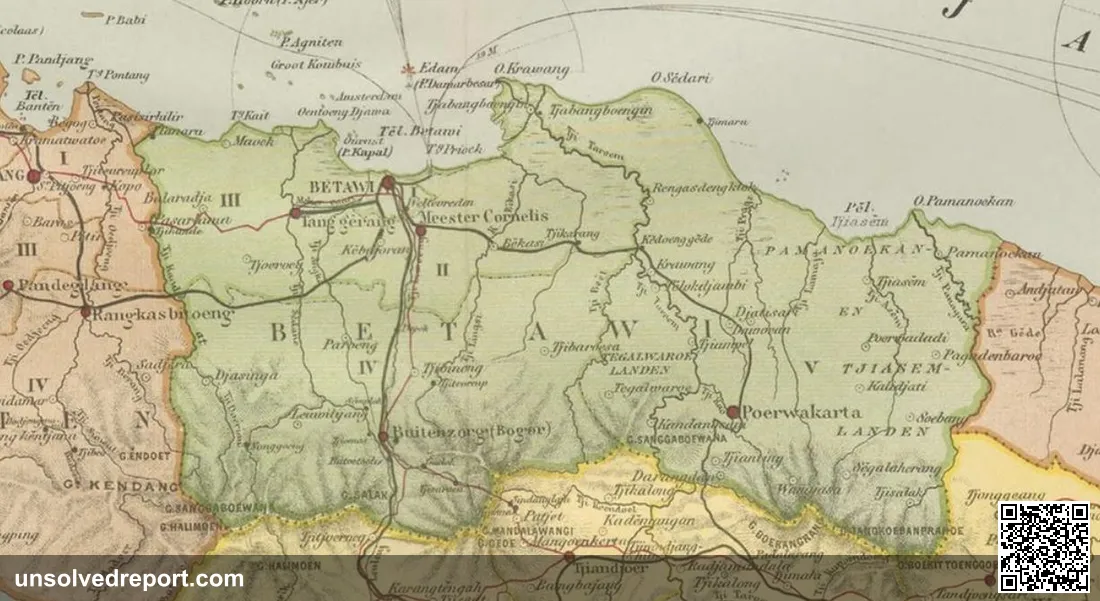
Start with the ship, because she was a beauty. The Batavia was a brand-new retourschip, an East Indiaman fresh off the slipway, the flagship of the Vereenigde Oostindische Compagnie (the VOC) on her very first voyage from the Netherlands to the trading hub of Batavia, the city we now call Jakarta. She wasn't carrying a skeleton crew, either. According to the Western Australian Museum, she officially had 341 people aboard: a little over two-thirds of them officers and crew, around 100 soldiers, and a smaller group of civilian passengers, women and children among them (Western Australian Museum).
Now picture what was riding in her hold. A fortune. Twelve chests of silver coin, a consignment of Pelsaert's silver wares, and antiquities including the so-called "great jewel of Gaspar Boudaen." The World History Encyclopedia puts the value of the silver alone at roughly 250,000 guilders (World History Encyclopedia). A floating bank vault, in other words, and that detail matters more than you'd think.
Here's where it all goes wrong. In the last dark hour before dawn she struck Morning Reef in the Houtman Abrolhos, a low scatter of islands and coral about 60 kilometers off the coast near present-day Geraldton, Western Australia. The museum records her bluntly as "the first Dutch ship to be lost off the west coast of Australia" (Western Australian Museum). Most survivors scrambled onto the nearby islands. And then they looked around and realized there was almost no fresh water anywhere.
So someone had to go for help. The commander, a seasoned VOC merchant named Francisco Pelsaert, crowded 48 people into a small boat and set off across open ocean. It took 33 days to reach Batavia. The Governor-General turned him straight around in the jacht Sardam, and then came the cruel part: it took Pelsaert another 63 days just to find the wreck again, because the islands are so flat and so scattered that they barely break the horizon (Western Australian Museum). Three months. Think about that gap. Three months of no one in charge, no rescue in sight, and a vault's worth of silver sitting on a reef.
Into that vacuum stepped the under-merchant, Jeronimus Cornelisz. He didn't panic. He calculated. Cornelisz took control of the survivors and began organizing systematic killings, the cold logic being to shrink the crowd, seize whatever rescue ship eventually arrived, and sail off into a life of piracy not unlike the crews behind ships such as the Whydah Gally. The final death toll is estimated at around 125 people, children included (World History Encyclopedia; Western Australian Museum).
And then the murder machine hit something it didn't plan for. A soldier named Wiebbe Hayes. Cornelisz had shipped Hayes and a group of men off to a separate island and pointedly left them with no weapons, fully expecting them to die of thirst and save him the trouble. They didn't. They found fresh water. They found game. They hammered together makeshift weapons, dug in, beat back the mutineers' attacks again and again, and in the end took Cornelisz himself prisoner. Hayes was later promoted for the stand he made (Western Australian Museum; World History Encyclopedia). The men sent to a desert island to die became the only thing standing between Cornelisz and total control.
When Pelsaert's ship finally reappeared, he didn't waste time. He held trials right there on the sand. On October 2, 1629, Cornelisz and several of his ringleaders were executed, and Cornelisz had both hands chopped off before they hanged him (Western Australian Museum; World History Encyclopedia).
And the silver? Pelsaert was nothing if not a company man. Even as the trials ran, he put Dutch and Gujarati divers down onto the reef to bring the treasure back up, and most of it came, a salvage effort far more successful than the ones that failed to recover the San Jose galleon or so many other wrecked fortunes. Contemporary accounts say roughly ten of the twelve money chests were eventually recovered, along with loose coin and silverware, while two chests had to be left behind in the Abrolhos (erenow / Batavia's Graveyard). The Sardam sailed back into Batavia in December 1629, carrying the surviving castaways and the salvaged hoard of coins and jewels (Western Australian Museum). Hold onto those two missing chests. We'll come back to them.
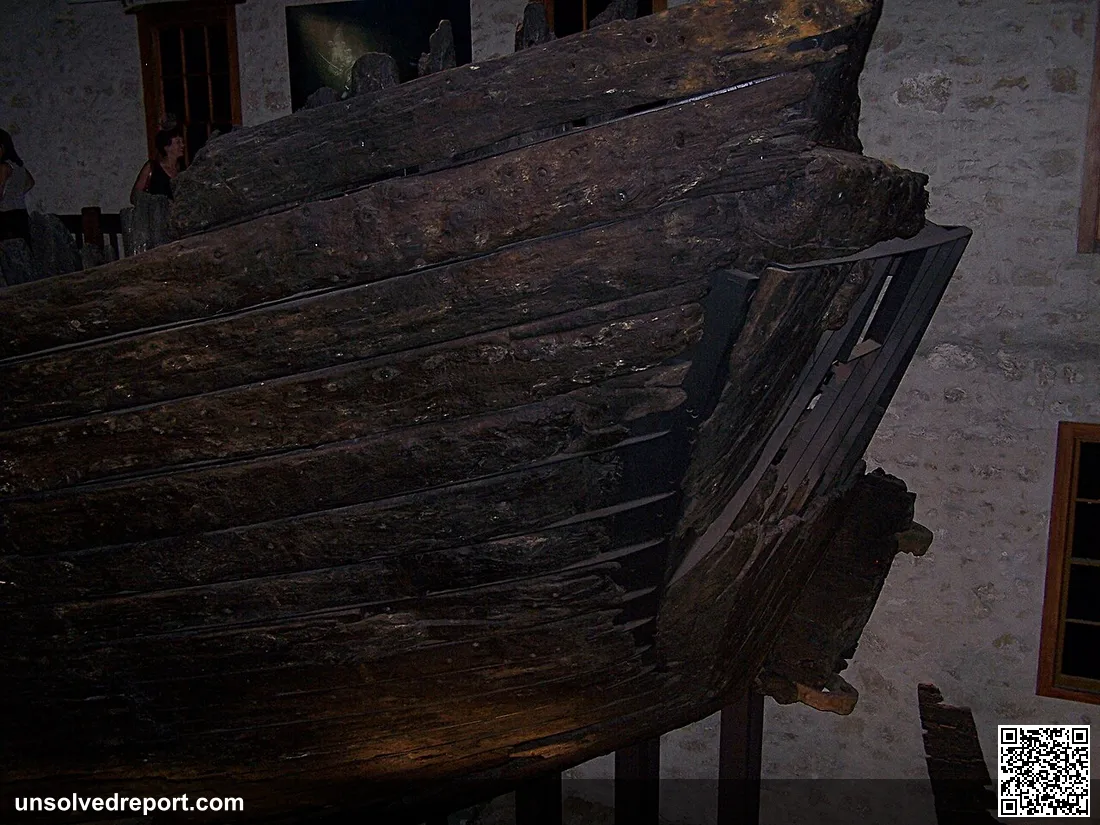
The wreck itself stayed lost for centuries. Then, in 1963, a rock-lobster fisher named Dave Johnson mentioned cannon and anchors he'd seen on Morning Reef to a diver, Max Cramer, and that offhand tip cracked the case open, leading to the site's rediscovery and a salvage expedition under Hugh Edwards (Western Australian Museum). What followed was decades of careful excavation by the Western Australian Museum, which raised part of the hull, sandstone facade blocks meant for a gateway in Java, navigational instruments, and thousands of coins. You can stand in front of them today in Fremantle and Geraldton.
The part nobody can finish
Here's where solid history runs out and the trail goes cold. After the executions, two of the youngest condemned men were spared the rope. Instead they got something arguably stranger: on November 16, 1629, they were marooned on the Australian mainland. One was a 24-year-old Dutch soldier, Wouter Loos. The other was a cabin boy of about 18, Jan Pelgrom de Bye (Immigration Place; Monument Australia). They were handed trade goods and told to make contact with the local people. By most accounts, that makes these two the first Europeans known to have lived on the Australian continent. And then the record simply stops. They were never heard from again.
Two real questions hang there, unanswered. First: where, exactly, were they put ashore? Researchers still argue over at least two candidate spots, the mouth of the Hutt River and Wittecarra Gully near Kalbarri (Monument Australia). Second, and far harder: what happened to them after that? No document, Dutch or otherwise, says a word about their fate. And out on the reef, two silver chests went down with the Batavia and, by the historical accounts, were left where they fell, a single loose thread in an otherwise meticulous salvage.
So what really happened to them?
What follows is interpretation and informed guesswork, not settled fact, and historians genuinely disagree.
Maybe they died fast. The plainest reading is also the grimmest. Two stranded young men, no shared language with the local Aboriginal groups, no boat, no way home, probably dead within weeks or months from disease, thirst, or plain bad luck. There's no evidence pointing either way, only the silence in the record where their names should be.
Maybe they were taken in. A theory that refuses to die holds that the pair, or their children, may have lived on among the Nhanda or neighboring peoples. Some writers have reached for later European reports of unusually fair-featured people in the region as faint echoes of the two castaways. Treat that gently. It's unproven, and historians handle it with tongs, because such secondhand observations have plenty of innocent explanations and no confirmed genetic or documentary link to Loos and Pelgrom has ever been established. A good story is not the same as a proven one.
Maybe we can still find the exact spot. Researchers such as the late Rupert Gerritsen argued that a close reading of Pelsaert's journal against the coastline could pin down the precise landing point. The tug-of-war between the Hutt River and Wittecarra Gully is still going, and notice what kind of fight it is: geography and document interpretation, not a race for buried gold.
And those two chests? Probably just gone. "Missing treasure" sounds wonderful, but be honest about the reef. It's shallow, it's hammered by storms, and archaeologists have combed it since 1963. Far likelier that the abandoned silver was scattered, corroded into the coral, or quietly hauled up long ago than that an intact chest is sitting down there waiting for you.
So in the end, the lasting treasure of the Batavia was never the silver. It's the human drama she left behind, ambition and cruelty and raw courage and the cold machinery of the law, all of it playing out on a sandbar at the edge of the known world. And it's two ordinary men, handed a sack of trade goods, walking off into a coastline that simply closed behind them and never gave them back. Somewhere on that shore, the story is still waiting to be finished.
Sources & further reading
- Western Australian Museum - Batavia's History: https://museum.wa.gov.au/research/research-areas/maritime-archaeology/batavia-cape-inscription/batavia
- Western Australian Museum - Batavia's history 1628-1963: https://visit.museum.wa.gov.au/batavias-history-1628-1963
- World History Encyclopedia - Wreck of the Batavia: https://www.worldhistory.org/article/2391/wreck-of-the-batavia/
- Immigration Place - Wouter Loos and Jan Pelgrom de Bye: https://immigrationplace.com.au/story/wouter-loos-and-jan-pelgrom-de-bye/
- Monument Australia - Batavia Mutineers: https://monumentaustralia.org.au/themes/landscape/exploration/display/60619-%22batavia%22-mutineers
- Batavia's Graveyard (Mike Dash) salvage account, via erenow: https://erenow.org/common/batavias-graveyard/10.php
- Department of Climate Change, Energy, the Environment and Water (DCCEEW) - Batavia Shipwreck Site and Survivor Camps Area: https://www.dcceew.gov.au/parks-heritage/heritage/places/national/batavia
El Dorado: The Golden Man Nobody Can Find
El Dorado was never a city — it was a man dipped in gold dust. So why did armies die hunting the wrong myth for 400 years? The real story is stranger.
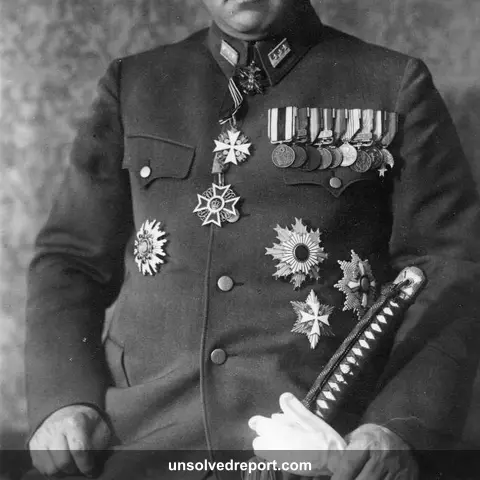
Yamashita's Gold: The WWII Treasure Nobody Can Prove Exists
Yamashita's gold: a golden Buddha, a $22 billion verdict, and 70 years of digging with nothing to show. Was the WWII treasure ever real, or all legend?
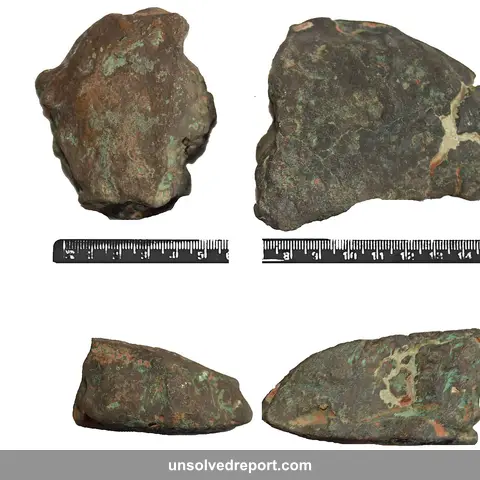
Salcombe Bronze Age Shipwreck: 3,000-Year-Old Cargo, No Ship
Divers off Devon keep hauling up 3,000-year-old copper, tin, and gold from a Bronze Age shipwreck cargo — so why has no one ever found the ship?