Blackbeard's Treasure: The Ship Was Found. The Gold Wasn't.
Divers found Blackbeard's flagship Queen Anne's Revenge in 1996. Three centuries of legend promised buried gold. What was actually in the hold is stranger.
You already know the story. A giant of a pirate with lit fuses braided into his beard. A hold heavy with stolen gold. A fortune buried somewhere along the American coast, sleeping under an X on a map that nobody has ever found - the same kind of promise that fuels nearly every famous shipwreck treasure story.
Great story. Almost completely the wrong shape.
Because the real evidence tells something stranger and, honestly, better: we found the ship and we did not find the gold. And the empty space where the gold should have been turns out to be the loudest clue of all.
The ship was real, and we have it
Start with the part nobody argues about.
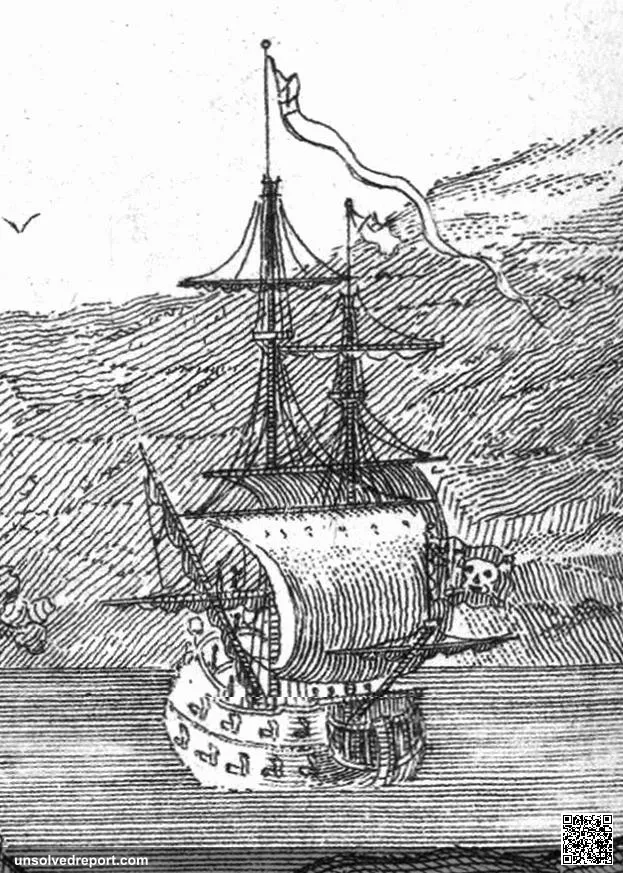
In November 1717, off the island of Martinique, the pirate called Blackbeard - real name probably Edward Teach, sometimes written Thatch - seized a French slave ship named La Concorde. He didn't sell her or scuttle her. He kept her. He bolted on a heavy battery of cannon, made her his flagship, and gave her a new name: Queen Anne's Revenge.
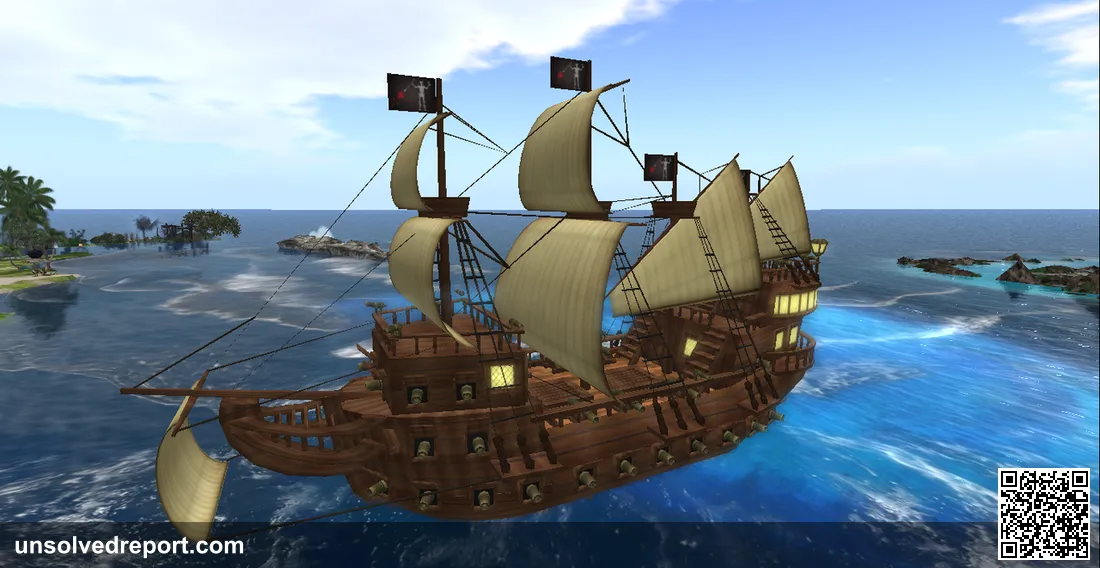
She was a monster. Roughly 100 feet long, around 200 tons, bristling with guns - estimates and archaeology together land at something like 40 of them. For several months that floating fortress owned the shipping lanes of the Caribbean and the American Southeast, including one brazen stunt in 1718: Blackbeard simply blockaded the port of Charleston and held it hostage.
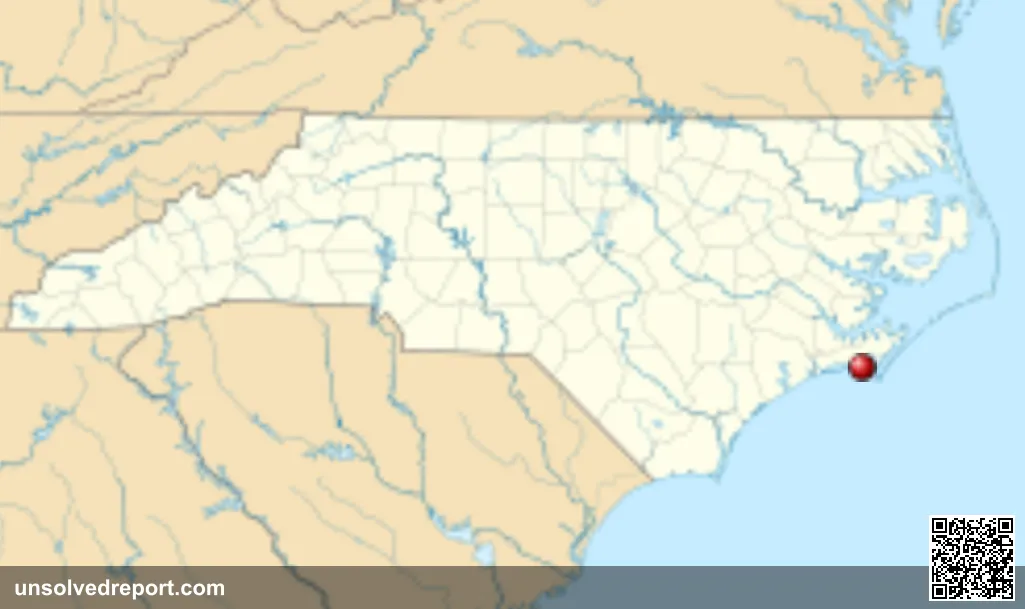
Then, in June 1718, the whole career ended - not in a roar of cannon fire, but on a sandbar. Blackbeard ran the Queen Anne's Revenge aground while pushing into Beaufort Inlet on the North Carolina coast. Was it a clumsy accident? Or a cold-blooded move to break up his fleet and shed crew? People have argued that for three hundred years. What nobody argues is the result: the ship died right there.
The discovery off Beaufort
The wreck waited 278 years.
Then, on November 21, 1996, a private research firm called Intersal, Inc., working under a North Carolina permit, found a scatter of cannon and anchors lying on the seabed in about 28 feet of water near Beaufort Inlet.
Nobody shouted "Blackbeard!" right away - and good thing, too. The state played it slow and careful. The first finds were exactly the boring, beautiful kind that archaeologists pray for: a bronze bell stamped 1705, a sounding weight, the barrel of an English blunderbuss, cannonballs, and a tally of guns and anchors that matched a ship of the right size and the right era. Year after year, the dives kept pulling material up - more than 300,000 artifacts by later counts. And in 2011, after all that analysis, North Carolina made it official: this was the Queen Anne's Revenge.
Today the site is protected, conserved, and studied as one of the most important early-18th-century shipwrecks anywhere in North American waters. Is this Blackbeard's ship? The evidence is strong. The answer is yes. The state signed off on it.
So that's the legend's first half - true. Now watch the second half fall apart.
What was actually in the wreck
Here's where the picture-book pirate and the real seabed go their separate ways.
What came up from the Queen Anne's Revenge is an astonishing snapshot of life aboard an armed ship in the early 1700s:
- Roughly two dozen cannon, many of them still loaded
- Anchors, rigging hardware, and ship's fittings
- Navigational and medical instruments - including parts of a urethral syringe, very likely used to treat syphilis with mercury
- Pewter and ceramic tableware
- A sword guard and scattered weapon fragments
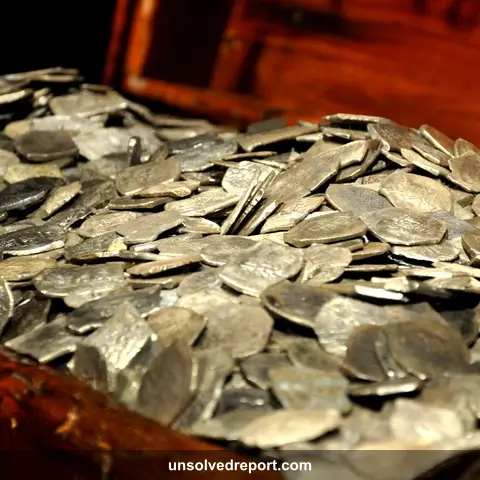
- A few gold flakes, one find of gold dust, and a small handful of coins
Now read that last line again. Flakes. Dust. A handful of coins.
That's it. No chests of doubloons. No heaped jewels. No stacked bullion. The gold from Blackbeard's flagship amounts to traces - the kind of residue you'd expect from a ship that handled valuables now and then, not from a fortune sinking to the bottom.
And that is not the dive team failing. That is the dive team finding something.
Why there was no treasure to find
The empty hold stops being a mystery the second you drop the cartoon and look at how Blackbeard actually worked - and how he actually died.
Start with the grounding itself. This was not a ship swallowed whole in open water with everyone and everything trapped aboard. When she stuck fast at Beaufort Inlet, the crew had time. They calmly transferred supplies and people onto smaller boats. And what gets carried off first, when you've got time? The valuable stuff. A flagship beached beside a working inlet isn't a sealed tomb. It's a ship that gets picked clean.
Then there's the myth of the pirate hoard itself - which mostly isn't true. Plunder was usually cargo: sugar, cocoa, cloth, enslaved people, ships' stores, medicines. Whatever actual valuables turned up tended to get split among the crew and spent, fast - much like the coin haul recovered from the Whydah Gally, another pirate ship whose real cargo looked nothing like the legend. The image of a captain perched on his own private mountain of buried gold? That's a literary invention, dreamed up long afterward and locked into our heads by 19th-century fiction.
And then there's the timeline. Blackbeard had only months left. In November 1718 a Royal Navy force under Lieutenant Robert Maynard cornered him at Ocracoke Inlet and killed him in a vicious close-quarters fight. He did not sail off into a rich retirement and bury a fortune at his leisure. He was hunted, caught, and cut down - and his fleet was already scattered to the winds.
The legend of the buried hoard
So where did all the gold-and-maps mythology come from? Mostly one good line and a mountain of later embellishment.
Blackbeard is supposed to have said that only he and the devil knew where his treasure was hidden. Maybe he really said it - maybe it's pure swagger, maybe it's something somebody pinned on him afterward. Either way, notice what it is: a boast. Not a map. Not a location. A quotable one-liner.
From that one seed sprouted generations of treasure hunting up and down the Atlantic and Gulf coasts, with island after island and inlet after inlet nominated as the secret spot. None of them has ever yielded a verified Blackbeard hoard. The hunt is absolutely real as a cultural obsession. The treasure has never once been documented.
The plainest reading is the one the romantics hate: there probably was no grand buried hoard waiting to be found. A working pirate with a short, violent career and a scattered crew was never likely to leave one behind.
What the wreck really teaches us
The Queen Anne's Revenge breaks the treasure hunter's heart. It makes the historian's year.
Shipwrecks this big and this old are rare to begin with. One tied to a named, infamous captain is rarer still - the same rarity that makes wrecks like the Spanish galleon Nuestra Señora de Atocha such a big deal whenever one turns up. And the artifacts let researchers rebuild the everyday world of a pirate crew in startling detail.
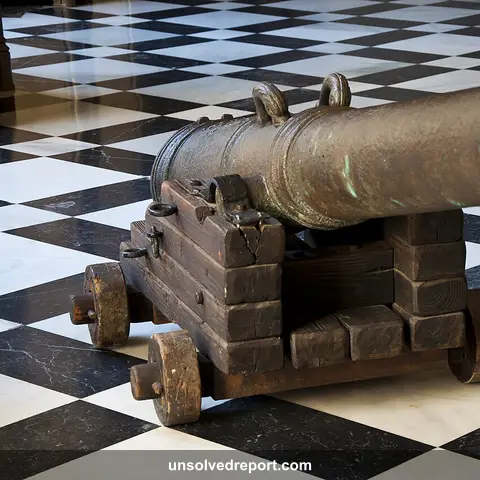
Take the cannon. They were not a tidy matched set from one foundry - they were a mongrel collection of guns from different countries and different decades. Which is exactly what you'd expect from a ship that armed itself by robbery instead of by purchase. Several came up still loaded - a small, vivid jolt of a ship that fully expected to fight.
The household and medical finds say just as much. Those fragments of medical instruments - including gear that fits with mercury treatment for venereal disease - line up neatly with a documented moment: when Blackbeard blockaded Charleston, his ransom demand wasn't gold. It was a chest of medicines. The pewter and the ceramics whisper of ordinary days aboard. Put it all together and you get a portrait of piracy as it really was - improvised, heavily armed, unglamorous, and dangerous.
The site has been run as a long-term state archaeology project, with thousands of objects stabilized in the lab and many put on public display. That's the real payoff of patient archaeology, as opposed to treasure hunting. It hands you the whole world, not just the gold.
The man behind the legend
It's worth peeling the real Edward Teach away from the folklore version.
The historical man was a pirate for a shockingly short stretch - roughly 1716 to his death in late 1718. And he built that terrifying image on purpose. The black beard, the menace, the theatrical dread. Why? Because fear was a tool. A captain feared enough could take a ship without firing a costly shot.
He wasn't a dragon hoarding gold. He was the commander of a brief, ferocious campaign that collapsed the moment the authorities turned their full weight against him. The Navy operation that killed him at Ocracoke in November 1718 was a deliberate manhunt, and his death basically closed the book. No long retirement. No decades of stacking plunder. No time to bury anything. The legend swelled in the telling - long after the man himself was gone.
Fact, inference, and legend
Let's draw the lines cleanly.
Documented fact: Blackbeard captured La Concorde in 1717 and turned her into the Queen Anne's Revenge. The ship grounded at Beaufort Inlet in 1718. A wreck found there by Intersal in 1996 was confirmed by the state of North Carolina in 2011 as that ship. Excavation recovered hundreds of thousands of artifacts but no treasure hoard - only traces of gold and a few coins. Blackbeard was killed at Ocracoke in November 1718.
Reasonable inference: The missing treasure reflects two simple things - valuables were carried off in good order after the grounding, and pirate wealth was spent and split rather than buried.
Legend: The buried treasure, the cryptic map, the devil-knows-where boast - all folklore and fiction. A thrilling story, and not one verified find has ever backed it up.
And here's the thing. The real discovery beats the myth.
We didn't find Blackbeard's gold. We found Blackbeard's ship - a heavily armed, fully documented flagship resting precisely where the records swore it would be, stuffed with the ordinary working tools of piracy. The treasure of the Queen Anne's Revenge turned out to be the wreck itself, in the same way the real prize of the San Jose galleon turned out to be the ship's identity, not a chest of coins.
Which raises a quieter question worth sitting with: how many other "lost fortunes" out there were never lost at all - because they were never there to begin with?
Sources & further reading
- Britannica - Queen Anne's Revenge - https://www.britannica.com/topic/Queen-Annes-Revenge
- Queen Anne's Revenge Project - Discovery of the Shipwreck - https://www.qaronline.org/history/discovery-shipwreck
- National Geographic - Blackbeard's Ship Confirmed off North Carolina - https://www.nationalgeographic.com/history/article/110829-blackbeard-shipwreck-pirates-archaeology-science
- North Carolina History - Queen Anne's Revenge - https://northcarolinahistory.org/encyclopedia/queen-annes-revenge/
Treasure of Lima: A Dying Pirate's Perfect Lie?
300+ expeditions, zero gold. Is the Treasure of Lima buried on Cocos Island — or was the whole story a condemned pirate's perfect con?
Atocha Missing Sterncastle Treasure: The Richest Half Still Lost
Mel Fisher found $400M of Atocha treasure in 1985 — but the ship's richest chamber, packed with gold and Muzo emeralds, was never among it. Where is it?
San Miguel 1715 Fleet Treasure: The Ship Nobody Can Find
The 1715 Fleet Treasure hurricane sank eleven ships. Ten were found on the reefs. The San Miguel vanished a day early — empty manifest, no grave. Why?