Igbo-Ukwu Bronzes: The 9th-Century Metal Too Perfect to Believe
A farmer's well uncovered Igbo-Ukwu bronzes cast so flawlessly that scholars accused the dates of lying. What actually happened 1,000+ years ago?
A shovel hit metal. It was 1938, in a compound in eastern Nigeria, and a man named Isaiah Anozie was just digging a hole to store water. Out of the dirt came strange, ornate bronze things. He had no idea what they were. So he handed some to neighbors, and one vessel he reportedly used to water his goats (Wikipedia, Archaeology of Igbo-Ukwu). Twenty years would pass before anyone grasped the truth. And when they did, the truth was almost too much to swallow: these castings were so finely made that, for decades, serious scholars simply refused to believe they could be as old as the science said.
What we actually dug up
The objects came from a place called Igbo-Ukwu, in the Lower Niger region of what is now southeastern Nigeria — not far, in cultural terms, from the earthen ramparts of Sungbo's Eredo further west. A British colonial officer, J.O. Field, scooped up some of the early finds and published them, and in 1946 the artifacts landed in the Nigerian Department of Antiquities (Wikipedia, Archaeology of Igbo-Ukwu). The real digging came later. Between 1959 and 1964, archaeologist Thurstan Shaw — working with the University of Ibadan and the Nigerian Department of Antiquities — opened three sites right next to where Anozie's shovel had struck (Wikipedia, Archaeology of Igbo-Ukwu).
Three sites, three completely different stories. Igbo Isaiah, sitting over the original find, looks like a shrine or a ritual storehouse — its treasures buried shallow, just 40 to 70 cm down. Igbo Richard was something else entirely: a burial chamber sunk 1.75 to 2.5 meters into the earth, holding human remains, beaded ornaments, and a wooden stool. And Igbo Jonah, the biggest dig of all, gave up a hoard of ritual pottery, animal bones, and bronze sculptures (Wikipedia, Archaeology of Igbo-Ukwu).
Now sit with the numbers. Shaw's team pulled more than 700 high-quality artifacts of copper, bronze, and iron out of the ground. Then roughly 165,000 glass, carnelian, and stone beads. Then pottery, textiles, and ivory (Wikipedia, Archaeology of Igbo-Ukwu). And the body at Igbo Richard? Most scholars read it as a high-status dignitary, possibly an early holder of the priestly Eze Nri office, laid out in full regalia (Wikipedia, Igbo-Ukwu).
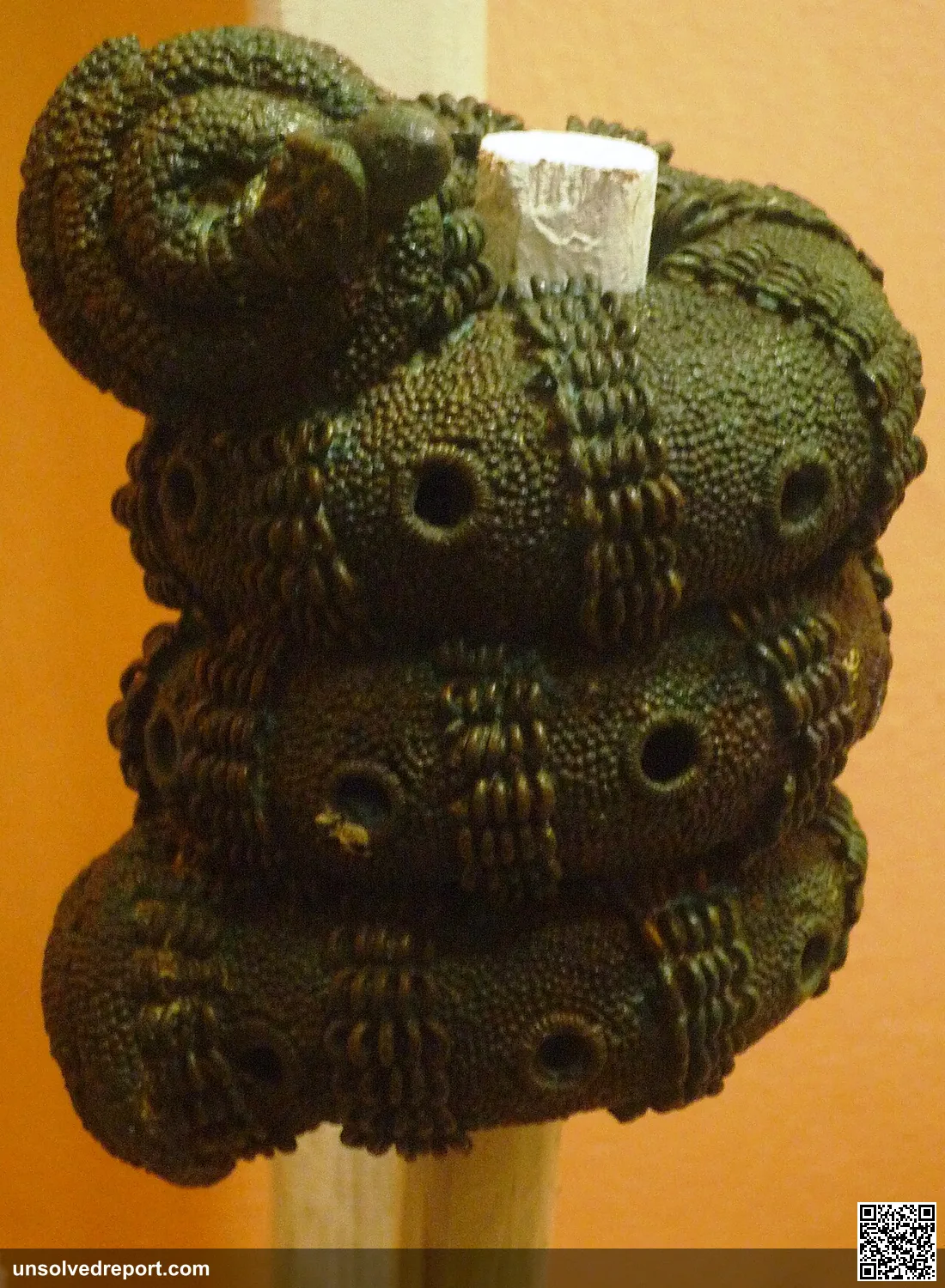
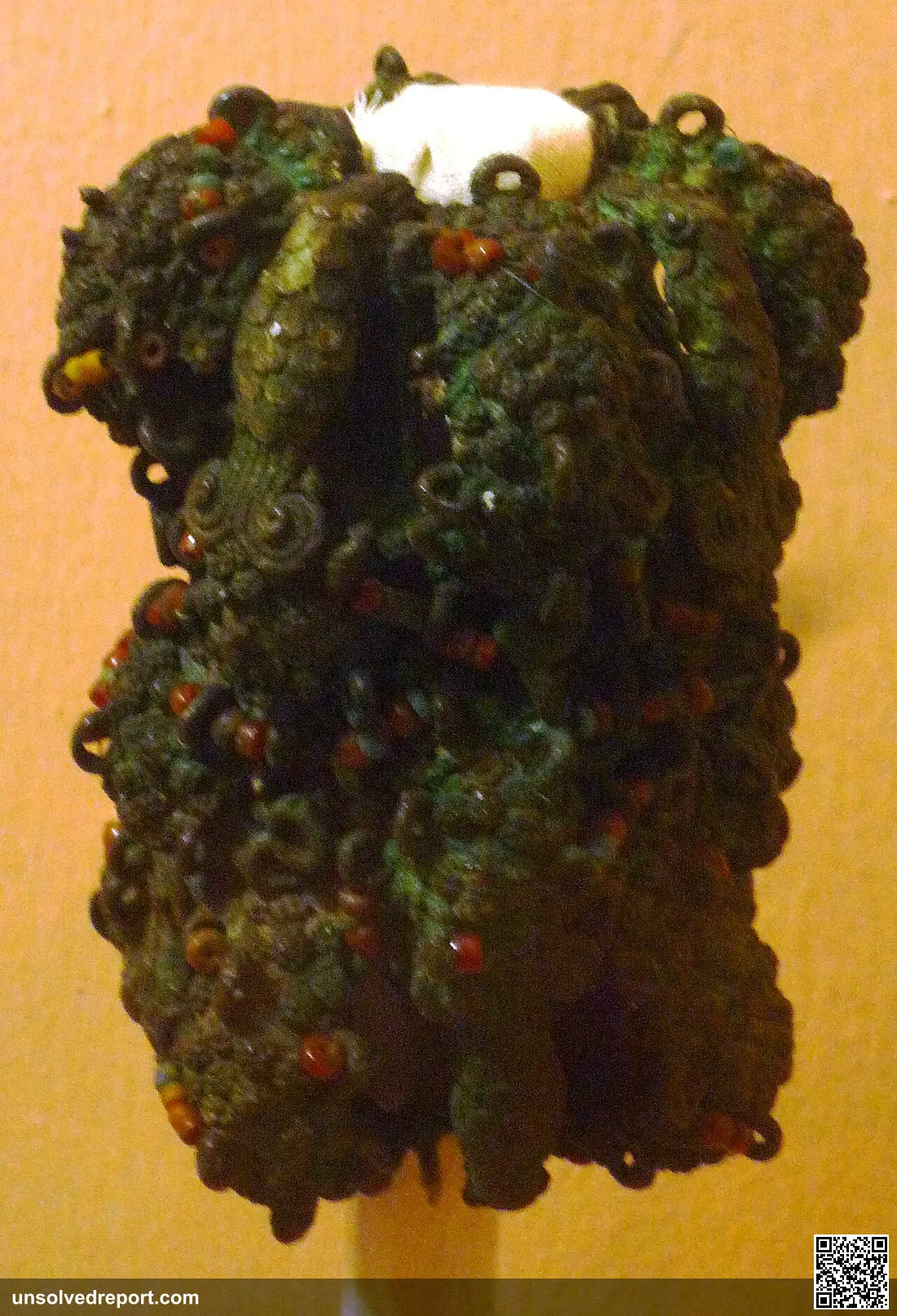
But the numbers aren't the jaw-dropper. The craft is. These bronzes were made by the lost-wax (cire perdue) casting technique, and the artisans of Igbo-Ukwu rank among the earliest West Africans known to have done it (The Metropolitan Museum of Art) — a mastery of metal that, centuries later and a continent away, the goldsmiths of Burkina Faso would echo in gold before vanishing from the historical record entirely. The detail is so fine, so lace-like, that researchers suspect the makers didn't even use beeswax — they think a latex-based modeling material was used instead, because it would hold finer detail (Wikipedia, Archaeology of Igbo-Ukwu). Many pieces are leaded bronze. And here's the one that gets people: a water pot wrapped in rope — except the "rope" isn't rope at all. It's metal, cast to look like rope, knot for knot. Experts call it "a virtuoso feat," and say its skill is "notably more advanced than European bronze casting of this period" (Wikipedia, Archaeology of Igbo-Ukwu).
And then comes the date — the part that made everyone uneasy. Radiocarbon results from Shaw's work pointed to roughly the 9th century CE (The Metropolitan Museum of Art). That's centuries before the famous bronze and brass traditions of Ife and Benin, which makes Igbo-Ukwu among the oldest known bronze metalworking in all of West Africa (The Metropolitan Museum of Art).
The question that wouldn't go away
Here's where curiosity turns into a fight. A 9th-century date was, for a lot of people, just too good to be true. The site had held onto things that almost never survive a thousand years in the ground — textiles, thread, wood — preserved against every odd. And some of the beads and metal shapes looked, to the skeptics, like they belonged to a far later world, the world of Atlantic trade. The dates themselves didn't help settle nerves: of Shaw's original radiocarbon readings, four clustered neatly in the 9th century, but one landed in the 15th. That single odd reading fed a long-running argument that the bronzes might be five or six centuries younger than claimed (Wikipedia, Archaeology of Igbo-Ukwu).
The argument has shrunk over the years, but it hasn't fully died. In 2022 a symposium called "Igbo-Ukwu at 50," published in the peer-reviewed African Archaeological Review, brought new high-precision dates and fresh digs to the table. Recent samples from Igbo Isaiah came back somewhere between the 10th and 13th centuries, and a study of the textiles backed a 10th-century reading (Wikipedia, Archaeology of Igbo-Ukwu, citing African Archaeological Review 2022). So today's experts allow that some of the material may be a touch younger than Shaw thought — but they're firm that it still "certainly pre-date European coastal contact by several centuries" (Wikipedia, Archaeology of Igbo-Ukwu). Think of "ninth century" less as a fixed birthday and more as shorthand for a window that scholars are still sharpening.
But the bigger riddle was never really when. It's how — and with whom. Look closely at the metalwork and something odd jumps out: it seems weirdly self-contained. These craftsmen cast breathtaking, complicated objects, yet they apparently never used wire-making, soldering, or riveting — basic tricks that metalworkers elsewhere relied on. That gap hints that the whole tradition grew up on its own, in its own way (Wikipedia, Archaeology of Igbo-Ukwu). Where did the raw metal come from? Mostly from right around the corner. Lead isotope and silver-content analyses show that the great majority — somewhere around 85 to 90 percent — came from regional ore sources, including old mines near Abakaliki about 100 kilometers away (Wikipedia, Archaeology of Igbo-Ukwu). The metal, in short, was homegrown.
The beads were not. And that's the twist. Chemical analysis of a sample reveals soda-lime glass consistent with production in Mesopotamia and Iran, and some beads trace back to glass workshops at Fustat — Old Cairo. In other words, a trade corridor stretching toward the eastern Mediterranean world (Wikipedia, Archaeology of Igbo-Ukwu, citing African Archaeological Review 2022) — the same long-distance routes that, centuries later, would let Mansa Musa move enough West African gold to shake Egypt's economy. So picture the contradiction at the heart of it all: a society pouring masterpieces from its own backyard ore, while at the same time wired into trade routes that ran for thousands of miles.
So what do we think happened?
Maybe it was pure homegrown genius. One reading says Igbo-Ukwu was a wholly indigenous metallurgical tradition that bloomed with no outside teacher at all — and the very holes in its skill set (no soldering, no riveting) are taken as proof of homegrown invention, not borrowed know-how (The Metropolitan Museum of Art). This is the mainstream view today.
Maybe it was the gear of a priest-king. Many researchers tie the Igbo Richard burial and all that ritual regalia to the early institution of the Eze Nri, a priest-king whose authority still echoes in later Igbo religious tradition (Wikipedia, Igbo-Ukwu). On this reading, the bronzes aren't bling. They're sacred power, cast in metal — not unlike the golden rhino buried with a vanished southern African king centuries later.
And then there's the holdout view. A minority position — now largely outvoted by high-precision dating — has long pushed for a 15th-century origin tied to later trade goods (Wikipedia, Archaeology of Igbo-Ukwu). It's worth keeping in mind, not because it's likely right, but as a reminder that the timeline, strong as it is, is still being worked over.
One thing, though, nobody argues about: the achievement itself. Long before any European set foot on that coast, an African community pulled copper and lead from nearby hills, shaped forms of almost impossible delicacy, and cast them in metal with a confidence that still stops metallurgists in their tracks. The loose ends — the exact dates, the precise trade routes, the names of the artists, lost forever — don't shrink the wonder. They sharpen it. Somewhere out there, a thousand years gone, a master craftsman bent over a knot of rope and decided to capture it in bronze. We will never know what he called himself. We only know he was very, very good.
Sources & further reading
- The Metropolitan Museum of Art — Igbo-Ukwu (ca. 9th Century): https://www.metmuseum.org/essays/igbo-ukwu-ca-9th-century
- Wikipedia — Archaeology of Igbo-Ukwu (citing the 2022 'Igbo-Ukwu at 50' symposium, African Archaeological Review): https://en.wikipedia.org/wiki/Archaeology_of_Igbo-Ukwu
- Wikipedia — Igbo-Ukwu: https://en.wikipedia.org/wiki/Igbo-Ukwu
- Igbo-Ukwu at 50: A Symposium on Recent Archaeological Research and Analysis, African Archaeological Review (2022), via PubMed Central: https://pmc.ncbi.nlm.nih.gov/articles/PMC9640786/
- Springer / African Archaeological Review — Igbo-Ukwu at 50 symposium: https://link.springer.com/article/10.1007/s10437-022-09495-5
- Smarthistory — Igbo-Ukwu: https://smarthistory.org/igbo-ukwu/
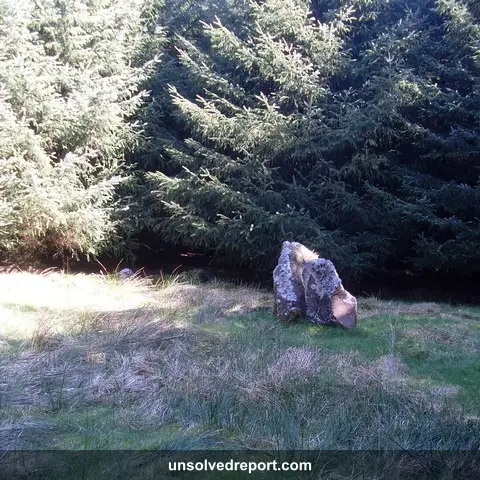
Cochno Stone: Scotland Buried It on Purpose. Twice.
Scotland deliberately buried the Cochno Stone in 1965, briefly dug it up in 2016, then reburied it. What do its 90 carved rings actually mean?

Genghis Khan's Tomb: The Grave Nobody Can Find After 800 Years
He conquered half the world, then vanished without a trace. 800 years, satellites, and AI later - why can't anyone find Genghis Khan's tomb?
Catalhoyuk No Streets Mystery: A 9,000-Year Town With No Doors
No streets. No doors. No alleys. Just rooftops and ladders for 9,000 years — and archaeologists still can't agree why. Here's the evidence, ranked.