This Person Does Not Exist: Faces You'd Trust More Than Real Ones
This Person Does Not Exist spawns a new fake human every refresh — a study found people trust its faces more than real ones. Can you spot the fake?
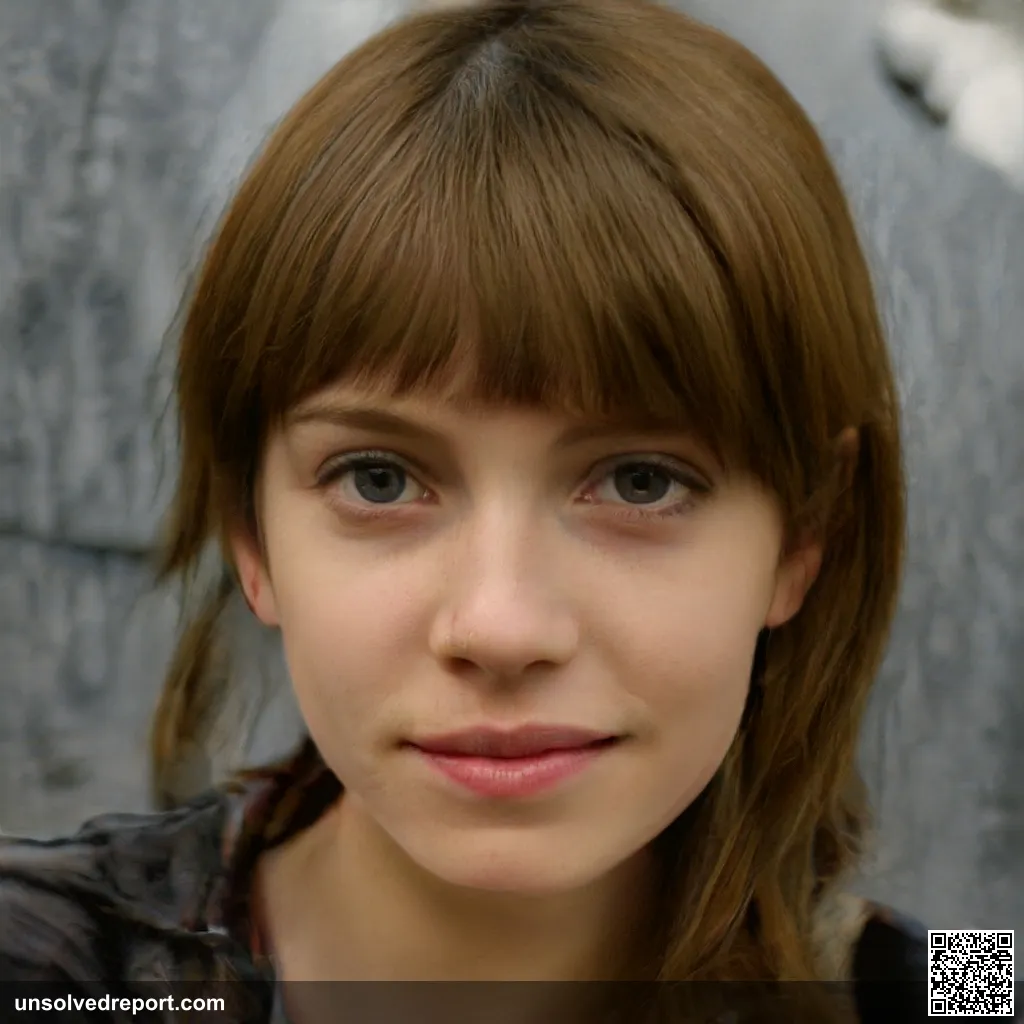
Refresh the page. A young woman smiles back at you. Refresh again. Now it is an old man with a gray beard. Again: a freckled kid. Again: a businessman in a blue shirt.
Every single one of these people looks completely real. You could pass them on the street and never blink.
And not one of them has ever existed.
No mother held them. No birth certificate has their name. They were never born, never photographed, never alive. A machine dreamed each face into being the instant your screen loaded it — and forgot it the moment you scrolled away. The website is called This Person Does Not Exist, and the title is a literal promise.
So how does a computer build a believable human out of nothing?
The Documented Facts
The trick starts with an idea hatched, of all places, in a bar.
In 2014, a researcher named Ian Goodfellow was arguing with friends at a Montreal pub about how to make computers create realistic images. That night he sketched out a strange solution: pit two AIs against each other. The published paper even thanks the bar — "Les Trois Brasseurs" — for the "stimulating" environment (Goodfellow et al., arXiv 2014).
His invention is called a Generative Adversarial Network, or GAN. Picture two rivals locked in a duel:
- The Generator is a forger. It tries to paint fake faces.
- The Discriminator is a detective. It studies real photos, then judges whether the forger's work is real or fake.
At first the forger is terrible — its faces look like smeared blobs. The detective spots every fake instantly. But each time it gets caught, the forger learns. Over millions of rounds, the forgery gets better and the detective gets sharper, each pushing the other to improve. Eventually the forger paints faces so convincing that the detective can only guess (Generative Adversarial Network, Wikipedia).
Four years later, the chip company NVIDIA supercharged the idea with a system called StyleGAN, built by researchers Tero Karras, Samuli Laine, and Timo Aila. They trained it on a giant library of real face photos and it learned to separate big features (pose, face shape, identity) from tiny ones (freckles, stray hairs). The result could "synthesize photorealistic faces" with eerie precision (Karras et al., arXiv 2018).
NVIDIA released the code to the public in February 2019. Within days, an Uber engineer named Philip Wang wrapped it in a website that served up a fresh fake face on every page reload. He said he was stunned the machine could "pick apart all the relevant features of human faces and recompose them in a way that's coherent" (StyleGAN, Wikipedia). He had built This Person Does Not Exist mostly to raise awareness — and it exploded.
Then came the unsettling part. In a 2022 study published in a top peer-reviewed journal, researchers showed people a mix of real photos and StyleGAN fakes and asked them to tell which was which. People did barely better than a coin flip. Worse, they rated the fake faces as slightly more trustworthy than the real ones — about 7.7% more, on average (Nightingale & Farid, PNAS 2022).
The fakes had walked straight through the "uncanny valley" and out the other side.
The Genuine Open Question
Here is the question nobody has truly solved: can we reliably tell a real human face from a generated one — and can we keep telling, as the machines keep improving?
Early GAN faces had tells. The eyes might point in different directions or be two different colors. Earrings often did not match. Teeth came out warped or with an extra incisor. Backgrounds melted into weird smears, because the AI poured all its attention into the face and barely noticed the edges (Kyle McDonald, "How to recognize fake AI-generated images").
For a while, those glitches were our defense. But each new version of StyleGAN erased more of them. The arms race that built these faces — forger versus detective — is the same race now playing out between fake-image generators and fake-image detectors in the real world. And so far, the forgers keep finding new tricks.
Nobody can confidently say who wins in the long run.
Theories and Interpretations
So what does a world full of people-who-never-lived actually do to us? Here the honest answer splits into possibilities — some documented, some pure speculation.
It is already a real espionage tool (documented). This is not a guess. In 2019, the Associated Press exposed a LinkedIn profile for "Katie Jones," a 30-something think-tank analyst connected to senior U.S. officials. She did not exist. Her photo showed the classic GAN fingerprints — a blurred earring, an eerie glow around the hair — and experts concluded it was an AI-generated face used for what looked like spy recruitment (AP via Gizmodo, 2019). Fake faces now staff fake companies, fake reviews, and fake activist accounts across the internet.
It quietly poisons trust (speculation, but plausible). Some researchers argue the bigger danger is not any single fake, but the slow rot of belief itself. If any face could be invented, then a real photo of a real event can be waved away as "probably AI." This is labeled speculation about a social effect we cannot yet measure — but it follows logically from the trust study above.
It is the harmless toy it appears to be (one optimistic view). Others counter that synthetic faces are mostly useful and benign: free stock photos, privacy-safe medical training data, video-game characters. By this reading, the panic outpaces the harm.
And to be clear about the wilder claims: there is no credible evidence that these systems are "sentient," "aware," or secretly conscious. A GAN does not know it is making a face. It has no idea what a face is. It is statistics dressed in skin — a pattern-matcher with no mind behind the eyes. Any story you have seen about an AI "deciding" to invent people, or possessing a will of its own, is unproven and unsupported by the actual science.
The strangest part is what comes next. If a machine can build a face that has never lived, what stops it from building a voice that has never spoken — or a video of you saying words you never said? That fake is already out there, and it has a name people are starting to fear.
Sources & Further Reading
- Goodfellow et al., "Generative Adversarial Networks," arXiv (2014)
- Karras et al., "A Style-Based Generator Architecture for GANs" (StyleGAN), arXiv (2018)
- StyleGAN — Wikipedia
- Generative Adversarial Network — Wikipedia
- Nightingale & Farid, "AI-synthesized faces are indistinguishable from real faces and more trustworthy," PNAS (2022)
- Associated Press / Gizmodo: "Spy Used AI to Create Fake LinkedIn Photo" (2019)
- Kyle McDonald, "How to recognize fake AI-generated images"

Loab AI: The Cursed Image No One Can Delete From Existence
An artist typed a negative prompt and a hollow-eyed woman came back. Every time. No matter what she blended Loab with, that face refused to disappear. Here's why.

Facebook AI Invented Language: The 2017 Shutdown That Wasn't
Facebook AI invented language in 2017 and headlines said engineers panicked and shut it down in fear. That is not what happened — so what really did?
Google LaMDA Sentient AI: The Engineer Who Said It Was Alive
A Google engineer said LaMDA was sentient, hired it a lawyer, and got fired for it. Was the AI truly alive, or the ultimate convincing mirror?