Dutch Schultz Treasure: $7M Buried in the Catskills, Never Found
A gangster buried $7 million in cash and diamonds in the Catskills in 1935 and died before he could say where. Ninety years on, it's still down there.
Shovels. Metal detectors. And one stubborn idea that won't die: that somewhere in the leaf litter above Phoenicia, New York, sits a steel box stuffed with a dead gangster's fortune. For nearly ninety years, people have climbed those wooded ridges chasing it. The box belonged — supposedly — to Dutch Schultz, a Prohibition beer baron gunned down in a Newark chophouse in 1935. He died without telling a soul where it was. And if the box is real, it's still up there.
That little word "if" is the entire story. So let's separate the three things tangled together here: what the historical record actually backs up, where the real mystery begins, and which parts are pure legend.
The man, the money, and the murder
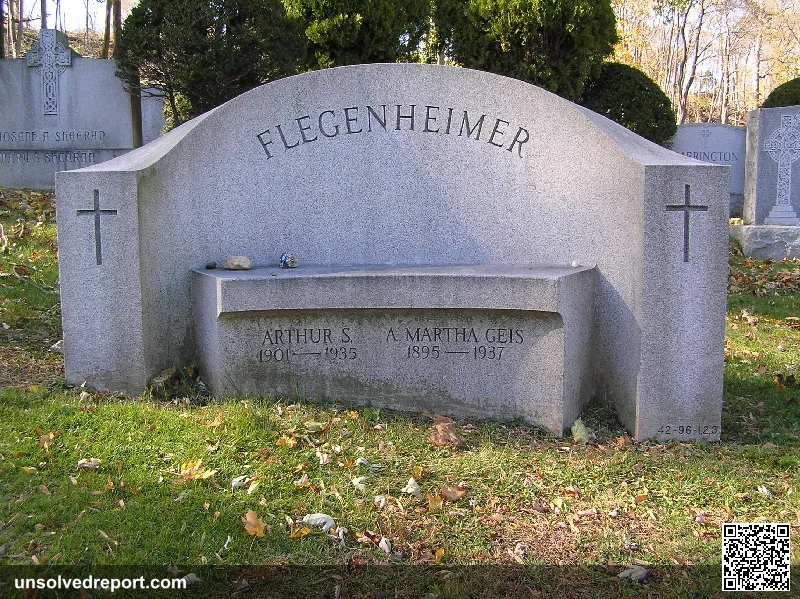
Start with what's solid, because plenty is. The man at the center of all this was real, rich, and genuinely dangerous. Arthur Simon Flegenheimer was born in the Bronx on August 6, 1901, and picked up the alias "Dutch Schultz" as he climbed the Prohibition-era bootlegging ladder — work that earned him a fitting nickname: "Beer Baron" (The Mob Museum). When Prohibition ended, he didn't slow down. He muscled into Harlem's "numbers" lottery and rigged the game with accountant Otto "Abbadabba" Berman, fixing it so the low-payout numbers always came up. The take was staggering. By some estimates the racket pulled in around $35,000 a day and ran into the millions a year — most of it never seeing a tax form (Casino.org). Hold onto that one fact: Schultz controlled an enormous pile of mostly cash wealth.
Then a young prosecutor went to work on him. Special prosecutor Thomas E. Dewey chased Schultz hard for tax evasion, hoping to bring him down the same way the government had finally caught Al Capone. Schultz wriggled free of the federal charges — one trial hung, the other acquitted him — but Dewey kept circling like a hawk (Mental Floss). Schultz's answer to the problem? Simple, and insane: kill Dewey. The newly formed Mafia Commission said no — murdering a figure that public was suicide for everyone — and historians now broadly agree that this exact act of defiance is what got Schultz killed (The Mob Museum).
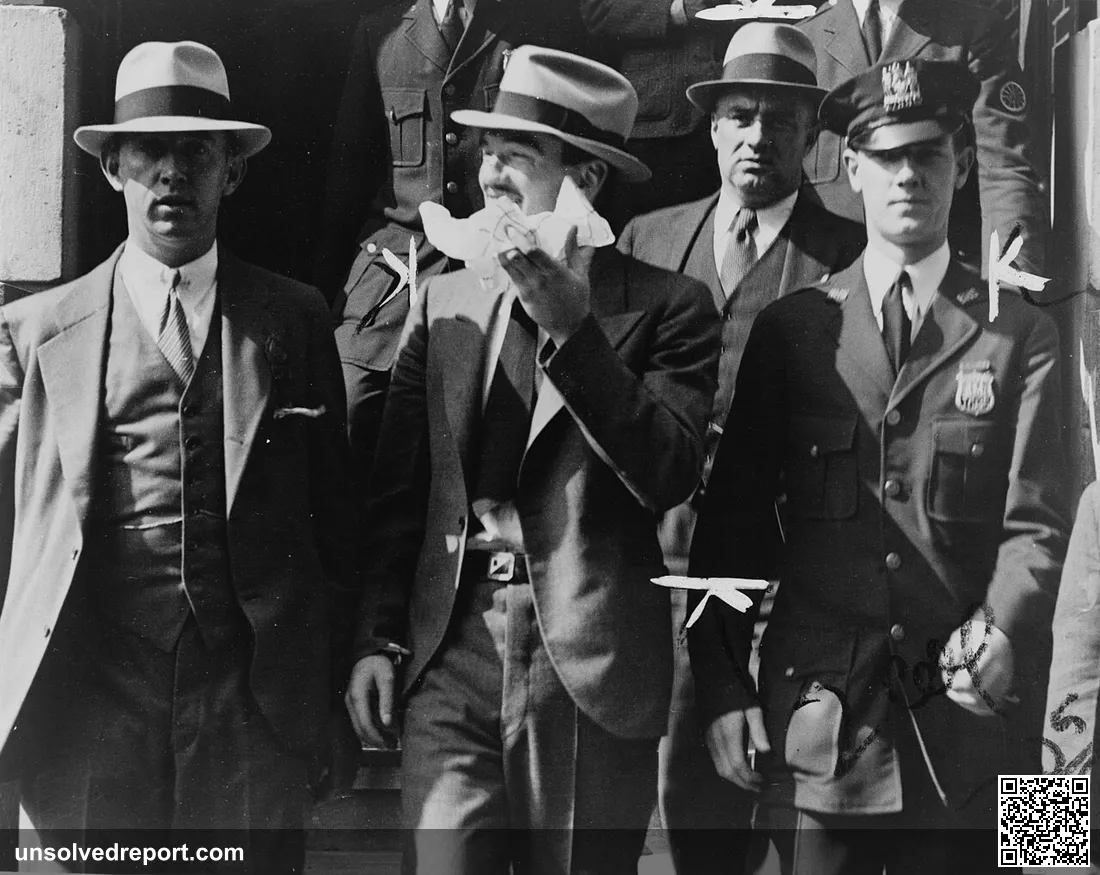
The killing itself is laid out in the record, minute by minute. On the night of October 23, 1935, gunmen from Murder, Inc. — including Charles "The Bug" Workman — strolled into the Palace Chop House at 12 East Park Street in Newark, New Jersey. They shot Schultz in the men's room. Three associates, including bodyguard Bernard "Lulu" Rosenkrantz, went down too (Washington Examiner). Schultz didn't die at the table. He hung on for roughly a day before peritonitis finished him on October 24, 1935 (Wikipedia: Dutch Schultz).
And here's where it gets strange — strange but documented. As Schultz lay in a Newark hospital, feverish and fogged on morphine, a police stenographer sat beside him and took down about two hours of his rambling, stream-of-consciousness talk. The New York Times ran the transcript on October 26, 1935, and lines like "A boy has never wept nor dashed a thousand kim" and "Oh, oh, dog biscuit" became infamous (Wikipedia: Dutch Schultz). The thing haunted writers for decades. Beat novelist William S. Burroughs was so gripped that he built an entire 1969 book, The Last Words of Dutch Schultz, around it (CrimeReads). But notice what's missing from those two hours: Schultz never named his killers. And — this is the part that matters — he never gave anyone usable directions to a single buried dime.
So where did the treasure come from?
Good question. If Schultz never spilled it, who said there was a box at all? The earliest and most-quoted source is Schultz's own lawyer, Dixie Davis. In a 1939 account tied to Collier's magazine, Davis told it like this: Schultz, terrified of prison, had a special airtight steel safe built and crammed it with cash, bonds, and diamonds — usually pegged at around $7 million, with estimates running anywhere from about $5 to $9 million (Mental Floss). From there the legend takes over: Schultz and Rosenkrantz supposedly drove the box north, into country Schultz knew well from his bootlegging years, and buried it near Phoenicia, in the Catskills, somewhere close to Esopus Creek.
Now the honest, uncomfortable heart of it: almost nothing about that burial can be checked. Historians point out there's no solid evidence Schultz or Rosenkrantz ever told anyone where the box was — or that any box ever existed in the first place. Whatever the two of them knew went into the ground with them, roughly twenty-four hours apart (Wikipedia: Dutch Schultz). What we can say is narrower, and frankly more interesting. Schultz was real. The money was real. His terror of Dewey was real. And the one person who first told the burial story was the man who knew his finances better than anyone. Everything beyond that is guesswork stacked on a single secondhand claim.
That hasn't stopped serious people from looking. The PBS series Secrets of the Dead handed its "Gangster's Gold" episode to the hunt, trailing teams armed with ground-penetrating radar, satellite mapping, and old archival photographs across the Catskills. They found what they believed were the remains of a Schultz-era bootlegger tunnel in Bronxville — real, tantalizing, the kind of thing that makes your heart jump. But the strongbox? Never turned up (PBS, Secrets of the Dead). That's the whole saga in a nutshell: rich context, no box.
Theories and interpretations
Here's where we leave the record behind. What follows is folklore and conjecture — fun, but unproven. Read it that way.
Theory 1: The deathbed transcript is a coded map
This is the romantic one, and it's pure speculation. The idea goes that Schultz's feverish hospital monologue was secretly stuffed with clues to the burial site, not unlike the way treasure hunters have spent two centuries trying to force meaning out of the Beale ciphers. Treasure hunters have pounced on fragments — most famously a warning not to let "Satan draw you too fast" — and tied them to Catskills landmarks like a "Devil's Face" rock formation or the "Devil's Tombstone" boulder (Mental Floss). Lovely idea. Fatal flaw: the transcript reads exactly like delirium, and a dying man adrift on morphine and a 106-degree fever makes for an unlikely codemaker. No "decoded map" has ever led anyone to anything.
Theory 2: There was a box — but it left the woods long ago
Also speculation. Some students of the case argue that if a strongbox really existed, it almost certainly didn't sit in the dirt waiting. Mafia historian Allan May has questioned the whole Catskills logic, suggesting Schultz could have picked "a better and more secure hiding place closer to home" (Mental Floss). Under this version, somebody moved the money — an associate, a tip-off, or Schultz himself — and the empty mountainside is empty because there was never anything buried there to begin with, a vanishing act with echoes of how D.B. Cooper's stolen cash surfaced only in scattered, unexplained fragments.
Theory 3: The treasure is basically a myth
Speculation too, but the hardest to argue with. The simplest explanation is that the buried-fortune story is a tall tale that calcified into "fact" through sheer repetition. It leans almost entirely on one source — a lawyer with every reason to polish his client's legend — and in nearly a century of digging, not one shovel has turned up physical proof, the same dead end that has stalled the hunt for the Gardner Museum's stolen paintings. The story survives because it's irresistible, not because it's true.
Why people keep digging anyway
True or not, the hunt has built a history all its own. A 1972 account describes searchers working the area "elbow to elbow," and by the late 1990s a Phoenicia librarian said tourists kept wandering in asking for treasure maps — one overeager digger reportedly knocked nearby railroad track out of true (Mental Floss). The Catskills are public land and much loved, so a friendly word before you grab a shovel: dig responsibly, respect private property and park rules, and leave the place the way you found it.
In the end, the pull of Dutch Schultz's lost strongbox was never really about the gold. It's the shape of the thing — a man we know was rich, a man we know was murdered, a single secondhand story, and a mountain range that has simply kept quiet, one more entry on the long list of famous lost treasures still missing. The facts march us right up to the tree line. Step past it, and the woods still aren't talking.
Sources & Further Reading
- The Mob Museum — "'Beer Baron' Dutch Schultz gunned down 90 years ago"
- PBS, Secrets of the Dead — "Gangster's Gold"
- Mental Floss — "Bootlegger's Bounty: The Hidden Treasure of Gangster Dutch Schultz"
- CrimeReads — "The Strange Poetry of a Notorious Gangster's Last Words"
- Wikipedia — "Dutch Schultz" (for the NYT 1935 transcript and Burroughs's book)
- Casino.org — "Public Enemy Number One: The Violent Life of Mobster Dutch Schultz"

Whydah Gally: The Pirate Wreck Still Hiding 90% of Its Gold
Whydah Gally shipwreck: the only pirate wreck ever proven real. So why is over 90% of Black Sam Bellamy's legendary gold still buried off Cape Cod?

Amber Room Lost Treasure: The $500M Wonder Nobody Can Find
Six tons of amber looted in 36 hours, $500M gone. Experts say it burned in 1945 — then a piece surfaced in 1997. So where is the Amber Room?
Golden Sun Bird Mystery: The Vanished City China Can't Explain
A 20-gram gold disc dug up by accident in 2001 may be the only clue to where an entire Bronze Age civilization went. So where did Sanxingdui's people actually go?