Green Children of Woolpit: The Kids Nobody Can Explain
Two green-skinned children walked out of a pit speaking no known language — and real medieval monks wrote it down as fact. So what actually happened?
The harvesters heard them before they saw them. Two small voices, crying in a language no one in the field could place. The workers turned, scythes still in hand — and froze. Standing at the edge of a pit were two children. Frightened. Dressed in clothes nobody recognized.
And their skin was green.
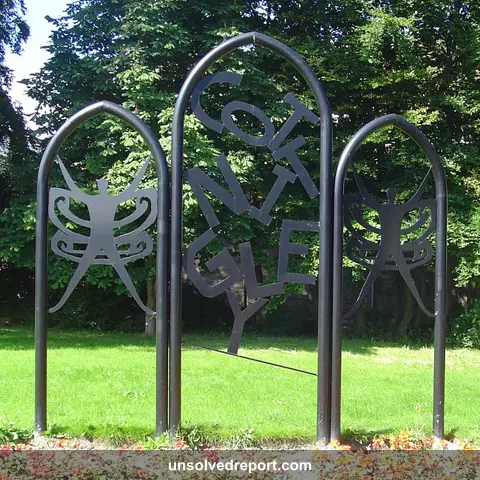
This isn't the opening of a fairy tale somebody dreamed up for a picture book — nor is it a staged hoax like the Cottingley Fairies photographs. It's pretty much how two respected medieval English chroniclers wrote down the event around eight hundred years ago. That's what makes the "Green Children of Woolpit" so strange. Most spooky legends live only in whispers. This one sits in serious history books, alongside other cases that made it into the historical record precisely because so many credible witnesses swore to them — much like some of history's most baffling unsolved disappearances. That leaves historians with a puzzle: what was actually written at the time, what got added later, and what on earth might have really happened?
Let's untangle all three, one piece at a time.
What the medieval records actually say
Two men gave us this story. Both were real people. Both can be dated. And neither was a known liar.
William of Newburgh (c. 1136–1198) tucked the account into his Historia rerum Anglicarum ("History of English Affairs"), written around 1189. Here's the thing about William: historians rate him as one of the more careful, skeptical chroniclers of his day. He didn't swallow tall tales easily. And yet he wrote this one down anyway — admitting, almost reluctantly, that he found it hard to believe. He said he gave in only because so many trustworthy people swore it was true.
Ralph of Coggeshall (died c. 1226) was the abbot of a Cistercian monastery in Essex. He recorded a fuller version in his Chronicum Anglicanum during the 1220s. And he had a source close to the action: Sir Richard de Calne, a knight who, according to Ralph, took the children into his own household.
So what do both writers agree on? Strip away the magic and here's the documented bone of the legend — the part that comes straight from the chronicles:
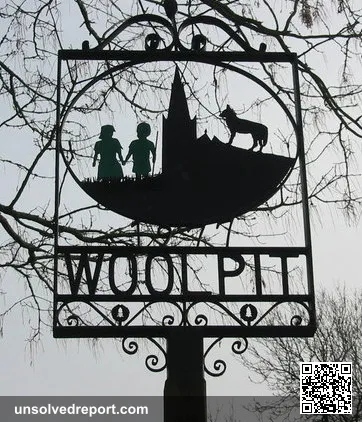
- It happened in or near Woolpit, a real village in Suffolk. The name sounds eerie, but it isn't. It comes from the Old English for "wolf pit" — a trapping pit for wolves, nothing mysterious.
- The timing lands roughly mid-12th century, during the reign of King Stephen (1135–1154).
- Two children, a boy and a girl, turned up near the village. Their skin was green-tinted. Their clothes were unfamiliar. Their speech was an unknown language.
- At first they refused ordinary food. They would eat only one thing: raw broad beans. Slowly, they came around to a normal diet.
- And as they ate like everyone else, the green faded from their skin.
- Then came the sad part. The boy grew sick and died (in some tellings, soon after he was baptized). The girl lived. She learned English. She went into service.
One honest caveat. These details are what the texts say. They're reports of what people claimed — testimony, not lab results. But the documents themselves are genuine medieval writings. That's more than almost any "mystery" can put on the table.
The part that turns history into legend
Once the surviving girl could speak English, people asked the obvious question. Where did you come from?
Her answer is the heart of the whole thing.
She described a home called "St Martin's Land" — a place drowned in permanent twilight, where the sun never truly rose. Everyone there, she said, was green, just like her. She remembered tending her father's cattle. Then a loud noise (William compares it to the bells of Bury St Edmunds). And then, somehow, she was simply here — blinking in the blinding, baffling fields of Woolpit.
This is exactly where the solid record ends and folklore takes the wheel. A shadow-land of endless dusk, reached through some hidden passage? That's a classic move in medieval storytelling, where caves and rivers mark the doorway between our world and an "otherworld." So treat the girl's account for what it is: what the chronicles say she said — passed through translation, retelling, and the minds of monks who genuinely believed such wonders were possible, not unlike the mass conviction that gripped an entire town during the Dancing Plague of 1518.
Beware the details that were added later
Here's a tidy little trap, and a perfect lesson in why separating fact from frosting matters.
Search online and you'll keep bumping into the same satisfying ending: the green girl was christened "Agnes," and she grew up to marry a royal official named Richard Barre. Neat. Romantic. A real name, a real wedding.
It's also nowhere in the medieval sources.
Neither William of Newburgh nor Ralph of Coggeshall names the girl. Neither names a husband. Neither writes "Agnes Barre." That whole identity was proposed much later — in the 20th century — by the Scottish writer Duncan Lunan, based on his own genealogy work tracing Richard de Calne's circle. It's a fun idea. But it's modern speculation, not a medieval fact — and the real Richard Barre's known life story makes the match shaky at best. Repeat it as history and you've just watched a documented legend mutate into an internet myth, right in front of you.
Rational explanations historians have proposed
Set the otherworld aside for a moment. Can the core story actually be explained? Several scholars think it can — though nobody's claiming they've cracked it for certain.
The Flemish refugee theory
The most popular explanation comes from historian Paul Harris in the late 1990s, and it's grimly plausible: the children were Flemish immigrants. Lots of Flemish settlers lived in 12th-century England, and plenty got swept up in the bloodshed of the era — including the Battle of Fornham in 1173, near Bury St Edmunds, where Flemish mercenaries were slaughtered. Now picture two orphaned, terrified kids who speak only Flemish, stumbling into a Suffolk field. To the locals, their words would have sounded like pure nonsense. And "St Martin's Land"? Maybe a mangled memory of Fornham St Martin, a village just up the road. (One catch keeps scholars cautious: the chronicles put the events under Stephen, but the Battle of Fornham happened in Henry II's reign. The dates don't line up cleanly.)
The medical explanation
The green skin has a down-to-earth cause too — no magic required. It's called chlorosis, or "green sickness": a form of iron-deficiency anemia that can give the skin a greenish, washed-out tint. Malnourished, frightened children living rough on a thin diet could easily have looked sickly and green. And once they were properly fed? Their color would come back — which is exactly what the chronicles describe.
A note of scholarly caution
The deepest modern study of all this comes from historian John Clark, who has gone through the texts line by line. His warning is worth keeping in your pocket: the rational theories are tempting, but the urge to cram every weird detail into one tidy answer often means quietly ignoring the bits that don't fit. Sometimes the honest reply to a medieval mystery is the hardest one to say out loud — we really don't know.
Why the story still matters
The Green Children of Woolpit refuses to die because it works two ways at once.
As folklore, it's an image that lodges in your head and won't leave: a twilight country, green skin, raw beans, and a lost child fumbling for words to explain the unexplainable. As history, it's a keyhole into 12th-century England — a world of civil war, migrants on the move, gnawing hunger, and chroniclers who jotted down marvels right alongside the deeds of kings.
And here's the best part: the most truthful version of the tale is also the most gripping. A real episode. Recorded in real documents. Wrapped in legend. And never fully solved. That unsolved gap isn't a flaw — it's the whole point. Sitting with the not-knowing turns out to be far more rewarding than pretending we've got the answer.
The pit is empty now. The green has long since faded. But somewhere in those old monastery pages, two frightened children are still standing at the edge of the field, waiting for someone to figure out where they came from.
Last reviewed: June 2026. This article distinguishes documented chronicle records from later legend and modern speculation; readers are encouraged to consult the primary sources above.
Sources & further reading
- Wikipedia, "Green children of Woolpit" — overview with citations to primary chronicles and modern scholarship: https://en.wikipedia.org/wiki/Green_children_of_Woolpit
- Historic UK, "The Green Children of Woolpit, Suffolk": https://www.historic-uk.com/CultureUK/The-Green-Children-of-Woolpit/
- Brian Haughton, "Mystery of the Green Children of Woolpit" (on the "Agnes Barre" attribution and Duncan Lunan): http://brian-haughton.com/ancient-mysteries-articles/green-children-of-woolpit/
- William of Newburgh, Historia rerum Anglicarum (c. 1189) — primary medieval source.
- Ralph of Coggeshall, Chronicum Anglicanum (1220s) — primary medieval source.
- John Clark, The Green Children of Woolpit: Chronicles, Fairies and Facts in Medieval England — modern scholarly study.
Cottingley Fairies Hoax: The One Photo She Never Confessed To
Two girls faked fairy photos with cardboard cutouts and fooled Conan Doyle for decades. Decades later they confessed everything — except one photo. Why?
Bennington Triangle: 5 Vanished in 5 Years, None Ever Found
A veteran guide who knew every ridge. A student who vanished on a marked trail. Five people gone near one Vermont mountain in five years. What actually happened?
Mothman: The Real 1966 Sightings Nobody Can Fully Explain
Mothman's 1966 sightings in Point Pleasant still baffle skeptics and believers alike — and a year later, 46 people died. Here's what actually happened.