Mothman: The Real 1966 Sightings Nobody Can Fully Explain
Mothman's 1966 sightings in Point Pleasant still baffle skeptics and believers alike — and a year later, 46 people died. Here's what actually happened.
A cold November night in 1966. Two young couples burst through the doors of the Point Pleasant, West Virginia police station, breathless, talking over each other. Something had chased their car. Down a dark road, near an abandoned munitions plant, a gray figure shaped like a man — seven feet tall, wings folded against its back, and two huge eyes that flared red in their headlights. The story they blurted out that night would outlive every single person in that room.
Within days the thing had a name, a newspaper headline, and a grip on American folklore it has never let go of.
Almost sixty years on, "Mothman" is a museum, a gleaming chrome statue, a festival, and a Hollywood movie. But peel back the gift-shop layer and a real puzzle is still sitting there, unsolved. What did those four people actually see? And how on earth did a winged figure on a country road get tangled up forever with one of the deadliest bridge disasters in U.S. history? Here's what the record really shows — what's still unexplained, and the exact spot where fact ends and legend takes over.
What we know for sure
It all started on the night of November 15, 1966. Roger and Linda Scarberry and Steve and Mary Mallette told Point Pleasant police they'd seen a big, man-sized winged thing with "glowing red" eyes out near a place locals called "the TNT area" — a creepy stretch of woods dotted with concrete igloos, left over from a World War II munitions plant. Linda Scarberry later pinned it down: a "slender, muscular man," roughly seven feet tall, with white wings. And it didn't just stand there. The couples said it chased their car, screeching, as they floored it back toward town.
The story hit print fast. The very next day — November 16, 1966 — the Point Pleasant Register ran the front-page headline that nobody has stopped quoting since: "Couples See Man-Sized Bird … Creature … Something." Some accounts push the first encounter back a few days, to November 12, when gravediggers near Clendenin, West Virginia, said a large figure passed overhead. But that one surfaced mostly after the fact, and it's on shakier ground than the Scarberry-Mallette report.
Here's a detail people get wrong: the witnesses never called it "Mothman." That name came later, reportedly coined by a newspaper copy editor — and the popular guess is that the Batman comics and the hit Batman TV show of the day, complete with a villain named Killer Moth, gave him the idea. Over the next thirteen months or so, more sightings rolled in around Point Pleasant — part of a broader run of unexplained encounters in the era, the same stretch of years that gave the world both the Westall UFO sighting in Australia and the Shag Harbour incident in Canada. Then the wave faded.
And then came the day that turned a local oddity into a legend.
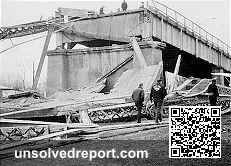
December 15, 1967. Around 5 p.m., right in the heart of rush hour, the Silver Bridge — a 1928 eyebar-chain suspension bridge carrying U.S. Route 35 across the Ohio River — let go. The whole span dropped into the water. According to the West Virginia Encyclopedia, 46 people died, dozens of vehicles went into the river, and two victims were never found.
So why did it fall? Not because of anything from a dark road. The cause was a single, microscopic flaw, investigated and documented down to the part number. The National Transportation Safety Board traced the collapse to "a cleavage fracture in the lower limb of the eye of eyebar 330" — one tiny crack in one critical link, in the Encyclopedia's words "inaccessible to visual inspection." No one could have spotted it without taking the bridge apart. And because the design had no backup, no redundancy, that one link took everything down with it. The disaster forced real change: the American Society of Civil Engineers notes that the Federal-Aid Highway Act of 1968 created the first national bridge inspection program — the foundation of the National Bridge Inspection Standards we still rely on today.
Two separate, well-documented events. A string of strange sightings. A catastrophic structural failure. Same small town, about thirteen months apart. Everything past that one fact is interpretation.
The question that never got answered
Here's what the record simply cannot tell us: what those people on the November road actually perceived.
By most accounts, they were ordinary folks with no reason to invent a monster — and several of them stuck to their story for the rest of their lives. They reported it to police that night. It was in the paper within a day. This wasn't a tale that grew quietly in the dark before anyone wrote it down. And yet: no photograph. No physical trace. No body, no feather, no specimen. All that survives is what people said they saw — and eyewitness perception, at night, under stress, in the glare of headlights, is famously, slipperily unreliable, much like the contested memories at the heart of the Betty and Barney Hill abduction case.
So the honest mystery isn't "was it a paranormal creature." The sharper, more interesting question is this: what ordinary thing — if anything — could make several people describe a tall, winged figure with reflective red eyes, and why did those reports pile up in that one place, at that one time? That's a riddle about human perception, about memory, about how a frightened community makes sense of the unexplained. And nobody has ever fully cracked it.
So what was it, really?
Everything below is interpretation and folklore — speculation, plainly labeled. We're not claiming any of it is settled fact.
The bird that's almost as tall as a man
The most convincing down-to-earth explanation came from a wildlife biologist. Dr. Robert L. Smith of West Virginia University pointed at a sandhill crane — a huge bird "almost as tall as a man," with a wingspan of around seven feet and patches of reddish skin around its eyes, as laid out in Wikipedia's summary of the case. Now picture one of those startled off course, far from its usual range, suddenly lit up by car headlights on a black country road. Tall. Winged. Red eyes. It fits unsettlingly well. Skeptics lean toward exactly this kind of mix-up — crane, big owl, or heron — as the likeliest seed of the whole thing, the same kind of mundane explanation that eventually resolved the decades-old Dyatlov Pass mystery.
The "harbinger of doom"
The most famous version of the story is the one with no evidence behind it at all. After the Silver Bridge fell, people went back and rewrote the meaning of the sightings — suddenly they weren't just a scare, they were omens. The Mothman became a prophet of disaster. Author John Keel ran with it in his 1975 book The Mothman Prophecies, braiding the sightings together with UFO lore and supernatural happenings and tying them straight to the bridge. (Writer Gray Barker had carried the story to a wider audience a few years before.) It's a gripping yarn. But it's storytelling stacked on top of a coincidence — not a documented cause-and-effect — and remember, the bridge's collapse already has a complete, separate engineering explanation sitting right there.
Why we can't let it go
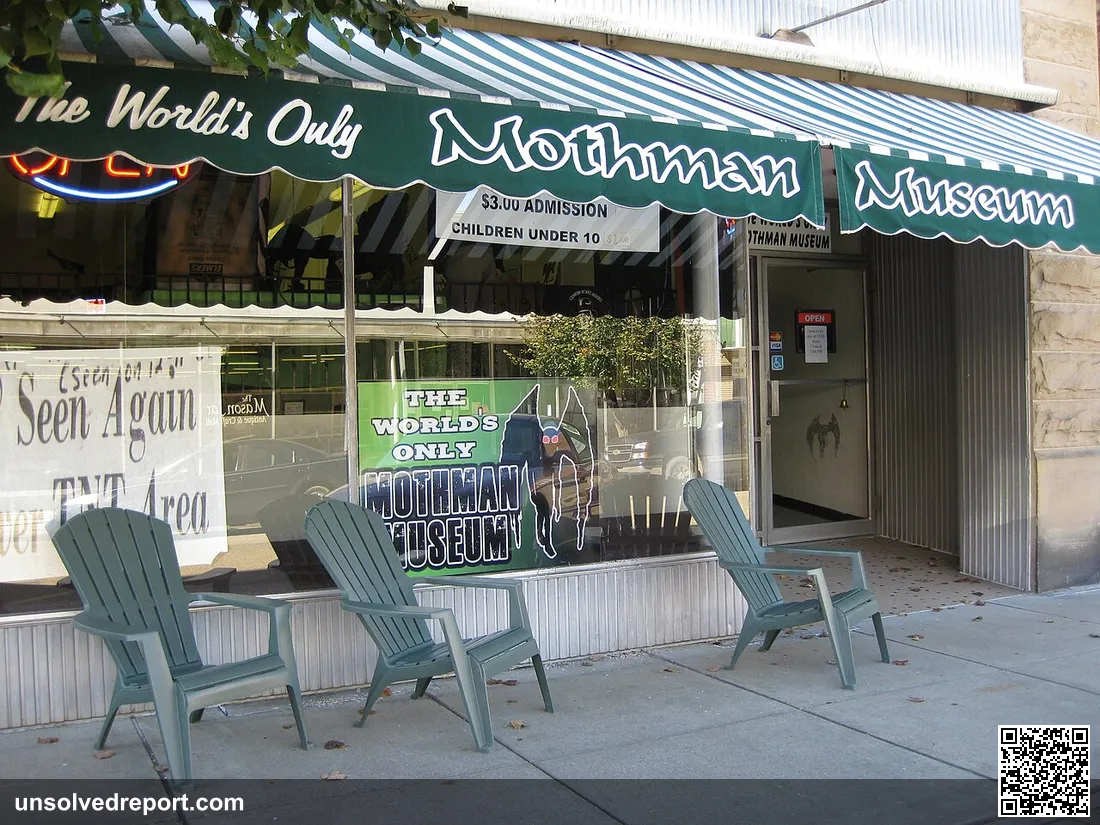
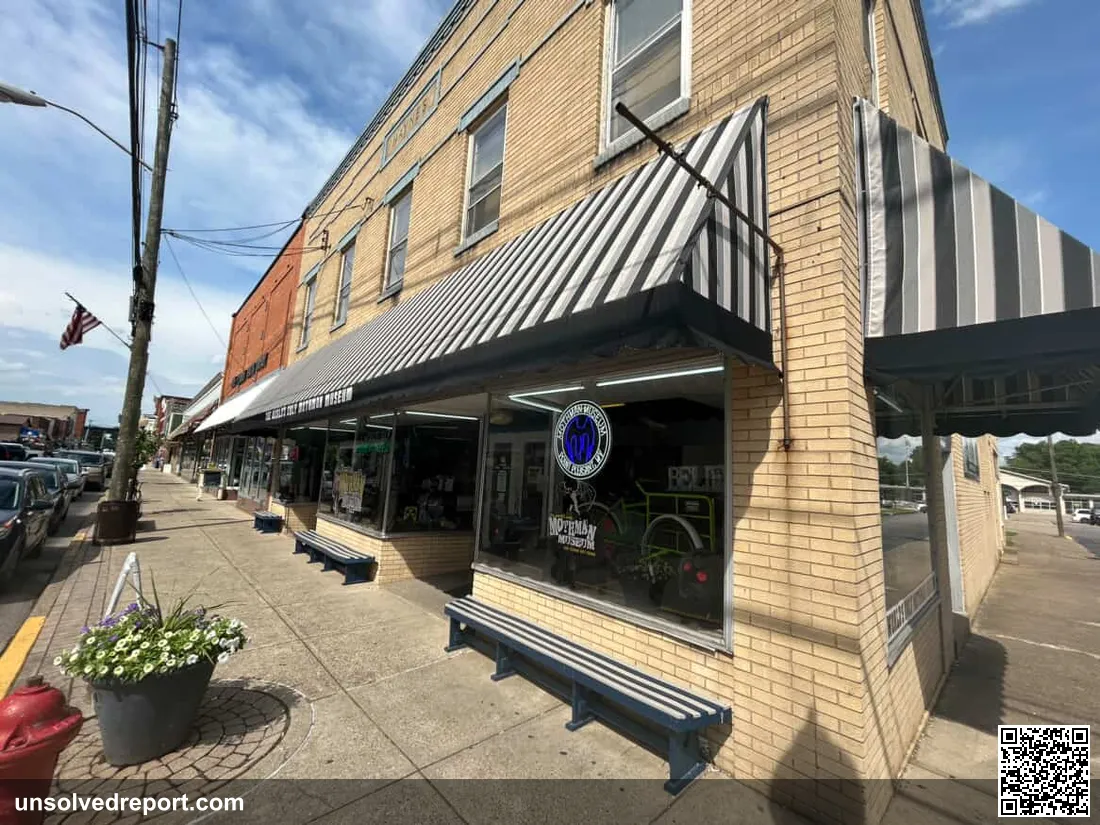
Whatever those witnesses saw, the deeper truth might have nothing to do with wings. A town lived through something unthinkable. And a strange story already going around offered a strange kind of comfort: maybe the tragedy had been foretold, maybe it wasn't just random and cruel. That's a powerful thing to believe. Today Point Pleasant embraces the whole tale — there's a Mothman Museum and an annual September festival, a community turning an unsolved mystery into a shared identity.
The facts hold firm: real sightings, a real disaster, a real flaw in a single piece of steel. The thread connecting them is legend. And the question of what flew over that dark road in 1966 is still — genuinely, stubbornly — open.
Sources & Further Reading
- West Virginia Encyclopedia — Silver Bridge Collapse
- American Society of Civil Engineers — Silver Bridge Collapse and National Bridge Inspection Standards
- West Virginia Tourism — Who Is the Mysterious Mothman?
- Wikipedia — Mothman and The Mothman Prophecies
Green Children of Woolpit: The Kids Nobody Can Explain
Two green-skinned children walked out of a pit speaking no known language — and real medieval monks wrote it down as fact. So what actually happened?
Cottingley Fairies Hoax: The One Photo She Never Confessed To
Two girls faked fairy photos with cardboard cutouts and fooled Conan Doyle for decades. Decades later they confessed everything — except one photo. Why?

Bennington Triangle: 5 Vanished in 5 Years, None Ever Found
A veteran guide who knew every ridge. A student who vanished on a marked trail. Five people gone near one Vermont mountain in five years. What actually happened?