The Sun Won't Tell Us What It's Made Of
We made a better model of the Sun's surface — and it broke our model of its core. Why scientists still can't agree what our own star is made of.
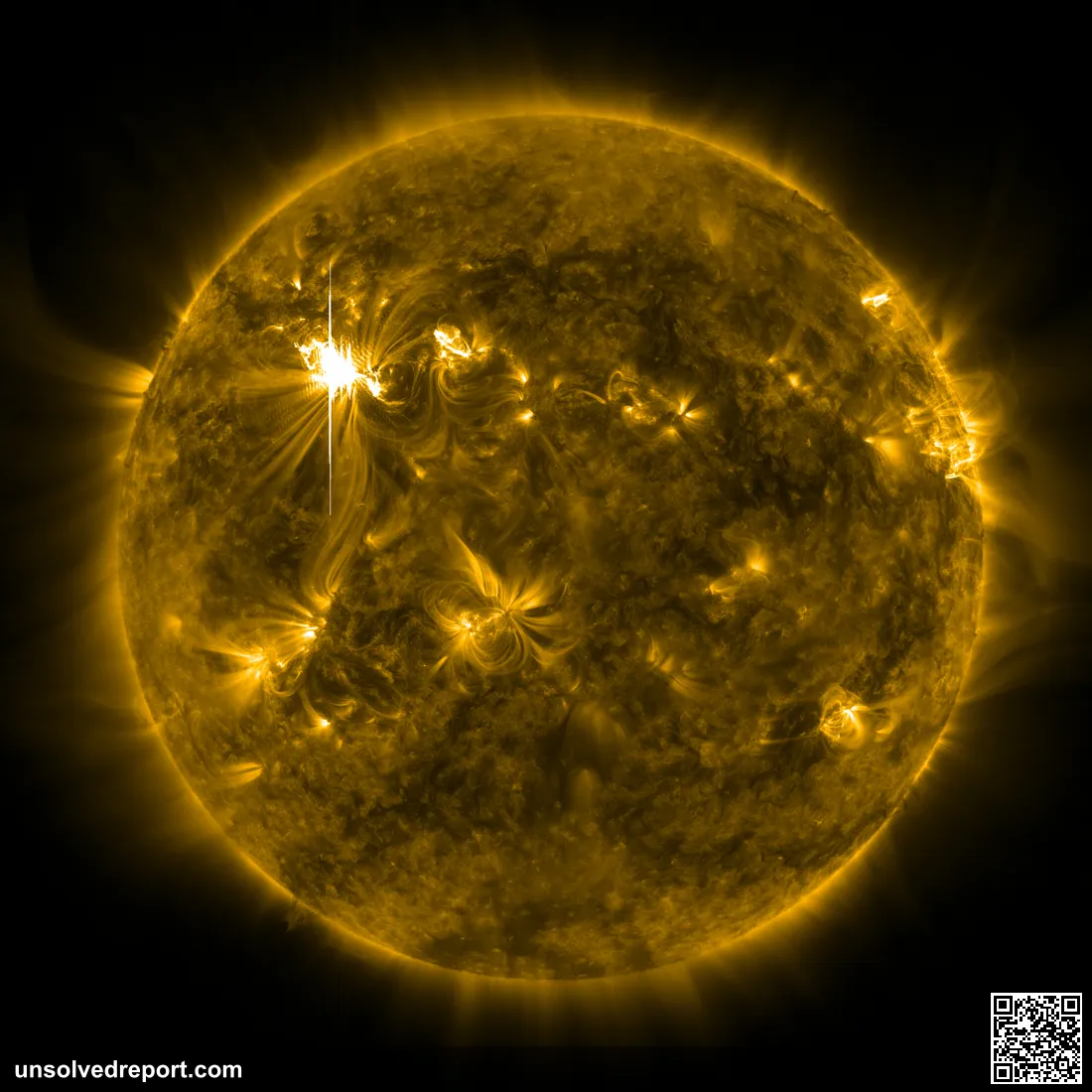
The Sun is the most studied star in the entire universe. It hangs just eight light-minutes away. It floods us with so much light that we can read its chemistry line by line, like a barcode. It is the yardstick we hold up to every other star to figure out what they are made of.
So here is something genuinely weird. As of 2026, the people who study the Sun for a living still can't agree on one of the most basic facts about it: what it's made of.
Not the big picture. On that, everyone shakes hands. The Sun is roughly three-quarters hydrogen and a quarter helium. The argument is over the tiny leftover sliver — the heavier stuff astronomers bundle together and call "metals." (In astronomy, anything past helium counts as a metal. Yes, even oxygen. Even carbon.) That sliver is only one or two percent of the Sun's mass. And the fight over its exact size has quietly grown into one of the most stubborn puzzles in modern astrophysics. It even has a name. They call it the solar abundance problem.
When the numbers used to fit perfectly
For decades, this was a solved problem. The trusted numbers for the Sun's recipe came from painstaking work — Anders and Grevesse (1989), then Grevesse and Sauval (1998). They handed the Sun a metal-to-hydrogen ratio (Z/X) somewhere around 0.023 to 0.0275. And those numbers were beautiful (Asplund et al. 2009, Annual Review of Astronomy and Astrophysics). Feed them into a standard model of the Sun's insides, and the model spat out a Sun that matched the real thing with almost spooky precision.
Then the measurements got better. And everything fell apart.
In the early 2000s, Martin Asplund, Nicolas Grevesse, A. Jacques Sauval and their collaborators threw out the old way of picturing the Sun's atmosphere — flat, frozen, one-dimensional — and built something far more lifelike: time-dependent, three-dimensional simulations of the churning solar surface, accounting for the ways the gas refuses to settle into neat equilibrium, fed by sharper atomic data (Asplund, Grevesse & Sauval 2005). By every honest measure, these were better models. More real. And the better models delivered a jolt: the Sun held far less oxygen, carbon, and nitrogen than anyone had believed.
Take oxygen — the single most important metal of the bunch. Its value slid from about 8.93 on the standard logarithmic scale (Anders and Grevesse 1989) down to roughly 8.69 (Allende Prieto et al. 2001). That's a drop of nearly 40 percent (Asplund et al. 2009). The Sun's overall metal content tumbled to around Z/X = 0.0165 in the 2005 work — almost half the old value. The 2009 review settled in near Z/X = 0.0181.
Here's where it gets strange. We have a second, totally independent way to peer inside the Sun. It's called helioseismology — the study of sound waves rumbling through the solar interior, like a struck bell ringing. Those waves let us map the speed of sound deep inside and measure how far down the boiling outer layer reaches, all to better than one percent. And the old, metal-rich recipe matched that interior music almost perfectly. The new, more sophisticated, metal-poor recipe shattered it.
This isn't a rounding error. With the revised numbers, the predicted speed of sound near the bottom of the Sun's churning envelope is off by about one percent — a gap of roughly ten standard deviations. Ten. Meanwhile the surface helium amount and the predicted depth of that boiling layer also wander out of bounds (Basu & Antia 2008, Physics Reports). Read that back slowly: the better we modeled the Sun's surface, the worse we modeled its guts.
Two perfect measurements that refuse to agree
That, right there, is the whole problem. And nobody has cracked it.
Two trusted techniques. Both excellent. High-resolution spectroscopy reads the Sun's surface like text. Seismic sounding listens to its interior like a doctor with a stethoscope. And the two answers cannot both be true — not with the physics we have today. So one of three things must be wrong. Maybe the new surface readings are off. Maybe we're misreading the seismic signal. Or — the most thrilling option — the standard model of the Sun is missing a piece of physics, something that's been hiding in front of us the whole time.
The favorite suspect for that missing piece has a dull name and a huge job: opacity. It's just a measure of how greedily solar material soaks up and spits back radiation. But opacity is what decides how heat crawls outward through the Sun, which means it sets the whole temperature map of the interior. Crank up the real opacity near the base of that boiling layer, and suddenly a metal-poor Sun could match the seismic data after all. For years this was a tidy idea with one fatal flaw: nobody could test it. You can't exactly recreate the inside of the Sun in a basement.
Then somebody did.
The machine that lit a piece of the Sun on Earth
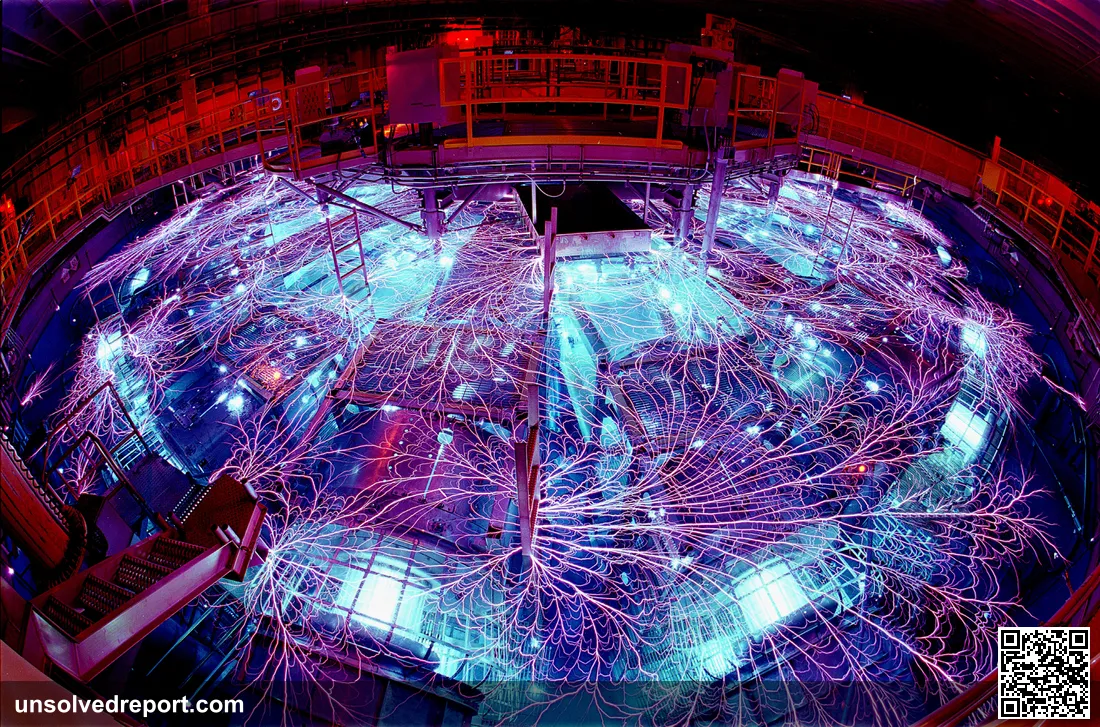
The opacity idea — backed by an experiment, not yet a slam dunk. In 2015, a team led by James Bailey walked up to Sandia National Laboratories' Z machine, the most powerful X-ray source on the planet, and used it to blast iron up to roughly 2.1 million kelvin at the same crushing density you'd find at the base of the Sun's boiling layer. Then they watched how it drank light (Bailey et al. 2015, Nature). The result stopped people cold: across part of the spectrum, the iron swallowed 30 to 400 percent more radiation than the best models had promised. Boiled down to a single overall figure, iron's contribution to opacity jumped about 7 percent (Iron Opacity Measurements, OSTI). Commentators did the math — that one experiment closed roughly half the gap between a metal-poor Sun and the seismic data. It's the strongest hint yet that the real flaw is buried in our atomic physics, not our chemistry. The catch: the experiment and how to read it still need independent confirmation.
The metal-rich comeback — disputed. In 2022, Ekaterina Magg and her collaborators went back to the solar spectrum, ran it through fresh 3D modeling with refined corrections, and came out the other side with a higher metal content — Z/X around 0.0225. Basically a U-turn back to the 1990s numbers. And they reported that this recipe makes peace with helioseismology again (Magg et al. 2022 discusses the claim). If they're right, the whole puzzle just evaporates. The low numbers were the mistake all along.
The pushback — still a brawl. Not so fast, said the other camp. A 2022 study with a title that pulls no punches — "Higher metal abundances do not solve the solar problem" — argued the fix simply doesn't hold (Buldgen et al. 2022, A&A). Then in 2024, a fresh seismic reading of the Sun's metal content landed around Z = 0.012 to 0.015. That backs the low, Asplund-style numbers and statistically throws out the metal-rich Magg models (Buldgen et al. 2024, A&A). So one camp says the Sun is metal-rich and the mystery is dead. The other says it's metal-poor, the mystery is alive, and it's pointing straight at missing opacity physics.
Other suspects on the board. Researchers have floated a few more ideas: that the young Sun gobbled up metal-poor material early on, that heavy elements have been quietly sinking inward, that the boiling layer overshoots its boundary. Each one nudges the models a little. None of them, on its own, cleanly shuts the door (Serenelli et al. 2011).
And this is exactly what makes the whole thing so delicious. There's nothing exotic here. No rogue particles. No invisible companion star lurking in the dark. Just two superb measurements of the nearest star in the sky, flatly refusing to shake hands. And the trouble doesn't stay put. The Sun is the ruler we use to weigh the chemistry of the entire galaxy. If we can't nail down what our own star is made of, then every recipe we've ever written for a distant sun inherits the same quiet little crack. So for now, the honest answer to "what is the Sun made of?" is the best kind of answer in all of science — the kind where we lean in and admit: we're still figuring it out.
Sources and Further Reading
- Asplund, Grevesse, Sauval & Scott (2009), "The Chemical Composition of the Sun," Annual Review of Astronomy and Astrophysics — annualreviews.org
- Asplund, Grevesse & Sauval (2005), "The Solar Chemical Composition" — ADS
- Basu & Antia (2008), "Helioseismology and Solar Abundances," Physics Reports — arXiv:0711.4590
- Bailey et al. (2015), "A higher-than-predicted measurement of iron opacity at solar interior temperatures," Nature — nature.com; supporting report — OSTI
- Magg et al. (2022), "Observational constraints on the origin of the elements. IV" — discussion at A&A
- Buldgen et al. (2024), "Helioseismic determination of the solar metal mass fraction," A&A — aanda.org
- Serenelli et al. (2011), "Solar models with accretion. I" — arXiv:1104.1639
The Vela Incident: The Double Flash Nobody Can Explain
The Vela Incident, 1979: the mystery flash a dying satellite caught over an empty ocean. Secret bomb test, or glitch? Scientists still can't agree.

Gardner Museum Heist: The $500M Theft Nobody Can Solve
Gardner Museum heist: two fake cops, 13 masterpieces, $500M gone in 81 minutes. The FBI says it knows who did it — so why is the art still missing?
G Objects Sagittarius A: 6 Things That Should Be Dead, But Aren't
Six objects orbit our galaxy's black hole wearing gas clouds like disguises. One was due to be shredded in 2014. It walked away. Why?