Antikythera Wreck: 9 Bronze Statues Still Buried Below
Antikythera wreck: a diver surfaced screaming about corpses on the seabed. It was bronze masterpieces — and up to 9 statues are still buried down there. Which ones?
A diver breaks the surface, rips off his helmet, and starts shouting about corpses on the seabed. Bodies. Horses. A whole field of the dead, fifty meters down.
It was the spring of 1900. A crew of Greek sponge divers from the island of Symi was riding out a storm off Antikythera, a rocky speck of land marooned between the Peloponnese and Crete. One of them, Elias Stadiatos, had gone down to roughly 50 meters to look around — and come back up with that wild story. Here's the thing: he wasn't lying, and he wasn't crazy. He just couldn't name what he'd seen. The "corpses" were bronze and marble statues, arms and faces and limbs frozen in the gloom, scattered across one of the richest ancient shipwrecks ever found (Woods Hole Oceanographic Institution; Cambridge Core Blog).
That was more than a century ago. Divers have been going back ever since. And the wreck still won't give up everything. The archaeologists working the site today will tell you flatly: the hold and the debris fields around it are nowhere near empty. So what is still down there?
What We Actually Pulled Up
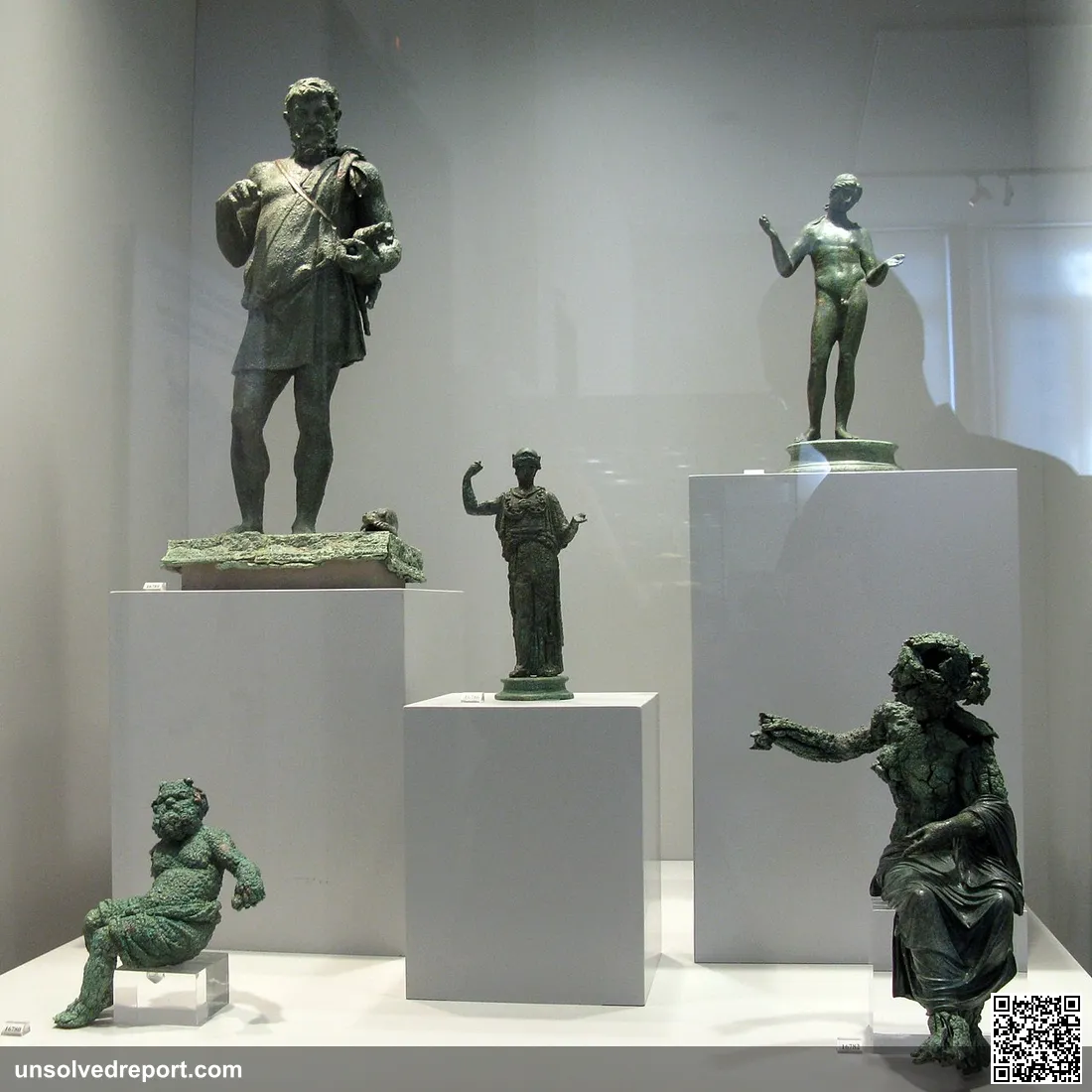
The first big salvage ran from 1900 to 1902, sponge divers again, this time backed by the Greek Navy. What came up now fills cases in the National Archaeological Museum in Athens — bronze and marble statues, severed statue heads, a bronze lyre, glassware, jewelry, coins, and ugly green lumps of corroded bronze (WHOI). And one of those lumps? It turned out to be the most famous object the sea has ever surrendered.
Crack it open and you find the Antikythera Mechanism: a tight nest of interlocking bronze gears that could model the motion of the sun, the moon, and the planets. An analog computer, basically. It is widely described as the earliest known geared device of its kind — and it beats anything comparable by more than a thousand years (WHOI). Sit with that for a second. Someone built a mechanical sky-calculator, loaded it onto a ship, and then the ship sank.
When did it sink? The vessel is generally dated to roughly the second quarter of the first century BCE, with the loss commonly placed around 65 BCE (WHOI). The site has pulled in heavy hitters too. Jacques-Yves Cousteau and his team dived it in 1976 and brought up coins, bronze statuettes, glass, jewelry — and human skeletal remains (Cambridge Core Blog).
Then the modern era arrived. Systematic excavation came back in the 2010s and turned into a multi-year program run by the Swiss School of Archaeology in Greece, with the University of Geneva's Lorenz Baumer among the directing scholars (University of Geneva). And the seabed kept paying out. In 2016, divers lifted a partial human skeleton they nicknamed "Pamphilos," after a name scratched into a wine cup from the site. Ancient-DNA specialist Hannes Schroeder of the Natural History Museum of Denmark looked at the bones — and found them strangely, almost impossibly, well preserved for something that had spent two thousand years soaking in saltwater (Nature; Scientific American).
Some of the treasure was simply hiding under rocks. Big ones. In 2022, the team shifted natural boulders weighing up to 8.5 tons apiece, prying open a part of the wreck nobody had been able to reach — and underneath lay marble fragments, including one that may belong to the beard of a known statue head of Herakles (phys.org). The 2023 season kept the haul coming: marble and pottery shards, glass, copper-alloy bits, lead and wooden structural pieces, and the bones of at least one more person (University of Geneva).
And then, in 2024 and 2025, the divers finally reached the ship itself. They found three outer hull planks still clinging to an internal frame — wood, intact, after all this time, which almost never survives. They lifted it in 2025 with a custom-built support cradle. The timber turned out to be elm and oak, assembled "shell-first," meaning the outer hull went together before the inner skeleton. Early analysis put the wood at around 235 BCE — though careful here: that's the age of the tree, not the day the ship was built or the day it went under (Archaeology Magazine). The same recent dives brought up Chian amphorae scattered across more than one zone, a clay mortar for grinding food, and the marble base of a statue with the lower part of a leg still attached to it (Archaeology Magazine).
A leg, a base, and the rest of the statue still missing. Which is exactly the kind of thing that keeps divers coming back.
The Question That Won't Die
Here's what really pulls them down there, season after season: the evidence keeps insisting that a lot of this cargo is still buried, still unrecovered, still waiting.
The strongest clue dropped in 2017. A team called "Return to Antikythera" swept the site with a custom underwater metal detector, and beneath those heavy boulders the machine lit up — anomalies shaped exactly like buried metal. Archaeologist Brendan Foley put a number on it: "a minimum of seven, and potentially nine" bronze sculptures could still be lying under the seabed (Smithsonian Magazine). Why should that make your pulse jump? Because the ancient world melted its bronzes down for scrap, over and over, recycling beauty into coins and weapons — which makes an intact classical bronze statue one of the rarest survivals on Earth (Smithsonian Magazine). Seven of them, maybe nine, sitting in the dark right now.
There's a second puzzle, and it's about size. The wreckage sprawls across an area on the order of 50 to 60 meters, at depths reported between roughly 35 and 60 meters. That's a wide, wide debris field — wide enough that people have long asked whether it came from one monster of a ship, or from more than one vessel going down together (Live Science). And in 2024, the Swiss-led team said they'd confirmed it: a second wooden wreck inside the study area, about 200 meters from the main site, and apparently dating to roughly the same period (SWI swissinfo.ch; CBS News).
So the open questions aren't vague at all. They're sharp, and they're testable. How many statues are still pinned under the boulders? Was this one ship loaded to the gills, or two sailing side by side? And what's left in the hold that the 1900 divers — kicking around in primitive gear, holding their breath against the bends — simply could not reach?
So What Was This Ship Doing Here?
Greek art, headed for Rome. The favorite scholarly read is that the ship was hauling Greek statues and luxury goods westward — maybe war plunder, maybe a custom order for rich Roman buyers in the first century BCE. It fits the cargo neatly: the fine statuary, the glass, the jewelry. What it doesn't have is a paper trail. The exact port it left from and the port it was aiming for aren't documented for certain (WHOI).
Two ships, one storm. Some researchers think the second wreck and the main wreck were traveling together and went down in the same disaster. The two sites reportedly carry similar amphora types from comparable periods — just what you'd expect from vessels that stopped at the same harbors and sailed in convoy (Greek Reporter). It's still a hypothesis under active investigation, not a settled fact.
Another mechanism down there? Tempting, isn't it — to wonder whether a second geared device is still buried in that hold. But let's be honest: there's no evidence for it. That one's pure speculation. What the documented record does support is simpler and, frankly, almost as thrilling: the wreck is, in the recent team's own words, far from exhausted, and the dives keep delivering (Archaeology Magazine).
For now, the lost hull of Antikythera keeps its books open. The boulders have been rolled aside. The framing has been mapped. The seabed has been scanned end to end. And the next answer is probably resting a single meter down in the sand — waiting for the right season, the right tide, and the right diver to come looking.
Sources & Further Reading
- Woods Hole Oceanographic Institution, "Antikythera Shipwreck": https://www.whoi.edu/ocean-learning-hub/ocean-topics/ocean-human-lives/underwater-archaeology/antikythera-shipwreck/
- Smithsonian Magazine, "Seven Bronze Statues May Be Buried at Antikythera": https://www.smithsonianmag.com/smart-news/seven-bronze-statues-may-be-buried-site-antikythera-shipwreck-180965127/
- Archaeology Magazine, "New Discoveries from Famed Antikythera Shipwreck" (2025): https://archaeology.org/news/2025/07/11/new-discoveries-from-famed-antikythera-shipwreck/
- University of Geneva, "New discoveries on the wreck of Antikythera" (2023): https://www.unige.ch/medias/en/2023/nouvelles-decouvertes-sur-lepave-danticythere
- Nature, "Human skeleton found on famed Antikythera shipwreck" (2016): https://www.nature.com/news/human-skeleton-found-on-famed-antikythera-shipwreck-1.20632
- Scientific American, "Human Skeleton Found on Famed Antikythera Shipwreck": https://www.scientificamerican.com/article/human-skeleton-found-on-famed-antikythera-shipwreck/
- SWI swissinfo.ch, "Swiss researchers uncover second ship in Antikythera shipwreck investigation": https://www.swissinfo.ch/eng/science/swiss-researchers-uncover-second-ship-in-antikythera-shipwreck-investigation/82471105
- Cambridge Core Blog, "The Statues from the Antikythera Shipwreck, 125 Years Later" (2025): https://www.cambridge.org/core/blog/2025/10/08/the-statues-from-the-antikythera-shipwreck-125-years-later/
- Live Science, "Famed Roman Shipwreck Could Be Two": https://www.livescience.com/26009-antikythera-roman-shipwreck-two.html
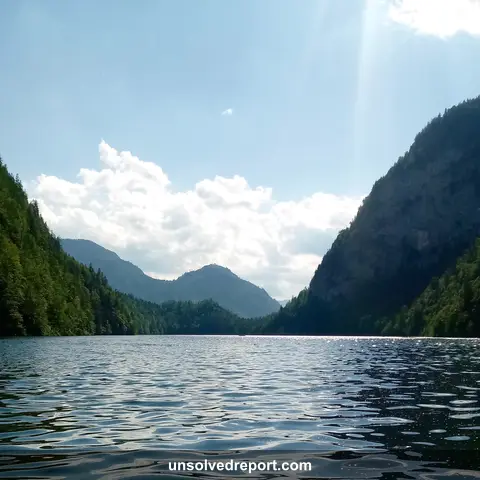
Lake Toplitz: The Nazi Treasure Lake That's Half True
A diver died searching Lake Toplitz. Nazi forgeries really did surface from its depths. But the gold everyone whispers about? Still unaccounted for.

The Honjo Masamune: Japan's Greatest Sword Just Vanished
A national treasure of Japan was handed across a police counter to an American soldier in 1946. Then the trail went cold on a misspelled name. Here is what we know.
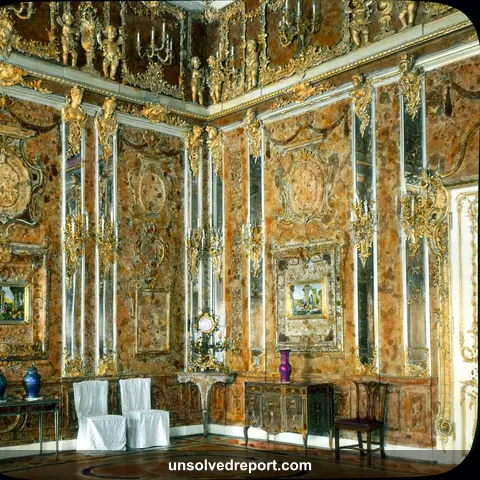
Famous Lost Treasures Still Missing: 12 Fortunes No One Found
These famous lost treasures still missing today left paperwork, photos, even a 2,000-year-old map etched in copper. So why has nobody found a single one?