The Honjo Masamune: Japan's Greatest Sword Just Vanished
A national treasure of Japan was handed across a police counter to an American soldier in 1946. Then the trail went cold on a misspelled name. Here is what we know.
No living person can prove they have seen it. Ask any serious collector of Japanese swords to name the blades that matter most, and a short list comes up — and at or near the very top sits one that has not been reliably laid eyes on in nearly eighty years. The Honjo Masamune was a national treasure of Japan, a symbol of shogunal power passed down for centuries. Then, in early 1946, in the rubble of a defeated nation under foreign occupation, it was slid across a police station counter to an American serviceman.
It was never reliably seen again.
Here is what makes this one different from the usual "lost treasure" tale. Most of those start with a "maybe." Maybe it existed. Maybe it was real. The Honjo Masamune is not a maybe. It is a documented, officially designated artifact whose story is rock-solid right up to a precise moment — and then falls off a cliff. We can date its disappearance almost to the month. That is the strange, maddening part: the record is sharp and clear, and then it simply stops.
The smith whose name became a legend
To understand why people still hunt for this sword, you have to start with the man who made it.
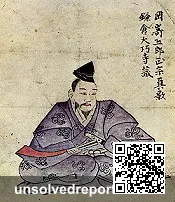
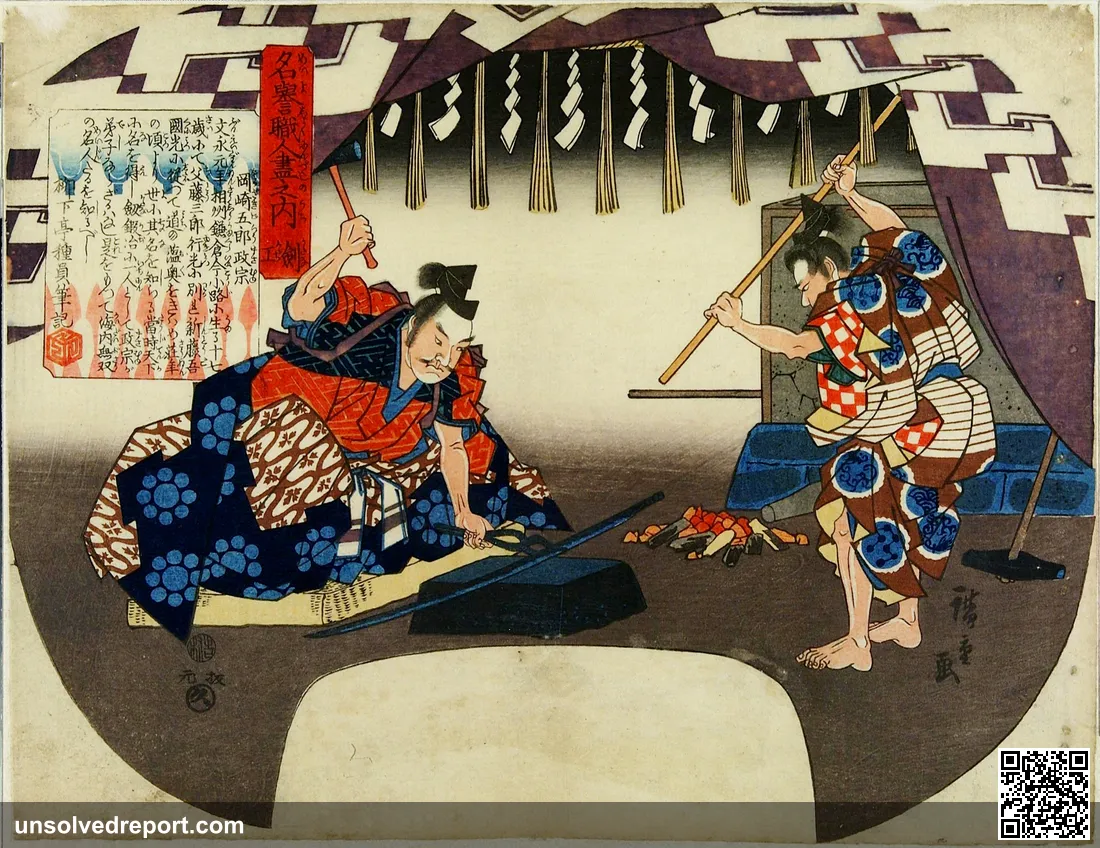
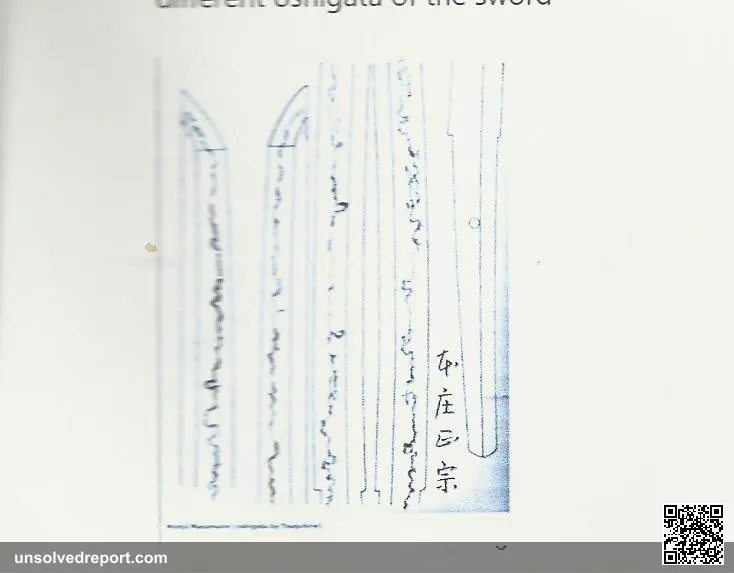
The blade is attributed to Goro Nyudo Masamune — widely regarded as the finest swordsmith in Japanese history. Full stop. He worked in Sagami Province in the late 13th and early 14th centuries, during the Kamakura period. What set his blades apart was the steel itself, and the way light seems to move inside the surface grain, an effect later smiths chased for centuries and never quite caught.
Now, a lot of what gets said about Masamune is pure legend. You may have heard the famous one: hold a Masamune blade in a flowing stream, and leaves drift toward it but part gently around the edge, untouched — while a Muramasa blade slices every leaf to ribbons. Great story. It is meant to show Masamune's supposedly gentle, benevolent spirit. But it is folklore, not a test anyone recorded. It belongs in the legend column, not the fact column.
What is documented is plainer and, honestly, more impressive: genuine Masamune blades were treasured objects. And one of them climbed all the way to the top of Japanese political power.
How a wounded general gave it his name
The sword carries the name of Honjo Shigenaga, a 16th-century general. The tradition goes like this: in battle, Shigenaga was struck by this very blade — and survived. He then took the sword from the man who had wounded him. Wounded by it, then claimed it. That is how it got his name.
From there the blade climbs. It eventually reached the hands of the Tokugawa family — the dynasty that would rule Japan as shoguns for roughly two and a half centuries after Tokugawa Ieyasu locked down control in the early 1600s. The Honjo Masamune became a treasure of the Tokugawa house, handed from one head of the family to the next, a solid object you could hold that meant: we are in charge.
Then, in 1939, the sword got Japan's highest official seal of approval for a cultural object. It was designated a National Treasure. Pay attention to that date, because it matters enormously to the mystery. It means the sword was formally examined, recorded, and recognized by the state — just a few short years before it would vanish.
When Japan was ordered to surrender its swords
Japan lost the war in 1945. With defeat came the Allied occupation, and with the occupation came a sweeping policy: disarm the country. Hand over the weapons. And traditional swords — heirlooms, art, history — got swept up in the same order as rifles and bayonets, in the same chaotic collapse that also swallowed Yamashita's Gold elsewhere in the Japanese empire.
To many Japanese this looked like a slow-motion catastrophe. Centuries of irreplaceable craftsmanship were about to be tossed onto scrap heaps or pocketed by souvenir hunters.
In December 1945, the head of the Tokugawa family, Tokugawa Iemasa, did as he was told. He surrendered a whole collection of swords — the Honjo Masamune among them, plus reportedly more than a dozen other blades — to a police station in the Mejiro district of Tokyo.
Hold that scene in your mind, because it is the last one we can fully trust. The sword was real. It was designated. It was in the family's hands. It was handed to the authorities at a known place, at a known time. After this point, the record starts to fray.
The man who signed for the swords — and never existed
According to the account repeated most often, the swords surrendered at Mejiro were collected by an American sergeant. The records give his name as Coldy Bimore, of the US 7th Cavalry Regiment.
And here the paper trail does something that sends a small chill down your spine.
When researchers later went hunting for this man, they could not find him. No serviceman named Coldy Bimore appears in the rolls of that unit. None. The name itself reads wrong — it reads like a sound, not a name. The kind of thing that happens when a Japanese clerk hears an unfamiliar American name and writes down his best guess by ear. One possibility that comes up again and again: that the record is really pointing at a soldier whose name might untangle into something like Cole D. B. Moore — a near-match so close it is almost cruel, and one that has never been firmly confirmed.
Sit with what that means. The single most important moment in the whole story — the instant a National Treasure left Japanese hands forever — is attached to a name that may not be a real name. That one corrupted line of paperwork is the hinge the entire mystery swings on. Find the man, and you might find the sword. Lose the man, and the trail dead-ends at a phonetic ghost.
It dead-ends.
So where is it now?
From the Mejiro police station in early 1946, the Honjo Masamune drops out of the verifiable record completely. People raise several possibilities — but they are not equally likely, and it is worth ranking them honestly instead of lining them up as equals.
- It is sitting unrecognized in a private collection. Thousands of Japanese swords crossed the ocean to the United States as war souvenirs in this exact period. Strip a blade of its papers, put it in the hands of someone who has no idea what it is, and it could pass quietly down through a family as just another old antique on the wall. This is probably the most plausible happy ending.
- It was lost or scrapped in the chaos. The early postwar years saw mountains of confiscated swords gathered up, stored badly, and in some cases destroyed or dumped outright. A masterpiece could have been lost for the dumbest reason imaginable: nobody handling the pile knew which blade in it mattered.
- It is in a collection whose owner knows exactly what they have. Possible — but resting on zero evidence. And anyone aware they were holding a stolen Japanese National Treasure would have every reason on earth to keep it hidden forever.
Notice what all the credible scenarios share. Not one of them needs anything supernatural. No curse, no conspiracy, no cover-up. The most likely truth is depressingly ordinary: sloppy record-keeping, a misheard name, and a chain of people who simply did not realize what had passed through their hands.
The bigger story: a flood of confiscated blades
The Honjo Masamune did not slip away on its own. It vanished inside one of the largest forced transfers of cultural objects in modern history — and once you see that backdrop, it becomes painfully clear how even the most important blade in the country could get swallowed.
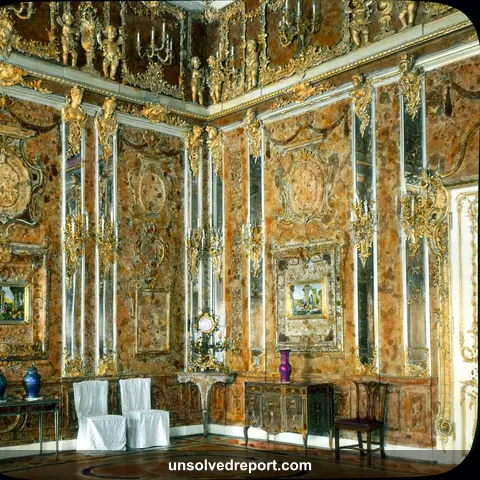
In the months after the surrender, occupation authorities ordered weapons collected, and Japanese households gave up swords by the hundreds of thousands. Many were genuine military issue. But mixed into that tide were heirloom blades centuries old. Collection points overflowed. Swords were heaped together, sometimes left in damp warehouses, sometimes shipped off abroad as keepsakes by individual servicemen — and in some documented cases simply smashed up as scrap, the same kind of careless wartime disposal that cost the world the Amber Room.
Japan's sword community saw the scale of what was being lost, and they pushed back hard. Through the work of curators, collectors, and officials, a line was eventually drawn between weapons and art swords. A licensing and preservation system was set up so that blades of real artistic and historical value could be kept, registered, and protected rather than confiscated wholesale. That fight is the reason countless important Japanese swords still survive today in registered collections.
And here is the gut-punch. The Honjo Masamune was surrendered in the earliest, most chaotic phase — before any of those protections existed. The single most important blade in the entire country went into the pile at the exact moment the pile was least controlled. Months too early. That is the whole tragedy in one sentence.
Why this sword, out of all of them?
There are other lost Masamune blades. There are other missing national treasures — from Imperial Faberge eggs scattered after a dynasty fell to countless heirlooms swallowed by war. So it is fair to ask: why does this one carry so much weight?
Part of it is the smith. A confirmed, signed-quality Masamune with flawless provenance is the absolute peak of an entire collecting field — there is nothing above it. Part of it is the ownership: a blade carried through the Tokugawa shogunate as a dynastic emblem has a documented pedigree almost nothing else can touch. And part of it — maybe the part that haunts people most — is the timing. A treasure that survived seven centuries of war and politics, only to slip away in peacetime through a clerical error. Supreme artistry, an unbroken aristocratic bloodline of ownership, and a disappearance that came within one misspelled name of being traceable. Put those three together, and you have the object that sits at the very top of the list of things people pray to recover.
Drawing the lines: fact versus legend
Let us lay it out plainly, because this is a story where it is easy to blur the two.
Documented: Masamune was a real and revered smith of the Kamakura era. A specific sword tied to the Honjo name became a Tokugawa family treasure and was designated a National Treasure of Japan in 1939. In December 1945, Tokugawa Iemasa surrendered it, along with other swords, to the Mejiro police under occupation disarmament orders. The collection was signed over to a serviceman recorded as Coldy Bimore.
A problem in the record: No one of that name can be found in the unit cited. That strongly points to a transcription error — and leaves the man who received the sword effectively unidentified.
Legend, not fact: The leaf-cutting stream test and the other tales of the blade's mystical gentleness are folklore about Masamune's reputation, not evidence about this sword. The same goes for any claim that owning the sword magically kept the Tokugawa in power. That is a romantic gloss on a much simpler reality: a powerful family holding a prestigious heirloom.
So here is where we are left. A genuine national treasure, documented in crisp detail right up to a precise moment, simply walks out of history on the strength of one misspelled name. Somewhere out there, maybe, a sword wrapped in cloth and forgotten in an American attic is the most valuable lost object Japan ever surrendered. And we will only ever know — if someone finally unwraps it and recognizes the hand of the greatest swordsmith the country ever produced.
Until then, it waits. Quiet, anonymous, and worth a fortune nobody around it can see.
Sources & further reading
- Wikipedia - Iemasa Tokugawa - https://en.wikipedia.org/wiki/Iemasa_Tokugawa
- Ancient Origins - Searching for the Honjo Masamune - https://www.ancient-origins.net/artifacts-other-artifacts/searching-honjo-masamune-lost-samurai-sword-power-005807
- Historic Mysteries - Japan's Perfect Sword: The Legend of the Honjo Masamune - https://www.historicmysteries.com/history/honjo-masamune/24392/
- History Collection - This Japanese Relic Disappeared After WWII - https://historycollection.com/one-japans-prized-possessions-went-missing-wwii-never-found/
Famous Lost Treasures Still Missing: 12 Fortunes No One Found
These famous lost treasures still missing today left paperwork, photos, even a 2,000-year-old map etched in copper. So why has nobody found a single one?
Eberswalde Hoard: Germany's Gold That Vanished in 1945
Germany's largest Bronze Age gold hoard vanished from a Berlin museum in 1945. It took 59 years to find out where it went — and who still won't give it back.
Sroda Treasure: The $100M Crown Nobody Can Name
The Sroda Treasure's $100M crown may not belong to who everyone thinks — and most of the hoard vanished before authorities arrived. What's still missing?