Lake Toplitz: The Nazi Treasure Lake That's Half True
A diver died searching Lake Toplitz. Nazi forgeries really did surface from its depths. But the gold everyone whispers about? Still unaccounted for.
A black, narrow slot of water sits high in Austria's Totes Gebirge — the "Dead Mountains." For more than seventy years, one rumor has clung to it like cold fog: that in the last desperate days of World War II, retreating Nazis backed up to its edge and dropped a fortune in gold into the dark.
Here's the part that should make the hair on your arms stand up. Some of the rumor is true.
Crates really were sunk in this lake. Treasure hunters really did haul Nazi-made riches back up into the sunlight. But the prize everyone wants — the gold — has never been found. And that gap, the space between what's proven and what's only whispered, is exactly what makes Lake Toplitz one of the most satisfying mysteries on the planet.
Let's pull the two apart, carefully.
What We Know For Sure
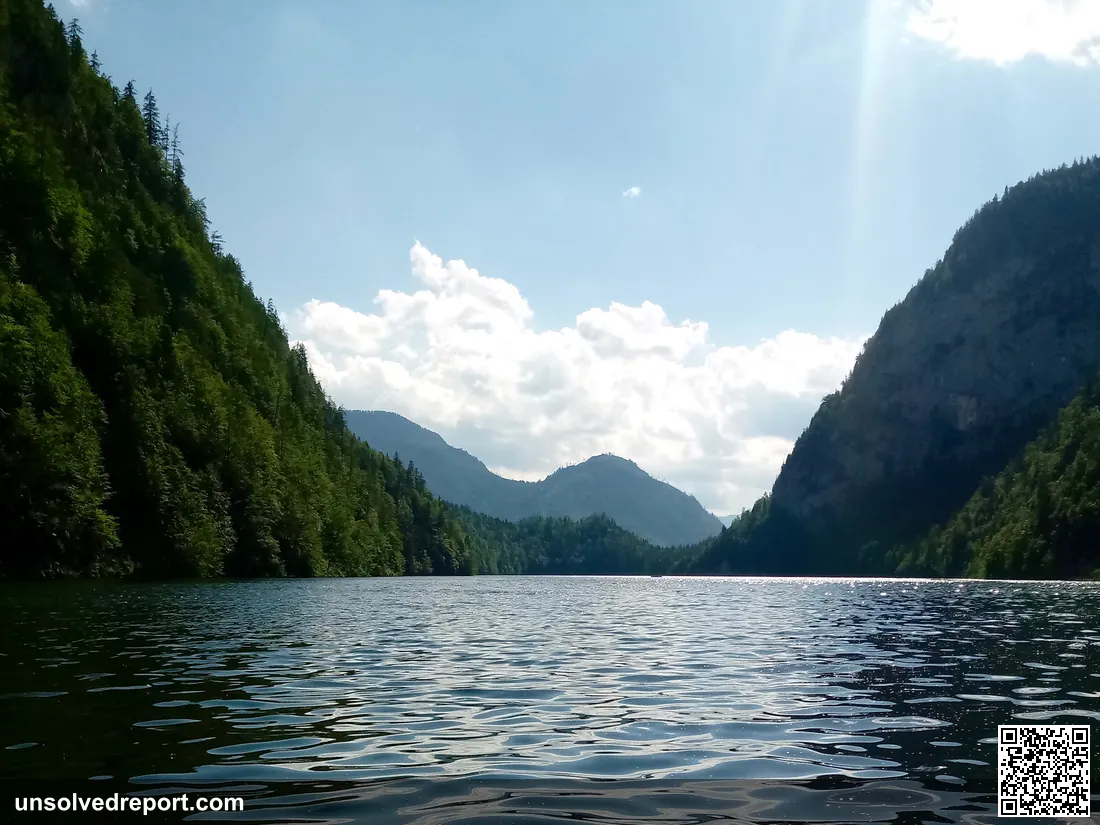
Start with the lake itself, because it's stranger than fiction. Lake Toplitz lies in the Salzkammergut region, about 100 kilometers from Salzburg, roughly 1.9 kilometers long and plunging to around 103 meters deep (Wikipedia, "Lake Toplitz"). But depth isn't the eerie part. Go below about 20 meters and the water turns saltier and runs out of oxygen entirely — so completely that ordinary lake creatures simply cannot live down there (Wikipedia). Picture a dead zone where sunken logs and debris pile up on a soft, murky false bottom that never rots. It's a near-perfect preserving jar. It's also a death trap for divers.
And the lakeshore has a dark résumé. During the war it was a Nazi naval testing station, where scientists set off big explosive charges at different depths (Wikipedia). That's a big reason the place mattered: when the Reich was collapsing and the leadership needed somewhere remote and secret to make things disappear, this lake was already on the map.
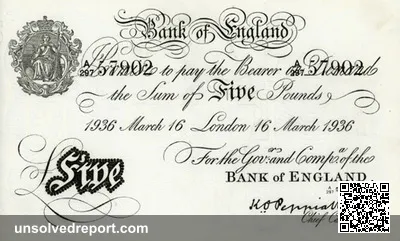
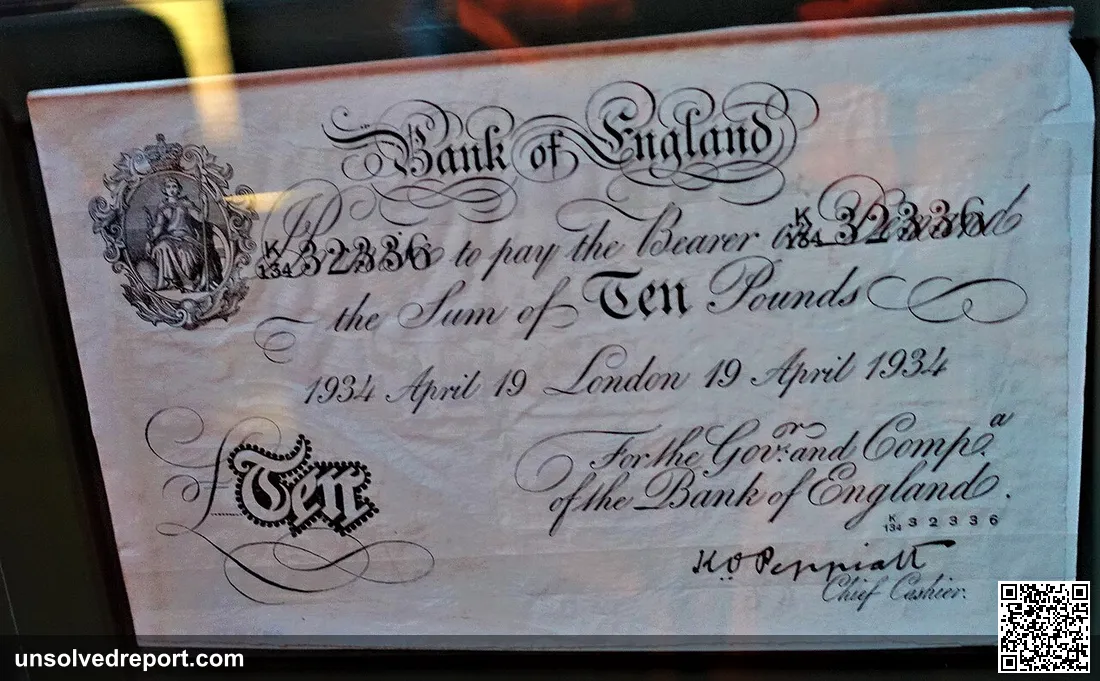
Now the treasure that's actually real. It wasn't gold. It was money — fake money — and it came from one of the boldest financial crimes ever attempted: Operation Bernhard. SS Major Bernhard Krüger ran a forgery factory staffed by prisoners, many of them gifted printers and engravers, at the Sachsenhausen concentration camp, churning out counterfeit Bank of England notes (Smithsonian Magazine). The original plan was diabolical: flood Britain with fakes and crash its economy. In the end, the notes mostly bankrolled German spies and quiet strategic purchases. By the time Sachsenhausen was evacuated in April 1945, the operation had reportedly cranked out around 8.9 million banknotes with a face value near £134 million (Imperial War Museums) — a sum so vast it rivaled a serious chunk of Britain's actual gold reserves.
So where do you hide a national treasury's worth of forgery as your empire burns? You haul it into the mountains and sink it — the same collapsing-Reich logic that supposedly buried a locomotive's worth of loot in the Nazi gold train far to the north.
This is where the legend stops being legend. In 1959, an expedition bankrolled by the West German magazine Stern sent divers into Lake Toplitz. Week after week, they pulled up metal and wooden crates stuffed with millions of pounds' worth of forged British banknotes — plus printing plates and Reich documents (Smithsonian Magazine). And it wasn't a fluke. Decades later, in the summer of 2000, the professional salvage firm Oceaneering Technologies — with CBS's 60 Minutes II watching — mapped the lake and brought up crates of counterfeit British pounds and fake American $100 bills from about 200 feet down. The notes came up still crisp, still sharp, as if printed yesterday (CBS News, "Hitler's Lake").
Then came the gut-punch moment. Adolf Burger — a survivor who'd been forced to work as one of the forgers — looked at the recovered notes and said simply: "Yes, these are the ones I was printing" (CBS News). Half a century after he was made to print them under threat of death, his own handiwork came dripping back out of the lake. Some of that recovered currency was preserved for the Simon Wiesenthal Center's Museum of Tolerance.
So the counterfeits are not up for debate. This lake really did swallow the output of a Nazi forgery ring, and people really have dragged pieces of it back into daylight — more than once.
The Question That Won't Close
Now the honest, nagging heart of it: no one has ever documented gold coming out of Lake Toplitz.
Not in decades of searches. Not even in the well-funded 2000 expedition that nailed down the counterfeit crates. No gold bars. No looted jewelry. No platinum bullion has ever been officially recovered or verified (CBS News). The professional team that actually succeeded in finding sunken crates found paper, not precious metal.
So why isn't the case just closed?
Because nobody can search this lake all the way down and swear they've seen everything. The oxygen-starved depths, the tangled raft of sunken timber, the constant danger — they make a truly complete search nearly impossible. And the danger is not a figure of speech. In 1963, a 19-year-old diver named Alfred Egner died on a dive here, a death that helped push Austrian authorities to clamp down on unauthorized exploration (War History Online). Over the years, more divers have lost their lives in these depths.
Think about what that means. The lake protects its secrets by killing the people who come looking. So "we haven't found gold" is not the same sentence as "there is no gold." That sliver of uncertainty? That's the real mystery.
The Stories People Tell
Everything past the counterfeits and the documents lives in rumor country. Read it as exactly that.
Theory 1 — A hoard of gold bars. This one is speculation. Persistent accounts say several Nazi units dumped loot into Lake Toplitz in the final days, and that one load was gold bars (War History Online). No expedition has ever confirmed it — much like the buried fortune in Yamashita's Gold, another Axis treasure legend that has swallowed decades of searchers without giving up a single verified bar. The size of the cache, and whether it ever existed at all, stays unverified.
Theory 2 — The secret Swiss bank lists. Also speculation. Treasure lore claims the crates held lists of secret Swiss bank accounts opened by Nazi leaders (War History Online). It's a favorite plot point in popular retellings, but it has no documented, independently verified backing.
Theory 3 — It's mostly already up. This is the sober reading. Maybe the lake's true treasure was always the Operation Bernhard material, and the gold legend simply grew up around the very real fake money — the human imagination quietly upgrading "sunken paper" into "sunken bullion." The fact that careful searches keep hauling up notes and never metal lends weight to this. It still can't fully rule out some undiscovered cache waiting in the dark.
And here's the lovely thing about Lake Toplitz: you don't have to invent a single bar of gold to be amazed. A forgery ring inside a concentration camp printing a country's whole treasury in fake pounds. Crates of it sunk in a near-bottomless alpine lake. Survivors recognizing their own work, dripping wet, fifty years on. All of that is documented. The gold may never have existed at all.
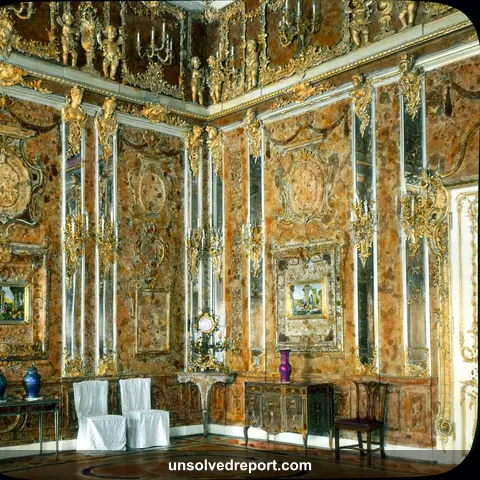
But the lake earned its mystery the honest way — by giving up just enough truth to make you lie awake wondering about the rest. And it's far from the only quiet place on earth still holding its breath — the Amber Room, another treasure the war swallowed, has kept its own secret just as stubbornly.
Sources & Further Reading
- Wikipedia: Lake Toplitz
- Smithsonian Magazine: The Nazis Planned to Bomb Britain With Forged Bank Notes
- CBS News / 60 Minutes II: "Hitler's Lake"
- Imperial War Museums: Counterfeit £5 note (Operation Bernhard)
- War History Online: The Mystery of Lake Toplitz
- International Spy Museum: Operation Bernhard Printing Plate

The Honjo Masamune: Japan's Greatest Sword Just Vanished
A national treasure of Japan was handed across a police counter to an American soldier in 1946. Then the trail went cold on a misspelled name. Here is what we know.
Famous Lost Treasures Still Missing: 12 Fortunes No One Found
These famous lost treasures still missing today left paperwork, photos, even a 2,000-year-old map etched in copper. So why has nobody found a single one?
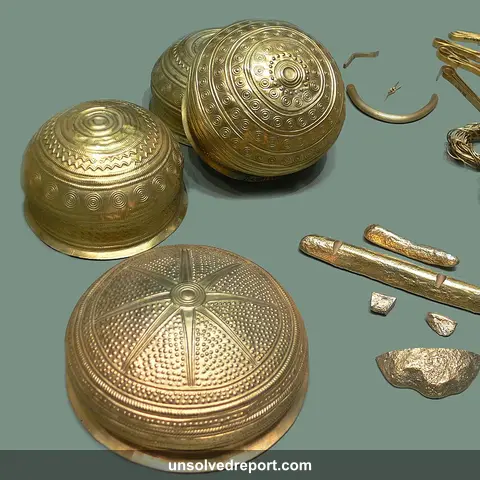
Eberswalde Hoard: Germany's Gold That Vanished in 1945
Germany's largest Bronze Age gold hoard vanished from a Berlin museum in 1945. It took 59 years to find out where it went — and who still won't give it back.