Nazi Gold Train: The Dig That Found Absolutely Nothing
Two treasure hunters swore radar showed a buried Nazi gold train in Poland. A government official said he was 99% sure. So why did the dig come up empty?
August 2015. Two amateur treasure hunters drop a single sentence on the world: we have found an armored Nazi train, maybe packed with gold, buried inside a mountainside in southwestern Poland.
The planet went a little mad.
Within days, the small city of Walbrzych was overrun. Tourists. Journalists. Fortune seekers with shovels and metal detectors fanning out through the forest. Hotels filled up. The regional government called press conferences. Everyone was certain the dirt was about to give up a fortune.
Then, a year later, the diggers reached the exact spot. No train. No tunnel. Nothing.
And here's the strange part — the legend didn't die. It barely flinched. The Nazi gold train is a near-perfect lesson in how a story can outlive the total absence of the thing it's about.
The kernel of truth: a region built for secrets
The legend isn't pure invention. That's exactly why it won't quit.
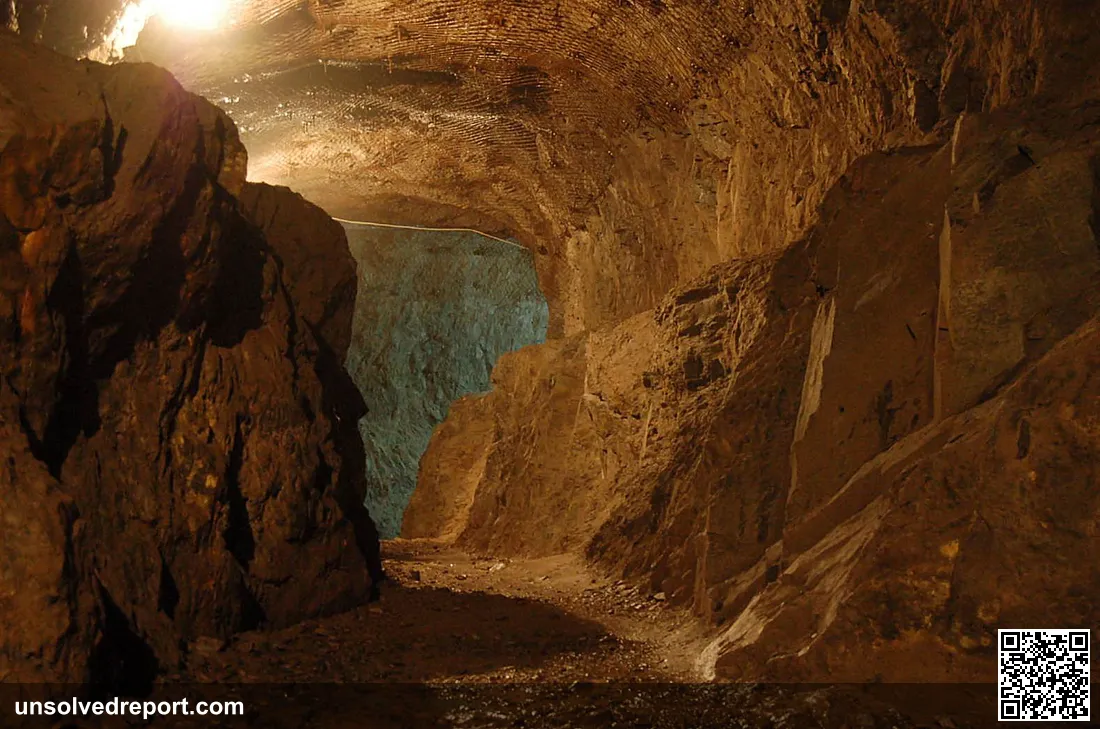
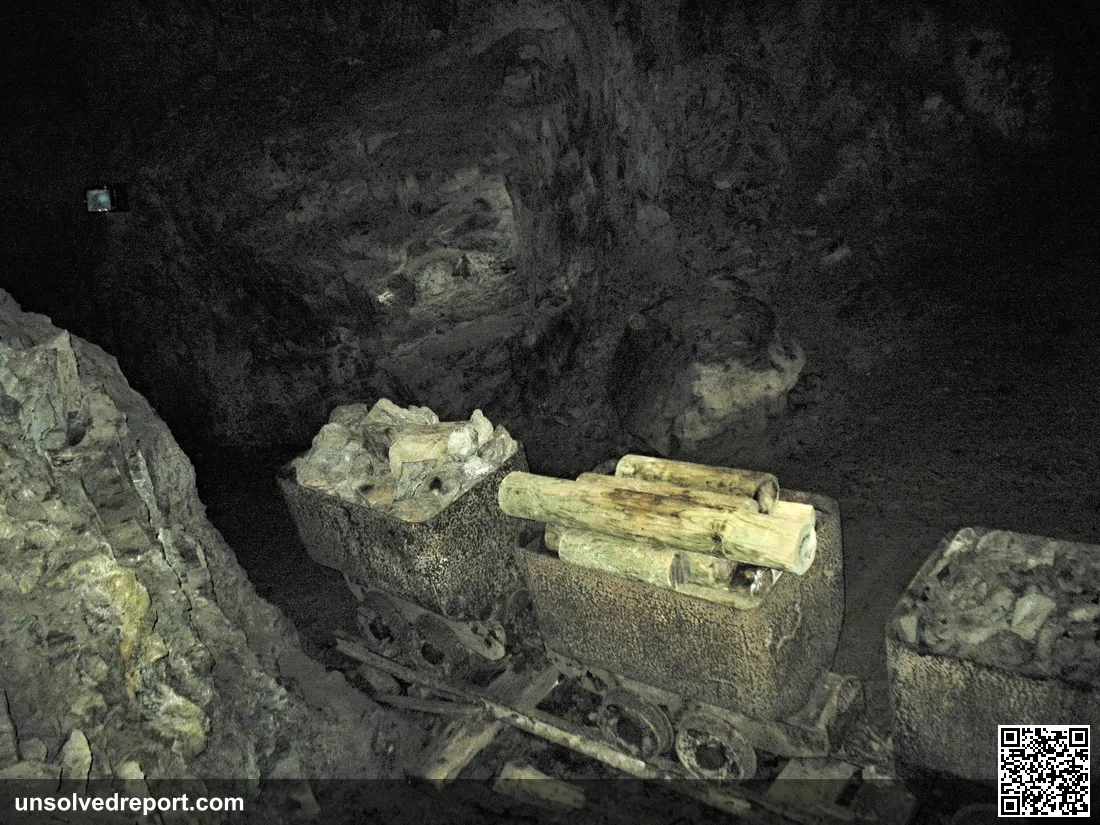
In the dying years of World War II, Nazi Germany burrowed a huge, unfinished maze of tunnels into the Owl Mountains (Gory Sowie) of Lower Silesia. The code name was Project Riese — German for "Giant." Work began in 1943, using forced and concentration-camp labor. It swallowed enormous resources. It cost many prisoners their lives.
And nobody fully knows what it was for. To this day, Riese's purpose isn't documented. Was it an underground headquarters for Hitler? Hardened weapons factories? Take your pick — the records don't settle it. Much of the complex was never finished. Large stretches sit unexcavated or collapsed, sealed and silent.
That eerie, half-mapped tunnel system is the soil. Every Silesian treasure legend grows out of it.
Now add a documented fact: as the Eastern Front caved in through 1944 and 1945, the retreating Reich really did hide assets, art, and records — the same wartime chaos that swallowed treasures like the Amber Room. Suddenly a buried armored train doesn't sound absurd. It sounds plausible. And plausible is all a legend ever needs.
Lower Silesia practically invites the story. The region — including the city then called Breslau (now Wroclaw) and Waldenburg (now Walbrzych) — was German before 1945 and Polish after. The German population was expelled. Polish settlers moved in. The people who knew where the secrets were buried were gone, and the people who inherited the ground had no map. What got left behind was a landscape stuffed with abandoned German infrastructure, unexplained tunnels, and questions nobody alive could answer — Poland already had its own vanished-gold story from this same upheaval, the Środa Treasure. Of course legends took root. So much really was hidden, lost, or blown apart in the chaos of 1945.
A legend with a long pedigree
The gold-train tale didn't start in 2015. Not even close.
For decades, locals had whispered about a German train that rolled into the Owl Mountains tunnels in the war's final months — and never rolled back out. The versions vary. An armored military transport loaded with gold. With gems. With weapons. With looted art. Sealed inside a tunnel as the Red Army closed in. Like all the best legends, it got handed down, dressed up, and revived again and again.
But in all those decades, not one recovered railcar. Not one verified document showing the train left a station and never arrived. Just the story.
That long pedigree is why the 2015 claim hit so hard. The two treasure hunters weren't conjuring a tale from thin air. They were bolting modern radar data onto a legend the region had nursed for two generations — the same way Yamashita's Gold has kept treasure hunters digging through the Philippines for 80 years on nothing more than rumor. The new ingredient was the technology.
And the technology is exactly where the whole thing came apart.
The 2015 claim
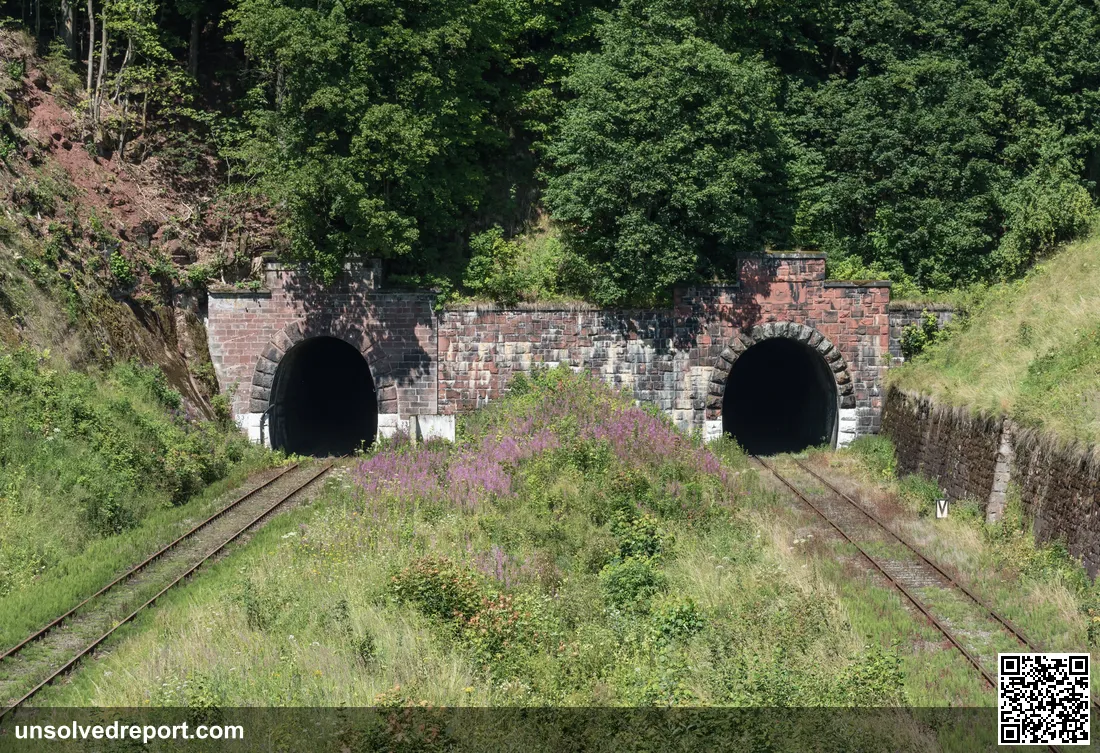
Two men lit the fuse: Piotr Koper, a Polish researcher, and Andreas Richter, a German. In 2015 they announced — through lawyers — that they'd located a buried train on an embankment along the rail line between Walbrzych and Wroclaw, near the 65th kilometer marker. A stretch already soaked in local lore.
What did they actually have? Ground-penetrating radar (GPR) imagery. They read it as a long buried object — reportedly around 100 meters — shaped like railway carriages. Maybe, they said, an armored train that vanished in early 1945. Maybe carrying valuables.
They wouldn't reveal the exact location at first. And under Polish law, they wanted a finder's cut of whatever came out of the ground.
The frenzy
Then a single sentence poured gasoline on everything.
A Polish deputy culture minister announced he was "more than 99 percent convinced" the train was real. From a government official's mouth, that line raced around the globe. Walbrzych became a boomtown of speculation overnight. Treasure hunters flooded in — some shrugging off warnings that the area might be mined or booby-trapped.
This is the most human stretch of the whole saga. Stop and look at it. No gold had been seen. No train had been touched. A radar smudge — that's all anyone had. Yet one official's confidence, blasted through global media, turned that smudge into a near-certainty in the public mind.
Hope, it turns out, travels faster than evidence.
The science said no
While the officials gushed, the scientists got to work.
A team from the AGH University of Science and Technology in Krakow ran their own geophysical survey, using magnetic and gravitational methods. Their verdict, reported in December 2015, was flat and final: there was no evidence of a train — or even a tunnel — at the spot. A big mass of buried metal leaves a magnetic fingerprint. That fingerprint simply wasn't there.
Here's the part everybody forgets. The experts called it before any real digging began. The professionals had already said nothing's down there.
The legend rolled on anyway, carried by hope and momentum instead of data.
The dig that found nothing
Koper and Richter didn't blink. In August 2016, a formal excavation finally went forward at the site in the Owl Mountains foothills.
The crews cut down through the embankment. Deeper. Deeper. And the result left no room to argue. As outlet after outlet reported, the searchers found "no train, no tunnel".
So what had the radar "seen"? The best explanation was almost poetic. The shapes on the GPR were natural formations — layers in the ground, possibly tied to ice or geology — that just happened to mimic the outline of buried carriages. The radar hadn't lied, exactly. It had been over-read. People saw a train because they came looking for one.
Why the legend will not die
Empty holes almost never kill a good treasure legend. This one shrugged off the empty hole completely. A few reasons it keeps breathing:
- The tunnels are real. Project Riese genuinely exists, genuinely sits under-explored, and was genuinely built in secret. As long as unmapped tunnels remain, the imagination has somewhere to stash the gold.
- The Reich did hide assets. Nazi looting and concealment are documented history — from Lake Toplitz in Austria to countless smaller caches. The underlying premise isn't fantasy.
- Absence of proof isn't proof of absence. One empty embankment doesn't rule out a train somewhere else in the region, believers point out. That's logically true — and impossible to disprove. Which is precisely why it keeps the myth alive.
- Tourism loves the story. Walbrzych cashed in on the attention. A legend that brings visitors has money on its side.
But the real lesson is buried in that embankment, and it has nothing to do with geology. The radar reading was real data. The catch? Data doesn't interpret itself. Two people primed to find a train stared at an ambiguous signal and saw carriages. An official primed to want a discovery declared near-certainty. A press corps primed for a great story flung it around the world. At every single step, expectation bent the interpretation.
The geophysicists who found nothing weren't smarter. They were just looking for what was actually there — not for what they hoped to find. That gap, between hope-driven reading and evidence-driven reading, is the engine behind nearly every treasure bust ever recorded.
The human cost behind the romance
There's something the gold-train excitement quietly buries, and it deserves a moment.
Project Riese was dug by prisoners — many of them from the Gross-Rosen concentration camp and its subcamps — under conditions so brutal that an unknown number of forced laborers died in the rock. The very tunnels that make this legend possible are, in a real and terrible sense, a mass grave of slave labor.
Any honest telling has to hold both threads at once. The romance of buried treasure. And the atrocity that dug the holes. The most defensible reason to study Riese was never the gold that probably isn't there. It's to document what was done to the people forced to build it.
What is actually documented versus what is legend
- Fact: Project Riese, a large unfinished Nazi tunnel complex built with forced labor, exists in the Owl Mountains.
- Fact: In 2015 Koper and Richter claimed GPR evidence of a buried train near Walbrzych; a senior official said he was over 99 percent convinced.
- Fact: Independent geophysicists from AGH found no evidence of a train; the 2016 excavation found no train and no tunnel.
- Legend: That an armored train laden with gold vanished into a Silesian tunnel in 1945. No physical evidence of such a train has ever been recovered.
- Speculation: That the train sits elsewhere in the region, still undiscovered. Possible in principle — but unsupported by any evidence so far.
The honest verdict? The Nazi gold train is exactly what it was before 2015: a vivid story bolted to a real and unsettling landscape, with no gold and no train to show for a century of telling.
The most valuable thing the 2015 episode unearthed wasn't treasure. It was a lesson in how easily authority and media can turn a radar shadow into a near-certainty — and how stubbornly a legend hangs on once the cameras pack up and leave.
And those tunnels are still down there. Still half-mapped. Still waiting. Which is the whole problem, isn't it — because as long as the dark stays unexplored, somebody, somewhere, will be sure the gold is just one more dig away.
Sources & further reading
- HeritageDaily - What happened to the Nazi gold train? - https://www.heritagedaily.com/2024/02/what-happened-to-the-nazi-gold-train/150569
- BBC News - Nazi gold train 'found in Poland' - https://feeds.bbci.co.uk/news/world-europe-33994483
- BBC News - Nazi gold train: 'No evidence' of discovery - https://feeds.bbci.co.uk/news/world-europe-35104117
- CBS News - Big dig for legendary Nazi gold train a bust - https://www.cbsnews.com/news/big-dig-legendary-nazi-gold-train-poland-a-bust-explorers-say
- BBC News - Nazi gold train: Team starts Poland dig despite doubts - https://feeds.bbci.co.uk/news/world-europe-37093940
Bactrian Gold: The 20,600-Piece Hoard Nobody Can Verify
Soviets dug an Afghan mound in 1978 and found 20,600 gold pieces. Three wars later, the hoard survived — but has anyone actually confirmed it's still intact?
Childeric's Golden Bees: A King's Hoard Lost in One Night
300 golden bees buried with a Frankish king in 1653 vanished in one night in 1831. Only two survived. So what happened to the rest of Childeric's treasure?

Treasure of Guarrazar: The Visigothic Crown That Vanished in 1921
The Treasure of Guarrazar: a Visigothic gold crown survived 1,300 buried years, then vanished from a locked royal palace in 1921. Where did it go?