Cleopatra's Tomb: The 20-Year Hunt That Found Everything But Her
A lawyer-turned-archaeologist has spent 20 years hunting Cleopatra's tomb at Taposiris Magna—finding coins, a tunnel, a sunken port. So where is she?
The most famous woman of the ancient world is missing. Cleopatra VII, the last pharaoh of Egypt, killed herself in the summer of 30 BCE rather than be marched through Rome as a war trophy. More than two thousand years have passed, and nobody can point to the ground and say: here she lies. That empty spot on the map has pulled one of the most stubborn archaeological hunts of our time to a sun-bleached temple ruin west of Alexandria—where a former criminal lawyer has spent twenty years digging toward an answer.
What We Actually Know
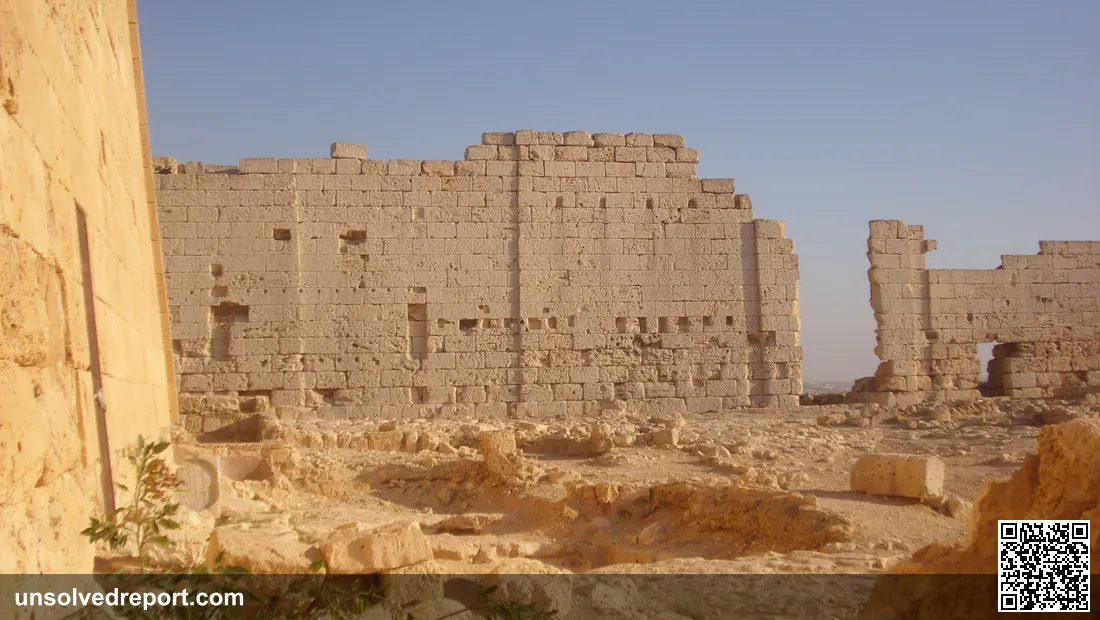
Start with the place. The search centers on Taposiris Magna, a Ptolemaic temple complex on Egypt's Mediterranean coast, roughly 30 miles (about 48 kilometers) west of Alexandria. Since October 2005 the digging has been run by Kathleen Martinez—a Dominican criminal lawyer who became an archaeologist and a National Geographic Explorer. She brought her theory to Egyptian antiquities officials in 2004, and she has not let go since (National Geographic; Live Science).
Here's the part worth sitting with: the dig has produced a lot. More than 2,600 objects have come out of the ground over the years—including over 300 coins stamped with Cleopatra's face, ceramics dated to her reign of 51–30 BCE, and a foundation plate inscribed in both Greek and hieroglyphics that names the temple as a shrine to the goddess Isis (National Geographic). That Isis link is not a footnote. Cleopatra publicly cast herself as Isis on earth. The team has also found human remains—some gilded with gold leaf—and basalt fragments that look like the shattered pieces of temple statues.
Then came the tunnel. In 2022, Martinez's team announced one of its strangest finds: a passage carved roughly 40 feet underground, cutting through about 1,305 meters (4,281 feet) of solid sandstone, partly flooded and submerged, aimed at the sea (Biblical Archaeology Society; ScienceAlert). Inside it, Ptolemaic-era ceramic jars and pottery.
And the tunnel led somewhere. On September 18, 2025, the Egyptian Ministry of Tourism and Antiquities announced that an international underwater team—including Martinez and Titanic discoverer Robert Ballard—had traced that passage to a sunken harbor offshore. Down in the dark, divers documented columns more than six meters high, polished stone floors, cemented blocks, ship anchors, and amphorae, all dated to Cleopatra's era (CNN, via search summary; GreekReporter). Taposiris Magna, it turns out, was a far bigger seaport and religious center than anyone had guessed.
So what do the ancient writers actually say about where the queen was buried? Less than you'd hope. Plutarch, writing about 150 years after her death, says Cleopatra had built "a tomb and monument surpassingly lofty and beautiful" near the temple of Isis, and that the victorious Octavian ordered her body "buried with that of Antony in splendid and regal fashion" (History.com). The Roman historian Cassius Dio agrees the two lovers were embalmed and "buried in the same tomb." But notice where the ancient writers put that monument: in or beside Alexandria, the Ptolemaic capital. Not out in the countryside.
The Real Mystery
Let's be honest about where this stands. After 20 years, Cleopatra's tomb has not been found at Taposiris Magna—or anywhere else. What Martinez has uncovered is a rich, Cleopatra-era sacred complex: a port, a tunnel, royal coins, an Isis temple. A genuinely important Ptolemaic site. But no burial chamber with the queen inside.
And the mystery runs deeper than one dig. No royal Ptolemaic tomb has ever been positively identified anywhere in Egypt—not one—including the legendary Soma mausoleum in Alexandria, where Alexander the Great and the Ptolemies were supposedly laid to rest (History.com). Even the pharaohs of earlier dynasties fared little better; dozens of royal mummies only survived at all because priests secretly reburied them together in a single hidden cliff tomb to keep them safe from looters. Part of the problem is that Alexandria's royal quarter is gone. A catastrophic earthquake and tsunami in 365 CE, then centuries of slow coastal sinking, dragged much of the old waterfront beneath the Mediterranean. Starting in the 1990s, underwater archaeologist Franck Goddio mapped that drowned district and even located a submerged temple of Isis in 1996, coins of Cleopatra still scattered through it—much like his earlier rediscovery of Thonis-Heracleion, the lost port city that sank beneath the same stretch of sea. Yet Goddio is refreshingly blunt about what he hasn't found: "I have no evidence to date of that mausoleum," he says—though he thinks it still lies somewhere in the sunken city (History.com).
So the open question splits in two. First: did Cleopatra's tomb even survive antiquity—or was it looted, smashed, or swallowed by the sea? And if it survived, where? Under the waves off Alexandria? Beneath the modern city's streets? Or, as Martinez argues, deliberately hidden at a temple far beyond the capital?
The Theories on the Table
The Taposiris Magna theory (Martinez). This is the idea driving every shovel. Read it as a sharp argument, not a settled fact. Martinez proposes that Cleopatra—terrified Octavian would seize her corpse—arranged a secret burial outside Alexandria, at a temple of the goddess she had spent her life claiming to embody, a deliberate vanishing act not unlike the grave built to hide Genghis Khan from his own enemies. The site, she says, "had all the conditions to be chosen for Cleopatra to be buried with Mark Antony" (National Geographic search summary). The tunnel-and-port discovery, in her reading, proves the temple mattered enough to host such a plan.
The Alexandria / underwater theory (the scholarly majority). Most Egyptologists side with the ancient sources, which put the tomb in or near Alexandria. Zahi Hawass, Egypt's former Minister of State for Antiquities Affairs, doesn't mince words: there is "no evidence at all" that Cleopatra lies at Taposiris Magna. Egyptians, he argues, did not bury their rulers inside temples built for gods—and he believes her tomb sits underwater near her palace, possibly beyond any hope of recovery (Live Science). Live Science reports that nearly a dozen scholars it interviewed generally agreed: she was buried within Alexandria.
The skeptics' caution. Jane Draycott, a professor of ancient history at the University of Glasgow, pokes at the whole secret-burial premise. "There are temples to Isis everywhere," she notes—so why this one?—and she points out that victorious Romans usually treated a defeated ruler's body with respect, which knocks out the supposed need to hide it (History.com). Even the friendly voices keep their feet on the ground. Sara E. Cole, an antiquities curator at the J. Paul Getty Museum who is not part of the dig, put it cleanly: "regardless of whether Taposiris Magna has anything to do with Cleopatra's burial," Martinez's team has been making significant discoveries that deepen our grasp of the Ptolemaic period (National Geographic).
That may be the fairest verdict for now. Whether or not the queen herself lies beneath the sand at Taposiris Magna, the search has lit up a lost corner of the ancient world that nobody was looking at. The tomb is still unfound. The mystery, genuinely, is still open—and somewhere out there, under sand or under sea, the last pharaoh of Egypt is still waiting to be found.
Sources & Further Reading
- National Geographic — "A team went searching for Cleopatra's lost tomb—and made an exciting discovery"
- History.com — "Why Cleopatra's Tomb Has Never Been Found"
- Live Science — "Where is Cleopatra's tomb?"
- CNN — "Sunken ancient Egyptian port may play a role in search for Cleopatra's tomb" (Sept. 2025)
- Biblical Archaeology Society — "Tunnel Discovered Under Egyptian Temple"
- ScienceAlert — "Archaeologists Hunting For Cleopatra's Tomb Found a 'Geometric Miracle' Tunnel"
- GreekReporter — "Taposiris Magna Reveals Underwater Harbor and Secret Tunnel" (Sept. 2025)
Costa Rica's Stone Spheres: The Balls the Bulldozers Almost Erased
Costa Rica's stone spheres: carved without metal tools, unearthed on a banana plantation, then dynamited by treasure hunters. What were they really for?
Shigir Idol Mystery: The 12,500-Year-Old Face No One Can Read
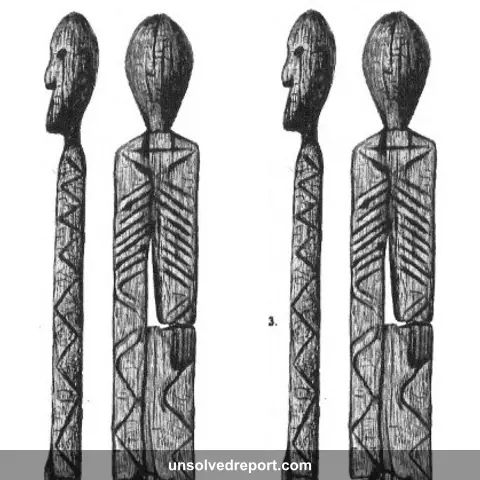
The Shigir Idol mystery: gold miners pulled this 12,500-year-old wooden god from a Russian bog. It's covered in faces nobody can read. What is it hiding?
Newgrange: The Tomb That Catches the Sun Once a Year
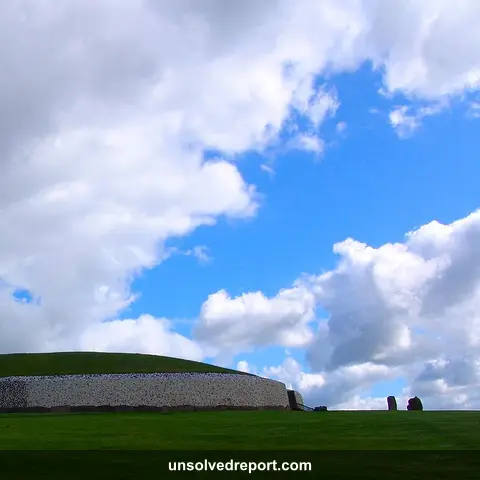
Older than the pyramids, this Irish mound swallows one winter sunrise a year and aims it straight at the dead. Nobody left a note explaining how, or why.