Thonis-Heracleion: The Sunken City Nobody Can Explain
Thonis-Heracleion vanished under Egypt's sea for a thousand years until a 2000 dive proved it real. Temples, anchors, a stele—so how did it actually sink?
For a thousand years, this city existed only as a rumor. It flickered through old Greek texts—Herodotus name-dropped it, the legend of Helen of Troy brushed past it—and then it was gone. No ruins. No road. Nothing. Scholars argued in circles: were "Thonis" and "Heracleion" two cities, or one, or just a sailor's lie that got too big?
Then the year 2000, a French underwater archaeologist guides a survey boat across the brown, soupy water of Aboukir Bay. His instruments ping. And down in the dark, on the seabed, lies the answer to every argument: an entire sunken metropolis. Temples knocked flat. Harbors choked with silt. Giant statues lying face-down in the mud, staring into the dark for centuries. Egypt's grand gateway to the sea had been hiding about four miles offshore the whole time. Right there. Just underwater.
This is the story of Thonis-Heracleion—what we can prove, what nobody can explain yet, and the wild theories people reach for to fill the silence.
What We Can Actually Prove
One city, two names—and a stone that settled it
To the Egyptians it was Thonis. To the Greeks it was Heracleion. And for years, the experts couldn't even agree it was the same town. Two names, two cities, or one place wearing two hats? The fight ended the day divers hauled up a stele—a carved stone slab—with the city's name spelled right on it, proving the two names belonged to one place (Wikipedia, "Heracleion"). It sat near the Canopic mouth of the Nile, about 32 km (20 mi) northeast of where Alexandria would one day be built (Wikipedia).
In its prime, this was the front door of Egypt. The team that dug it up put it plainly: "before the foundation of Alexandria in 331 BC, the city knew glorious times as the obligatory port of entry to Egypt for all ships coming from the Greek world" (Franck Goddio Foundation). Founded probably around the 8th century BC, it hit its peak between the 6th and 4th centuries BC—a customs gate where every foreign cargo got taxed before it could float upriver. Want into Egypt? You paid here first.
The day the seabed gave it up
A French archaeologist named Franck Goddio, with his European Institute for Underwater Archaeology (IEASM), found the city in 2000, working hand in hand with Egypt's antiquities authorities (Franck Goddio Foundation). The ruins sit in the western part of Aboukir Bay, roughly 6.5 km off today's coast, about 10 meters down—inside a search zone 11 by 15 kilometers wide (Franck Goddio Foundation). Picture searching a haystack the size of a small city, in water you can barely see through.
What was waiting down there
The finds are staggering. At the heart of the city stood a great temple of Amun-Gereb, a form of Egypt's supreme god, tied to the rituals that crowned new pharaohs (The Past). Right beside it, divers lifted out a black granodiorite stele—almost two meters of solid stone, 1.99 m tall—completely intact, carved with the Decree of Saïs in the name of Pharaoh Nectanebo I (reigned 380–362 BC).
Here's the eerie part. It's nearly a twin of a stele found at Naukratis, the Greek trading town upriver—the one now sitting in the Egyptian Museum in Cairo. Two matching decrees, two cities. Read together, they show exactly how the pair split the job of taxing foreign trade (Franck Goddio Foundation; The Past).
And the harbor? One of the richest underwater sites ever found, anywhere. More than 700 ancient anchors. Dozens of shipwrecks from the 6th to 2nd centuries BC—part of a graveyard of over 70 vessels (Franck Goddio Foundation; Smithsonian Magazine). A whole fleet, frozen on the seabed.
Herodotus told the truth
One of those wrecks—plainly labeled Ship 17—ended an argument that had simmered for over two thousand years. Around 450 BC, the Greek historian Herodotus described a strange Nile cargo boat called the baris. He said it was built from short acacia planks stacked "like courses of bricks" and locked together with long internal tenons. It sounded almost too odd to be real, and nobody had ever found one. Skeptics shrugged.
Then Ship 17 came up out of Thonis-Heracleion—built exactly the way he said, plank for plank. Archaeologist Alexander Belov published the study through the University of Oxford's Centre for Maritime Archaeology and concluded the construction backed up Herodotus's account (Smithsonian Magazine; Live Science). A 2,500-year-old eyewitness, confirmed by a boat dredged out of the mud.
Herodotus tangled the city up in legend, too. In his version, Paris and Helen—on the run from Menelaus—were blown to the Canopic mouth, where a watchman named Thonis seized them (Wikipedia). So when modern divers swam down to the real Thonis, they were, in a way, swimming straight into a myth.
And the part that should keep you up at night: only about 5 percent of the city has been dug, by Goddio's own count (Franck Goddio Foundation). Ninety-five percent is still down there, untouched, in the dark.
The Question Nobody Can Fully Answer
Here's what genuinely stumps the researchers: how, exactly, and over how long, did a whole rich city slide under the sea—and why did it never crawl back out?
The rough answer is solid enough. The Nile Delta is built on soft, waterlogged clay and silt that squashes down and sinks over time, and the eastern Mediterranean's sea level was already creeping upward even back in antiquity (Franck Goddio Foundation, "Why did the cities disappear?"). That much is clear. What's still up for grabs is the order and the triggers—how much was slow, grinding sinking, how much was sudden disaster, and which exact blow finally finished it.
One mechanism keeps coming up: soil liquefaction. That's when saturated ground briefly turns to something like liquid—often during an earthquake—and can swallow heavy stone temples in seconds, dropping them straight into the mud (Wikipedia). But the precise dates, which earthquakes did what, whether tsunamis or monster floods played a part, and the exact order in which neighborhoods caved in—all of that is still being pieced together from sediment cores and the way the toppled monuments lie. And because so little of the site has been dug, the full timeline stays, honestly, an open question.
Theories—From Solid to Pure Guesswork
These explanations run from rock-solid to total speculation. We've labeled each so you can judge for yourself.
Theory 1: It just sank, slowly (well-supported). The least dramatic story is also the best documented. Over centuries, the delta mud compacted while the sea climbed higher, drowning the city inch by inch. The excavators themselves point to this slow one-two of "subsidence of the soil" plus rising sea level as the root cause—with the city fully underwater by the 8th century AD (Franck Goddio Foundation; introduction page).
Theory 2: A sudden "death blow" (plausible, partly supported). Some accounts argue that on top of the slow sinking, one sharp catastrophe finished things—heavy flooding, then liquefaction of the central island, maybe set off by an earthquake—collapsing a big chunk of the city, with the proposed dates clustering somewhere around the 2nd to 1st centuries BC. This reads reasonably from the geology, but the exact dates and events shift from source to source, so treat it as provisional, not settled fact.
Theory 3: Earthquakes and tsunamis were the real killers (speculative). A bolder version says one or more violent seismic events—not slow sinking—were the main cause. This one is speculation, plainly. Yes, the eastern Mediterranean shakes a lot and has documented historic quakes, but pinning the city's death on one specific named earthquake goes past what the published evidence actually proves right now.
About Atlantis. Because Thonis-Heracleion is a genuine "lost city under the sea," it sometimes gets dragged into Atlantis talk. So let's be clear: there's no scholarly link, none. Thonis-Heracleion is a documented Egyptian port with inscriptions, coins, and dated wrecks you can touch. Atlantis is a made-up parable from the philosopher Plato. Mashing the two together is pure speculation with zero archaeological basis.
What makes this place impossible to look away from is the balance it strikes. A city once written off as half-fairy-tale, now proven flatly real by a stele, a shipwreck, and a 1.99-meter slab of granodiorite—and yet still hiding the biggest secret of all: how it died. With 95 percent of it still buried in the silt of Aboukir Bay, the next answer might be one dive away. Somebody just has to go down and find it.
Sources & Further Reading
- Franck Goddio Foundation, "Thonis-Heracleion" and "Why did the cities disappear?"
- Smithsonian Magazine, "Wreck of Unusual Ship Described by Herodotus Recovered From Nile Delta"
- Live Science, "2,500 Years Ago, Herodotus Described a Weird Ship. Now, Archaeologists Have Found It"
- The Past, "Thonis-Heracleion: finding a legendary port under the sea"
- Wikipedia, "Heracleion" (tertiary overview; cross-checked against the sources above)
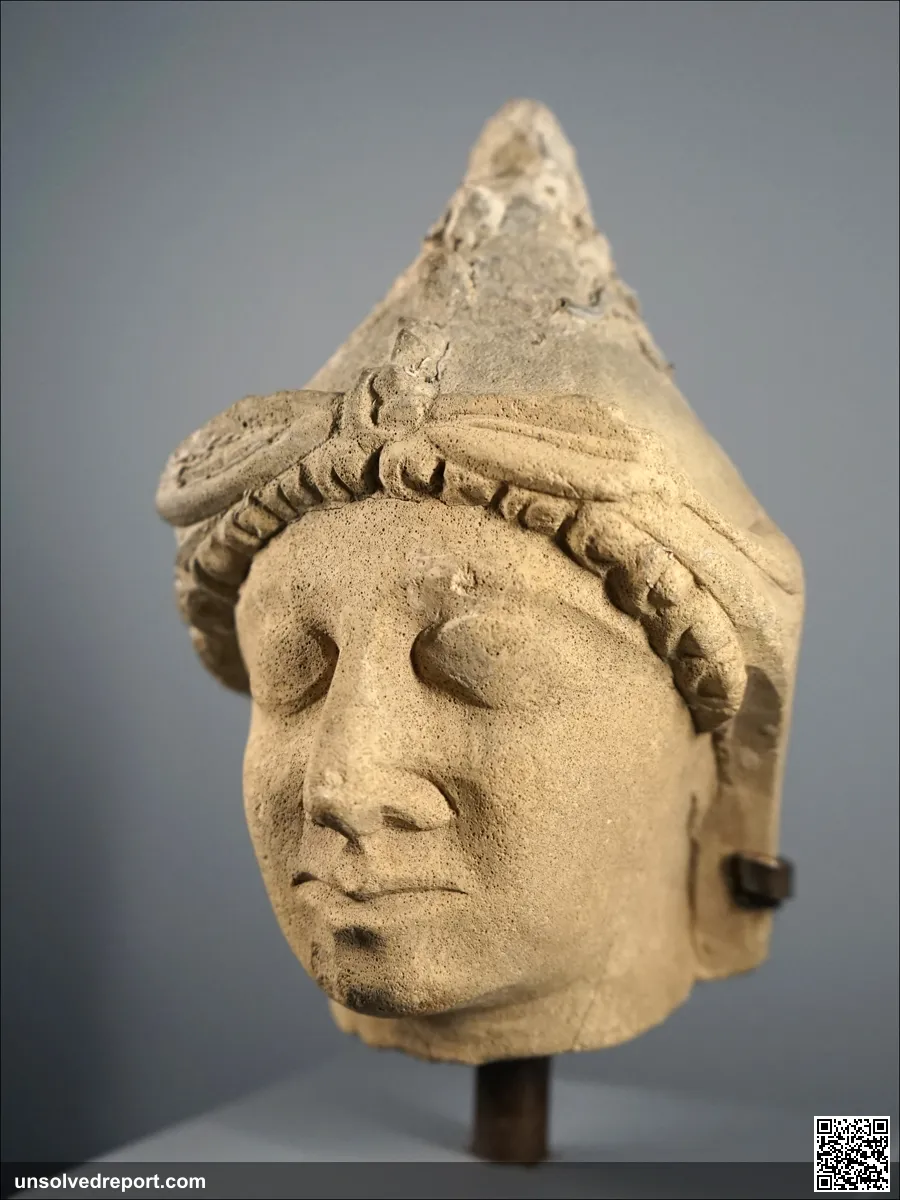
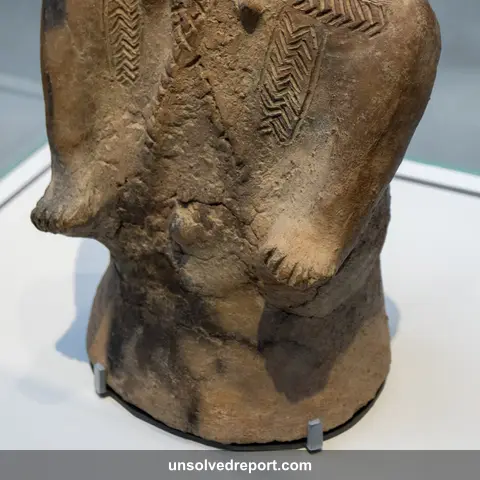
Sao Civilization: The Lake Chad Giants Nobody Can Explain
Bronze masks, giant warriors in legend, and 2,000 years of mystery: what happened to the Sao civilization of Lake Chad — and why did it just disappear?
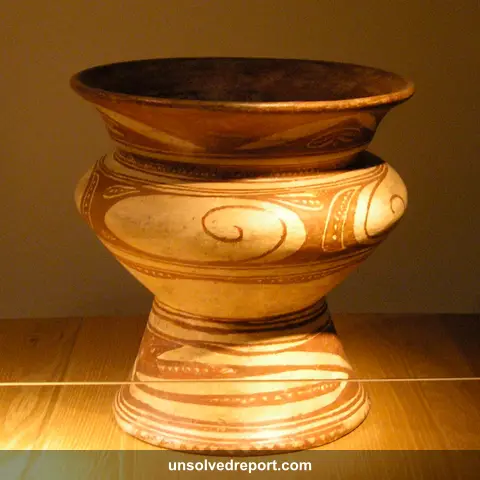
Ban Chiang Bronze Age: The 1,000-Year Fight Nobody Can Settle
A Harvard student's trip over a tree root uncovered a lost civilization — but top archaeologists still can't agree when its bronze age began. Off by 1,000 years. Why?
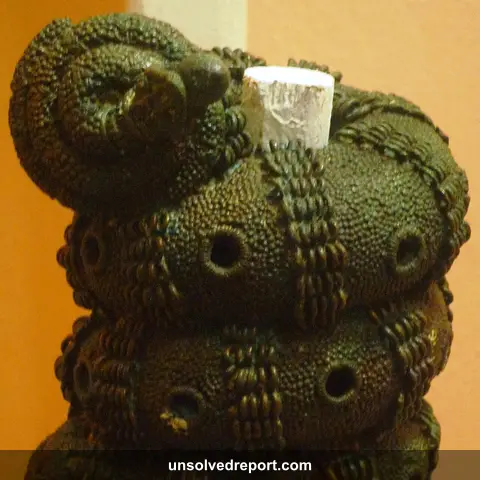
Igbo-Ukwu Bronzes: The 9th-Century Metal Too Perfect to Believe
A farmer's well uncovered Igbo-Ukwu bronzes cast so flawlessly that scholars accused the dates of lying. What actually happened 1,000+ years ago?