Lake Titicaca Underwater Ruins: The Gold Divers Can't Explain
Lake Titicaca underwater ruins hide real gold, carved shell, and sacrificed llamas divers pulled from the deep. So why is a sacred reef submerged at all?
A diver drops through bitterly cold water, more than 12,500 feet up in the Andes. The light goes blue, then deep blue. And there on the rocky reef below, scattered across the lakebed, sits gold. Real gold. Shell carved into the shape of a tiny llama. The bones of sacrificed animals. Someone put all of this here on purpose—more than a thousand years ago.
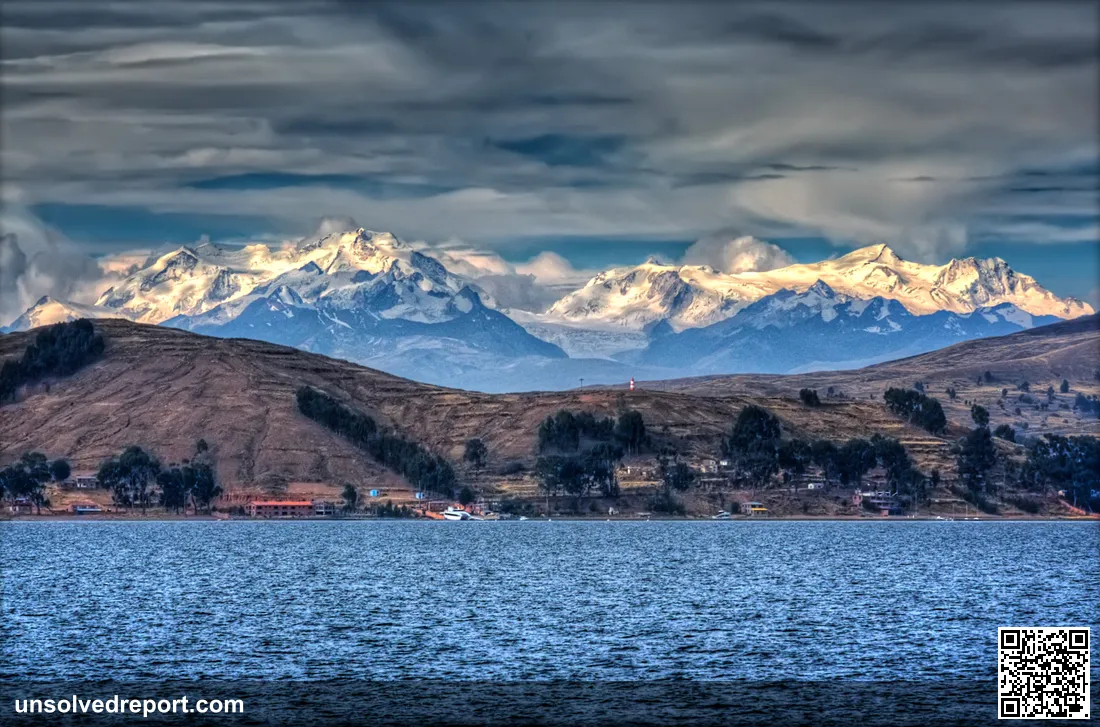
This is Lake Titicaca, the highest large navigable lake on Earth, straddling the border between Bolivia and Peru. The people who have lived along its shores for thousands of years call it sacred. And for a small team of archaeological divers in wetsuits and tanks, it has turned into one of the richest underwater sites in all the Americas.
You've probably heard the phrase "sunken temples of Lake Titicaca." It makes you picture lost cities and drowned pyramids. The real story, the one backed by peer-reviewed science, is more grounded—and, honestly, more interesting. Because buried inside that solid evidence is a question even the scientists can't fully answer yet.
What Divers Actually Pulled From the Lake
Start with the most carefully studied spot down there: Khoa Reef, a rocky shoal near the Island of the Sun. That island isn't just any island—Inca tradition named it the birthplace of the sun itself. In 2019, the Proceedings of the National Academy of Sciences published a study by Christophe Delaere (then of the Oxford Centre for Maritime Archaeology and the Université Libre de Bruxelles), José Capriles (Penn State), and Charles Stanish (University of South Florida), laying out exactly what divers had brought up from that reef (PNAS, 2019; PMC mirror).
The list is wild. Gold ornaments—including two medallions engraved with the "rayed-face deity," the central figure of Tiwanaku religious art. Ornaments of lapis lazuli and turquoise. Roughly 37 ceramic incense burners shaped like pumas. Spondylus shell—thorny oyster, hauled all the way from the coast of Ecuador—and in one case carved into a miniature llama. And the bones of at least seven young llamas, laid down as ritual sacrifices (PMC, 2019; Penn State, 2019).
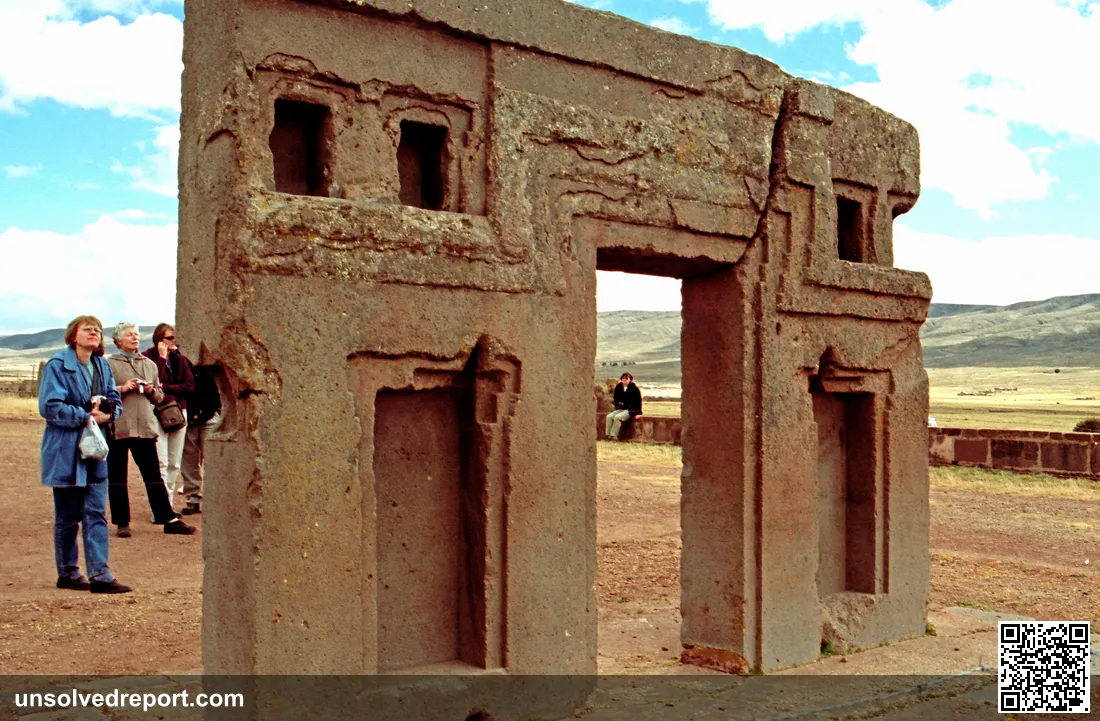
Here's the part that makes it more than a treasure pile: we know when it was placed. Eight AMS radiocarbon dates pin the offerings between roughly 794 and 964 CE—during the expansion of the Tiwanaku state, centuries before the Inca ever came to power (PMC, 2019). Tiwanaku is no myth. Its monumental ruins on the Bolivian altiplano are a UNESCO World Heritage Site, and the civilization peaked between about 500 and 900 CE, one of the great pre-Columbian powers of the Andes (UNESCO World Heritage Centre). As Capriles described it, the Khoa offerings capture "the transitioning of societies from more local-based religious systems to something that had a more ambitious geopolitical and spiritual appeal" (Penn State, 2019).
And Khoa is just one spot. Since 2012, an underwater program led by Delaere—working with Bolivian authorities and local communities—has logged, by the team's count, roughly 20,000 objects across some 25 submerged sites (UNESCO Courier). In 2014, divers brought up an intact Inca-period stone offering box from about six meters down. Sealed inside, untouched: a miniature llama carved from Spondylus shell, and a tiny rolled sheet of gold (UNESCO Courier). The team has also mapped shrines, the remains of homes, and what it calls one of the earliest known pre-Columbian ports. There are even plans, with UNESCO behind them, for an underwater museum—the Museo Subacuático Titicaca (UNESCO Courier).
So yes—the headline is true. Beneath Lake Titicaca lies an extraordinary, carefully excavated record of Andean ritual life, including objects of enormous value that people slid into the water on purpose. But how the water came to hold them is where it gets strange.
The Question Nobody Has Fully Answered
The Khoa offerings sit five to seven meters below today's surface. Now think about what that means. Placing gold medallions, shell figurines, and incense burners just so, on a precise spot on a reef, is not something you pull off by free-diving in freezing, oxygen-thin, high-altitude water. So how did they get down there—and why is the reef underwater at all?
The PNAS team's reading is that the ceremonies "occurred above the waterline, followed by ritual underwater interment." In other words, the reef may have been poking out of the water, or nearly so, back in Tiwanaku times, with the people likely working from boats—and sure enough, anchors turned up near the offerings (PMC, 2019; Penn State, 2019). Which opens up a much bigger, much eerier question: how much has the lake itself risen and fallen over the centuries? Did rising water later swallow shorelines, shrines, and whole settlements that once stood on dry ground?
This isn't idle wondering—the science is alive and ongoing. A 2023 PNAS study that reconstructed the lake's levels across the Holocene found that Titicaca's surface has swung up and down dramatically over thousands of years, and that a big rise around the end of the Formative Period (roughly 500 CE) drowned low-lying shoreline areas (PNAS, 2023). So a lake that breathes in and out across centuries isn't folklore. It's measurable. What's still genuinely open is the exact timing and size of those shifts at each underwater site—and how much of what divers find today was drowned by nature versus lowered into the water by design. Both seem to be happening. Pulling them apart, site by site, is slow, patient work that's far from finished.
The Stories That Go Too Far
Here's where you need to slow down, because this lake pulls in far more dramatic claims than the evidence can carry.
The "200-meter sunken temple." Plenty of widely shared articles describe a 2000 expedition called "Atahualpa 2000," backed by a group named Akakor Geographical Exploring, that supposedly found a temple 200 by 50 meters, a submerged road, crop terracing, and an 800-meter wall (Deseret News, 2000; Ancient Origins). Treat that as a 25-year-old news story, not a confirmed find. Unlike the Khoa work, those specific 2000 measurements have not, as far as we can tell, been confirmed in any peer-reviewed publication, and the numbers shift from one retelling to the next. The careful, documented record of submerged structures comes from the later ULB program—so those dramatic dimensions deserve a heavy dose of skepticism until they're formally published.
The "lost advanced city / Atlantis of the Andes." Some popular and fringe sources spin the underwater finds into a vanished super-civilization. That's speculation, and the archaeology doesn't back it. The evidence points squarely at Tiwanaku and the later Inca—real, well-documented Andean cultures—not some unknown lost race.
The Indigenous traditions. Andean tradition holds that the creator god Viracocha rose out of Lake Titicaca, and that the sun was born at the Island of the Sun. These are living spiritual beliefs of the region, and they deserve respect on their own terms—they're cultural and religious heritage, not claims to be poked at like physical history.
Strip away the hype and what's left is quietly astonishing: a sacred lake that genuinely holds treasure, placed there by people who believed the water was a doorway to the divine. The mystery was never whether a lost world lies beneath Titicaca. One does—and it's documented. The real puzzle is how the water came to keep it. And that, scientists are still working out, one cold, careful dive at a time.
Sources & Further Reading
- Delaere, Capriles & Stanish, "Underwater ritual offerings in the Island of the Sun and the formation of the Tiwanaku state," PNAS (2019): pnas.org · open-access mirror
- Penn State News, "Rise of religion pre-dates Incas at Lake Titicaca" (2019): psu.edu
- "Titicaca: The sacred lake reveals its secrets," UNESCO Courier: courier.unesco.org
- "Tiwanaku: Spiritual and Political Centre of the Tiwanaku Culture," UNESCO World Heritage Centre: whc.unesco.org
- "Holocene variations in Lake Titicaca water level," PNAS (2023): pnas.org
- "Divers find a temple in Lake Titicaca," Deseret News/Reuters (2000) — contemporary news claim: deseret.com
Thonis-Heracleion: The Sunken City Nobody Can Explain
Thonis-Heracleion vanished under Egypt's sea for a thousand years until a 2000 dive proved it real. Temples, anchors, a stele—so how did it actually sink?
Sao Civilization: The Lake Chad Giants Nobody Can Explain
Bronze masks, giant warriors in legend, and 2,000 years of mystery: what happened to the Sao civilization of Lake Chad — and why did it just disappear?
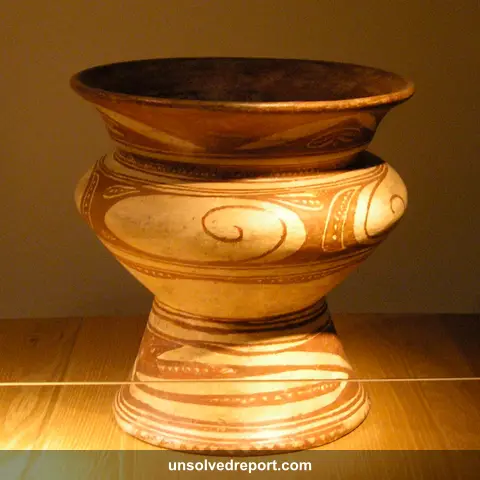
Ban Chiang Bronze Age: The 1,000-Year Fight Nobody Can Settle
A Harvard student's trip over a tree root uncovered a lost civilization — but top archaeologists still can't agree when its bronze age began. Off by 1,000 years. Why?