Olmec Colossal Heads: 17 Giant Faces Nobody Can Name
17 stone giants, each cut from a single multi-ton boulder 3,000 years ago, stare with individual faces — and not one name survives. So who were they?
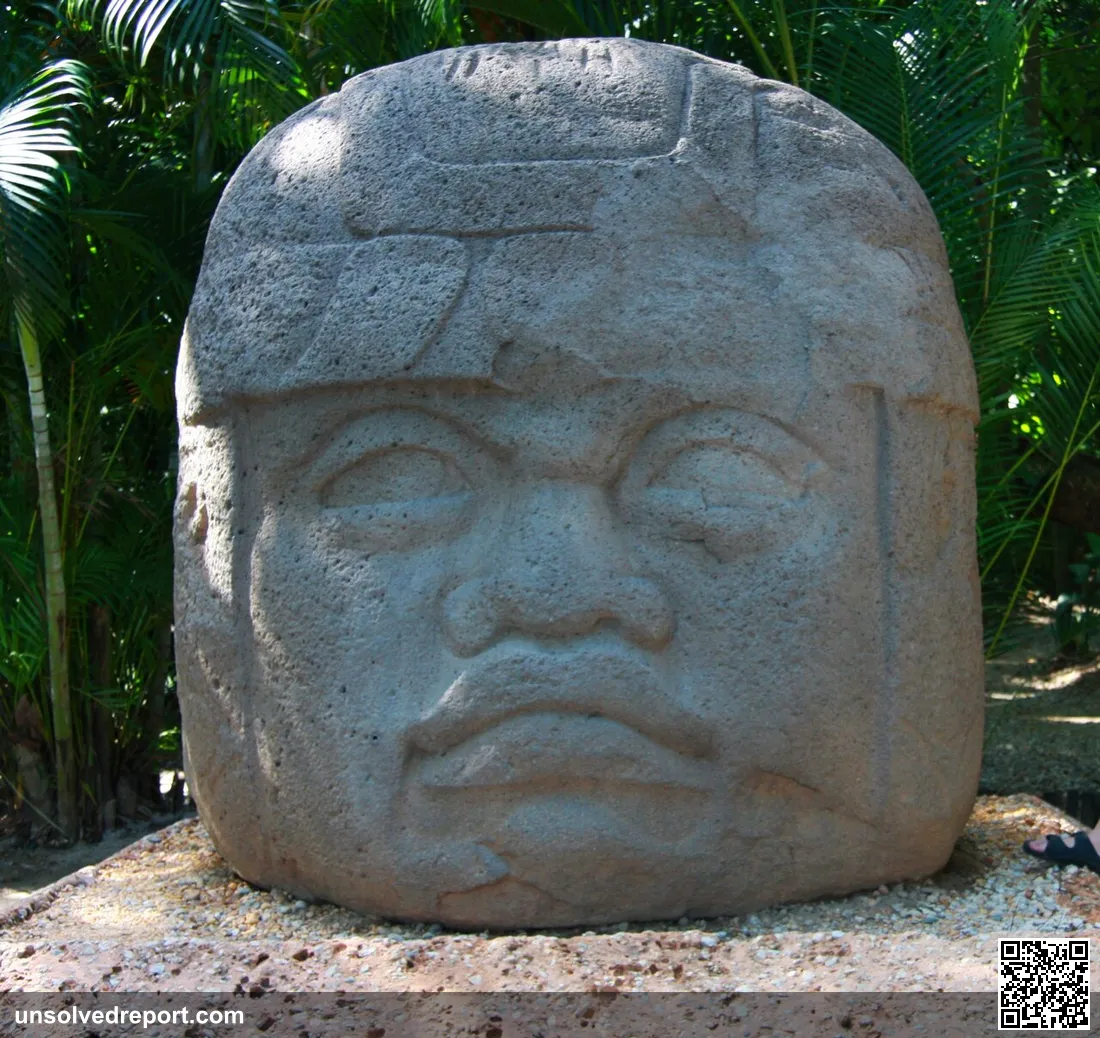
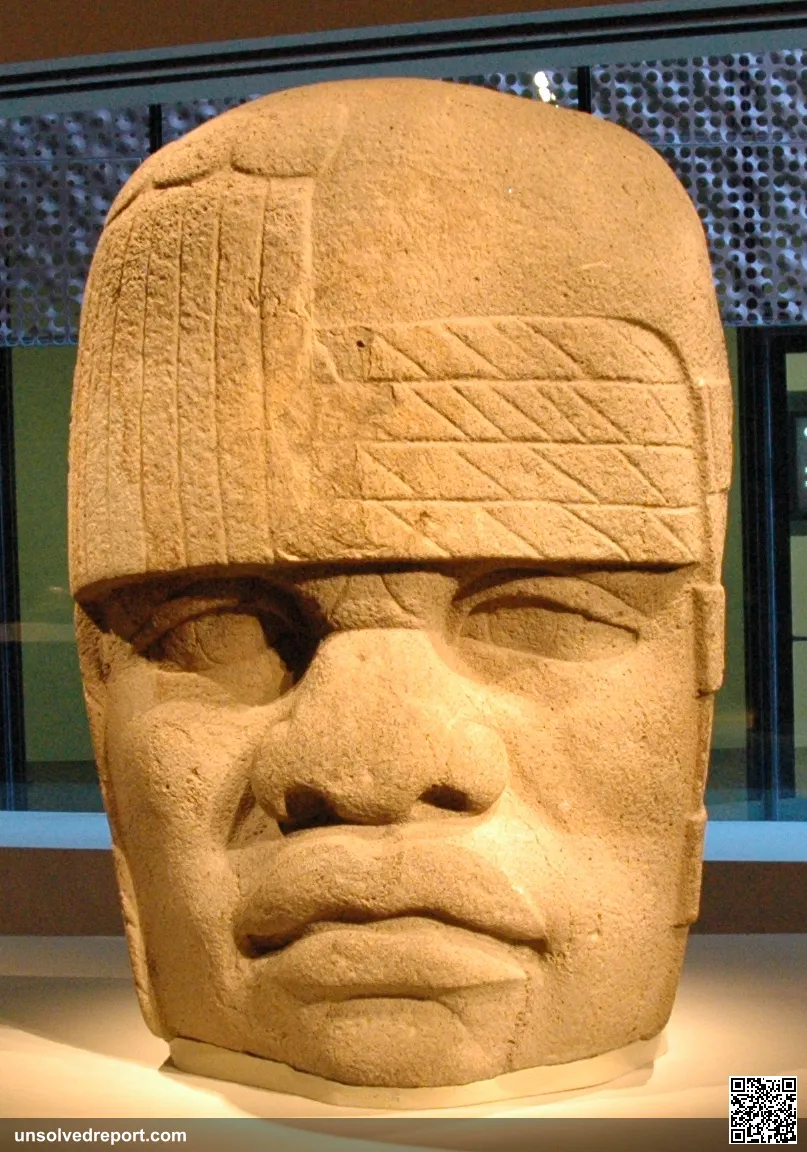
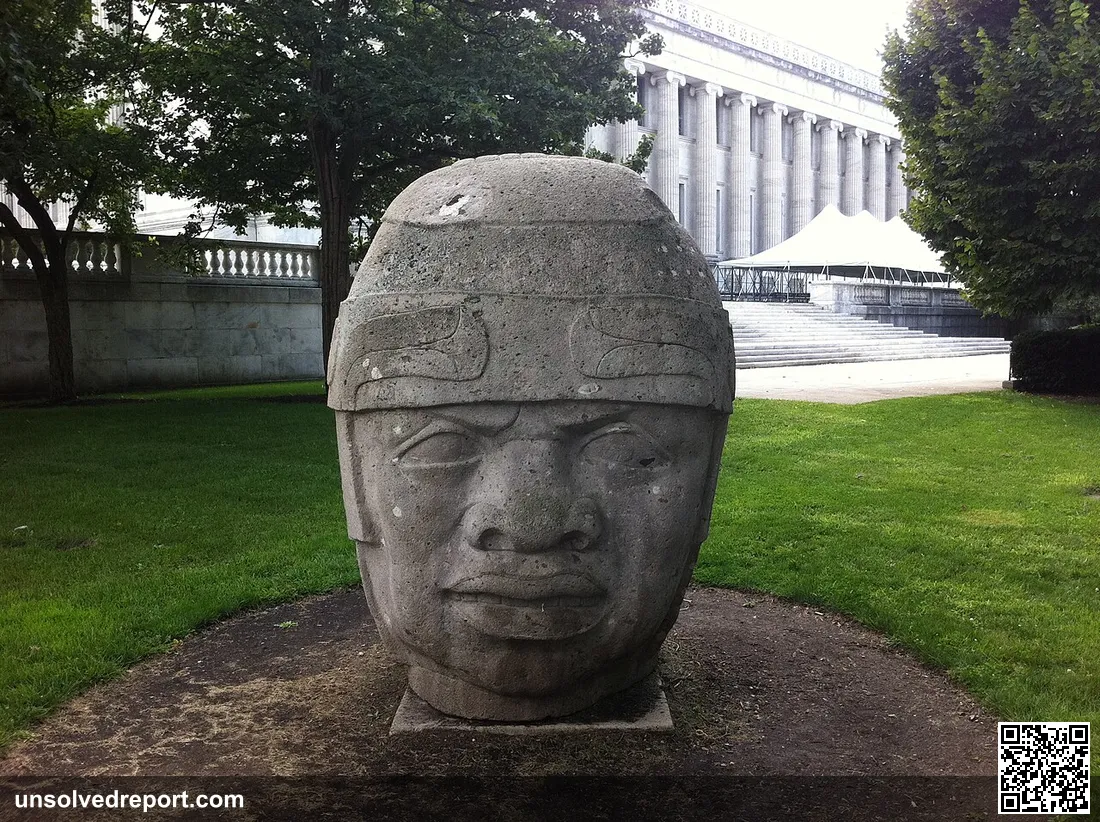
A giant face stares at you out of the Mexican jungle. It's taller than you are. It has full lips, a broad nose, heavy eyelids half-closed like it's bored of you, and snug headgear that looks weirdly like a modern helmet. It was carved from a single boulder of volcanic stone. And for three thousand years, it has not said one word.
Not one. The people who made these faces — we call them the Olmec — left behind no writing we can read. So the heads just sit there. Watching. We call them the Olmec colossal heads.
Seventeen of them are known today. They are among the oldest and most jaw-dropping sculptures in all of the Americas. And every single one is the answer to a question we can no longer ask: who was this person, and why did someone move a mountain to remember their face?
What we actually know
Start with the count, because the count is real. Archaeologists have catalogued seventeen confirmed colossal heads, spread across four sites. Ten come from San Lorenzo, the first big Olmec city; four from La Venta; two from Tres Zapotes; and one lone giant from a place called La Cobata (Britannica; World History Encyclopedia). They come from Mesoamerica's Preclassic era — deep time. Radiocarbon dates from La Venta cluster between roughly 1150 and 400 BCE, and ten of twelve samples from San Lorenzo land between about 1150 and 920 BCE (Dumbarton Oaks). To put that in plain terms: these faces were already ancient before the famous Maya cities ever rose.
Now stand next to one. That's the part that knocks the wind out of visitors. The heads run from about 1.47 meters to 3.4 meters tall — roughly 5 to 11 feet. The biggest, the La Cobata head, stands about 3.4 meters high and weighs on the order of 40 tons. The San Lorenzo heads alone span an estimated 6 to 50 metric tons (Dumbarton Oaks). Each one was cut from a single block of basalt, a hard volcanic rock dragged out of the Sierra de los Tuxtlas mountains, with the main source pinned to the Cerro Cintepec lava flows in Veracruz (World History Encyclopedia).
Here's the strange part: somebody had to move that stone. Tens of kilometers, from the mountains to the ceremonial centers — most likely floated on rafts down rivers where they could, then hauled overland by brute force the rest of the way. Picture a 40-ton boulder inching across the lowlands on log rollers and rope. Archaeologist Ann Cyphers has estimated that no fewer than 490 tons of basalt were dragged to San Lorenzo just for monuments (Dumbarton Oaks). You don't pull that off with a few volunteers. That takes a society with real power, and a leader who could command an army of workers.
And the faces? They're individuals. Each has its own features, its own headdress, and many specialists say they give "the impression of viewing the faces of specific living individuals" (Dumbarton Oaks). That helmet-like headgear sometimes carries little marks that may flag rank or identity. This matters more than it sounds: true portraits — sculptures of one real person — were almost unheard of in the ancient New World, found mostly among the Olmec, the Classic Maya, and much later the Moche of Peru.
Then there's the detail that flips everything sideways. Art historian James B. Porter showed that at least two of the San Lorenzo heads were re-carved from older monuments — specifically from massive flat-topped stone "thrones" (which earlier scholars had mislabeled as altars). Cyphers agreed that San Lorenzo Monuments 2 and 53 were clearly reworked from thrones (uchicago.edu). Let that land. The very block a living ruler once sat upon could later be tipped upright and carved into his own face.
The question the stone refuses to answer
And now the wall. The Olmec left no readable writing that names a single one of these people.
So even though most scholars agree the heads are portraits of powerful rulers, we cannot read one name. Not one reign, not one deed, not one story. We are staring straight into the faces of specific human beings — and we have absolutely no idea who they were. It's like finding a hall of presidential statues with every nameplate scraped blank.
The puzzles spiral out from there. Why were some heads smashed, scarred, or deliberately buried? Was that the work of enemies? A ritual "killing" of a monument after its ruler died? Or just thrifty recycling of expensive stone, the way those thrones got reused? Why does the count stop at seventeen — and how many more might still be sleeping under the mud of Veracruz and Tabasco, waiting? And that helmet: what did it actually mean, when no surviving text bothered to explain it? These aren't settled questions dressed up as mystery. They're genuinely open, waiting on the next shovel.
The theories
Theory 1 — They're portraits of real rulers. This is the front-runner. Most Mesoamerican specialists think each head shows an actual Olmec lord, partly because of the staggering cost and labor, partly because of those one-of-a-kind faces and headdresses (Britannica; Dumbarton Oaks). It's the best-supported reading we have. But "best-supported" is not "proven" — no inscription confirms a single identity.
Theory 2 — They're recycled thrones, so portraits of dead kings. Building on Porter's work, some scholars suspect heads were made on purpose from a dead ruler's throne — turning the seat of power into a memorial of the man who once filled it. We know this happened for at least a couple of heads. How far it spreads across all seventeen is still up for debate (uchicago.edu).
Theory 3 — They're ballplayers or warriors. Because that headgear looks so much like protective gear, a long-running idea links the heads to the brutal Mesoamerican ballgame or to war chiefs. It's a fair guess from the imagery — but a guess, not a confirmed job description (Smarthistory).
And one claim that needs killing. When Melgar y Serrano first published a head back in 1869, he wrongly called it "African" in appearance. That misreading later got dug up and recycled in popular books — and it's flat wrong. The scholarly community has firmly rejected it: the facial features match physical types still common in the region today, the artistic traditions are entirely homegrown to the Americas, and mitochondrial DNA from Olmec-area remains lines up with the founding Native American lineages (Dumbarton Oaks; Britannica). We bring it up only to set the record straight.
What stays with you, in the end, is the meeting itself. Walk up to one of these heads and you lock eyes with a real human face — carved with breathtaking care by people who could move mountains of stone, but who could not, it turns out, send their own names down through three thousand years. The Olmec colossal heads are the answers to a question we can no longer fully ask. And that gap, that maddening silence behind the stare, is exactly what keeps pulling us back to the jungle to look again.
Sources and further reading
- Britannica, "Olmec" — https://www.britannica.com/topic/Olmec
- World History Encyclopedia, "Olmec Colossal Stone Heads" — https://www.worldhistory.org/article/672/olmec-colossal-stone-heads/
- Dumbarton Oaks (Harvard), "The Origin and Development of Olmec Research" — https://www.doaks.org/resources/olmec-art/introduction
- Smarthistory, "Olmec Colossal Heads" — https://smarthistory.org/olmec-colossal-heads/
- James B. Porter, "Olmec Colossal Heads as Recarved Thrones," RES: Anthropology and Aesthetics — https://www.journals.uchicago.edu/doi/pdf/10.1086/RESvn1ms20166812
Ubar & Iram of the Pillars: Oman's Lost City Nobody Can Confirm
NASA satellites found a buried fortress under Oman's sand in 1992. Explorers swore it was Ubar, the lost Iram of the Pillars — scholars still disagree.

Newark Earthworks Mystery: They Aimed 50 Acres at the Moon
A 50-acre earthen octagon nailed a moonrise that returns once every 18.6 years — with no writing, no star charts, no instruments. So how did they pull it off?

The Dancing Plague of 1518: 400 Danced, No One Could Stop
In July 1518, one woman's dancing spread to 400 people in Strasbourg who couldn't stop. The records are real — so why has no one ever explained why?