Newark Earthworks Mystery: They Aimed 50 Acres at the Moon
A 50-acre earthen octagon nailed a moonrise that returns once every 18.6 years — with no writing, no star charts, no instruments. So how did they pull it off?
Two thousand years ago, in what is now central Ohio, the moon climbed over an earthen wall — and slid into place like a key into a lock. The wall had been built to catch it at its single most extreme rising point in the sky. That moment comes around just once every 18.6 years. And the people who shaped that mound got the angle right.
They built the largest set of geometric earthen enclosures on Earth to do it — a scale that puts it in the same conversation as the world's other megalithic sites nobody can fully explain. Which leaves one small, enormous question hanging over the whole site: how on earth did they know?
What We Actually Know
Start with the builders. They belonged to the Hopewell culture — and "culture" is the right word, because they weren't one tribe at all. They were a scattered web of Indigenous communities who came together for ceremony, trade, and burial. They raised this place between roughly 100 BCE and 400 CE, which makes it about 2,000 years old (Ohio History Connection; UNESCO/Hopewell Earthworks).
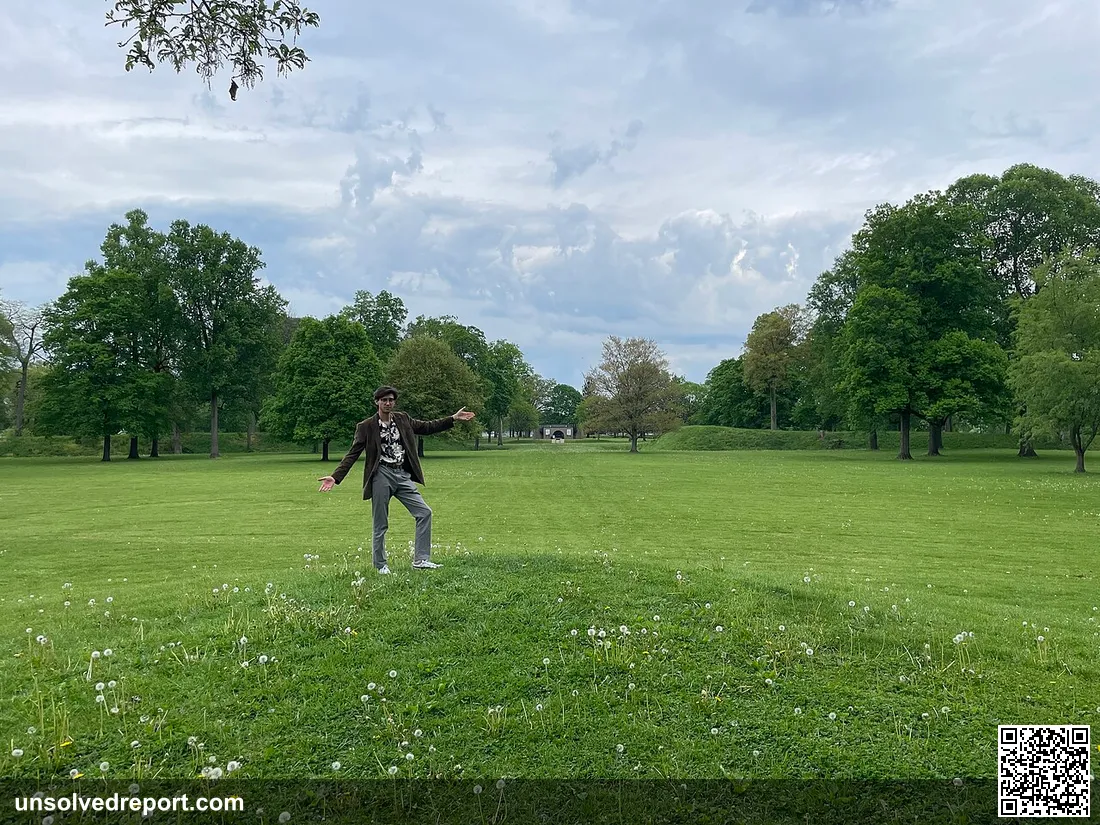
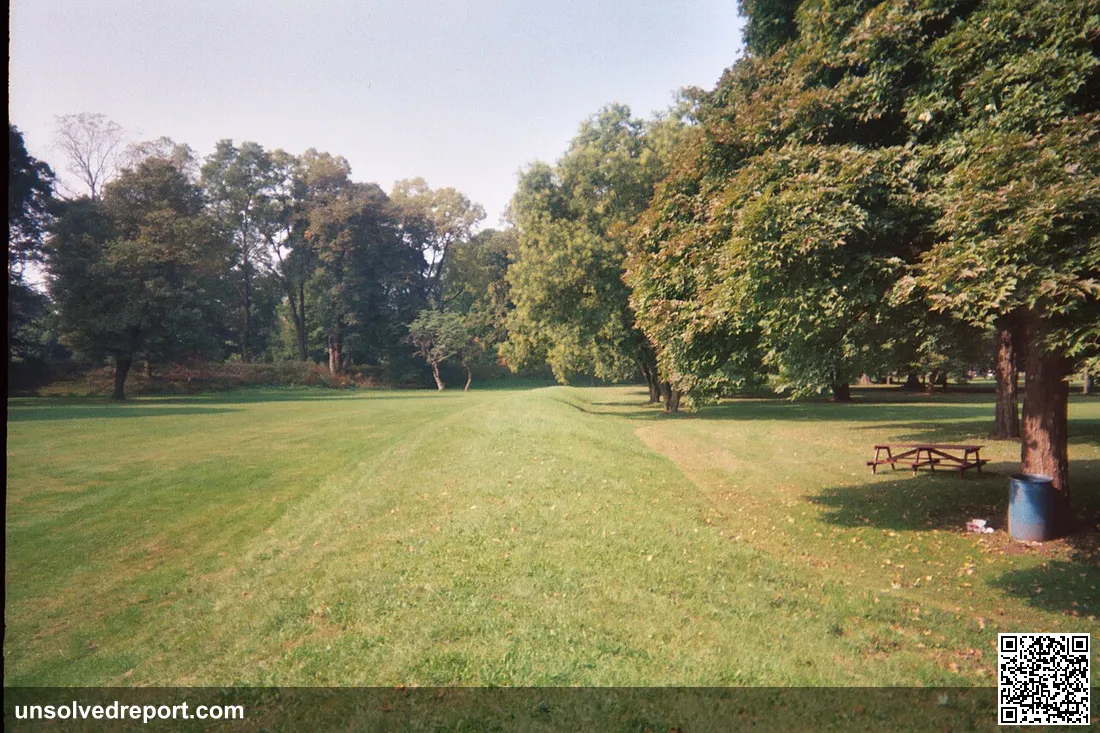
Now picture the scale. At its peak, the complex spread across an estimated 3,000 acres — squares, circles, and one colossal octagon, all stitched together by long walled avenues. Most of it is gone. Less than ten percent survives; the rest was plowed under or paved over as towns grew on top of it (Wikipedia: Newark Earthworks). And yet what's left will still stop you cold. The Great Circle runs roughly 1,200 feet across, its walls rising up to eight feet, backed by an interior moat. The Octagon Earthworks wrap around about 50 acres — eight walls, each one roughly 550 feet long — joined to a flawlessly drawn Observatory Circle of about 20 acres (Ohio History Connection: Newark and the Moon).
Here's where it gets eerie. The moon claim isn't a guess — it rests on decades of patient fieldwork. In the early 1980s, two Earlham College professors, Ray Hively and Robert Horn, surveyed the Octagon. They went in expecting to find the sun. That's the usual story at ancient monuments: walls aimed at sunrise, at solstices, at the familiar fire in the sky — Newgrange is the textbook case. They found nothing solar. Nothing. Instead, they realized the symmetry axes of the circle-and-octagon figure — and several of its walls — pointed straight at where the moon rises and sets at the far edges of an 18.6-year cycle that astronomers call the lunar standstill (Ohio History Connection; LostWorlds.org).
And that cycle is sneaky. Watch the moon for a month and you'll see its rising point drift north and south along the horizon. Fine. But the outer edges of that drift — the farthest north and farthest south it ever reaches — slowly creep, too, swinging back and forth over 18.6 years as the moon's orbit wobbles. At a major standstill, the moon rises and sets at its most extreme points of all. To even notice this, you have to watch the horizon for longer than a single human life runs its prime. The Octagon's eight walls line up with all four standstill moonrises and all four moonsets (Heartland Earthworks Conservancy; Griffith Observatory).
But could it all be a lucky accident? Hively and Horn asked exactly that — and then they put it to the test. They ran a Monte Carlo simulation, letting a computer spit out more than ten billion randomly oriented octagons and tallying how many landed alignments as good as the real one. Even bending every assumption in chance's favor, they put the odds of an accident at about one in a thousand. Tighten the assumptions, and it gets far, far longer than that (LostWorlds.org).
The world has noticed. The Newark Earthworks became a National Historic Landmark in 1964 and Ohio's official prehistoric monument. Then, in September 2023, the Hopewell Ceremonial Earthworks — eight sites, including Newark's Great Circle and Octagon — were inscribed as Ohio's first UNESCO World Heritage Site, the 25th in the entire United States (Ohio History Connection: UNESCO inscription). And here's a twist that almost sounds made up: for more than a century, this ancient lunar instrument sat beneath a private golf course. After a legal settlement, it finally opened to the public daily on January 1, 2025 (Ohio History Connection: Octagon settlement).
The Question Nobody Can Answer Yet
So here's the part the evidence can't reach. We know what they did. We don't know how — how the Hopewell discovered the 18.6-year cycle, how they locked it into the dirt, and why they poured this much labor into a sky event one person might see only three or four times in a whole lifetime.
The alignments are real. The math says chance can't shrug them off. But the Hopewell left no writing. No star charts — nothing like the geared bronze logic of the Antikythera mechanism to hint at their method. No oral instructions that survived. We have no idea how many generations of horizon-watching went into the design, whether anyone recorded the moon's positions on something that has long since rotted away, or how the knowledge was handed from one set of builders to the next. The monument is proof of the result — proof that people watched the moon with patience that spanned lifetimes. The method behind it is simply gone. And the honest scholars say so, instead of inventing a tidy answer.
There's a discipline trap here too, and the site's own researchers flagged it. Robert Horn warned against falling in love with every number that "fits." Take the Observatory Circle: it happens to enclose about 18.6 acres, a neat echo of the 18.6-year cycle. Tempting, isn't it? Horn himself cautioned that this one is almost certainly just coincidence — a perfect little reminder of how fast pattern-hunting can sprint past the actual evidence (Ohio History Connection).
What People Think It Means
Idea 1 — it's a working observatory. This one has the strongest evidence behind it. The mainstream archaeological read is that the Octagon worked, at least partly, as an instrument for catching the moon's extremes — the same job standing stones did for later cultures. The statistics from Hively and Horn hold this up, and you can hear it in UNESCO's own citation of alignments to "the cycles of the sun and moon" (hopewellearthworks.org).
Idea 2 — it's ceremony, not just measurement. Plausible, and many people hold it. A lot of scholars and Indigenous voices stress that these earthworks were sacred ground. In this view the lunar geometry wasn't cold number-crunching at all — it was a way of tying human ritual to the rhythm of the heavens. A cathedral aimed at the sky, not an open-air lab. And notice: this idea and the first one can both be true at once.
Idea 3 — the legend stuff. Clearly unproven. Popular tellings sometimes claim the site outdid Stonehenge for precision — the same boast made for France's Carnac Stones — or pin mystical, numerology-flavored meaning to its proportions. Treat those as speculation, plain and simple. The real precision is jaw-dropping all on its own — it doesn't need dressing up, and you cannot read the builders' true intentions off a tape measure.
The Newark Earthworks reward the slow kind of curiosity. The next major lunar standstill — the rare alignment this place was built to greet — won't come back until the early 2040s (Griffith Observatory). When it does, the moon will rise once more over walls shaped by people who studied the very same sky we do — and who left us a question still worth holding open.
Sources & Further Reading
- Ohio History Connection — The Newark Earthworks and the Moon
- Ohio History Connection — Octagon Earthworks and Octagon settlement / public access
- Ohio History Connection — Hopewell Ceremonial Earthworks inscribed as Ohio's first UNESCO World Heritage Site
- Hopewell Ceremonial Earthworks (UNESCO partners) — hopewellearthworks.org
- LostWorlds.org — Octagon Earthworks' alignment with the moon likely is no accident
- Heartland Earthworks Conservancy — Astronomically Aligned
- Griffith Observatory — Extreme Moon: The Major Lunar Standstills of 2024–2025
- Wikipedia — Newark Earthworks (overview and references)

The Dancing Plague of 1518: 400 Danced, No One Could Stop
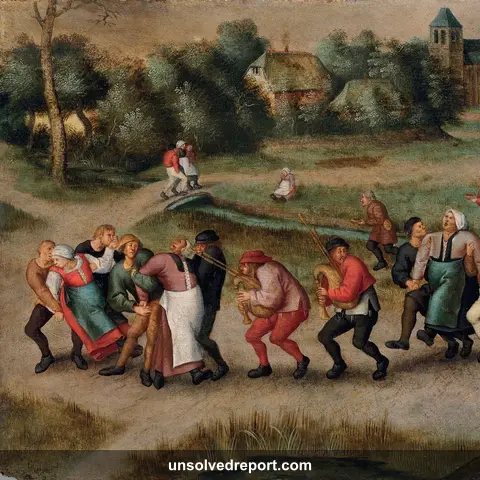
In July 1518, one woman's dancing spread to 400 people in Strasbourg who couldn't stop. The records are real — so why has no one ever explained why?
Lost Army of Cambyses: 50,000 Men, Zero Bodies, 2,500 Years
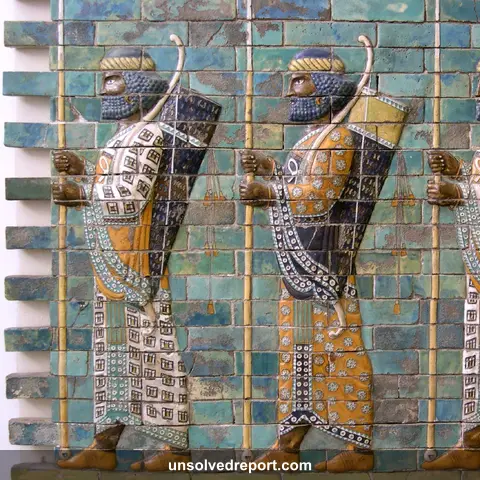
50,000 Persian soldiers marched into Egypt's desert in 525 BC and vanished without a trace. No bones. No weapons. So what really happened to them?

Ludwig Leichhardt: 7 Men Vanished, One Nameplate Came Back
In 1848, explorer Ludwig Leichhardt and six men rode into the outback and vanished. Only one brass relic ever came back. What happened to the men?