Lost Army of Cambyses: 50,000 Men, Zero Bodies, 2,500 Years
50,000 Persian soldiers marched into Egypt's desert in 525 BC and vanished without a trace. No bones. No weapons. So what really happened to them?
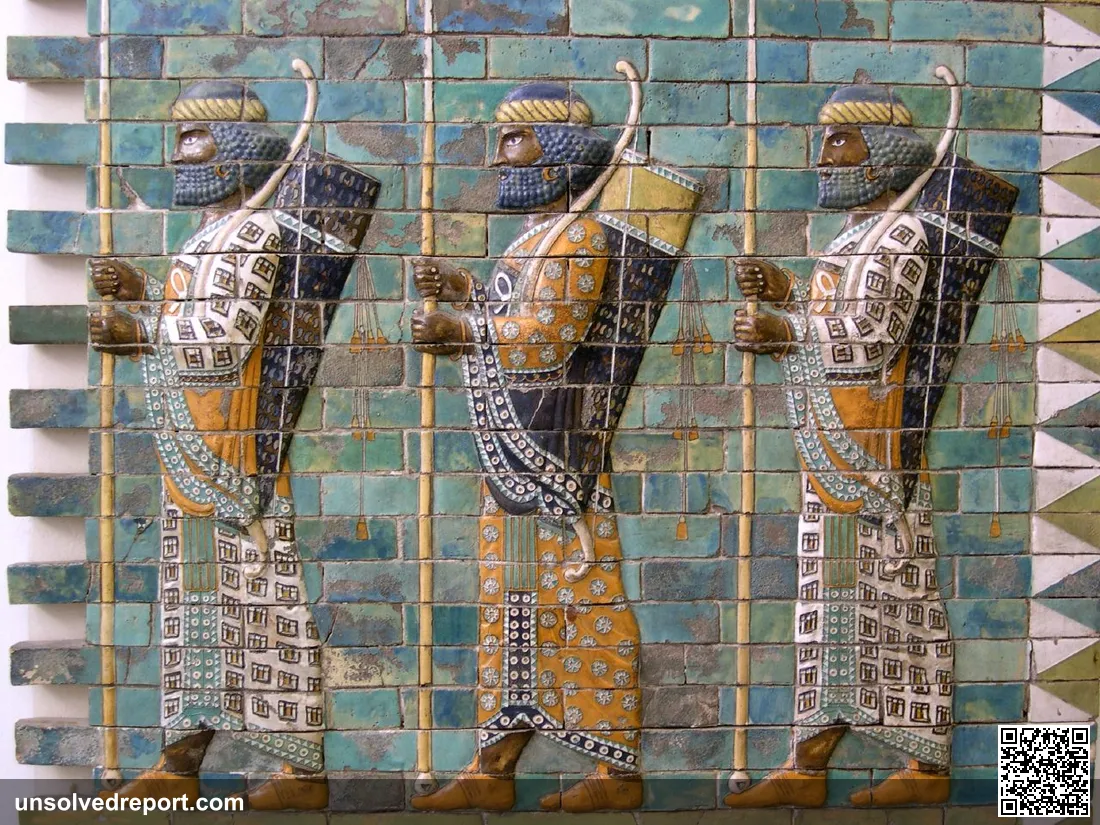
Fifty thousand soldiers walked into the desert and never walked out. No retreat. No survivors limping home. Not a single bone to bury — a disappearance that belongs on any list of history's lost cities the earth swallowed whole, except this time it wasn't a city, it was an army. Around 525 BC, one of the ancient world's most famous travel writers tells us, a Persian king sent his men marching into the Egyptian sand toward a sacred oracle — and the sand swallowed them whole. They left the green ribbon of the Nile, struck out into nothing, and then they were simply gone. For more than two thousand years, the "lost army of Cambyses" has sat right on the seam between solid history and pure ghost story, dragging in geologists, Egyptologists, and treasure hunters who all burn to know the same thing. Where did 50,000 people go? Let's pull this apart: what the record actually holds, where the real puzzle hides, and which "answers" are nothing but educated guessing dressed up as fact.
The Part That's Rock Solid
Start with what nobody can knock down. Every word we have about the lost army traces back to one man: the Greek historian Herodotus, scribbling in his Histories roughly seventy-five years after it all supposedly happened. One source. That's it.
But Cambyses II was no campfire invention. Son of Cyrus the Great, he was a flesh-and-blood Persian king who conquered Egypt in 525 BC — an event nailed down by Persian and Egyptian records and laid out plainly in reference works like Encyclopaedia Britannica. Nobody argues about that part.
Here's where it gets strange. Herodotus (Histories, Book 3, chapters 25–26) says Cambyses peeled a detachment off from the city of Thebes and pointed it west with two orders: crush the people of Ammon, and burn the famous oracle of Amun at the Siwa Oasis to the ground. Why? Pure rage. The king wanted that oracle wiped off the map. So 50,000 men, by tradition, marched seven days across open desert to a place Herodotus just calls "the Oasis" — probably the Kharga or Dakhla region. And then, he writes, the world never saw them again, exactly as the well-sourced rundown at Wikipedia lays out.
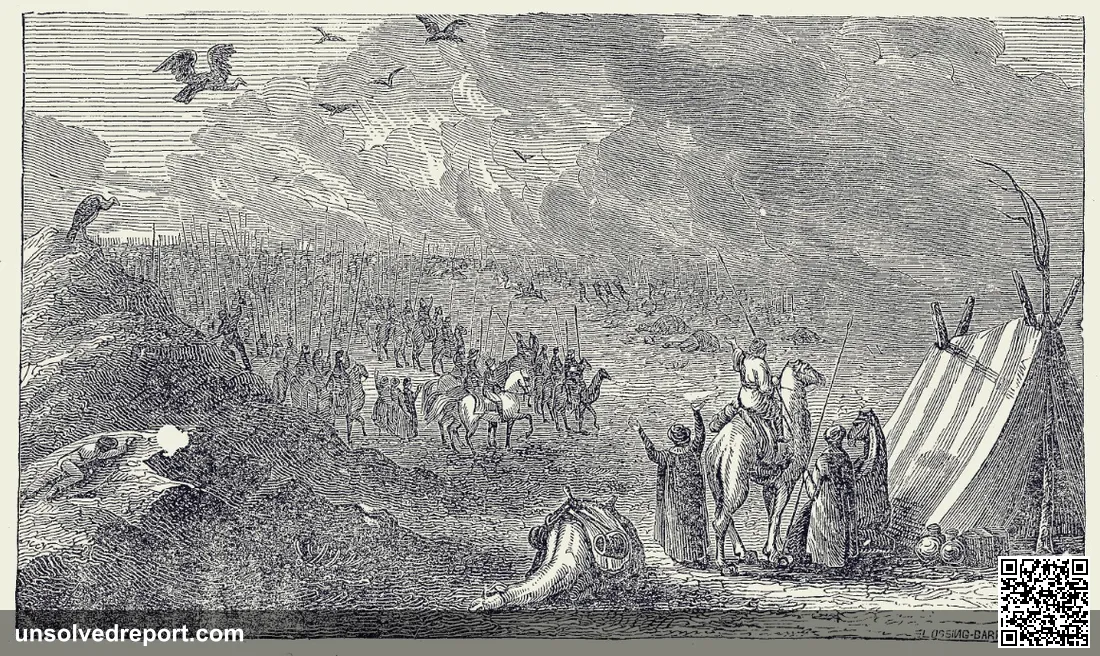
Then comes the sentence everybody remembers. As the army crossed the bare sand between the Oasis and Siwa, Herodotus reports, "a wind arose from the south, strong and deadly, bringing with it vast columns of whirling sand, which entirely covered up the troops and caused them wholly to disappear."
Now watch what he does next — because this is the whole ballgame. Herodotus didn't see this. He flinches. He pins the entire sandstorm story on the Ammonians, the locals living near Siwa. He's passing along gossip he heard, not a fact he checked, and modern scholars cited by the Biblical Archaeology Society are careful to flag exactly that.
So strip away the drama and here's the bedrock: a real king, a real conquest, a real march toward Siwa, and one nervous, secondhand sentence saying the soldiers vanished in a storm. That is everything anyone has ever had. That's the foundation the whole legend is built on — a single rumor, repeated for 2,500 years.
The Real Question Nobody Can Answer
The honest mystery is sharper and smaller than the legend lets on. It comes down to this: what actually happened to a Persian detachment sent toward Siwa in the 520s BC — and did the "50,000 lost men" event ever really happen at all? It's a question that echoes centuries later with Rome's own vanished force, the Ninth Legion, where an entire unit walks off the page of history with no clean answer either.
Three problems blow up any tidy answer.
First, that number. Fifty thousand is enormous, and Herodotus had a well-known weakness for inflating big round figures, so it may be ancient exaggeration plain and simple. Second, the bodies. No undisputed mass grave. No weapons cache. No human remains, ever, properly excavated, documented, and peer-reviewed in a way the archaeological community accepts as the lost army. Not once in 2,500 years — the same maddening dead end that has kept archaeologists digging for Cleopatra's tomb for two decades with nothing to show for it. Third — and this one's a killer — the physics just won't play along. Sandstorms are terrifying, yes, but they do not "bury" an army where it stands. As physicist-writers explained for Scientific American, wind shoves sand around; it does not entomb tens of thousands of standing people in one afternoon. Dying slowly — from heat, thirst, and getting hopelessly, fatally lost — is far easier to believe than the desert gulping a whole army in a single bite.
So the real question isn't just "where are the bodies." It's stranger than that. Is the dramatic sandstorm true history, a juicy tale that fattened up in the retelling, or a cover story hiding something uglier? Did nature kill these men in one stroke, did the desert grind them down inch by inch — or did something else entirely finish them off?
The Theories Trying to Fill the Silence
Quick warning before we go further: what follows are theories and interpretations, not settled facts. Each one is somebody's attempt to plug the hole Herodotus left behind.
Theory 1: The literal sandstorm. The oldest reading just takes Herodotus at his word — a freak storm rolled over the column, and that was the end. Most Egyptologists shrug off the cinematic "buried alive in seconds" version as apocryphal, while admitting a detachment really could have died out there in a storm tangled up with exposure and lost bearings. It's the original theory. It's also the one hardest to prove.
Theory 2: Death by the desert itself. A grimmer, quieter version. Yes, the army marched out. Yes, it died. But slowly, with no movie-poster burial. Heat. Dehydration. One wrong turn between water sources. A sand-choked wind piled on top of all of it. An under-supplied force could absolutely be destroyed this way, with the sandstorm story standing in as memorable shorthand for a much slower horror. Still speculation, though — the physical proof has never been confirmed.
Theory 3: A defeat, then a cover-up. Here's the most talked-about modern idea, and it's a good one — the kind of reveal that, like the hidden void found deep inside the Great Pyramid, shows how much of ancient Egypt still waits to be found with the right tools and the right dig. Egyptologist Olaf Kaper of Leiden University spent roughly a decade digging at Amheida in the Dakhla Oasis, and his conclusion flips the whole legend upside down. The army's real target, he argues, was Dakhla — not some doomed sprint to Siwa — and it was ambushed and crushed by the Egyptian rebel leader Petubastis III. The twist? Cambyses' successor, Darius the Great, later rebranded a humiliating military disaster as an act of God — the polished version Herodotus would inherit decades later. As reported by Sci.News and Time, Kaper laid this out at a Leiden conference in 2014. It's elegant, and it leans on real inscriptions naming Petubastis III. But here's the catch: it's an inference about the lost army, not a direct discovery of it, and plenty of scholars are keeping their distance.
Theory 4: The disputed 2009 "find." In 2009, Italian filmmakers and amateur archaeologists Angelo and Alfredo Castiglioni dropped a bombshell — they claimed to have found human bones, bronze weapons, arrowheads, and jewelry near Siwa that matched the lost army, building on prospecting they'd done back in the 1990s. The backlash was savage. Egypt's antiquities authorities said the brothers had no excavation permit, the findings surfaced through a documentary instead of scientific review, and Egyptologists greeted the announcement with raised eyebrows — all documented by The History Blog. File it under unverified claim, not solved case.
The lost army of Cambyses survives for one simple reason: its core is solid while its ending is smoke. A real king sent real soldiers toward a real oracle — and then the trail dies in a single borrowed sentence. Did the desert kill them, hide them, or never swallow them at all? The sand still isn't talking. For now, the most honest verdict is the one Herodotus quietly wrote into the story himself: this is a tale he was told, and the proof has yet to surface. Somewhere out past the last oasis, fifty thousand questions are still buried — waiting for someone to dig in exactly the right place.
Sources & Further Reading
- Encyclopaedia Britannica, "Cambyses II" — https://www.britannica.com/biography/Cambyses-II
- Wikipedia, "Lost Army of Cambyses" (with primary-source citations to Herodotus 3.25–26) — https://en.wikipedia.org/wiki/Lost_Army_of_Cambyses
- Sci.News, "Mystery Surrounding Lost Army of Persian King Cambyses II May Have Been Solved" — https://www.sci.news/archaeology/science-lost-army-persian-king-cambyses-ii-02002.html
- Time, "The Vanished Army: Solving an Ancient Egyptian Mystery" — https://time.com/archive/6948583/the-vanished-army-solving-an-ancient-egyptian-mystery/
- Scientific American, "Cambyses' Lost Army and the Physics of Sandstorms" — https://blogs.scientificamerican.com/cocktail-party-physics/cambysese28099-lost-army-and-the-physics-of-sandstorms/
- Biblical Archaeology Society, "Were 50,000 Soldiers Buried by a Sandstorm?" — https://www.biblicalarchaeology.org/daily/news/were-50000-soldiers-buried-by-a-sandstorm/
- The History Blog, "Lost Persian army found in the Sahara?" — https://www.thehistoryblog.com/archives/3905

Ludwig Leichhardt: 7 Men Vanished, One Nameplate Came Back
In 1848, explorer Ludwig Leichhardt and six men rode into the outback and vanished. Only one brass relic ever came back. What happened to the men?
Al Naslaa Rock: The Saudi Boulder Split Like a Laser
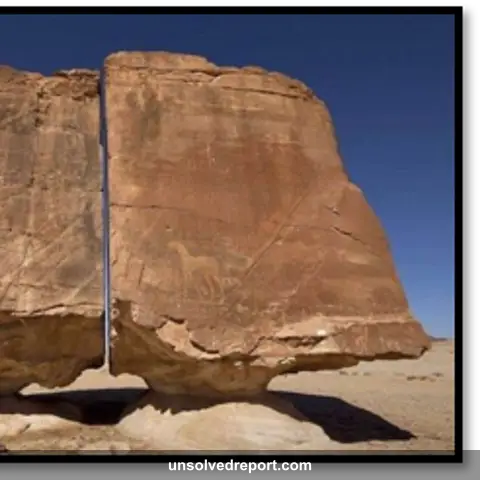
A Saudi boulder split by a perfectly straight gap that looks laser-cut. No tool marks, no debris — so what actually sliced Al Naslaa in two?
Undeciphered Texts and Codes: 13 Nobody Can Crack
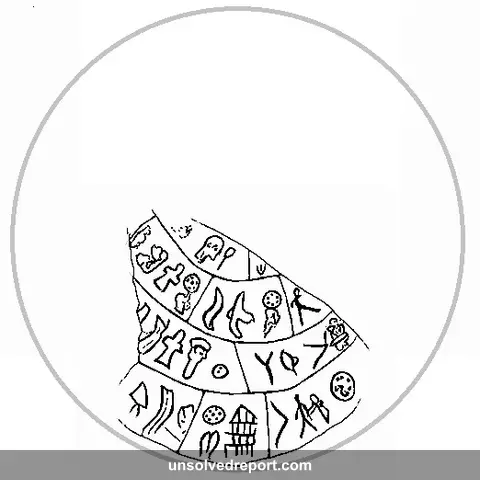
13 undeciphered texts and codes — from the Voynich Manuscript to a killer's cipher — that have beaten every expert for centuries. Which falls first?