Undeciphered Texts and Codes: 13 Nobody Can Crack
13 undeciphered texts and codes — from the Voynich Manuscript to a killer's cipher — that have beaten every expert for centuries. Which falls first?
Somewhere out there are words that no living person can read.
Some of them were ordinary once. Someone wrote them down, meant them to be read, and then the key slipped away. Others were written in scripts whose languages died before anyone thought to leave a translation behind. And a few may have been built, on purpose, never to be understood by anyone at all.
What ties them together is the silence. Rooms full of linguists, cryptographers, codebreakers, and humming computers have stared these marks down for years — and the words still refuse to come loose.
Everything below is real and well documented. Each case carries one clear, checkable fact and one genuine question that no one has answered yet. Some are ancient scratches on clay and stone. Some are handwritten ciphers from the last couple of centuries. Not one of them has a solution the experts agree on. That is exactly what makes them so hard to walk away from.
1. The Voynich Manuscript
Imagine flipping through a 240-page book and not recognizing a single word — or a single plant.
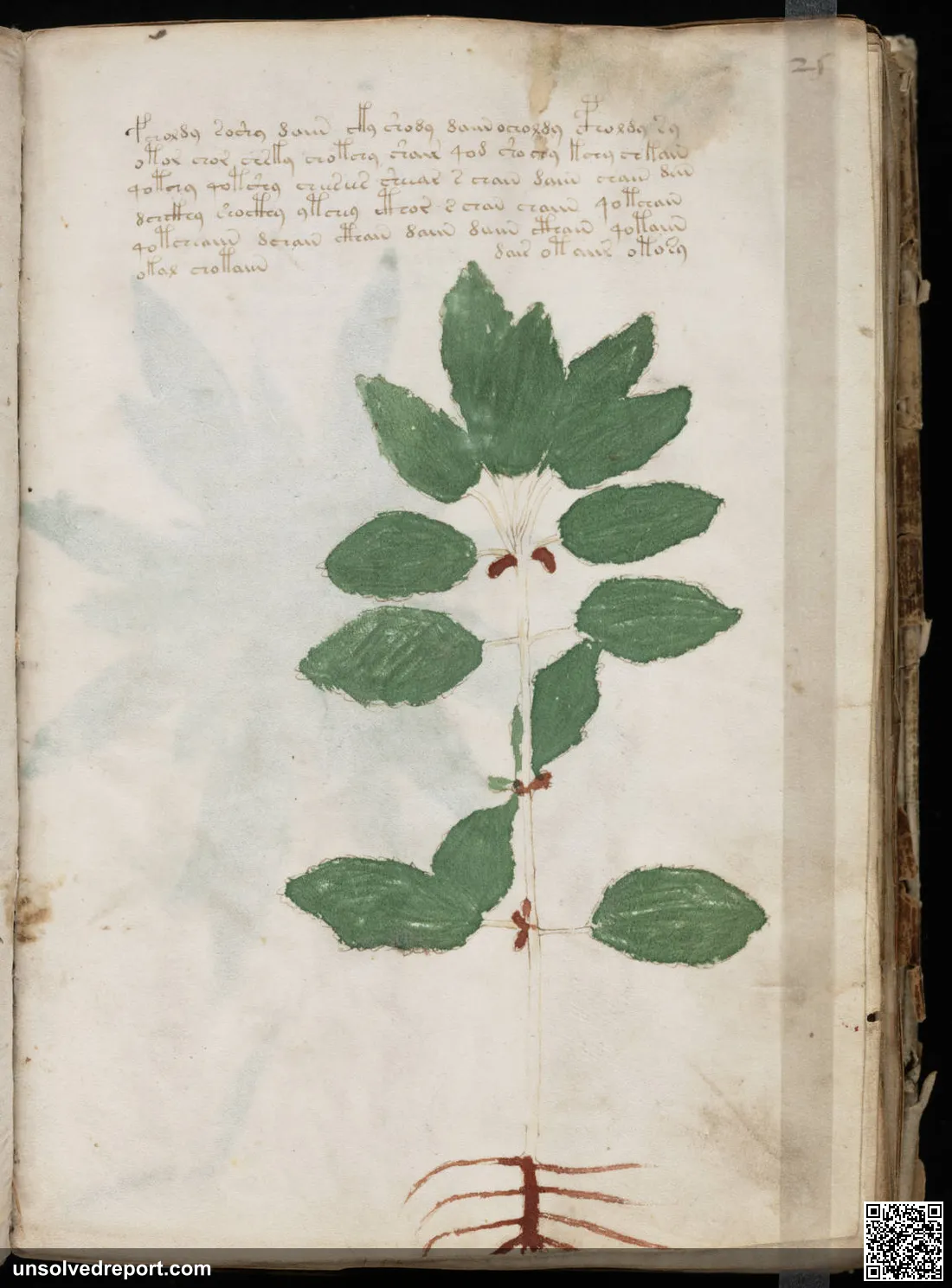
That is the Voynich Manuscript. Carbon dating puts it in the early 15th century. Its pages loop with text in a script nobody can identify, wrapped around drawings of plants that match nothing on Earth, astronomical diagrams, and tiny figures bathing in green pools. For a hundred years it has pulled in professional codebreakers, including some who cracked real wartime ciphers and won — and every one of them has hit the same wall. No translation has ever convinced the wider scholarly community.
Here's the strange part. The biggest question isn't what does it say. It's does it say anything at all? Is this an encoded real language, an invented one, or an elaborate hoax with no meaning hiding inside it whatsoever? A century in, we still don't know.
2. The Phaistos Disc
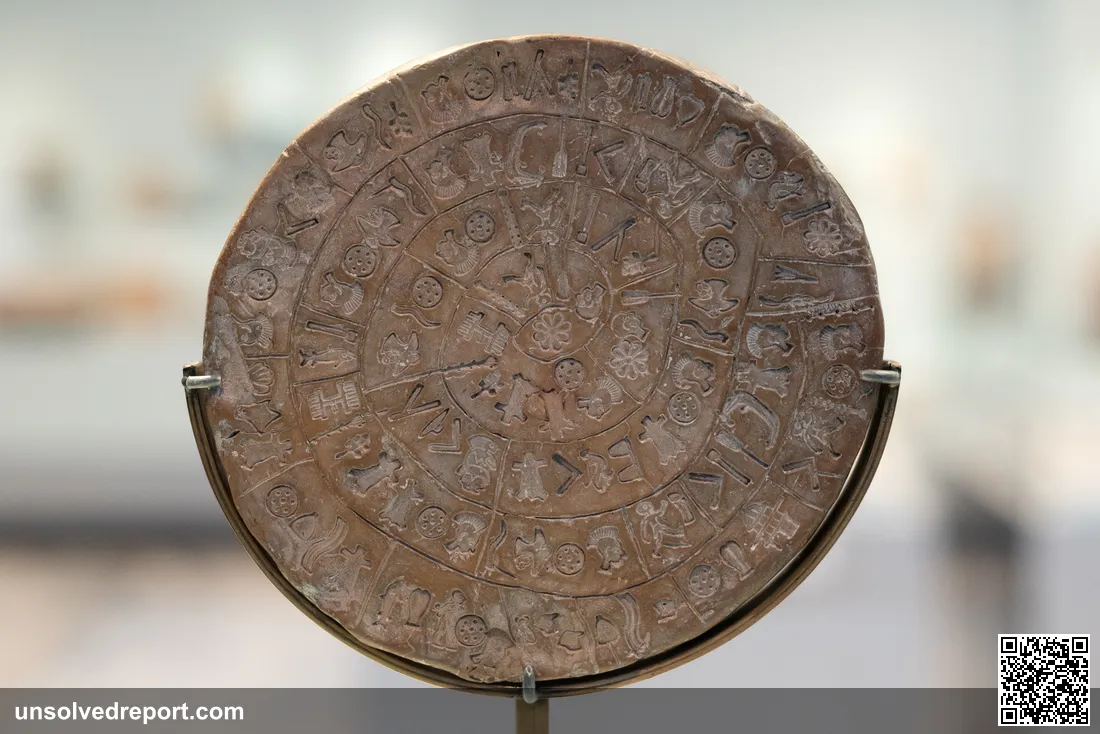
A clay disc, fired hard, stamped on both sides with 241 symbols spiraling inward like a tiny labyrinth. Dug out of a ruined Minoan palace on Crete in 1908. So far, so archaeological.
Now the twist. Those symbols weren't carved by hand — they were pressed in, each one with its own little punch, like a stamp. Which makes this object, arguably, the earliest known example of movable-type printing. Centuries ahead of its time, sitting in the dirt of Bronze Age Crete.
And we can't read a word of it. There is exactly one securely authenticated object bearing this script. No bilingual key, nothing to check it against. The symbols have never been reliably read, and even the language they record is a complete blank.
3. Linear A
Here is a puzzle that feels almost cruel: a script we can pronounce but not understand.
The Minoans left behind hundreds of clay tablets in a writing system scholars call Linear A. It came first. A later, related system — Linear B — was built on top of it, and Linear B got famously cracked in the 1950s. So researchers can take many Linear A signs and make a confident guess at the sounds they stand for.
Go ahead and sound them out. The trouble is what comes out: an unknown language with no surviving relatives anywhere on the planet. You can read the tablets aloud, fluently, in a tongue no human has spoken for thousands of years — and have absolutely no idea what you just said.
4. Rongorongo
On Easter Island, one of the most remote inhabited places on Earth, a handful of wooden tablets survive covered in tidy rows of tiny carved glyphs. The script is called Rongorongo.
Try to read one and your neck starts to ache. The carvings run in a strange back-and-forth: you read a line, then flip the tablet upside down to read the next, then flip it back. Over and over.
And then there is the part that stings. By the time outsiders showed up to write down what the tablets meant, the chain was already broken — the last islanders who could actually read them were gone. So today the debate isn't just what do the glyphs say. It's whether they're true writing at all, or an elaborate memory aid for chants now lost.
5. The Indus Script
Picture a civilization with grand cities, plumbing, planned streets — and a writing system so short it may never be cracked.
The Bronze Age cities of the Indus Valley turned out thousands of seals, tablets, and inscriptions, all covered in compact little symbols. Most are only a handful of characters long. A few squiggles, then nothing. And that brevity is the killer: codebreakers thrive on patterns, repetition, long stretches of text to chew on, and these inscriptions barely give them a mouthful. No bilingual artifact has ever turned up to help.
So the experts are stuck on the most basic questions of all. What language is this? Is it even a language — or just symbols that don't encode speech? Nobody can agree.
6. Proto-Elamite
This is one of the oldest forms of writing humanity ever produced. Clay tablets from ancient Iran, more than five thousand years old.
We're not totally blind here. Researchers can tell that many of these tablets are accounting records — numbers, quantities, the bookkeeping of a long-dead office. High-resolution imaging projects have photographed and catalogued them in painstaking detail.
But the moment you move past the numbers, the writing closes up. The non-numerical signs simply refuse a confident reading. Five thousand years on, with every modern tool brought to bear, a full decipherment of this early administrative script is still out of reach.
7. The Kryptos Sculpture
Walk into a courtyard at CIA headquarters and you'll find a curving copper sculpture covered in coded text. It's called Kryptos. The artist Jim Sanborn installed it in 1990 and packed it with four encrypted passages — a puzzle planted at the doorstep of the world's master spies.
Three of the four passages were solved years ago. The fourth has not budged.
That's the one that haunts people. Section four is just 97 characters long — and it has beaten professional and amateur cryptographers alike for decades. Sanborn occasionally tosses out a single clue word to keep the chase alive, like a man feeding a fire just enough to stop it dying. The final message is still unread.
8. The Zodiac Killer's Ciphers
In the late 1960s, someone claiming responsibility for a string of crimes in California started mailing encrypted messages to newspapers. The crimes were real. The taunting was real. And the codes were a dare.
One cipher fell fast — solved by a schoolteacher and his wife, of all people. A second, longer one held out until 2020, when a team of codebreakers finally tore it open after half a century.
But at least one shorter cipher is still officially unsolved. And here's the gut-punch that keeps it locked: the sender's identity was never confirmed. So even if you crack it tomorrow, there's no name, no confession, nothing to check your answer against. You could solve it and never know you'd solved it.
9. The Beale Ciphers
A buried fortune in Virginia. Three coded messages said to reveal where it's hidden and who it belongs to. A man named Thomas Beale who supposedly left them behind. The whole story comes down to us through a 19th-century pamphlet — and it has driven treasure hunters half-mad ever since.
There's a genuinely eerie hook in here. One of the three ciphers reportedly does produce readable plaintext — but only when you match it against a very specific key: the Declaration of Independence. That actually works. That's the part that's verifiable.
The other two have never yielded a confirmed reading. And a lively, decades-long argument still smolders over whether any of it is true at all, or whether the entire treasure story was an invention from the start.
10. The Dorabella Cipher
In 1897 the composer Edward Elgar sent a note to a young friend named Dora Penny. The whole thing was written in a playful little alphabet of squiggles, three lines of curls and loops with no plain words anywhere.
Elgar adored puzzles and codes. He sent it, said nothing about what it meant, and that was that. He never explained it.
More than a century of clever people have taken a run at those three lines. Not one solution has won general acceptance. A few squiggles dashed off as a friendly message between two people who knew each other well — and it still keeps its secret tight.
11. The Shugborough Inscription
On an 18th-century monument at Shugborough Hall in England, just below a carved scene, sits a short row of letters that fits no obvious word, no name, nothing.
People have been guessing for generations. Visitors, scholars, reportedly even a few celebrated thinkers, have thrown out theories ranging from a lover's tribute to a hidden religious motto. Everyone seems sure it means something.
The catch: there's no documentation. Nobody wrote down who carved the letters, or when, or why. So that little handful of characters just sits there in the stone, an open riddle with no edges to grab.
12. The Singapore Stone
A huge sandstone slab once stood at the mouth of the Singapore River, its face crowded with dozens of lines of an unidentified ancient script. Possibly many centuries old. Quite likely one of the oldest inscriptions the whole region ever produced.
Then came the early 19th century, and construction work — and the boulder was smashed apart to clear the way. Only a few fragments were saved.
So now we have scraps of a script no one can read, from a slab that no longer exists. With so little of the original surviving, the meaning of this ancient message may simply be lost for good. Gone, not hidden.
13. Not Every Mystery Is Ancient
Some of these codes are barely a generation old.
Take the so-called "Ricky McCormick notes" — two pages crammed with jumbled letters, found in the pocket of a man whose 1999 death was investigated in Missouri. Law enforcement actually publicized them, hoping a fresh set of eyes might finally crack the thing.
And they might be the hardest of all to break. They're short. They're idiosyncratic. And they may use a personal shorthand known only to the man who wrote them — a private code that died with its author. That is precisely the kind of cipher that laughs off every standard technique we have.
---
What makes these cases so stubborn is that each one beats us in a different way. Some are too short to analyze. Some record dead languages with no living cousins to compare them to. And some may be private systems whose only key walked out the door with the person who made it.
Codebreakers have come and gone. Computers have grown unimaginably powerful. And still, every time, the silence holds.
Want to go deeper? Pick any name above and follow it into its full case file — where the documented evidence and the leading theories run straight into the wall that no one has climbed yet.
Sources & further reading
Crystal Skulls Debunked: The Speck That Exposed the Fakes
Crystal skulls debunked: museums called them ancient Aztec relics for 100 years. One speck of grit under a microscope proved otherwise. Here's how.
Florentine Diamond: The 137-Carat Secret a Dying Empress Kept for 100 Years
The 137-carat Florentine Diamond was declared lost for a century. It was never stolen — find out what Empress Zita hid in a Canadian vault and why.
Lost Library of Ivan the Terrible: 400 Years, Zero Books Found
Lost library of Ivan the Terrible: 400 years of tsars, monks, and diggers hunting a sealed Kremlin vault. Still no book found. Did it ever exist?