Lost Library of Ivan the Terrible: 400 Years, Zero Books Found
Lost library of Ivan the Terrible: 400 years of tsars, monks, and diggers hunting a sealed Kremlin vault. Still no book found. Did it ever exist?
Deep under the Moscow Kremlin, in the cold and the dark, there is supposed to be a sealed room. Inside it: chests. Inside the chests: books the rest of the world long ago gave up for dead. Greek and Latin texts smuggled out of a city the Ottomans were burning to the ground. And — some people whisper — pages older still, pages that reach all the way back to the lost shelves of Alexandria.
The Russians even gave it a name. The Liberea.
For more than four hundred years, scholars, tsars, and Soviet archaeologists have dug for it, dreamed about it, and screamed at each other over one single question: did it ever exist at all? Here's the part that keeps people up at night. The trail is real, much like the paper trail behind the Knights Templar's vanished treasure. The treasure has never been found.
What we actually know
It starts with a wedding.
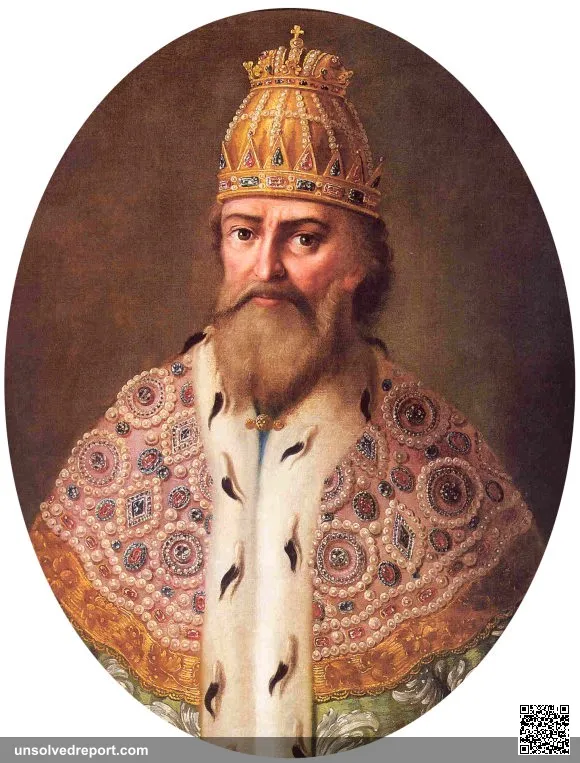
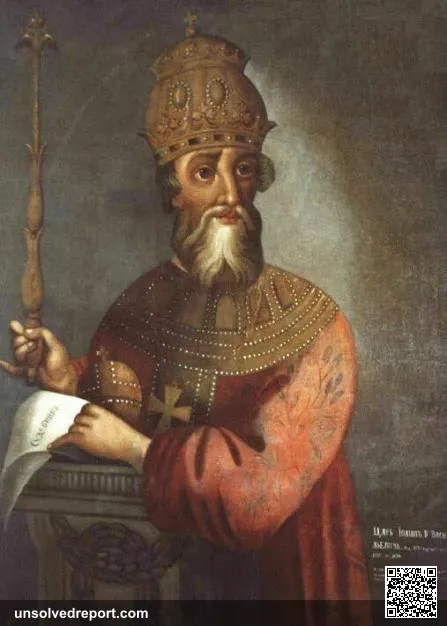
November 12, 1472. A young woman named Sophia Palaiologina walks into Moscow and marries Grand Prince Ivan III — "Ivan the Great" — at the Dormition Cathedral. (They'd already done a stand-in ceremony back in Rome on June 1 of that year — the long-distance royal way of saying "I do.") And Sophia was no ordinary bride. Her father was Thomas Palaiologos. Her uncle was Constantine XI — the last emperor of Byzantium, the man who died the day Constantinople fell to the Ottomans in 1453 (Wikipedia: Sophia Palaiologina). In one wedding, the rising court of Moscow plugged itself straight into the bloodline of fallen Byzantium. And her grandson? Ivan the Terrible — Ivan IV, 1530 to 1584 — Russia's first crowned tsar.
Now here comes the first real eyewitness. And he's a good one.
Jump ahead a generation. In 1515, Sophia's son, Grand Prince Vasili III, fires off a request to the Patriarch of Constantinople: send me someone who can actually read Greek. The man who answered was a monk named Maximus the Greek — born Michael Trivolis — from the Vatopedi Monastery up on Mount Athos. He reached Moscow on March 4, 1518, and was put up at the Chudov Monastery (Presidential Library of Russia). Then they showed him the tsar's Greek books. According to a biography of the man, he was floored. So many of them. He said he'd never seen the like — not even back in Greece. He stayed. He translated the Psalter, and by some accounts went to work on the princely collection itself. That 1518 moment is as close as this whole legend ever gets to a living witness pointing at the shelves and saying: they're real, and there are a lot of them.
And then? The story slides into shadow — secondhand tales, told later, by people who weren't there.
A German chronicle stitched together in the early 1600s claims a Lutheran pastor from Dorpat, Johann Wettermann, was shown some of the tsar's books and walked away stunned by what they were worth (Wikipedia: Lost Library of Ivan the Terrible). Then comes 1682, and the part that feels ripped straight out of an adventure film. A clerk named Vasily Makariev, nosing through an underground Kremlin passage, is said to have stumbled into a chamber stacked with trunks. Picture his lamp swinging across all those chests in the freezing dark. Whatever he saw, the door slammed shut on it fast: Princess Sophia Alekseyevna later forbade anyone from ever going back. And we only know the tale at all because a sexton named Konon Osipov wrote it down in a report in 1724 — decades after the fact.
Then a list appears. Early 1800s. Professor Christian Dabelov of the University of Dorpat says he found, buried in the archives at Pernau (today Pärnu, Estonia), an anonymous catalog titled something like "manuscripts held by the tsar." It described around 800 volumes. That number — 800 — is the figure you'll see quoted everywhere for the size of the library. There's just one snag. The original list was never shown to anyone else again. It vanished.
And then there's the obsessed man.
His name was Ignatiy Stelletskii (1878–1949), and he chased the Liberea for most of his adult life. He asked the Soviets for permission to dig in 1925. Got it in 1929. And on December 1, 1933, he finally drove his excavation down beneath the Kremlin's Arsenalnaya Tower. He was digging. He was right there. Then, in December 1934, Sergei Kirov was assassinated — and in the political deep-freeze that followed, the idea of tunneling under the Kremlin became flatly, dangerously impossible. The work stopped cold (Wikipedia: Ignatiy Stelletsky). Even Peter the Great, the stories say, had once been curious about it. And in all those centuries, with all those hunters clawing at the ground? Not one expedition has ever pulled up a single confirmed book.
The honest problem
Strip away the romance, and one ugly fact just sits there refusing to move: nobody has ever actually touched any of it.
Not a chest. Not one verified manuscript. Not the original inventory. Look closely at everything holding this legend up, and you find it's all testimony — somebody remembering, somebody writing it down later, somebody passing the story along. A biographer recalling what Maximus said. A German chronicler's note about Wettermann. A sexton's report about a clerk's discovery. A professor's copy of a list nobody else ever laid eyes on. Words about books. Never the books — not even a locked-away puzzle like the Voynich manuscript, which at least exists for scholars to argue over.
But here's the hook that keeps the whole hunt alive: "we haven't found it" is not the same as "it was never there."
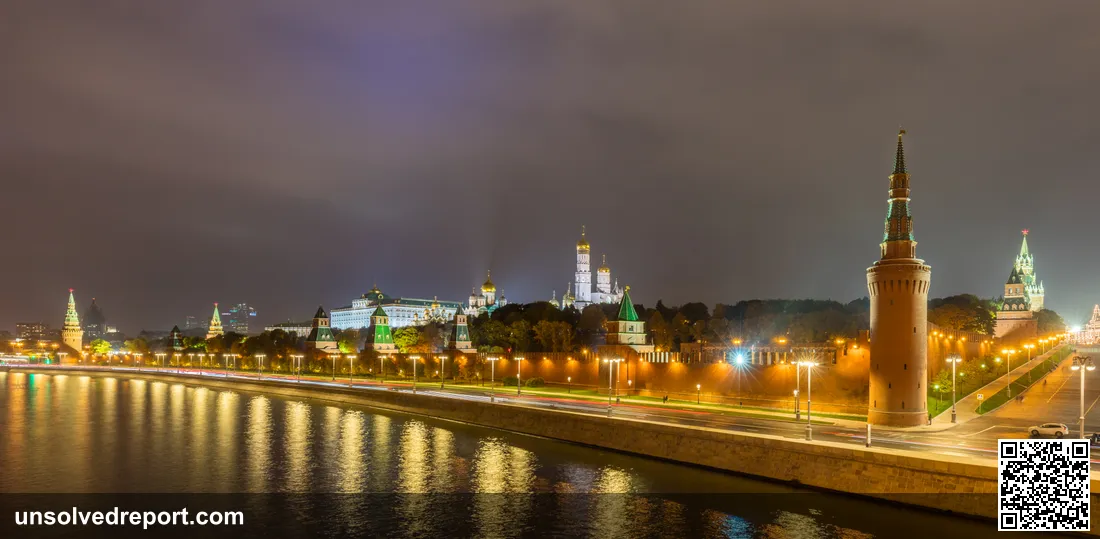
Think about Moscow. The city burned again and again and again. A hoard of manuscripts tucked into cellars to save it from fire could just as easily have burned in the next one — or been bricked up and forgotten, or scattered, or quietly destroyed hundreds of years ago. And the Kremlin really does have underground passages and chambers down there. The catch is brutal. You cannot exactly grab a shovel and start tunneling under one of the most heavily guarded government complexes on the planet.
So the real mystery splits in two. First: did a great trove of ancient Greek and Latin manuscripts ever truly exist in Moscow, on the scale the legend claims? And second: if it did — does any of it still survive, waiting down there to be found? Both questions are wide open. And part of the reason they stay open is almost cruel: the one place that could answer them is the single hardest spot on Earth to dig.
So what's the real story here?
Theory 1 — The Byzantine inheritance (the popular legend). This is the version your friend tells you at midnight. Sophia carried the books out of Constantinople as part of her dowry; the collection swelled under Vasili III and Ivan IV; and finally it was sealed away underground to keep it safe. Great story. But let's be honest about it: even the standard reference accounts flat-out call the idea that Sophia hauled a great library to Moscow a legend — not documented fact (Wikipedia: Sophia Palaiologina). So that vivid picture of seventy carts groaning under stacks of manuscripts? Treat it as folklore. A campfire tale, not a customs receipt.
Theory 2 — It was real, but smaller, and it's gone now (the middle road). A calmer take goes like this: yes, the Moscow court probably did own some notable Greek manuscripts — that 1518 Maximus episode is genuinely hard to wave away — but no, you shouldn't swallow the glittering claim of 800 priceless ancient texts. Under this reading, a real but modest collection got scattered or burned in the fires and the chaos, and only later did the legend inflate it into a buried wonder. The 19th-century historian Ivan Zabelin came down right here — and harder: he concluded the library had already been destroyed by the 1600s.
Theory 3 — It's mostly a myth (the skeptics). In 1898, the scholar Sergei Belokurov went to war on the entire thing. He picked apart the Maximus biography for contradictions, and argued that Dabelov's Pernau list — that all-important catalog of 800 books — was probably a fake (Ancient Origins). Later researchers piled on, including the Byzantine specialist Boris Fonkich, who doubted Sophia ever shipped a Byzantine collection west at all and pointed to evidence the materials stayed in the East. In this version, the Liberea is a gorgeous tapestry — woven from threads that are thin, secondhand, and sometimes just plain dubious.
So where does all this leave you, standing at the edge of the legend?
With a mystery that's almost suspiciously well-behaved. The names check out. The dates check out. The digs really happened. The only thing missing is the one thing that would end the whole argument forever — an actual book in someone's actual hands. Until somebody is finally allowed to crack open the right cellar beneath the Kremlin, the lost library of Ivan the Terrible stays exactly where the legend left it. Just out of reach. Hovering in that thin dark space between what we've proven and what we badly, badly want to believe.
And if a treasure can hide for four centuries under the most-watched building in Russia — what else is down there, still waiting in the dark, alongside all the other famous lost treasures still missing?
Sources and further reading
- Lost Library of Ivan the Terrible — Wikipedia
- Sophia Palaiologina — Wikipedia
- Ignatiy Stelletsky — Wikipedia
- Maximus the Greek (1470–1556) — Presidential Library of Russia
- The Search for the Lost Library of Ivan the Terrible — Ancient Origins
- The Golden Library of the Moscow Tsars That No One Can Find — Book Riot
SS Waratah Disappearance 1909: 211 Vanished, No Wreck Found
SS Waratah disappearance, 1909: a 9,339-ton luxury liner vanishes off South Africa with 211 aboard — no wreck, no bodies. What sank her?

Saturn Rings Age Mystery: Younger Than the Dinosaurs?
Saturn rings age mystery: Cassini's data say they might be younger than T. rex — but no one can explain how, or agree they're really young. Why not?
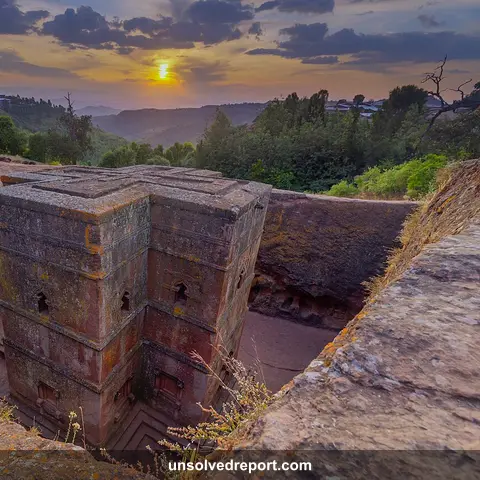
Lalibela's Rock-Hewn Churches: Carved Downward, No One Knows How
Ethiopia's Lalibela churches were carved downward into solid rock with zero room for error. So how did they do it, and when? Experts still can't agree.