SS Waratah Disappearance 1909: 211 Vanished, No Wreck Found
SS Waratah disappearance, 1909: a 9,339-ton luxury liner vanishes off South Africa with 211 aboard — no wreck, no bodies. What sank her?
A winter morning, 1909. A brand-new luxury liner steams along the South African coast, 211 people aboard — sleeping in cabins, eating breakfast, watching the green hills slide by. By the time she should have reached the next port, she was simply gone.
No distress call. No lifeboats. No bodies. Not even an oil slick on the water.
More than a hundred years later, the SS Waratah is still one of the strangest vanishings the sea has ever swallowed. A floating hotel, an entire ocean liner, that dissolved into thin air between two harbors barely a day apart. How does something that big just disappear?
What We Actually Know
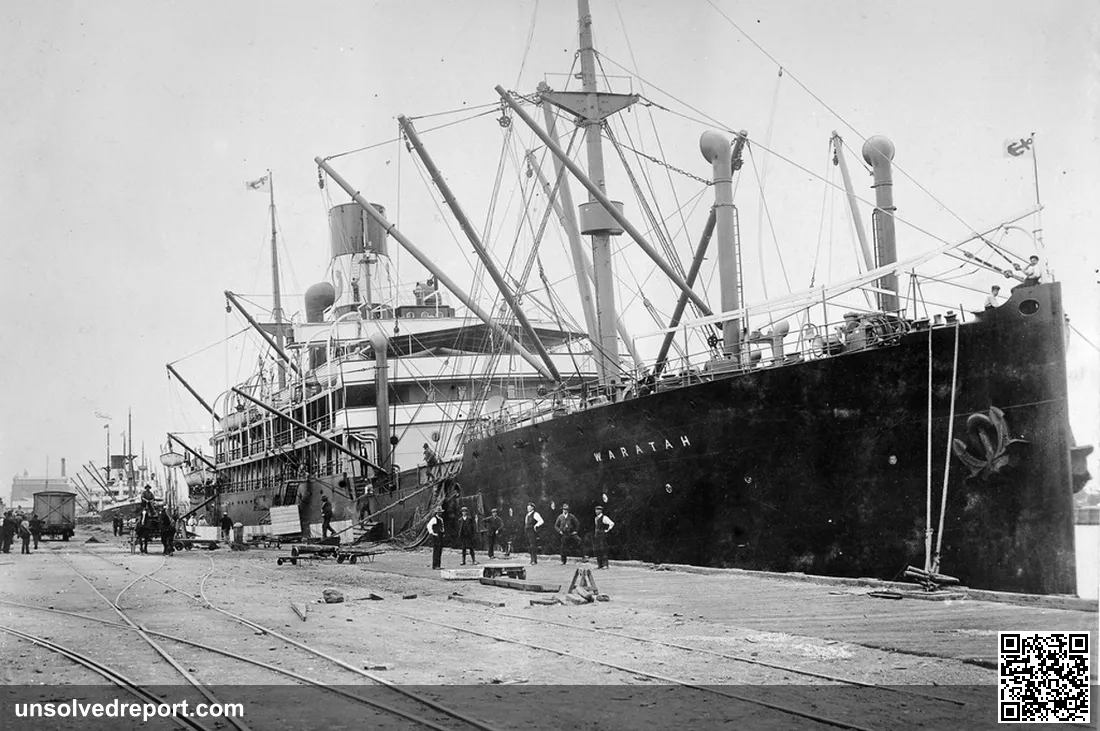
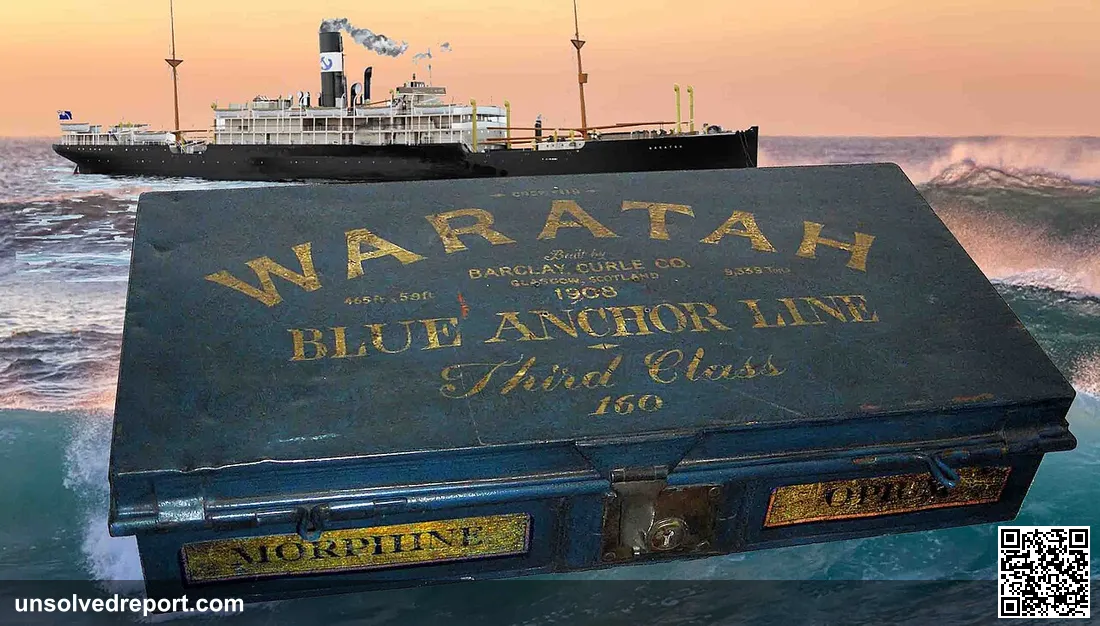
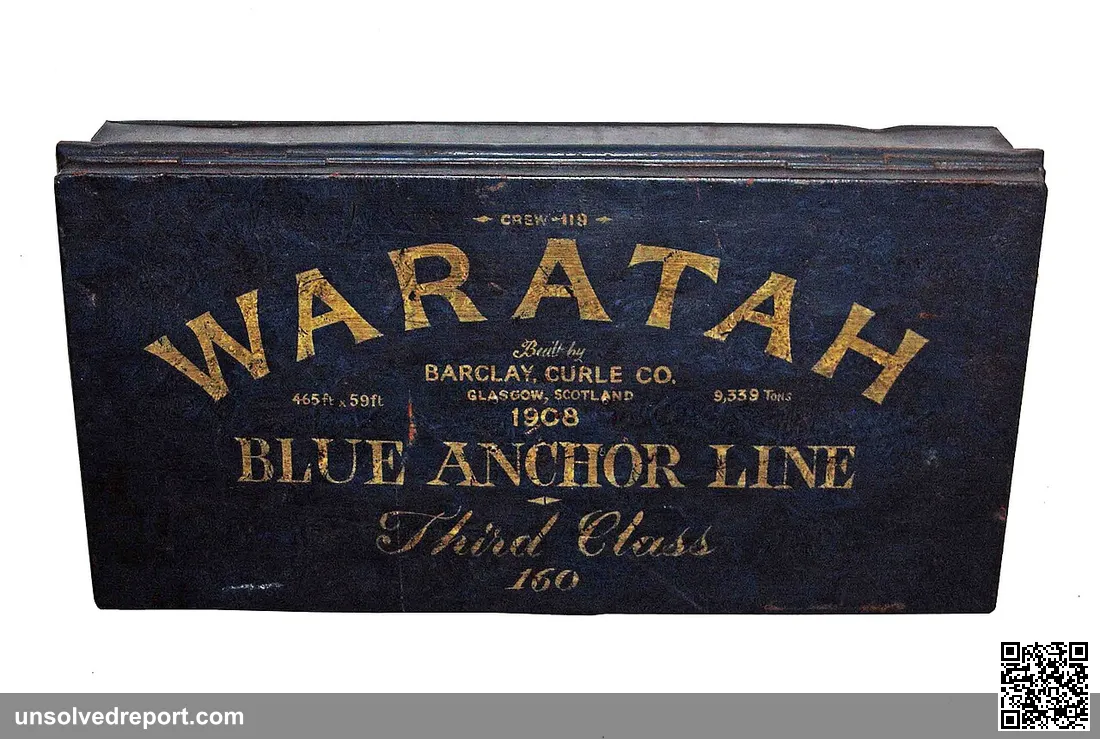
Forget the image of a creaky old tub. The Waratah was the pride of the fleet — a 9,339-gross-ton passenger and cargo steamer built by Barclay, Curle & Co. of Glasgow and launched on 12 September 1908 for the Blue Anchor Line, owned by W. Lund & Sons (Wikipedia). She stretched roughly 465 feet, carried Lloyd's of London's top "+100 A1" rating, and ran as the company's flagship on its London–Durban–Adelaide route (Wikipedia). This was no risky maiden gamble, either — she had already completed a full first voyage in 1908. Among those early passengers? Two future Nobel laureates, William and Lawrence Bragg (State Library of South Australia).
Now follow her last trip. She pulled out of Port Adelaide on 7 July 1909, reached Durban on 25 July, and steamed back out for Cape Town at about 8:15 p.m. on 26 July 1909. On board: 211 passengers and crew under Captain Joshua Ilbery, plus a heavy belly of cargo — lead concentrate, lead ore, frozen meat, wool, flour and bullion (Wikipedia; South African History Online).
The last time anyone laid eyes on her was the early hours of 27 July. The Clan Line steamer Clan MacIntyre slid past her off the Eastern Cape, near the mouth of the Mbashe (Bashee) River, and the two ships flashed lamp signals at each other — a polite hello between strangers in the dark (Wikipedia). That was it. The last verified contact, ever. Then the coast turned violent: a powerful gale roared in. When the Waratah didn't show up in Cape Town on 29 July as expected, the worry began (Discovery UK).
The hunt was massive. Royal Navy cruisers, including HMS Pandora and Forte, raked the coastline. The Union-Castle steamer Sabine logged roughly 14,000 nautical miles over weeks. The steamer Wakefield kept searching for months into 1910, pushing all the way down to the sub-Antarctic Kerguelen Islands (Wikipedia). On 15 December 1909, Lloyd's gave up and listed the ship as missing. And here's the gut-punch: in all those thousands of miles, they found nothing. No wreckage. No lifeboats. No remains.
In December 1910, a British Board of Trade Court of Inquiry sat down in London to figure out what happened. Expert witnesses swore the ship was soundly designed and built — yet the passengers who'd ridden her told wildly contradicting stories about how steady she was. The court threw up its hands and ruled it could not determine a cause (Wikipedia). The Blue Anchor Line never recovered. Ticket sales cratered, and the firm sold off its remaining ships to P&O in 1910.
The Question Nobody Can Answer
Here's what gnaws at people. This wasn't a tiny boat lost in the empty middle of the Pacific. This was a large, modern, top-rated liner that vanished in a busy coastal lane — close to shore, on a route ships ran all the time, the kind of near-coast disappearance that also swallowed the Flannan Isles lighthouse keepers without a trace. And it left absolutely nothing behind that anyone has ever confirmed.
Think about what a sinking usually leaves: floating wood and luggage, a rainbow sheen of oil, a body, a wrecked lifeboat tossed up on the beach days later. The Waratah left a clean, empty horizon. Like she'd never existed.
And the wreck? Still missing. To this day, nobody knows where she lies. The most relentless hunter was South African marine explorer Emlyn Brown, who chased her for more than twenty years, at times bankrolled by novelist Clive Cussler's National Underwater and Marine Agency (NUMA) (NUMA). In July 1999, Brown's team found a promising wreck and announced it just might be the Waratah (South African History Online). Hopes soared. Then came the dive in 2001 — and it broke their hearts. The wreck was the Nailsea Meadow, a cargo ship a German U-boat had sent down in 1942 (Discovery UK; NUMA). Around 2004, Brown finally stopped, admitting he'd run out of leads. As of today, no verified wreck of the SS Waratah has ever been found.
So What Sank Her?
A rogue wave — the front-runner. Off the Wild Coast, the warm Agulhas Current slams headlong into southwesterly storm swells, and that collision is a documented factory for freakishly huge waves. The idea is simple and terrifying: one towering wall of water rolled or nosedived the heavily loaded liner under so fast that not a single soul had time to react (Wikipedia). It fits the sheer suddenness of it all. It's also still unproven for this exact ship.
She was top-heavy — the eeriest twist. This is where the story gets spine-tingling. A passenger named Claude Sawyer got off the ship at Durban — and lived. He reportedly described her as "top-heavy," and said he'd been having unsettling dreams he took as warnings (State Library of South Australia). Some witnesses remembered the Waratah leaning over and then righting herself, slow and sluggish. Others swore she handled perfectly fine. The engineering version of this theory: her dense lead cargo might have shifted, or a "free surface effect" quietly stole her stability in rough seas. But keep your feet on the ground here — the 1910 inquiry heard exactly this kind of clashing testimony and still reached no verdict. So Sawyer's premonition is a chilling piece of the tale, not proof of a deadly flaw. A man who walked off a doomed ship on a bad feeling makes a great story. It isn't evidence.
A boiler or coal-bunker explosion. Floated from time to time — but it doesn't really hold up. A blast that violent would almost certainly have scattered recognizable debris, and searchers never found a scrap.
The ghost sightings. After the Clan MacIntyre, other ships reported maybe-glimpses — a vessel rolling hard in the swell, far-off flashes of light. None were ever confirmed. They live in the land of legend, not the land of evidence — the same ghost-ship rumor mill that still trails the Mary Celeste (Wikipedia).
What we can say for sure is short and cold: a fine ship, a quick coastal hop, a savage storm, and 211 people who were never seen again. Everything else — the rogue wave, the top-heavy liner, the passenger who trusted a hunch and stepped off into the rest of his life — is the kind of open question that keeps a mystery breathing. Until the seabed finally hands her back, the Waratah stays exactly where she's rested for over a century: out there somewhere, unsolved.
Sources & Further Reading
- SS Waratah — Wikipedia
- Discovery of the wreck of passenger liner SS Waratah — South African History Online
- "Australia's Titanic" — the sinking of the SS Waratah — State Library of South Australia
- What Happened to the SS Waratah and Has It Been Found? — Discovery UK
- Waratah expedition — National Underwater and Marine Agency (NUMA)

Saturn Rings Age Mystery: Younger Than the Dinosaurs?
Saturn rings age mystery: Cassini's data say they might be younger than T. rex — but no one can explain how, or agree they're really young. Why not?
Lalibela's Rock-Hewn Churches: Carved Downward, No One Knows How
Ethiopia's Lalibela churches were carved downward into solid rock with zero room for error. So how did they do it, and when? Experts still can't agree.
Lead Masks Case: 2 Men Dead, Masked, and No One Knows Why
A kite snagged in the grass led a teen to two dead men wearing homemade lead masks, a cryptic note about "capsules" and a "signal" — and zero answers since 1966.