Flannan Isles Mystery: Three Vanished, One Coat Left Behind
December 1900: three keepers vanish from Flannan Isles lighthouse. Two coats are missing. The third is still on its hook. What happened to him?
The lamp was cleaned, filled, and ready to burn. It never burned. On the day after Christmas in 1900, the relief ship Hesperus rounded the cliffs of Eilean Mòr and met a wall of silence. No flag on the staff. No empty provision boxes stacked at the landing. No keeper at the rail to wave the ship in. When men finally climbed the long stairs and shoved open the door, here is what waited for them: a stopped clock, a lamp trimmed and ready but dark, and three chairs pulled up to a table. James Ducat, Thomas Marshall, and Donald MacArthur were gone. The sea around their lonely rock kept whatever it knew — a silence that echoes the far more famous case of the Mary Celeste, a ship found drifting with not a single soul aboard.
What we actually know
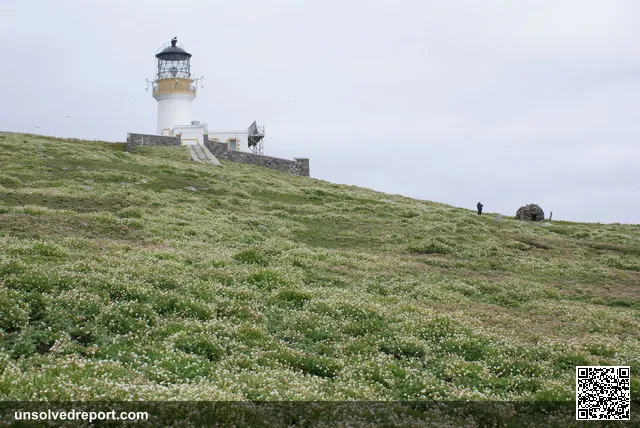
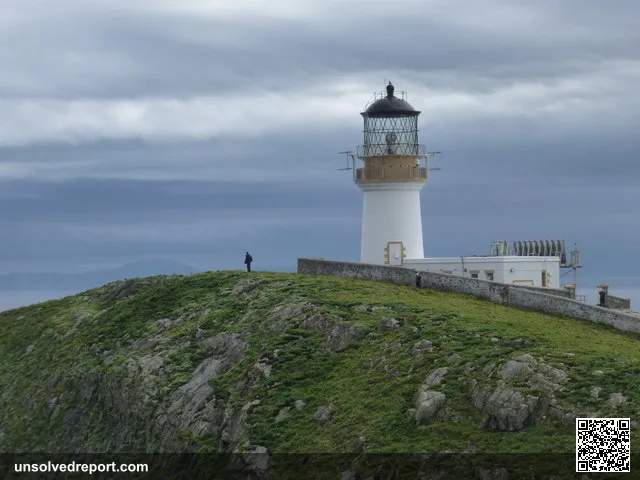
Three men ran a brand-new station, barely a year old. The Flannan Isles lighthouse stands on Eilean Mòr in the Outer Hebrides, off the west coast of Scotland — exposed, remote, hard to reach. David A. Stevenson designed it; the lamp was first lit in December 1899. A year later, in December 1900, three keepers held the rock: principal keeper James Ducat, second assistant Thomas Marshall, and occasional keeper Donald MacArthur, standing in for a sick colleague (Northern Lighthouse Board).
A passing steamer noticed the light had gone dark — and the alarm crawled in slowly. On 15 December 1900, the steamer Archtor reportedly saw no light where a light should have been. That report was delayed. The relief vessel Hesperus, already overdue thanks to foul weather, didn't reach the island until 26 December — and its crew found the station deserted (Wikipedia).
The lighthouse was tidy. That's the unsettling part. Joseph Moore, the assistant keeper sent ashore, found the entrance gate and the main door shut, the kitchen in order, the lamps cleaned and filled, the clock stopped. Two of the three oilskin coats were gone — so two men had pulled on waterproofs and walked out into the storm. The third set of waterproofs was still hanging there, untouched (BBC).
The logbook simply ends. The last entry was made on the morning of 15 December 1900, the light prepared but never lit that night. Superintendent Robert Muirhead, running the Northern Lighthouse Board's investigation, went through the station's records and weather notes for his report (Northern Lighthouse Board).
Down at the west landing, the sea had done something violent. Muirhead's inquiry found heavy damage roughly 110 feet above sea level. A wooden box that held the mooring ropes had been ripped out of a rock crevice. Iron railings stood bent. A lifebuoy lashed to those railings was simply gone. The picture was clear: the water had risen to a height almost nobody would expect (Historic Environment Scotland).
The official verdict pointed at the sea. In his report, Superintendent Muirhead concluded the three men had most likely been swept away while trying to secure equipment at the west landing during exceptionally heavy seas (Wikipedia).
The question nobody can answer
Strip away the legends and one question is left, simple and grim: how did all three men leave the lighthouse together and never come back?
Lighthouse rules generally kept at least one keeper on station at all times. Always. So the easy half makes sense — two men in oilskins, heading down to the landing to wrestle ropes and gear away from a building storm. That's just the job. But the third man? What pulls a keeper out the door without his coat, into that same weather, breaking the one rule that never breaks?
The official inquiry's best answer is a rogue wave — a freak, monstrous surge. The Flannan Isles face the open North Atlantic with nothing in the way, and the damage 110 feet above the waterline proves the sea climbed to a height that should have been safe. A sudden wall of water sweeping over men at the landing — or over a third man who bolted down to help, or to shout a warning — could have taken all three in seconds. It fits the evidence. It's grounded. And it can never be proven, because there were no witnesses and no bodies ever came back.
Theories — and which ones to trust
Here's where we leave hard fact and start reading the evidence. The first two ideas below are fair readings of the record. The third is about the stories the record flatly does not support.
A rogue wave at the landing
The plainest reading of Muirhead's findings: two keepers went to the west landing to secure the rope box and gear as the storm built, and a freakishly large wave overwhelmed them — the same brand of merciless North Atlantic and Southern Ocean seas that would later be blamed for swallowing the SS Waratah whole. The torn-out box, the bent railings, the vanished lifebuoy — all of it says water hit with tremendous force at a height that should have felt perfectly safe. This is the explanation most people cite, and the one that sits most comfortably with the physical evidence.
One man swept away, two lost trying to save him
This is the wave theory with the third-man puzzle solved. Picture it: one or two keepers are working the landing when the sea strikes. The last man — maybe the one who left his oilskins on the hook because he ran out without thinking — sprints down to help and gets caught by the next surge. That would explain why the station was left completely empty, which a seasoned principal keeper like Ducat would never have allowed on a whim. It's speculation. But it's speculation built straight from a documented detail: the coats that left, and the coat that stayed.
The fake logbook drama and a poem that fooled everyone
Most of what the public "knows" about Flannan Isles is invented, and it's worth saying that out loud. The popular retellings are lurid: log entries describing storms that raged for days when the weather records show calm seas, keepers found weeping or praying, one keeper written up as "insane," even a sighting of a giant bird. None of that appears in the real records. None of it comes from any official source. It was dreamed up and pumped up in later magazine articles to crank the drama.
The single biggest reason this place feels haunted is a poem. In 1912, the English poet Wilfrid Wilson Gibson published "Flannan Isle," picturing the relief party arriving to find an overturned chair and a meal left uneaten, brooding over the keepers' fate. It's beautiful writing. It is also fiction — literature, not testimony. So many details now passed around as "facts" — the untouched meal, the toppled chair — trace back to Gibson's imagination, not to Joseph Moore or Robert Muirhead. Pull the poem away and the true record is quieter, and sadder: a tidy station, prepared lamps, a stopped clock, and three working men who walked out into the weather and never walked back.
Why it still gets under our skin
Flannan Isles holds on because it refuses to hand us the clean ending we want. There's a strong, evidence-based answer — the sea took them — and yet no one saw it, and no grave marks the spot. That gap is exactly where legend pours in, much as it did around an entire vanished village at Lake Anjikuni, and the case is a sharp little lesson in how fast invented details harden into accepted fact. For more than a century, the fake log entries and the poet's imagined scene have partly buried the men themselves. James Ducat, Thomas Marshall, and Donald MacArthur were not characters in a ghost story. They were lighthouse keepers doing dangerous, essential work on one of the most brutally exposed rocks in the North Atlantic, keeping a light burning for the ships passing in the dark. Telling their story straight — sorting the documented from the invented — is the most honest tribute it can offer. And it raises a quieter question worth carrying to the next case: how many "famous facts" about our great mysteries were never facts at all?
Sources & further reading
- https://www.nlb.org.uk/lighthouses/flannan-isles/
- https://en.wikipedia.org/wiki/Flannan_Isles_Lighthouse
- https://www.bbc.co.uk/news/uk-scotland-highlands-islands-50653969
- https://www.historicenvironment.scot/
- https://en.wikipedia.org/wiki/Flannan_Isle_(poem)

The Sun Won't Tell Us What It's Made Of
We made a better model of the Sun's surface — and it broke our model of its core. Why scientists still can't agree what our own star is made of.
The Vela Incident: The Double Flash Nobody Can Explain
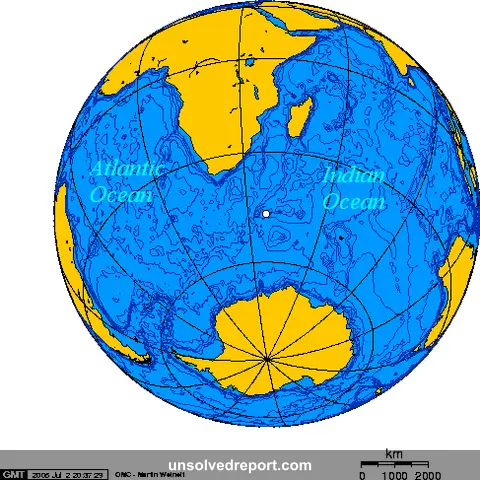
The Vela Incident, 1979: the mystery flash a dying satellite caught over an empty ocean. Secret bomb test, or glitch? Scientists still can't agree.
Gardner Museum Heist: The $500M Theft Nobody Can Solve
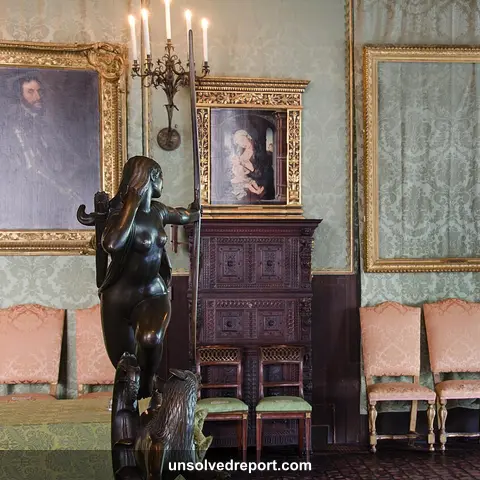
Gardner Museum heist: two fake cops, 13 masterpieces, $500M gone in 81 minutes. The FBI says it knows who did it — so why is the art still missing?