Lake Anjikuni: The Vanished Village That Never Existed
2,000 people vanished from Lake Anjikuni with empty graves and no footprints — or so the story goes. The real trail leads somewhere stranger.
A frozen November night, 1930. A trapper crests a rise above a remote Canadian lake and looks down on a village he knows. But something is wrong. The cooking fires are dead. Meals sit half-eaten in the cold. The sled dogs lie starved at their posts, still tied. And the graves — the graves have been dug open, and they are empty. Around 2,000 people, gone. Not a single footprint in the snow — the same kind of clean, impossible absence that makes the Flannan Isles lighthouse keepers still unsettle people more than a century later.
It's the kind of story that crawls into your bones. It's also, according to just about everyone who has actually pulled the records, almost certainly made up. And here's the twist that makes Lake Anjikuni worth your time anyway: the real mystery isn't what happened to the villagers. It's how one sensational scrap of newspaper copy mutated, over decades of retelling, into a "documented" disappearance that millions of people now half-believe.
Where the Story Actually Came From
The legend has a birthday. November 29, 1930. A "special correspondent" named Emmett E. Kelleher filed a wire story about a trapper, Joe LaBelle, who'd walked into a deathly quiet village near Lake Anjikuni (more correctly spelled Angikuni) in what was then Canada's Northwest Territories. People love to say it ran in the Halifax Herald — but researchers tracking down the oldest surviving copy found it in The Bee of Danville, Virginia (Skeptoid; Mental Floss).
Now here's the strange part. Kelleher's original story was tiny next to the monster it became. It described a settlement of about 25 people, one rusty rifle, and a few dog carcasses — not a bustling town of thousands (Skeptoid). And it ran with a photograph of an Inuit village. That photo turned out to be a problem — much like the Cottingley Fairies photographs decades earlier, a single doctored or misused image did more to build the legend than any actual testimony. When the Royal Canadian Mounted Police dug into the report, Sergeant J. Nelson reportedly figured out the image wasn't a fresh shot at all. It was an older picture lifted from the RCMP's own files (Skeptoid; Historic Mysteries).
That RCMP investigation is the heaviest fact in the whole case. Dated to early 1931, Nelson's inquiry found that Joe LaBelle was a real man — but he worked in northern Manitoba, not the area in question — and concluded the whole episode was a sensationalized story with no foundation under it (Skeptoid). And the force never blinked, not once. Decades later, RCMP historian S. W. Horrall noted that members could find no record of such an event and were frankly astonished anyone believed it. To this day the RCMP publicly calls the vanished-village story a myth, saying their records show nothing of the kind ever happened (Mental Floss).
Then come the people who went looking on their own. In November 1976, writer Dwight Whalen published "Vanished Village Revisited" in FATE magazine. He chased down the early articles, wrote straight to the RCMP, and got the same answer: no record of any such event. His verdict was sharp. The whole thing rested, he wrote, on "the story of an inexperienced trapper told to an imaginative and not too conscientious newsman" (anomalyinfo). More recently, science writer Brian Dunning landed in the same place, calling the modern legend "simple pulp fiction" (Skeptoid).
And watch the headcount grow. Kelleher's 1930 village: 25 people. Frank Edwards' 1959 book Stranger than Science — the one that yanked the tale back to life and made it famous — bumped it to about 30. Later paranormal authors shoved it up to 1,200. By the early 2000s, online retellings were claiming 2,000 (Skeptoid). The juiciest bits — the dug-up graves, the missing organs, the lights glowing in the sky — show up only in these later versions. Never in the original report.
So What's Actually Left to Wonder About?
If the disappearance itself is almost certainly invented, is there anything real here at all? Yes, actually — just not the thing the legend keeps promising you.
The honest open question is about origins and authorship. We still don't fully know what Emmett Kelleher was working from when he filed that 1930 dispatch. Was there a seed — a real abandoned seasonal camp, a piece of local folklore, a trapper's tall tale — that he puffed up into news? Or did he mostly invent it? Whalen leaned toward the first idea, calling the piece "possibly based on a tall tale" (Skeptoid). Kelleher's habit of embellishment is part of the record. His exact sources are not.
There's a second loose thread, and it has Frank Edwards' name on it. Edwards cited no sources for his 1959 chapter and never pointed back to the 1930 article or the 1931 RCMP release. That's led Dunning to wonder whether Edwards effectively reinvented the story "from whole cloth," apart from Kelleher entirely (Skeptoid). Did the modern legend descend straight from Kelleher's 1930 wire copy, or did Edwards quietly rebuild it three decades later? Nobody's sure. It's a genuinely murky link in the chain — a little puzzle in the history of misinformation, not a paranormal one.
Theories and Interpretations
The hoax / embellishment theory (best supported). Stack up the evidence — the RCMP's repeated denials, the recycled photo, the total absence of any contemporary record backing the story, the headcount that kept ballooning — and it all points one way: a journalistic fabrication, or heavy embellishment, that snowballed with every retelling. This is the explanation the RCMP backs, the one Whalen reached, the one Dunning reached. And it fits every documented fact without needing anything weird.
The "real but mundane" theory (speculative). Here's a softer take. Inuit groups in the region genuinely moved around, following caribou and the hunting seasons. So a camp emptied for the season could have been misread by an outsider as a sinister mass vanishing. Plausible as human behavior — but on its own, nothing specific ties it to Kelleher's report. Treat it as informed guesswork, no more.
The paranormal theories (speculation, and the weakest of all). Later writers bolted UFO abductions onto the story. The claim got a boost when FATE ran a 1977 item invoking a supposed RCMP "Captain Larsen" who believed the villagers had been carried off by lights in the sky (Skeptoid). No such investigator, and no such official finding, has ever been verified. And the geographic details riding along with these versions fall apart on contact — sealskin kayaks at a landlocked inland lake, where caribou hide, not sealskin, was the norm (Skeptoid). These bits are best read as folklore stuck on after the fact, not evidence.
Lake Anjikuni won't die because it's the perfect ghost story: specific, cold, and just believable enough to keep you up. But the documented record tells a different tale — and honestly, a stranger one. A thin newspaper column, a borrowed photo, and a handful of imaginative authors manufactured a "true mystery" that has outlived every correction thrown at it. The villagers of Anjikuni didn't vanish, unlike the real settlers who walked away from the Lost Colony of Roanoke leaving only a single carved word behind. The evidence that they ever existed simply never showed up. Which leaves you with the real question worth chasing — one worth sitting with alongside history's other mysterious disappearances: how many other "documented" mysteries are just one borrowed photo away from falling apart?
Sources and Further Reading
- Brian Dunning, "The Vanishing Village of Angikuni Lake," Skeptoid — https://skeptoid.com/episodes/4371
- "The Strange Story of the Village That Supposedly Vanished," Mental Floss — https://www.mentalfloss.com/history/mystery/village-supposedly-vanished-canada
- "Lake Anjikuni: How Did an Entire Village Disappear?," Historic Mysteries — https://www.historicmysteries.com/unexplained-mysteries/lake-anjikuni/23871/
- "1930, November: Lake Anjikuni Disappearances," Anomalies: the Strange & Unexplained — http://anomalyinfo.com/Stories/1930-november-lake-anjikuni-disappearances
Sigiriya: The Sky Palace a Murderer Built on a Rock
Sigiriya rock fortress: a king who killed his father built a sky palace on a 180m cliff, painted 500 women on its face, then cut his own throat. Why?
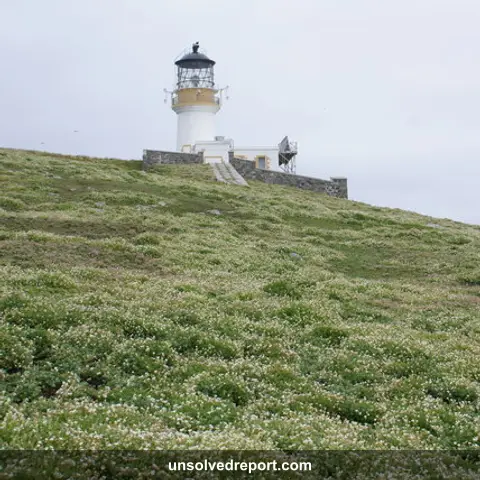
Flannan Isles Mystery: Three Vanished, One Coat Left Behind
December 1900: three keepers vanish from Flannan Isles lighthouse. Two coats are missing. The third is still on its hook. What happened to him?

The Sun Won't Tell Us What It's Made Of
We made a better model of the Sun's surface — and it broke our model of its core. Why scientists still can't agree what our own star is made of.