The Voynich Manuscript: The Book No One Can Read
The Voynich Manuscript sits in a Yale vault, fully photographed and free to read online — yet in 600 years, not one word has ever been decoded. Why not?
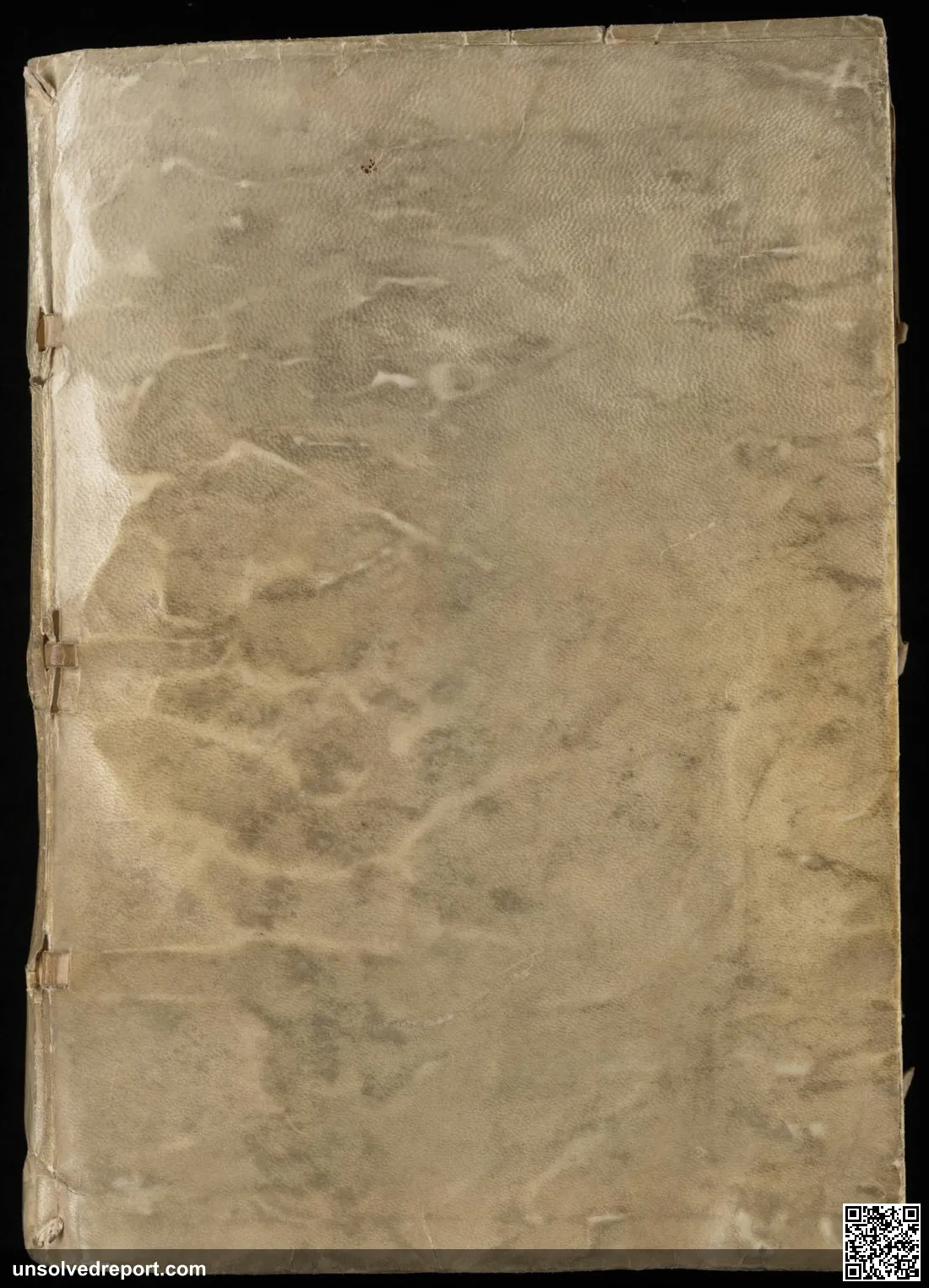
A small book sits in a climate-controlled vault at Yale University. It's about the size of a hardback novel. The pages are calfskin, gone soft with age. Nothing about it looks special.
But for more than a hundred years, the sharpest cryptographers, linguists, and codebreakers alive have stared at this book. They've fed it into computers. And one by one, they've walked away beaten. Not a single one of them can read a word of it.
This is the Voynich Manuscript, one of the world's most famous undeciphered texts and codes. It may be the most stubborn puzzle in the entire history of writing.
What is the Voynich Manuscript, exactly?
Start with what we can actually prove. The hard facts are strange enough on their own.
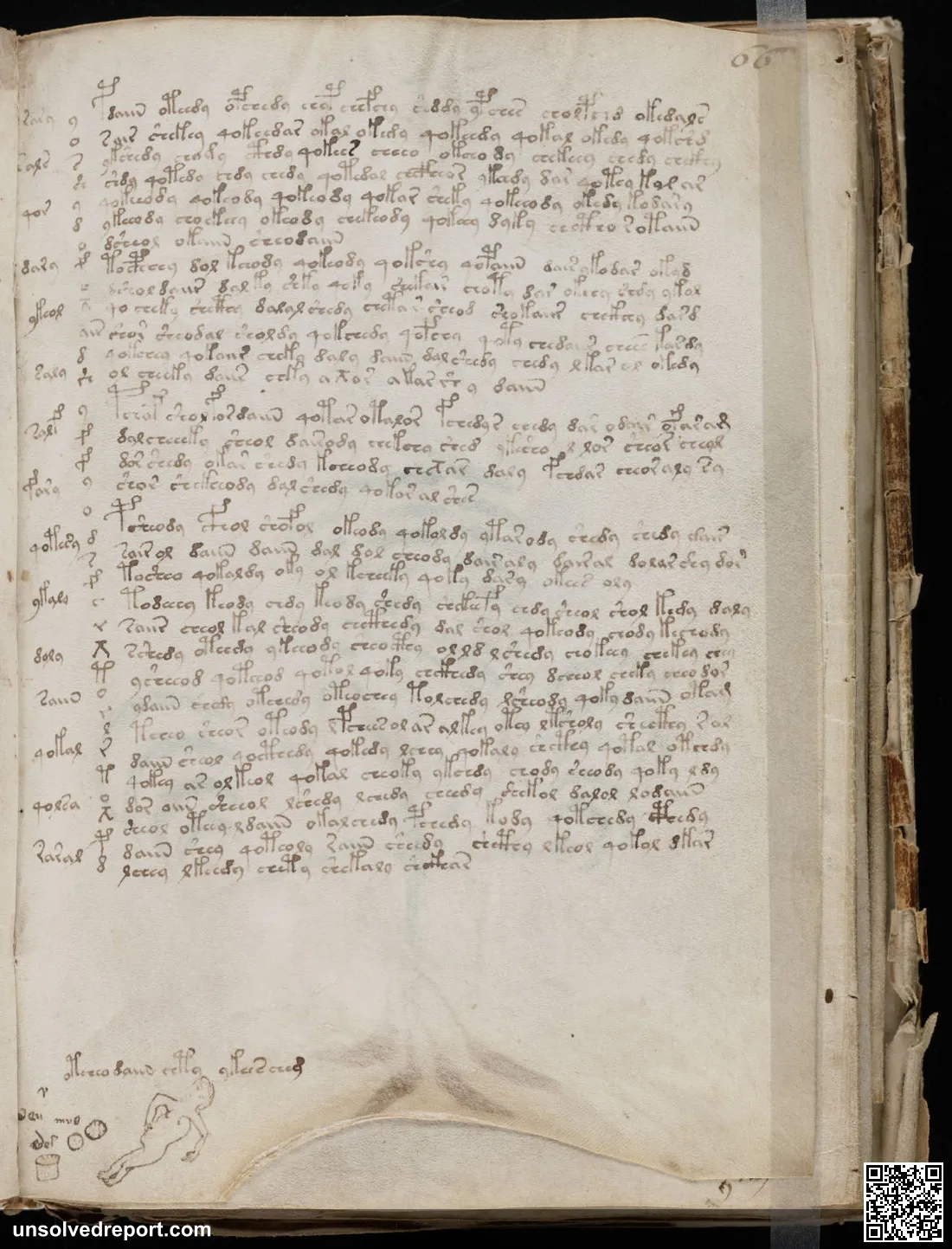
It's a handwritten book — about 240 surviving pages, each one roughly 23.5 by 16.2 centimetres. The handwriting is flowing and confident, the work of someone who clearly knew what they were doing. But the alphabet? It exists nowhere else on Earth. Scholars just call it "Voynichese."
There's a lot of it, too. Over 170,000 characters. Around 38,000 words, about 9,000 of them unique. It reads left to right, uses an estimated 20 to 25 main characters — and here's the unsettling part — it never once corrects itself. No crossings-out. No hesitation. Whoever wrote this was fluent in a language that, as far as we know, only they could speak.
Then there are the pictures. Hundreds of them crowd the margins, and this is where the book turns genuinely eerie. Researchers sort the drawings into sections that look like a medieval encyclopedia that went slightly wrong somewhere:
- A herbal section bursting with plants — many of which match no species any botanist can name.
- An astronomical section of circular diagrams, stars, and zodiac symbols.
- A balneological section: tiny nude figures bathing in green pools, all linked by strange tubes.
- Cosmological and pharmaceutical pages, then a long final stretch of dense text that looks like recipes.
In other words, it reads like a working reference book — something someone actually used. It just happens to be written in a language no living human can understand.
The fact that kills the "modern fake" idea
For decades, a sensible suspicion shadowed the book. Maybe it was a hoax — something cooked up to fleece gullible collectors. In 2009, that theory took a hard hit.
A team at the University of Arizona radiocarbon-dated samples of the vellum. The result came back tight and consistent: the calfskin dates to 1404–1438, the early 15th century (per Yale's Beinecke Library and Wikipedia's survey of the research). Made from at least fourteen or fifteen whole calfskins, the parchment is genuinely six centuries old.
Now, that doesn't prove the writing is medieval. In theory, someone could have gotten hold of old blank vellum and scribbled on it. But it knocks out the easiest answer and plants the manuscript firmly in late-medieval Europe. The skin is real. The age is real.
A paper trail through royal courts
Most mystery objects come with no history at all. This one comes with a provenance — an ownership record — that reads like a thriller.
The trail picks up in 17th-century Prague, in the hands of an alchemist named Georg Baresch. When he died, the book passed to Jan Marek Marci, rector of Charles University. In 1665 or 1666, Marci shipped it off to Rome, to the famous Jesuit scholar Athanasius Kircher — a man who decoded things for a living — hoping the great mind could finally crack it. (There's also a long-repeated tale that Holy Roman Emperor Rudolf II once paid 600 ducats for the book, a small fortune at the time. That part is shakier than the rest of the chain, so hold it loosely.)
Then the book vanished. Into a Jesuit collection it went, and there it sat for roughly two and a half centuries. In 1912, a Polish-born antiquarian bookseller named Wilfrid Voynich bought it in Italy — and gave the manuscript the name we use today. In 1969 it was donated to Yale's Beinecke Rare Book and Manuscript Library, where it now lives, catalogued as MS 408.
So tally it up. A real medieval object. A documented journey across the courts and libraries of Europe. And a book that defeated even a 17th-century genius who specialised in cracking codes.
So why can't anyone read it?
Here's the heart of it. Every easy explanation falls apart the moment you test it against the text itself.
You'd think it might just be gibberish — random scribbles. If it were, the letters should be statistically chaotic. They aren't. Linguist Claire Bowern of Yale, along with other researchers, has shown that the text obeys many of the statistical "laws" that real human languages follow — the kind of word-frequency patterns natural language tends to throw off. In a 2025 Yale News interview, Bowern summed up the maddening core of it: "It's very hard to work with because there are so many unknowns; any theory relies on so many assumptions."
But the second you flip the other way — fine, it's a real language in disguise — the text fights back. Bowern's statistical work found its properties are not consistent with a simple letter-for-letter substitution cipher. Words clump together in odd ways. Some "words" show up only on certain pages and nowhere else. It's far too structured to be nonsense. It's far too strange to be any known language in code. It sits in the impossible space between the two.
And it gets stranger. Paleographer Lisa Fagin Davis has argued the handwriting actually reveals as many as five different scribes working on the book together. Think about that. This wasn't one eccentric scribbling in private. It was a team. A deliberate, organised project. Five people, all fluent in a script that means nothing to anyone else.
Theories, legends, and dead ends
Everything below is unproven. These are hypotheses and claims, not facts — and here's the telling part: every single "solution" so far has failed to win over the experts.
- A lost or invented language. Some argue Voynichese captures a real spoken tongue that has since died out, or a language someone built from scratch. Nobody has produced a translation that holds up under scrutiny — the same stalemate that has stumped researchers on other undeciphered systems like the Indus Valley script and Easter Island's Rongorongo.
- An elaborate hoax. In 2003, researcher Gordon Rugg showed that meaningless text with language-like statistics could be churned out using a 16th-century gadget called a Cardan grille. Critics say the resemblance to the real manuscript is only skin-deep — so this stays a possibility, not a proof.
- A complex cipher. Recent work in the journal Cryptologia (covered in early 2026 by Archaeology Magazine) suggests a sophisticated cipher system could reproduce some of Voynichese's statistical quirks. Researchers treat it as a useful benchmark — not a decode, much like the still-unbroken Beale ciphers, whose buried-treasure code has resisted over 150 years of cryptanalysis.
- The "I cracked it" claims. Over the years, confident solutions keep arriving, and keep collapsing. In 2019, Dr. Gerard Cheshire announced the book was written in a "proto-Romance" language. The linguistics community rejected it fast — Lisa Fagin Davis memorably dismissing it as "aspirational, circular, self-fulfilling nonsense," and the University of Bristol pulling its own press release. Go back further, to 1921: philologist William Newbold swore he could see microscopic letters hidden inside the ink strokes. That reading was later debunked too.
The pattern is humbling. Brilliant people keep announcing victory. The manuscript keeps quietly outliving them.
Why the Voynich Manuscript still matters
What makes this book so magnetic isn't a curse, and it isn't a conspiracy. It's something rarer, and a little dizzying.
A real, datable, six-hundred-year-old object — sitting in a public library, fully photographed, free to view online by anyone with an internet connection — can be completely open to our eyes and still completely closed to our minds. You can stare at every page right now. You will not understand a single line.
Every generation brings sharper tools to the fight: statistics, multispectral imaging, machine learning. And every generation gets a little deeper into how the text behaves — without ever cracking what it says. The Voynich Manuscript is, in the most literal sense, an open book that no one can read.
Maybe someday someone will. Until then, it waits in its vault — patient, silent, and undefeated. And somewhere out there, the next person who thinks they've solved it is just sitting down to begin.
Sources & further reading
- Yale University, Beinecke Rare Book & Manuscript Library — catalog entry for MS 408 (the manuscript is fully digitised and viewable online).
- "Deciphering a mysterious manuscript," Yale News, February 21, 2025 — interview with linguist Claire Bowern.
- "Voynich manuscript," Wikipedia — well-sourced overview of physical description, radiocarbon dating, provenance, and decode attempts.
- "New Voynich solution proposed – and rebuffed by experts," Klausis Krypto Kolumne (scienceblogs.de), May 2019 — on the Cheshire proto-Romance claim and its rejection.
- "A new study suggests the mysterious Voynich Manuscript may be a medieval cipher," Archaeology Magazine, January 2026.
Sinaia Lead Plates Forgery Mystery: The Clue Nobody Can Explain
Lab tests call the Sinaia lead plates 19th-century forgeries. So why hasn't anyone explained the one clue that doesn't fit the hoax story?
Somerton Man: The Body Nobody Could Name for 74 Years
Who was the Somerton Man? A coded note, a torn Persian poem, and a phone number kept him nameless for 74 years - until DNA cracked the case in 2022.
Mahendraparvata: The Lost Khmer City a Laser Uncovered
Mahendraparvata: a Khmer capital hidden under Cambodia's jungle for 1,200 years, found only when a laser exposed it from the air. Why did it empty out so fast?