Somerton Man: The Body Nobody Could Name for 74 Years
Who was the Somerton Man? A coded note, a torn Persian poem, and a phone number kept him nameless for 74 years - until DNA cracked the case in 2022.
6:30 in the morning, December 1, 1948. The sun is already warm on Somerton Park beach, just south of Adelaide. A man sits propped against the sea wall, head resting back, legs neatly crossed, an unlit cigarette balanced on his collar. The people who spot him think he is asleep.
He is dead. And he will stay nameless for the next seventy-four years.
What grew out of that morning became one of the most documented, most maddening unidentified-body cases of the entire twentieth century. It ran for more than seven decades before science finally offered a likely answer, the same slow-motion twist that finally resolved the Dyatlov Pass Incident. Along the way it picked up spies, secret codes, a Persian poem, and a phone number scribbled in a book. Here is the strange part: nearly all of that is real. The trick is to hold the hard paper trail in one hand and the wild folklore in the other, and never let the two blur together.
A sleeping man who wasn't
Picture a man dressed for a meeting on a hot summer morning. Clean suit, freshly pressed. According to the coronial record, he had no wallet, no ID, nothing to say who he was. His pockets held only ordinary scraps of a life: a used bus ticket, an unused train ticket, a comb, a packet of chewing gum, cigarettes, and a box of matches.
Then the first quiet jolt. The labels had been cut from his clothing. That single detail would later feed the wildest theories on Earth - though, to be fair, removed labels are also exactly what you find on secondhand clothes.
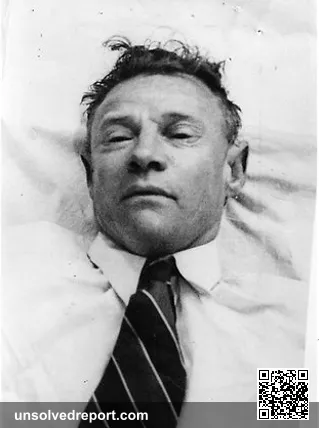
The description police wrote down is almost painfully thorough for a man no one could name. Forties. About 180 centimeters tall. Athletic. Grey eyes, fair-to-ginger hair greying at the temples. And one odd flourish: unusually well-developed calf muscles, the kind that made investigators wonder if he had been a dancer, a runner, or a man who lived in high-heeled or pointed shoes. His hands were clean and uncalloused - no heavy labor in this man's life. None of it gave him a name in 1948. But this careful, almost obsessive record-keeping is the only reason the case could be cracked seventy years on.
There's a timing clue too. The evening before, on November 30, witnesses saw a man matching his description lying in that exact spot, one arm flopped out as if he were drunk or asleep. That places his death, plausibly, on the night of November 30 into December 1, 1948.
So what killed him? The inquest, led by South Australian coroner Thomas Cleland, couldn't say for sure. A pathologist - John Burton Cleland, a different Cleland, a noted professor - examined the body and found congestion that looked like poisoning. But no poison ever showed up in the tests they had back then. The coroner refused to record a definite cause, while the experts leaned toward poison, possibly something that breaks down and vanishes without a trace. Read that line again, because it matters: poisoning was suspected. It was never proven.
Two words sewn into a pocket
Months into the dead end, a tailor took another look at the dead man's trousers - and found something everyone had missed. Rolled up tight and tucked into a hidden fob pocket was a tiny scrap of paper. On it, two printed words:
Tamam Shud.
The phrase is Persian. It means, roughly, "it is ended." Or "finished." It comes from the closing lines of the Rubaiyat of Omar Khayyam, a book of medieval Persian quatrains that was wildly popular in English translation at the time. Suddenly the whole case tilted. A dead man with a poem about endings sewn into his clothes.
Police went public. And a man came forward with a chill of a coincidence: around the relevant time, he'd found a rare edition of the Rubaiyat tossed into the back seat of his unlocked car, parked near Somerton beach.
That book came with two more puzzles bolted on:
- A torn-out section in the back matched the shape and the paper of the "Tamam Shud" scrap. The slip had been ripped from this exact copy.
- Faint pencil markings inside the cover formed lines of seemingly random capital letters - what became known as the Somerton Man code. Scrawled there too: a phone number, traced to a local nurse.
The code that won't crack
Cryptographers have stared at those letters for decades, much like the still-unread pages of the Voynich Manuscript. So have hobbyists, code-breakers, and analysts circling Australian intelligence. Want the honest answer, the one that keeps showing up in the serious coverage? It's too short to crack with any confidence - and it may not be a code at all. It could be the first letters of a half-remembered verse, a mnemonic, or plain idle doodling. No credible decryption has ever held up. So when someone tells you they've "solved" the code, the evidence says they're reaching.
Now the phone number. It led police to a woman who, in 1948, lived near the beach. For decades the coverage shielded her behind a single alias - "Jestyn" - to protect her privacy; she was later publicly named as Jessica Thomson. When police showed her a plaster cast of the dead man's face, she reportedly flinched with visible discomfort. Then she denied knowing him.
That flinch lit a fire. Theories swarmed - the most repeated being that the dead man was somehow linked to her, or even to her son. Here's the catch: none of it was ever proven while she was alive. She died in 2007 without ever resolving the question. So it stays where it belongs - in the unproven column.
The suitcase nobody claimed
Soon after the body turned up, police followed a thread to a suitcase. It had been checked into the cloakroom at Adelaide Railway Station on November 30, 1948 - the very day before the man was found. Almost everyone believed it was his. And cracking it open only deepened the mystery instead of solving it.
Inside: clothing with the labels cut out again. A few items with names or partial names - tags reading "T. Keane" or something close - that police chased hard and could never tie to a single missing person. There was a set of specialized tools, including gear linked to stenciling or upholstery work. And a spool of orange waxed thread, the kind reportedly not sold in Australia at the time - thread that some noticed matched a repair on the dead man's own trousers.
None of these threads, so to speak, led anywhere. But put them together - the cut labels, the dead-end name tags - and you can see why people couldn't let go. It looked like someone had deliberately erased a man's identity, stitch by stitch. It is equally consistent with something far quieter: a private, drifting man who traveled light and bought his clothes used.
Why everyone thought "spy"
Stack it all up. A label-less suit. A Persian poem. A code nobody can read. And the year - 1948, the early Cold War, with spy paranoia crackling across the Pacific. Adelaide even sat within reach of the Woomera weapons-testing range, which handed conspiracy-minded readers a tidy little motive on a plate.
It's easy to see why the spy story is so seductive. It's just as important to say this clearly: no document, no defector's testimony, no archive ever released has placed the Somerton Man inside any intelligence operation. Not one. The spy story is folklore built on genuine ingredients. The ingredients are real. The conclusion was never earned.
The grave gives up its secret
In the end, the answer didn't come from the code, or the poem, or the suitcase. It came from the body itself.
The Somerton Man had been buried in Adelaide's West Terrace Cemetery. For years, University of Adelaide researcher Derek Abbott chipped away at the case, more stubbornly than anyone. (And here's a twist worthy of the story: Abbott had married a descendant of Jessica Thomson herself.) He pushed and pushed for one thing - dig up the body, and run the DNA.
In May 2021, South Australian authorities did exactly that. They exhumed the remains to attempt modern DNA extraction. Teaming up with American genetic genealogist Colleen Fitzpatrick, Abbott built a DNA profile and started climbing family trees through genealogical databases - the same forensic path that came up empty for Kaspar Hauser, Europe's other famous unnamed man.
In July 2022, they announced it. The Somerton Man had a name: Carl "Charles" Webb, an electrical engineer and instrument maker, born in Melbourne in 1905. By their account, Webb had been married, was estranged from his wife, and had quietly fallen out of contact with his family - which is the whole reason no one reported him missing in 1948. The case rested on matching the recovered DNA to relatives tracked down through exhaustive genealogical work.
Two caveats keep this honest:
- As of the 2022 announcement, the identification came from independent researchers and was described as a strong probability built on DNA and genealogy - not yet a formal government confirmation. The coverage was careful to note that South Australia Police and the state had not, at announcement, officially confirmed the name.
- This tells us who he likely was. It does not tell us how he died, or why he was on that beach. The cause of death is still officially unresolved.
What we know - and what we never will (yet)
It helps to sort the layers cleanly.
Documented fact:
- A well-dressed, unidentified man was found dead at Somerton beach on December 1, 1948.
- His clothing labels were removed and he carried no ID.
- A hidden "Tamam Shud" scrap was found, matched to a specific copy of the Rubaiyat of Omar Khayyam.
- That book contained pencil markings (the "code") and a nurse's phone number.
- The body was exhumed in 2021; in 2022 researchers named him, via DNA, as Carl Webb.
Unproven or folkloric:
- That he was a spy.
- That the letter markings are a solvable cipher.
- That he had a specific romantic or familial link to Jessica Thomson.
- That he was definitely poisoned (suspected, not confirmed).
The Somerton Man is a masterclass in how a mystery snowballs, the same slow inflation that turned D.B. Cooper into legend. Every real oddity - the missing labels, the Persian phrase, the strange book - is genuine and on the record. But for seventy-four years, people stitched those true details together with guesses the evidence never backed up. And when the answer finally arrived, it came from the least romantic source imaginable: a DNA swab and a family tree. A man with a name. An estranged marriage. A life that simply slipped out of the world.
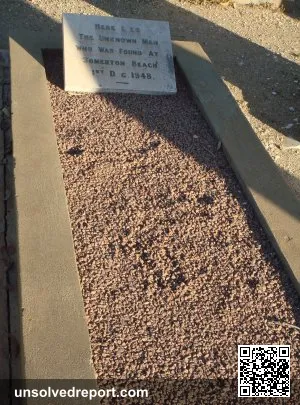
The beach is still there. So is the book, and the two words sewn into a pocket. So is the question that won't die - how did Carl Webb actually die? But for the first time since 1948, the man at the center of it all is no longer a stranger.
And somewhere in the world, there is always another nameless body, another sealed file, another secret waiting in a pocket.
Sources & further reading
- Wikipedia: Tamam Shud case - https://en.wikipedia.org/wiki/Tamam_Shud_case
- ABC News Australia (2022): Somerton Man identified as Carl Webb - https://www.abc.net.au/news/2022-07-26/somerton-man-mystery-identity-solved-carl-charles-webb/101270614
- The Guardian (2022): Researchers say they have solved Somerton Man identity - https://www.theguardian.com/australia-news/2022/jul/26/somerton-man-mystery-adelaide-researchers-say-they-have-solved-identity-of-tamam-shud-case
- University of Adelaide - Derek Abbott Somerton Man research - https://www.adelaide.edu.au/
Mahendraparvata: The Lost Khmer City a Laser Uncovered
Mahendraparvata: a Khmer capital hidden under Cambodia's jungle for 1,200 years, found only when a laser exposed it from the air. Why did it empty out so fast?
Dwarka Submerged City: The Sunken Ruins Nobody Can Explain
Divers found cut stone walls and 120+ anchors submerged off Dwarka, India. Is it Krishna's legendary drowned city? The age nobody can pin down.
Mercury Large Iron Core Mystery: The Planet That Shouldn't Exist
Mercury's iron core swallows 85% of the planet, more than double any rocky world's share. Something added metal or stole the rock, but the evidence contradicts itself. See why.