Kaspar Hauser: The Lost Prince DNA Couldn't Name
Kaspar Hauser claimed 16 years locked in the dark, then died from a wound he may have inflicted himself. In 2024, DNA answered one question about the 'lost prince' — but not the one everyone wanted.
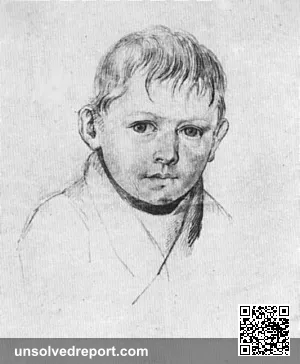
May 26, 1828. A teenage boy lurches into a public square in Nuremberg, Germany, swaying on his feet like a toddler taking his first steps. He clutches two letters. He can barely talk. Over and over he says the same odd thing — he wants to be "a cavalryman, as my father was." Ask him almost anything about the world, and he draws a blank. He seems to have arrived from nowhere — a modern echo of the Green Children of Woolpit, medieval England's own tale of youngsters who appeared with no explainable origin.
Within months, this blinking, half-mute stranger was one of the most famous people in Europe. And clinging to him was a rumor so delicious it refused to die for nearly 200 years: that he was a kidnapped prince, the stolen heir to a German throne.
In 2024, scientists finally pressed DNA for an answer. Part of it came back loud and clear. The part it stayed silent on is the mystery that still won't let go.
What We Actually Know
Here's something strange for a case this murky: Kaspar Hauser's arrival is unusually well documented. One of his letters was addressed to a local cavalry captain. It claimed an anonymous caretaker had taken the boy in as an infant back in 1812 and had never once let him "take a single step out of my house." The second letter, supposedly from his mother, handed over his name — Kaspar — and a birth date. There's a catch. Handwriting analysis later suggested Hauser had written both letters himself (Wikipedia, "Kaspar Hauser").
At first the authorities did the unromantic thing and jailed him as a vagrant. Then, in 1828, they handed him to a schoolmaster named Georg Friedrich Daumer. And the story Hauser told under that roof was the stuff of nightmares. He said he'd spent his whole childhood in "solitary confinement in a dark cell," fed nothing but rye bread and water. A masked man, he said, visited him — taught him to write his name, taught him to walk, and then, just before turning him loose, vanished. The boy learned fast. He had a real gift for drawing.
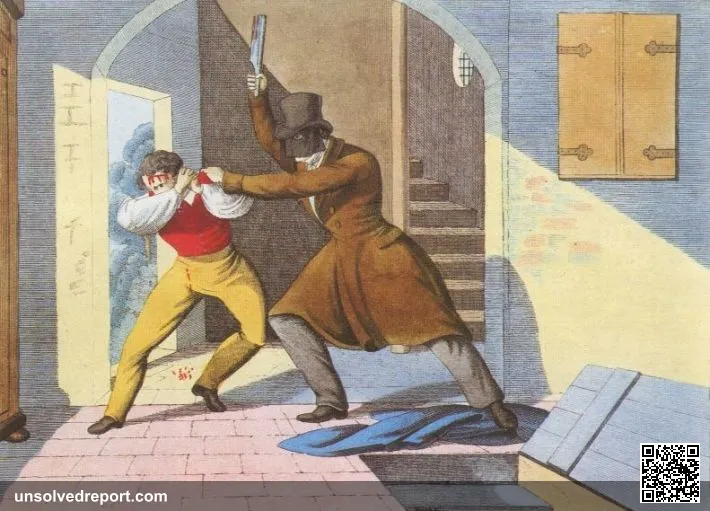
Then the story turned bloody. On October 17, 1829, Hauser was found bleeding from a slash to the forehead. A hooded man, he said, had attacked him inside Daumer's house. A pistol incident followed in 1830. He was passed from household to household — including a stretch under the patronage of British nobleman Lord Stanhope and the famous jurist Anselm von Feuerbach, who became convinced the boy was a hidden aristocrat. By late 1831, Hauser was living in Ansbach.
The last act came on December 14, 1833. Hauser staggered home with a deep wound in his chest. A stranger, he gasped, had stabbed him in the Ansbach Court Garden — handing him a purse at the same moment. Police found that purse: violet, with a note inside written in mirror script and signed with three cryptic initials, "M. L. Ö." Three days later, on December 17, 1833, Hauser died of the wound — another 19th-century Bavarian death, like the Hinterkaifeck murders a century later, that left investigators with more questions than culprits (Wikipedia).
Now, the legend. It started while Hauser was still alive, and it was irresistible. The tale went like this: Hauser was the firstborn son of Charles, Grand Duke of Baden, and Stéphanie de Beauharnais — an adopted daughter of Napoleon himself. That baby, born in 1812, had officially died in infancy. But according to the rumor, the dying child swapped into the cradle was a commoner's, and the real prince was spirited away — the scheme of the ambitious Countess Louise Caroline of Hochberg, whose own sons would inherit the throne if the direct line collapsed. The true heir, the story whispered, was raised in the dark and resurfaced 16 years later as the boy in the square (CNN, 2024).
Historians never bought it. As far back as 1876, the original documents on the infant prince's baptism, autopsy and burial were dug up; the writer Andrew Lang scoffed that it was "too absurd" to imagine the court physicians, the nurses and the whole family all conspiring to pull off a baby swap. A 2023 study piled on. Hauser's body carried cowpox vaccination scars — and vaccination had been mandatory in Bavaria since 1807. Try squaring that with a boy who supposedly spent his entire life sealed inside a single cell (Wikipedia).
The knockout blow came from genetics. In a 2024 paper in the peer-reviewed journal iScience, forensic geneticist Walther Parson teamed up with Turi King — the scientist who put a name to the bones of King Richard III — and an international team. They went after mitochondrial DNA (mtDNA), the kind passed down only from the mother — the same maternal-line technique that helped untangle the ancestry of the Tarim Basin mummies — pulled from hair strands and traces of blood on objects attributed to Hauser and kept at the Kaspar Hauser museum (University of Bath, 2024). Using modern high-sensitivity sequencing that can read even degraded fragments, they found the mtDNA across the different Hauser samples matched one another perfectly — proof, for the first time, that the relics really did come from the same person. And it was "clearly different from the mitochondrial lineage of the House of Baden, which rules out a maternal relationship and thus the widely believed 'Prince theory'" (Parson et al., iScience, 2024, abstract via PubMed).
That result also cleared up an old mess. Earlier DNA tests, reported in 1996 and again in the early 2000s, had thrown back contradictory answers. The 2024 team explains why: those older attempts leaned on "less sensitive Sanger and electrophoresis-based methods," and on top of that, some of the samples' authenticity was in doubt — which left the whole question hanging until now (PubMed; University of Leicester, 2024).
The Question DNA Couldn't Touch
Here's what the DNA did not do. It never told us who Kaspar Hauser actually was. The maternal line points away from Baden — and then it simply stops. King said it without any sugar: "Sadly our data still can't tell us who he was… he still remains an enigma in terms of his origins." The best the team could do was file his mtDNA under broadly "Westeurasian." No region. No family. No name — much like the Somerton Man, whose identity stayed locked away for 74 years despite decades of forensic effort (Phys.org, 2024).
So the real puzzles are still standing. Where did a boy who could barely walk truly come from? Was he genuinely raised in isolation — or did he spin an elaborate story? And the darkest question of all: how did he die?
The Theories Still on the Table
The following are interpretations and remain unproven.
He did it to himself (the view many historians favor). Back in 1833, the forensic examiners concluded that the fatal chest wound "might have been self-inflicted." The mirror-writing note in that violet purse was riddled with the same spelling errors Hauser always made, and it was folded in his own distinctive triangular style. The leading scholarly read: Hauser may have wounded himself to reignite the fading public fascination with his case — possibly hoping to nudge Lord Stanhope into finally taking him to England — and cut deeper than he ever meant to (Wikipedia). Skeptics read the 1829 forehead wound the same way, coming as it did right after a quarrel with Daumer.
He was silenced. Hauser's defenders, then and now, insist the attacks were real — that someone wanted him dead. The trouble is, this version needs the Prince theory to supply a motive, and the DNA just knocked most of the legs out from under that.
He made it all up. Some who knew him weren't charmed. Baron von Tucher complained of Hauser's "exorbitant vanity and lies." In this reading, Hauser was a gifted, troubled young man who invented a captivity tale that eventually grew too big for him to control.
The honest verdict? The 2024 study slammed one door shut and left the rest of the house in the dark. Kaspar Hauser was almost certainly not the lost prince of Baden. But the boy who appeared out of thin air, and the wound that killed him, are still genuinely unexplained — a mystery that modern science has sharpened to a finer point instead of solving. Some doors, it turns out, even DNA can't open.
Sources & further reading
- Parson W, Amory C, King T, Preick M, et al. "Kaspar Hauser's alleged noble origin — New molecular genetic analyses resolve the controversy." iScience, 2024. PubMed abstract
- University of Bath, "New DNA analysis helps bust 200-year-old royal conspiracy theory" (2024). Link
- University of Leicester, "New DNA analysis helps bust 200-year-old royal conspiracy theory" (2024). Link
- CNN, "New DNA analysis unravels the mystery of 'lost prince' Kaspar Hauser" (2024). Link
- Phys.org, "New DNA analysis helps bust 200-year-old royal conspiracy theory" (2024). Link
- Wikipedia, "Kaspar Hauser." Link

Oc Eo Lost City: The Funan Port That Traded With Rome
A farmer's plough hit gold in a Vietnamese rice paddy—then archaeologists found Roman coins buried beside it. What was Oc Eo, and why did it vanish?
The Voynich Manuscript: The Book No One Can Read
The Voynich Manuscript sits in a Yale vault, fully photographed and free to read online — yet in 600 years, not one word has ever been decoded. Why not?
Sinaia Lead Plates Forgery Mystery: The Clue Nobody Can Explain
Lab tests call the Sinaia lead plates 19th-century forgeries. So why hasn't anyone explained the one clue that doesn't fit the hoax story?