Florentine Diamond: The 137-Carat Secret a Dying Empress Kept for 100 Years
The 137-carat Florentine Diamond was declared lost for a century. It was never stolen — find out what Empress Zita hid in a Canadian vault and why.
For about a hundred years, the Florentine Diamond sat on history's list of great vanishings - right there with the things that simply stop existing one day. A 137-carat yellow gem, famous across Europe, gone in the smoke of a collapsing empire. The books didn't agree on how it died. Stolen, some said. Recut into anonymous little stones. Smuggled across an ocean and sold off piece by piece. Pick your tragedy.
Then, in November 2025, the whole mystery just... evaporated.
The diamond hadn't been stolen. It hadn't been recut, or smuggled, or lost. It had spent roughly eighty years inside a bank vault in Canada, whole and untouched, kept secret by a family honoring a promise made to a dying empress. In a field where lost treasures almost never come home, this one had been safe the entire time - exactly where someone meant it to be. Here is the documented story, with every legend that grew in the gap clearly flagged for what it is.
What the stone actually is
Start with the object itself. The Florentine is a large, light-yellow diamond weighing 137 carats, cut in an elaborate double-rose style bristling with well over a hundred facets. That sunny color and that unmistakable cut made it one of the most recognizable historic diamonds on the continent.
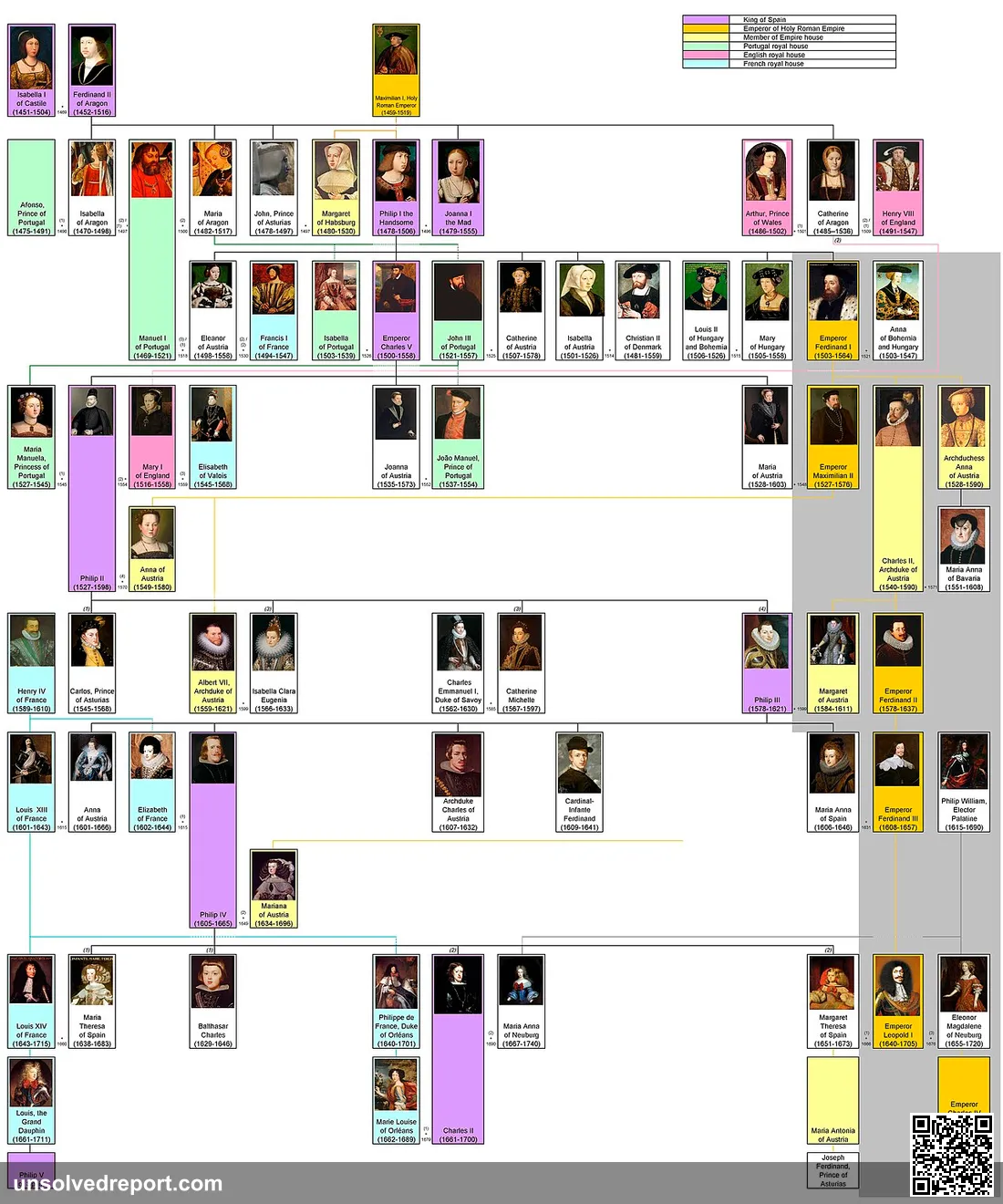
And its résumé is genuinely dazzling. Before the Habsburgs ever touched it, the stone belonged to the Medici - the banking dynasty that ruled Florence, and the reason the diamond carries that city's name to this day. The Habsburg family got hold of it in 1736, when it traveled north through the marriage and inheritance lines that knotted the Medici legacy to the Austrian imperial house. For nearly two centuries after that, it lived among the Austrian crown jewels.
The legends it carried before it ever vanished
Here's the strange part: the Florentine was collecting myths long before it disappeared.
The most famous tale claims the stone once belonged to Charles the Bold, Duke of Burgundy, who supposedly lost it on a battlefield in the 1470s before it eventually surfaced in Italy. It's a wonderful story. It's also unverified - there is no solid documentary chain connecting that Burgundian battlefield diamond to the Medici stone. So file the Charles the Bold connection under legend, not fact.
What is solid is the Medici-to-Habsburg line from 1736 onward, backed by inventories of the imperial collection. The handoff came through a death and an empty throne: when the last Medici grand duke of Tuscany died with no heir, the Medici treasures - the great yellow diamond among them - passed into the orbit of the Habsburg-Lorraine family that took over Tuscany. From Tuscany the stone made its way to Vienna, joined the Austrian imperial jewels, got displayed and catalogued, and became a celebrated centerpiece of the Habsburg treasury.
Across the 18th and 19th centuries it was set and reset over and over - mounted as a hat ornament here, a brooch there - and reproduced in illustrations that burned its distinctive shape into the public imagination. By the time the Austro-Hungarian Empire rolled into the 20th century, the Florentine was one of the most famous colored diamonds in the world. Remember that. It's exactly why its disappearance would later spawn a century of speculation.
The night the trail went cold
The documented vanishing begins where so many things ended: the collapse of Austria-Hungary at the close of World War I.
As the empire came apart, Emperor Charles I (Karl I) and his family fled into exile, leaving Austria around 1919 and taking the family jewels with them - the Florentine Diamond included. Three years later, in 1922, Charles died of pneumonia in exile on the island of Madeira.
And there the public trail stopped dead for a hundred years. Into that vacuum rushed the theories:
- That someone in the imperial entourage stole it during the scramble into exile.
- That it was smuggled to South America and recut into smaller, unrecognizable stones, the original erased forever.
- That it was quietly sold to keep an exiled family afloat.
For decades, those were the stock explanations in the gemological literature. Not one was ever confirmed. The honest answer, right up until very recently, was three words: location unknown.
The recutting theory is the one worth pausing on, because if it were true, the Florentine wouldn't just be missing - it would be gone, reduced to anonymous daughter stones sliced from its body. Every so often a gemologist would eye some big yellow diamond on the market and wonder. None was ever shown to be a piece of it. The theory survived not on evidence but on its grim tidiness: the great jewel destroyed by greed and exile, scattered beyond recognition, a perfect tragic ending. The 2025 revelation, if it holds up, blows that ending apart. The stone was whole the entire time.
The vow that hid a diamond in plain sight
The truth the family finally told in 2025 was stranger than any theft - and far gentler.
After Charles died, his widow, Empress Zita of Bourbon-Parma, became the keeper of the jewels. By the family's account, she carried the gems to Canada around the World War II era - reportedly in nothing fancier than a cardboard suitcase - and tucked them into a bank vault in the province of Quebec.
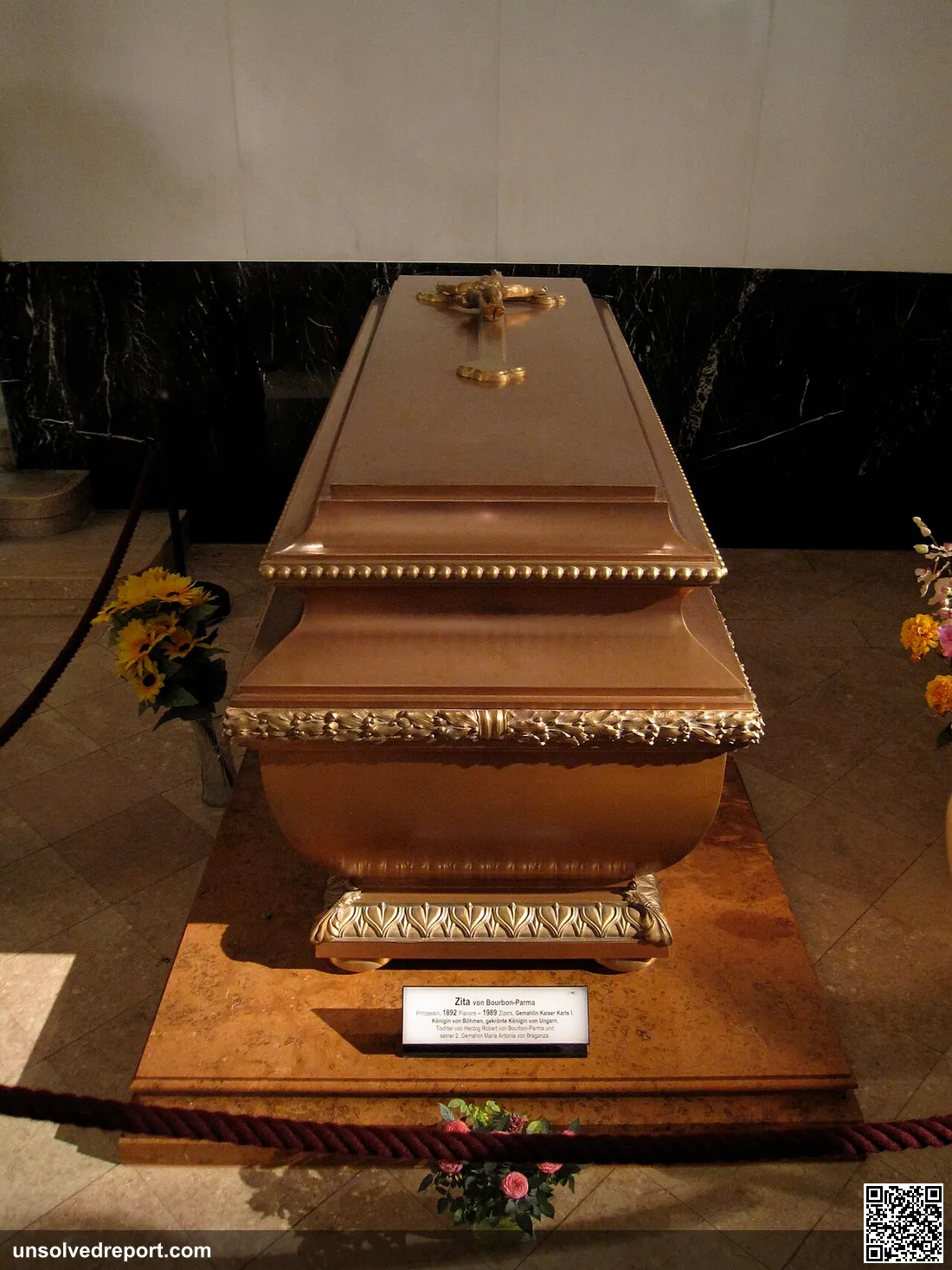
Then she made one specific request. The diamond's location was to stay secret for about a century after her husband's death in 1922. Zita herself died in 1989, aged 96, the secret still locked tight. Only a handful of family members knew where the stone really was. To everyone else - including the experts dutifully cataloguing it as lost - it was a ghost.
That's the heart of it. The Florentine was never missing the way the world assumed. It was hidden on purpose, and the hiding was an act of family discretion, not crime or catastrophe.
The why makes the secrecy click into place. The Habsburgs were a deposed imperial family in exile, stripped of their throne and, for a stretch, legally barred from even setting foot back in Austria. The new republic was claiming former imperial property, and real disputes flared over which jewels were personal family possessions and which belonged to the state. Put yourself in that position. The most valuable, most instantly identifiable heirloom you own is also the one you can't sell, can't display, can't even insure without inviting lawyers and headlines. So you make it disappear. Hiding the Florentine wasn't just sentiment - it was self-protection. And Zita's century-long vow turned that hard-headed practicality into something closer to a sacred trust.
Empress Zita, the keeper
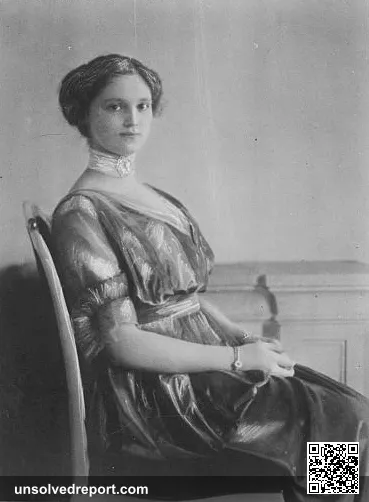
Zita of Bourbon-Parma is the quiet hero here - and, importantly, no legend. She's a documented historical figure.
Married to Charles in 1911, she became empress of Austria and queen of Hungary in 1916, was widowed at 29 in 1922, and then spent the next sixty-seven years as the matriarch of an exiled dynasty: raising her children, guarding the family's interests across several countries and a world war. Moving to Quebec during the WWII years parked the jewels in just about the safest, least conspicuous spot imaginable - an ordinary bank vault, an ocean away from the European powers squabbling over the Habsburg legacy. She died in 1989 at 96, the secret kept to the very end. The diamond outlasted the empire, the war, and even its own keeper, and never once surfaced.
The 2025 reveal
As the century-long window Zita had asked for drew to a close, the family decided to speak.
In November 2025, Karl von Habsburg-Lothringen, the current head of the House of Habsburg, confirmed it: the Florentine Diamond had been safe in a Canadian vault the whole time.
He also made clear the family has no intention of selling it. Instead, Karl spoke of placing the stone in a trust in Canada and putting it on public display in a museum - framed in part as a thank-you for the refuge Canada gave the exiled family during the war. After a century of being presumed lost, the diamond is set to become visible again. This time on purpose.
Why this case breaks the mold
Most lost-treasure stories end in a shrug, an empty hole in the ground, or a courtroom. The Florentine breaks the pattern in three ways:
- The object survived intact. Forget the recutting theories - the diamond was reportedly preserved whole.
- The disappearance was deliberate and harmless. Its rightful custodians hid it for sentimental reasons. Nobody stole anything.
- The mystery was solved by disclosure, not discovery. No treasure hunter cracked it. The keepers simply decided the moment had come to talk.
A note of healthy skepticism is still in order. Much of the 2025 account rests on the family's own testimony and the items they've chosen to reveal. The real tests are still ahead: independent gemological authentication, public display, scholarly examination. Is the stone now in Canada demonstrably the historic Florentine? The family's stated plan to put it in a museum should, in time, let the world check.
Fact, legend, and what's still open
- Fact: The Florentine Diamond is a roughly 137-carat yellow diamond with a documented Medici-to-Habsburg provenance from 1736.
- Fact: It left Austria with the imperial family around 1919 after the empire's collapse; Charles I died in 1922.
- Fact (per family disclosure, 2025): Empress Zita brought the jewels to a Quebec bank vault around WWII and asked that the location stay secret for a century; in November 2025 Karl von Habsburg revealed it and announced museum and trust plans.
- Legend: The Charles the Bold Burgundian battlefield origin - romantic, but unverified.
- Open question: Independent authentication and public display are still pending, and the detailed account currently rests largely on family sources.
The Florentine got its second life because a family chose to break a hundred-year silence. But for every secret someone decides to tell, there are others still sitting in vaults, suitcases, and forgotten ledgers - waiting for the moment someone finally decides it's safe to speak.
Sources & further reading
- Smithsonian Magazine - Florentine Diamond tucked away in a Canadian bank vault - https://www.smithsonianmag.com/smart-news/this-florentine-diamond-was-thought-to-be-lost-to-history-its-actually-been-safely-tucked-away-in-a-canadian-bank-vault-all-along-180987665/
- ARTnews - 137-Carat Florentine Diamond Discovered in a Vault in Canada - https://www.artnews.com/art-news/news/florentine-diamond-habsburg-canada-1234760400/
- The Globe and Mail - Florentine Diamond hidden in Quebec to go on display - https://www.theglobeandmail.com/canada/article-famed-130-carat-florentine-diamond-hidden-in-quebec-to-go-on-display/
- Euronews - Habsburg family's Florentine Diamond found in bank vault after a century - https://www.euronews.com/2025/11/06/habsburg-familys-florentine-diamond-found-in-bank-vault-after-a-century
Lost Library of Ivan the Terrible: 400 Years, Zero Books Found
Lost library of Ivan the Terrible: 400 years of tsars, monks, and diggers hunting a sealed Kremlin vault. Still no book found. Did it ever exist?
SS Waratah Disappearance 1909: 211 Vanished, No Wreck Found
SS Waratah disappearance, 1909: a 9,339-ton luxury liner vanishes off South Africa with 211 aboard — no wreck, no bodies. What sank her?

Saturn Rings Age Mystery: Younger Than the Dinosaurs?
Saturn rings age mystery: Cassini's data say they might be younger than T. rex — but no one can explain how, or agree they're really young. Why not?