9 Megalithic Sites Nobody Can Fully Explain
Stones too heavy, too precise, too ancient. From Gobekli Tepe to Baalbek, here are 9 megalithic sites that still leave the experts genuinely stumped.
Some of these stones weigh more than a modern truck. People moved them anyway. They had no cranes, sometimes no metal, sometimes not even the wheel. And then they fit the blocks together so tightly that, thousands of years later, we still bend down to test the seams with a sheet of paper.
Here's the strange part. This isn't a list of "impossible" things. Every site below was built by human hands, and archaeologists have decent ideas about how most of them came together. But "decent idea" is not the same as "case closed." At every single one of these places, one stubborn detail refuses to lie down. A stone too heavy. A joint too perfect. A purpose nobody can name. Nine monuments, nine honest gaps in the record. Let's walk up to the edge of what we actually know.
1. Gobekli Tepe, Turkey — the temple older than farming
Carved limestone pillars up to 5.5 meters tall, shaped like giant letter Ts, watched over by foxes, lions, scorpions, and vultures. That's what stands on a hilltop at Gobekli Tepe in southeastern Anatolia. Now here's the gut-punch: radiocarbon dating puts the earliest rings of this place at roughly 11,500 years ago. That's before pottery. Before metal tools. Before there were farming villages anywhere nearby.
So picture who built it. Hunter-gatherers. No crops, no permanent settlement we can find, no obvious way to feed a workforce. And yet someone organized the labor, the planning, and a shared belief strong enough to quarry these pillars, raise them, decorate them — and then, deliberately, bury the entire complex under the earth. Who fed the builders? And what idea was powerful enough to summon them up that hill in the first place?
2. Baalbek, Lebanon — the stone that wouldn't move
Underneath the Roman temple of Jupiter at Baalbek sits a row of three limestone blocks called the Trilithon. Each one weighs close to 800 tons. Walk over to the old quarry nearby and you'll find something even more humbling: the famous "Stone of the Pregnant Woman," and an even bigger block beside it, still half-attached to the bedrock. These are among the heaviest cut stones human beings have ever worked.
Engineers aren't short on theories. Rollers, capstans, levers — on paper, systems like these could shift such monstrous weights. But no one has ever demonstrated it at this scale in a real experiment, and exactly how these blocks were dragged uphill and set with such accuracy is still an open question. And that largest block? It never left the quarry. It just sits there, as if the effort finally hit a wall the builders couldn't push past.
3. Sacsayhuaman, Peru — the wall you can't slip paper into
High above Cusco stands the Inca fortress-temple of Sacsayhuaman, stacked from limestone and andesite blocks. Some top 100 tons. They fit together so tightly that, the story goes, you cannot slide a sheet of paper between them.
Now look closer, because this is the eerie part. The stones are irregular polygons, all odd angles and curving faces — and yet each one meets its neighbor seamlessly. No mortar. No gaps. The walls have shrugged off centuries of earthquakes. The documented mystery is the joinery itself: how did a society without iron tools or the wheel carve these compound curves and angles so they lock together like puzzle pieces, and how did they wrestle the megaliths into place? Spanish chroniclers stood here five hundred years ago asking the exact same thing.
4. Puma Punku, Bolivia — the blocks that look machined
Straight grooves. Drilled holes. Crisp right angles, all cut into hard andesite and sandstone. At Puma Punku, part of the high-altitude Tiwanaku complex near Lake Titicaca, the shattered megalithic blocks look almost machine-made. The famous H-shaped blocks are nearly identical to one another, as if each was stamped from the same template.
Scholars credit skilled Tiwanaku stonemasons — and that's a real, human answer. But exactly which tools and techniques produced precision this repeatable, in stone this hard, at nearly 4,000 meters up where the air is thin? That's still being argued over. And there's a second loose thread: the site collapsed in antiquity, and what brought it down hasn't been fully pinned down either.
5. Stonehenge, England — why these stones from way over there?
The most famous stone circle on Earth, Stonehenge, still won't give up all its secrets. Its huge sarsen uprights were hauled from about 25 kilometers away — a brutal job, but at least a local one. The smaller "bluestones" are the puzzle. Those came from the Preseli Hills in Wales, roughly 250 kilometers off, dragged all the way to Salisbury Plain around 5,000 years ago.
And the real question isn't just how Neolithic Britons moved multi-ton stones that far. It's why. Why insist on these particular Welsh stones when perfectly good rock sat much closer to home? Then it gets stranger still: recent research suggests one central "altar stone" came from Scotland, hundreds of kilometers to the north. The further the stones travel, the harder it is to explain what these people were thinking.
6. The Megalithic Temples of Malta — the work of "giants"
On the small islands of Malta and Gozo sit temples with names like Ggantija, Hagar Qim, and Mnajdra. Some of them are older than the Egyptian pyramids and older than Stonehenge, built from limestone blocks weighing many tons. For so long, locals didn't believe ordinary people could have done it — they blamed giants. The name Ggantija literally means "Giantess Tower."
The documented puzzle is just as striking. How did a tiny Neolithic island population, armed with nothing but stone and antler tools and not a scrap of metal, quarry and move and raise these blocks? And why did this temple-building culture, so concentrated and so prolific, seem to vanish so suddenly? At sites like Mnajdra the stones line up with the heavens in precise astronomical alignments — one more layer that scholars are still carefully mapping.
7. Nan Madol, Micronesia — the city stacked on a reef
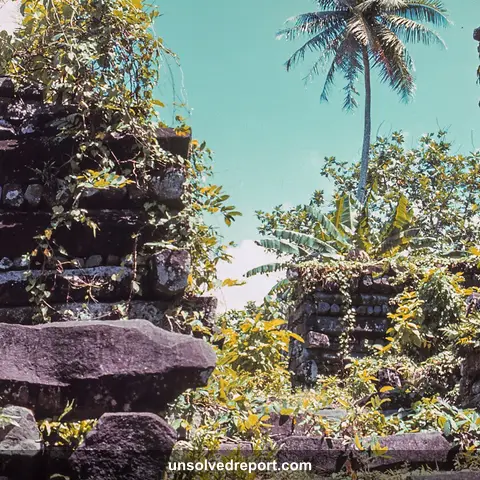
Off the island of Pohnpei, the ruined city of Nan Madol rises straight out of a coral reef: about 100 artificial islets, walled in with stacked basalt "logs," some of those columns weighing several tons. And there's nothing here. No fresh water on the site, no food. Every heavy basalt column had to be brought from quarries elsewhere on the island and stacked across open water.
This is a mystery of muscle and patience. How did a pre-industrial Pacific society move an estimated 750,000 tons of basalt and engineer this lattice of canals and platforms — and how many generations did it swallow whole? Local tradition has its own answer: the stones, people said, were "flown" into place. A memory wrapped around a feat that still leaves engineers shaking their heads.
8. The Carnac Stones, France — thousands of stones, no clear point
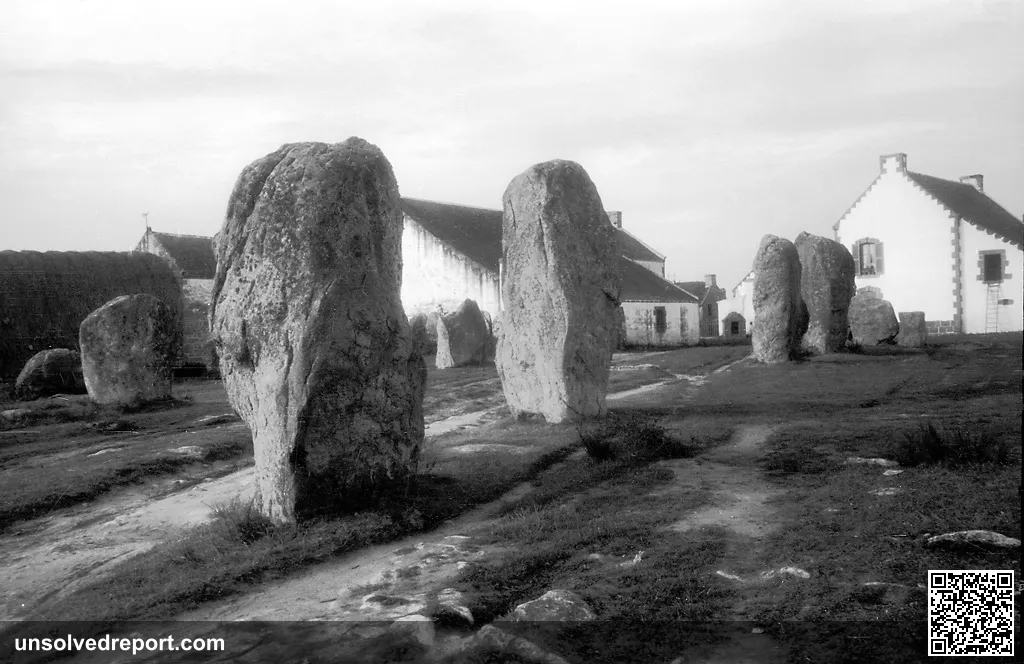
Walk the coast of Brittany and you'll meet the Carnac stones — thousands of standing stones, set in long deliberate rows that march on for kilometers. It's one of the largest gatherings of megaliths anywhere on the planet. People raised them over a long stretch of time, beginning more than 6,000 years ago — earlier than plenty of monuments far more famous.
The enduring mystery here is simple to ask and maddening to answer: what were they for? The rows don't snap into one obvious pattern. Astronomical calendars, ceremonial processions, territorial markers — every theory has its champions and none has won. Why a Neolithic community poured such immense, sustained effort into planting so many stones in rows is genuinely unsettled to this day.
9. Yangshan Quarry, China — the monument too big to finish
Near Nanjing lies a monument frozen halfway to existence. In the early 15th century, workers began cutting a colossal stele straight out of the living bedrock, in three sections. Assemble them and the thing would stand over 70 meters tall and weigh many thousands of tons — far beyond anything anyone could move. The Yongle Emperor ordered the carving. Then it was simply abandoned, still partly fused to the mountain.
The puzzle here is about ambition and intent. Did the builders ever truly believe this giant could be transported and raised? Or was it always going to stay exactly where it was cut? It's a rare megalith where the makers left their reasoning — and their limits — frozen right there in the stone, for us to read.
These nine places stretch across continents and across thousands of years, yet they rhyme. Each one shows people reaching past what their tools and their numbers should have allowed. And each one leaves at least one honest gap in the record, a small dark space where curiosity gets to live. The fun was never in shouting "unexplainable!" It's in following the real evidence right up to the edge of what we know — and then peering over.
The one stubborn question at each site
Line the nine up side by side and a useful distinction appears. These are not all the same kind of mystery. Some are questions of method (how was it physically done?), some are questions of motive (why do it at all?), and a couple are questions of intent or fate (did they even mean to finish, and what became of them?). The table below isolates the single gap that each site is best known for, using only the facts described above.
| Site | The core unsolved question | What kind of gap | Full case file |
|---|---|---|---|
| Gobekli Tepe, Turkey | Who fed and organized a hunter-gatherer workforce ~11,500 years ago, before farming? | Motive / organization | Read more |
| Baalbek, Lebanon | How were ~800-ton blocks dragged uphill and set with precision — never demonstrated at scale? | Method | — |
| Sacsayhuaman, Peru | How were compound curves and angles cut without iron or the wheel to lock mortarless? | Method | Read more |
| Puma Punku, Bolivia | Which tools made such repeatable precision in hard stone at ~4,000 m — and what collapsed it? | Method | Read more |
| Stonehenge, England | Why haul bluestones ~250 km from Wales (and one stone from Scotland) past closer rock? | Motive | Read more |
| Malta temples | How did a tiny Neolithic island population build these — and why vanish so suddenly? | Method / fate | Read more |
| Nan Madol, Micronesia | How did a pre-industrial society move ~750,000 tons of basalt across open water? | Method | Read more |
| Carnac, France | What were thousands of stones in kilometers-long rows actually for? | Motive | Read more |
| Yangshan Quarry, China | Did the builders ever believe a 70-m+ stele could be moved, or was abandonment inevitable? | Intent | — |
Read the columns and a pattern falls out. The "method" mysteries — Baalbek, Sacsayhuaman, Puma Punku, Nan Madol — are the ones closest to a resolution: engineers already have plausible mechanisms (rollers, levers, capstans, skilled masonry), and the gap is really a missing full-scale demonstration rather than a blank. The "motive" mysteries — Stonehenge and Carnac — are the ones least likely to ever close, because they ask what people were thinking, and thought leaves no tool marks. Yangshan is the outlier: it is the only site here where the makers arguably left their own reasoning behind, frozen in an unfinished cut. And Gobekli Tepe sits alone at the far end of time, its gap widened not by weight but by a date that predates every explanation we usually reach for.
Want the full case file on any of these stones? Pick a site above and dig deeper into the evidence with us.
Sources & further reading
Nan Madol: The 750,000-Ton Stone City Nobody Can Explain
90+ man-made islands, no mortar, no metal tools, 750,000 tons of basalt stacked on a coral reef. Who built Nan Madol — and how did they actually move the stone?
Derinkuyu: The 18-Story City Hidden Behind a Basement Wall
A Turkish man smashes a basement wall and cold air pours from the rock: a city plunging 85m down, built to hide 20,000 people. Who really carved Derinkuyu?
Newgrange Winter Solstice: The Trap Built to Catch One Sunrise
Newgrange traps a single sunrise inside a 5,000-year-old Irish tomb through a secret slot called the roof box. How did Stone Age farmers pull it off?