Seuso Treasure: $100M Silver That Won't Say Where It's From
Roman silver worth $100M, a forged Lebanese permit, and a dead conscript. The Seuso Treasure tells you everything — except where it was actually dug up.
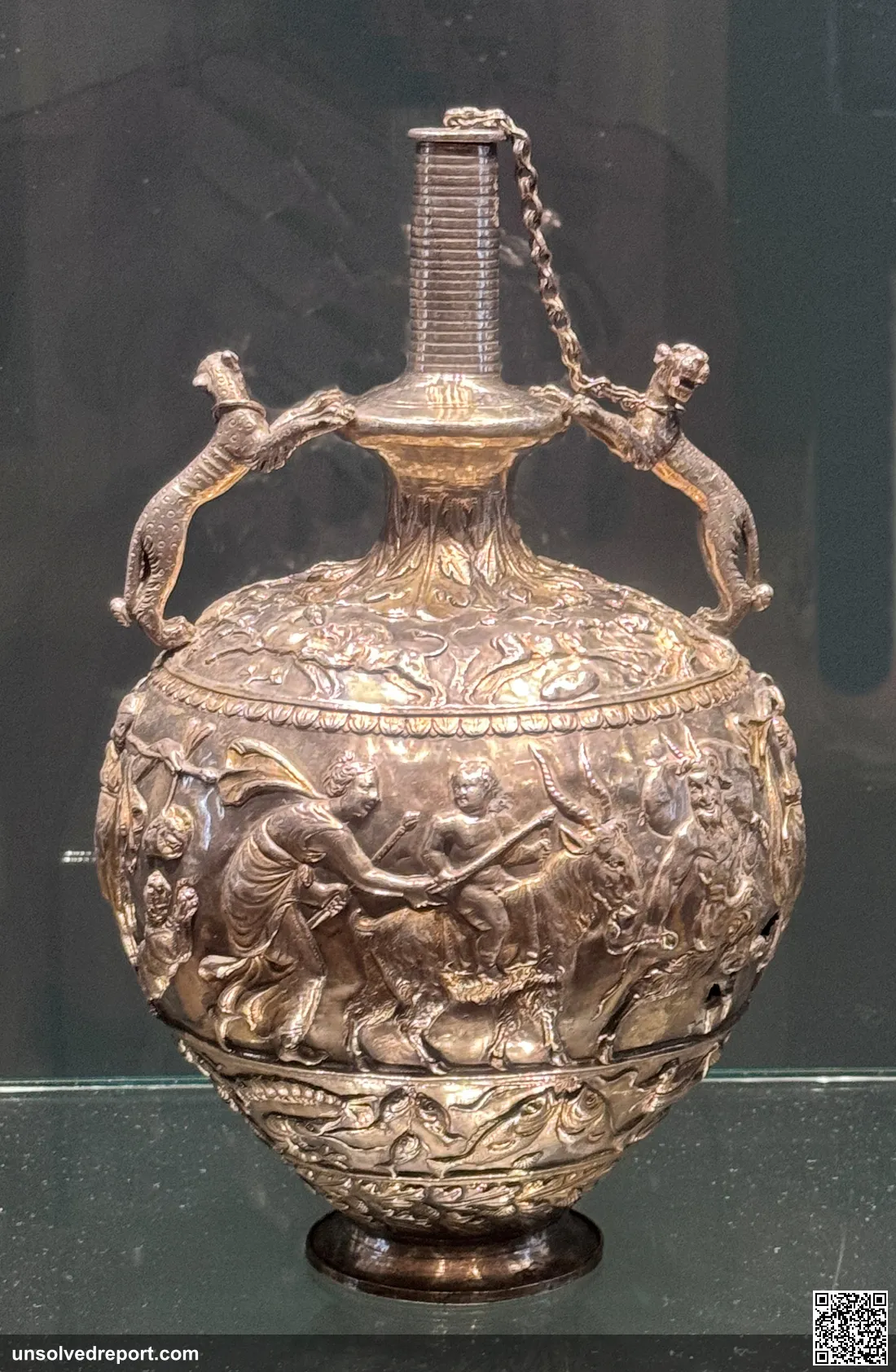
Fourteen pieces of ancient Roman silver. One dented copper cauldron. A price tag once whispered as high as $100 million. The biggest dish is about 70 centimeters wide and weighs nearly 9 kilograms — a slab of silver you'd struggle to lift with one hand (Wikipedia, citing exhibition catalogs). One platter even carves its owner's name into Latin poetry, so you know exactly who it belonged to seventeen centuries ago.
And yet nobody can prove where it came out of the ground.
That's the trick of the Seuso Treasure. It will tell you almost everything about itself — its owner, its age, a lake it loved — except the one thing investigators and three whole countries have spent decades fighting over. Where, exactly, was it buried? Here's the strange part: the silver seems to be answering. The people around it just kept lying.
What We Actually Know
Start with the objects, because the objects are real and astonishing. This is late-Roman luxury tableware — the kind of thing a very rich person ate and bathed with, the same imperial extravagance that produced marvels like the Lycurgus Cup. Scholars mostly date it to the fourth century AD, though the argument stretches anywhere from the third to the fifth (Trafficking Culture) — roughly the same turbulent window in which Britain's Hoxne Hoard went into the ground. You get four big decorated plates, ewers, situlae, an amphora, a basin, a little casket for toiletries, and the copper cauldron the silver is thought to have been stuffed into and buried.
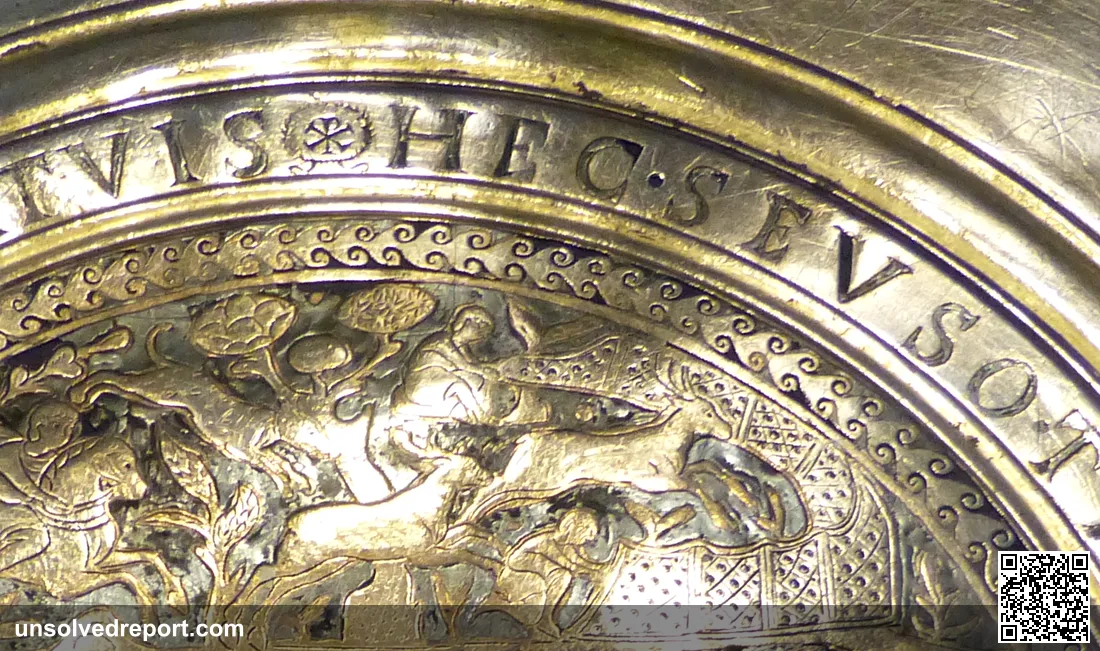
Now look closer at the centerpiece, the so-called Hunting Plate. Around its rim, someone engraved a line of Latin poetry: "Hec Seuso tibi durent per saecula multa / posteris ut prosint vascula digna tuis" — "May these, O Seuso, yours for many ages be, small vessels fit to serve your offspring worthily" (Hungarian National Museum). There's the name. Seuso. Sometimes spelled Sevso. That single word is why the whole hoard is called what it's called.
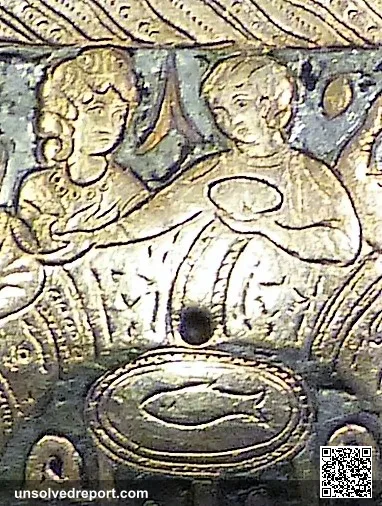
But the plate hides a second, quieter clue. Above a patch of water crawling with fish, the engraver wrote one more word: PELSO. That was the Roman name for Lake Balaton, in western Hungary — back then part of a province called Pannonia (Hungarian National Museum). The silver is practically pointing at a map. Remember that. It matters.
Then comes the paperwork, and this is where the whole thing curdles. The silver started showing up for sale around 1980, moved by a cluster of dealers that included a Lebanese dealer named Halim Korban (Trafficking Culture). To sell something this valuable, you need a story for where it legally came from. The story they handed over said Lebanon. In June 1981, Korban produced a Lebanese export permit, with documents claiming the hoard had been dug up around Tyre and Sidon (Trafficking Culture; Wikipedia).
It was fake. When the J. Paul Getty Museum thought about buying the silver, its curator Arthur Houghton picked up the paperwork, studied the official signatures — and found they were forged. He also found Korban wasn't even a registered Lebanese dealer (Trafficking Culture). The Getty put the silver down and walked out.
Someone else didn't walk away. Spencer Compton, 7th Marquess of Northampton, gathered the hoard through a string of purchases in the 1980s and ended up holding it through a trust (The Art Newspaper). In February 1990, Sotheby's announced the treasure for sale in New York, with an estimate reported in the tens of millions (Trafficking Culture). And then the sale detonated.
The Lebanese provenance was exposed as false. Three nations lunged for the silver at once — Lebanon, Hungary, and Croatia (then breaking free of Yugoslavia) — each filing competing ownership claims in a New York State court. At the 1993 trial, Lebanon dropped out. And the jury reached a verdict that still defines the case: neither Hungary nor Croatia had produced convincing proof of where the silver was actually found. So under U.S. law, the silver stayed with Northampton (Trafficking Culture).
That still wasn't the ending. After years of quiet negotiation, the Hungarian government bought seven of the pieces plus the copper cauldron for €15 million, announced in March 2014 (The Art Newspaper). In 2017 Hungary scooped up the remaining seven, reuniting the hoard at last (Wikipedia). Today the full set sits on permanent display at the Hungarian National Museum in Budapest (Hungarian National Museum). You can stand in front of it. You still can't ask it where it was buried.
The Question Nobody Can Answer
Here's the knot that has never come undone. The plate says Pelso. Hungary is sure of itself. But the exact spot where the Seuso Treasure came out of the earth has never been officially nailed down — not in court, not by any excavation. The 1993 jury said it flat out: no claimant could prove origin (Trafficking Culture).
Sit with that for a second. The Lebanese papers were proven fake — but proving a lie is a lie is not the same as proving the truth. You can shred the false answer and still be left staring at a blank space. By the cold standard of evidence, this glittering, name-engraved, lake-naming hoard is a treasure with no documented hometown.
And tangled into that blank space is a death.
A young conscript named József Sümegh is widely believed to have dug up a Roman hoard near the town of Polgárdi — not far from Lake Balaton — sometime in the mid-1970s (RMX News). In 1980, Sümegh was found dead in a cellar. The death was first ruled a suicide. Then his father pushed to reopen the case in 1990, and the Hungarian National Police later reached a darker conclusion: he had been killed (RMX News). But investigators could never gather enough evidence against anyone. The case was closed in 1996, then pulled back out and revisited again in the years that followed (RMX News).
Was the silver he supposedly found the same silver now gleaming in Budapest? Nobody has ever proven it. The connection is there, hovering — circumstantial, unsettling, unsolved.
So What Really Happened?
The Pannonian theory. This is the front-runner, and the best-supported guess: the hoard was buried near Lake Balaton in late-Roman Pannonia, hidden by some wealthy provincial as the western Empire started cracking apart. The Pelso engraving and the Polgárdi connection are the two pillars holding it up (Hungarian National Museum). Plausible. Widely believed. And still — frustratingly — missing the kind of proof a courtroom would accept.
The "there's more out there" theory. Some researchers and Hungarian officials have long suspected the original hoard was bigger than the fourteen vessels we have, and that other pieces were scattered or are still hidden somewhere. To be clear, that's speculation — a hunch, not a documented inventory. But it's the kind of hunch that keeps people digging.
The trafficking-network reading. Experts who study the illegal antiquities trade look at those forged Lebanese papers and see a textbook move: "provenance laundering," inventing a clean legal backstory to slide a stolen-or-looted object onto the open market (Trafficking Culture). The trick itself is documented — the same authenticity fight that still swirls around Afghanistan's Bactrian Gold. What's missing is the full chain of hands between the soil and the sale.
Notice what the Seuso Treasure is haunted by. Not a ghost. Not a curse. A paper problem. The silver speaks Latin. It names its owner. It even points at a lake. And then everything humans wrapped around it turned out to be a forgery. The real mystery is the silence between a magnificent object and the dirt it was pulled from — a silence the courts couldn't break, and the fake documents only made louder.
So the next time you read about "looted" treasure, remember this: the hardest thing to fake is the truth, and the easiest thing to lose is where something came from. Somewhere under western Hungary, the ground may still be keeping the rest of the secret.
Sources & Further Reading
- Hungarian National Museum, "The Seuso Treasure" and "The Seuso Platter": mnm.hu and seuso.mnm.hu
- Trafficking Culture, "Sevso Treasure" case study (University of Glasgow research project): traffickingculture.org
- The Art Newspaper, "Hungary takes control of half of Sevso silver" (2014): theartnewspaper.com
- Wikipedia, "Seuso Treasure" (overview and dates): en.wikipedia.org
- RMX News, "Seuso murder investigation suspended" (on the Sümegh case): rmx.news
Beale Ciphers: $60 Million in Gold, One Code Nobody Can Crack
$60M buried in Virginia. One Beale cipher decoded — the map to the gold has stumped every cryptographer for 135 years. Real fortune or genius hoax?
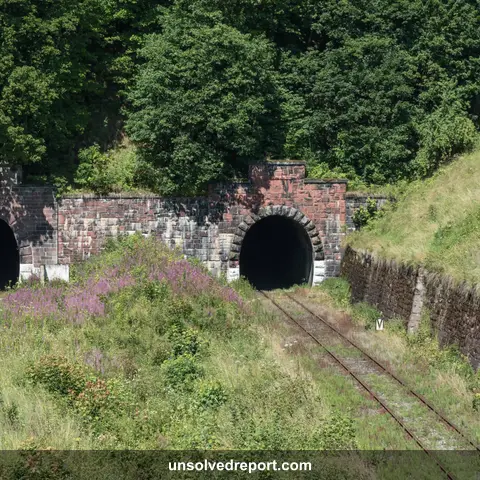
Nazi Gold Train: The Dig That Found Absolutely Nothing
Two treasure hunters swore radar showed a buried Nazi gold train in Poland. A government official said he was 99% sure. So why did the dig come up empty?
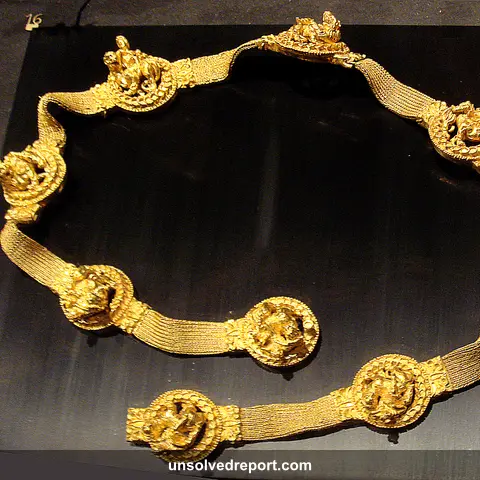
Bactrian Gold: The 20,600-Piece Hoard Nobody Can Verify
Soviets dug an Afghan mound in 1978 and found 20,600 gold pieces. Three wars later, the hoard survived — but has anyone actually confirmed it's still intact?