GRB 221009A: The BOAT, the Brightest Gamma-Ray Burst Ever
GRB 221009A hit every detector in the solar system and even reached Voyager 1. It also fired photons physics says should be impossible. Here's the BOAT.
October 9, 2022. A wave of high-energy light reaches the solar system after a journey of roughly 1.9 billion years, and it does not go gently. It trips the gamma-ray detectors built to catch it, sure. But it also lights up instruments designed to stare at the Sun. It jolts the upper layers of Earth's atmosphere. And it reaches all the way out to Voyager 1, more than 14 billion miles from home, leaving a fingerprint on a spacecraft that left us in 1977.
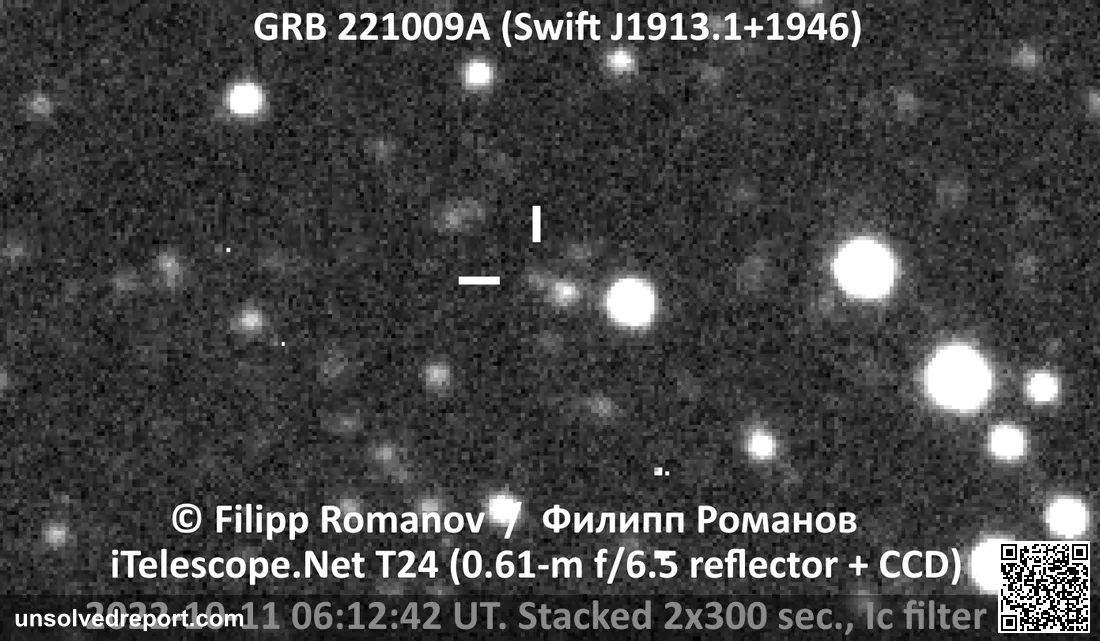
Astronomers logged it as GRB 221009A. Then they gave it a nickname that stuck: the BOAT, the Brightest Of All Time.
Here's the thing about that name. Usually a superlative like that is hype. This time it isn't. But the BOAT also dropped a few genuine puzzles in our laps, riddles that researchers are still chewing on years later. So let's walk through what we actually know, what we still don't, and where the smartest guesses are pointing.
What Actually Happened
Start with the basics. A gamma-ray burst is the brightest explosion the universe knows how to make, brighter even than a fast radio burst, the other flash astronomers still can't fully explain. The "long" kind, the ones that last more than a couple of seconds, come from a brutal moment: a massive, fast-spinning star runs out of fuel and collapses into a black hole, firing jets of matter outward at almost the speed of light (NASA).
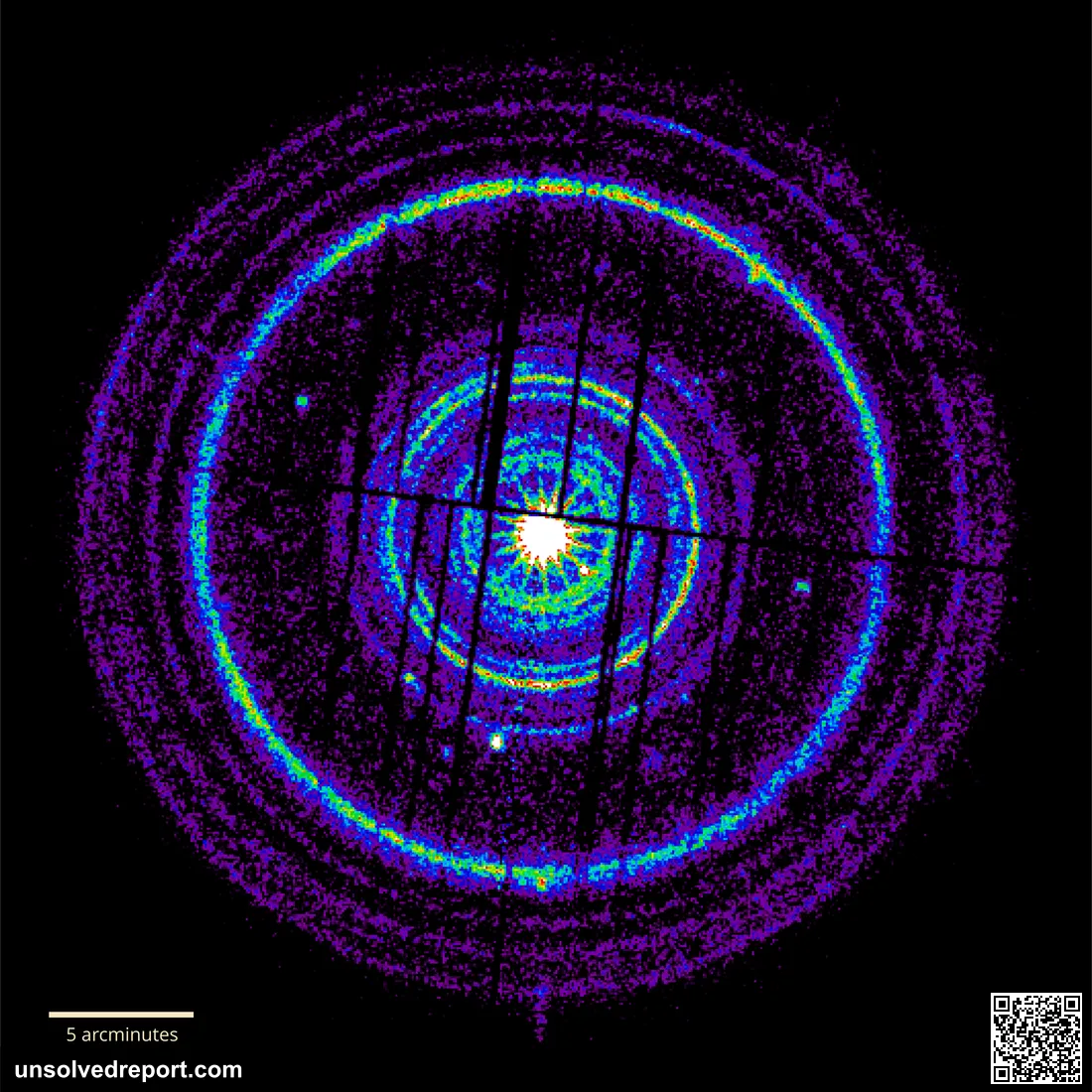
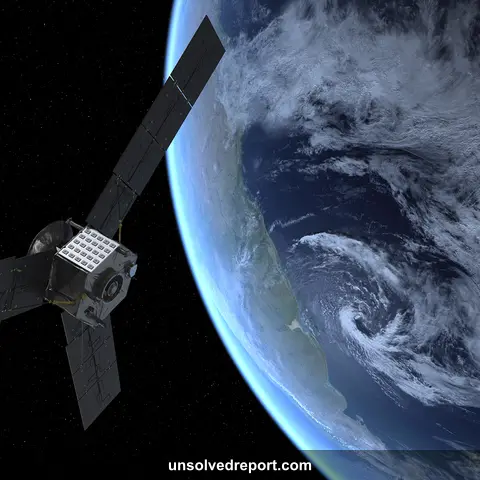
That's what set off the alarms on October 9. NASA's Fermi Gamma-ray Space Telescope and the Neil Gehrels Swift Observatory caught it first, with backup detections rolling in from the Konus instrument aboard the Wind spacecraft, NICER on the International Space Station, and more (NASA). And here's where it gets a little absurd: the burst was so bright it blinded Fermi's detectors. They saturated, like a camera pointed straight at the sun, and scientists had to painstakingly reconstruct the readings afterward just to recover how bright it truly was (The Astrophysical Journal Letters).
So how bright are we talking? Eric Burns of Louisiana State University didn't hedge. GRB 221009A, he said, "was likely the brightest burst at X-ray and gamma-ray energies to occur since human civilization began" (NASA). Read that again. Since civilization began. It beat the old record holder by something like 50 to 70 times over. And when researchers sifted through roughly 7,000 known bursts to do the math, they landed on a sobering number: an event this bright shows up about once every 10,000 years (NASA).
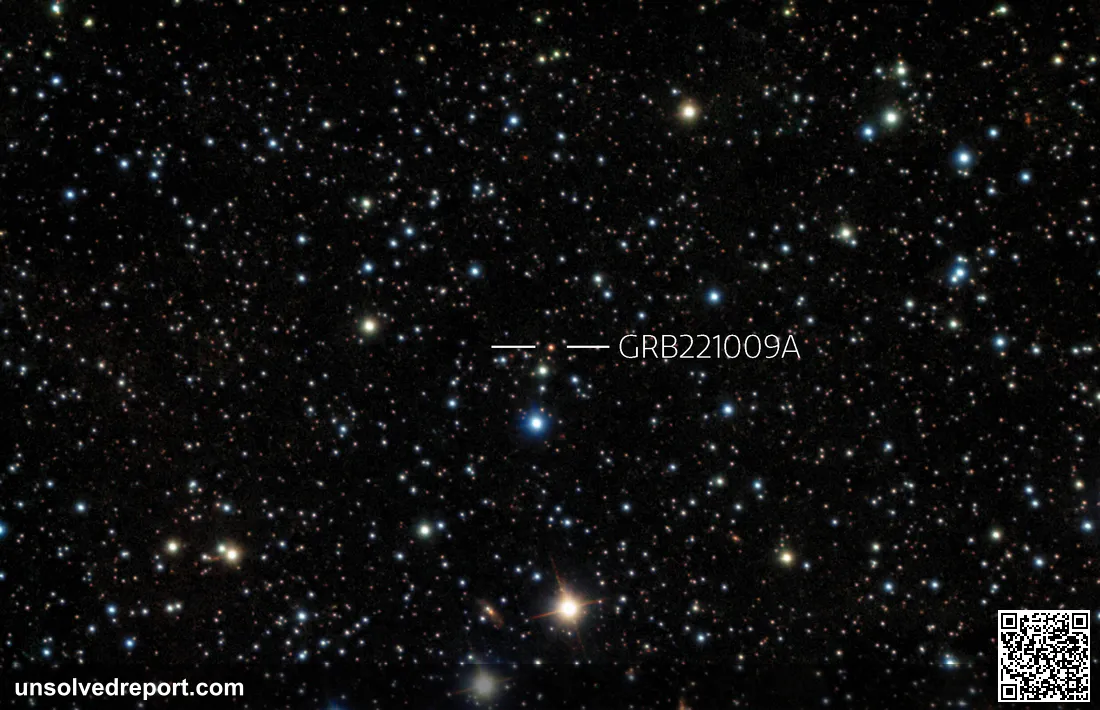
Why this one? Two strokes of luck, cosmically speaking. First, it was close. Splitting the light apart pinned it at a redshift of z = 0.151, a few billion light-years off, which makes it one of the nearest "long" GRBs we've ever caught (arXiv preprint, Science Advances). Second, the jet seems to have been aimed almost dead-on at Earth. Imagine the difference between a flashlight sweeping past you and one pointed right between your eyes.
Then it broke a second record, this time at the violent end of the energy scale. China's LHAASO observatory clocked more than 5,000 very-high-energy photons, some carrying about 18 teraelectronvolts of energy. No gamma-ray burst had ever been seen above 10 TeV before. The old records sat around 1 to 3 TeV. This blew right past them (Science Advances).
And it touched us, too. A team led by ESA researchers, writing in Nature Communications, found a disturbance in Earth's upper ionosphere, way up around 500 kilometers, that lined up with the burst. It was the first time a GRB had ever been tied to a ripple that high in our atmosphere (Nature Communications). Don't lose sleep over it, though. This was a faint blip on sensitive instruments, not anything anyone on the ground could feel — nothing like the disruption a roaming magnetar can cause up close.
The Photons That Shouldn't Have Made It
Now the real mystery. That 18 TeV light? It shouldn't be here. And the fact that it is pokes at a basic assumption about how the universe works.
Photons that energetic are not supposed to survive a trip across billions of light-years. The reason is subtle but firm. Space isn't truly empty. It's filled with a faint, diffuse glow called the "extragalactic background light," the combined shine of every star and galaxy that ever burned. An ultra-high-energy photon racing through that haze is supposed to slam into it, vanish, and turn into a particle-antiparticle pair. At 18 TeV, the universe is supposed to fog out completely (Science Advances).
So how did thousands of these photons cross the cosmos and land on a detector in China? That's the puzzle, and there's no comfortable answer. Maybe the space between galaxies is clearer than our models say. Maybe something is escorting those photons past the fog. Maybe our whole picture of how these jets fling particles around needs a rewrite. Nobody knows yet.
And there's a quieter mystery riding alongside it. With that staggering flood of high-energy light pouring out, you'd expect a matching shower of ghostly particles called neutrinos. The IceCube Neutrino Observatory went looking. It found nothing, just upper limits across a broad sweep of energies (a conference preprint, arXiv; not yet peer-reviewed). Plenty of models had predicted a neutrino signal from the brightest burst ever seen. Its silence is a real constraint, and theorists are still working out what it means.
So What's Going On?
The boring (and most likely) answer to the transparent-universe problem. The calmest take is that there's no new physics here at all, just some tuning. Maybe that background glow happens to be thinner along this exact line of sight. Maybe our absorption models are a touch too pessimistic, and nudging them a little lets enough photons survive to match what LHAASO saw (MNRAS Letters). Right now, most of the evidence leans this way.
The wild answer (and yes, this is speculation). There's a far stranger idea floating around, and it leans on hypothetical things called "axion-like particles." The pitch goes like this: a gamma ray briefly morphs into one of these featherweight particles, slips across the universe untouched by the fog, then flips back into a gamma ray near Earth. A cosmic disappearing act (arXiv preprint). It's a real line of research, not crackpot stuff, but to be clear it's unconfirmed speculation that would require brand-new physics to hold up.
The geometry answer. One peer-reviewed explanation for the sheer brightness has nothing to do with exotic particles and everything to do with shape. It's called a "structured jet": a razor-thin, ultra-fast core wrapped in a wider, slower outer sheath, with that blistering core aimed almost straight at us (Science Advances). In other words, maybe we just got an extraordinarily lucky angle on an ordinary monster.
The missing supernova. A collapsing giant star is supposed to leave a corpse behind: a supernova, and eventually a dense remnant like a neutron star or, if there's enough mass, a black hole. But early on, hunters couldn't find one buried in all that glare, and rumors of a "missing supernova" started to swirl. Then 2024 settled it. JWST spotted the supernova roughly 168 to 170 rest-frame days after the burst. And here's the twist: it looked completely ordinary. A SN 1998bw-like event, about 0.09 solar masses of nickel, and, tellingly, no sign of the rapid neutron-capture ("r-process") reactions that forge the heaviest elements (Nature Astronomy). The takeaway is quietly profound: even the most extreme bursts don't seem to be major forges of the heaviest elements, and the burst and the supernova may be more independent of each other than anyone assumed.
That's the part that lingers. The light was off the charts, a once-in-ten-millennia scream from the dark. But the star that screamed it was, by every number we can measure, almost boringly normal. An unremarkable death producing the brightest flash in recorded history, still teaching us how clear the universe really is, and still keeping a few of its secrets.
Sources & further reading
- NASA, NASA Missions Study What May Be a 1-in-10,000-Year Gamma-Ray Burst: https://www.nasa.gov/feature/goddard/2023/nasa-missions-study-what-may-be-a-1-in-10000-year-gamma-ray-burst
- Burns et al., GRB 221009A: The Boat, The Astrophysical Journal Letters: https://iopscience.iop.org/article/10.3847/2041-8213/acc39c
- LHAASO Collaboration, Very high-energy gamma-ray emission beyond 10 TeV from GRB 221009A, Science Advances: https://www.science.org/doi/10.1126/sciadv.adj2778
- Hayes et al., Evidence of an upper ionospheric electric field perturbation correlated with a gamma ray burst, Nature Communications: https://www.nature.com/articles/s41467-023-42551-5
- Blanchard et al., JWST detection of a supernova associated with GRB 221009A without an r-process signature, Nature Astronomy: https://www.nature.com/articles/s41550-024-02237-4
- O'Connor et al., A structured jet explains the extreme GRB 221009A, Science Advances: https://www.science.org/doi/10.1126/sciadv.adi1405
- IceCube Collaboration, IceCube search for neutrinos from GRB 221009A (ICRC2023 preprint): https://arxiv.org/abs/2307.16354
- What absorbs the early TeV photons of GRB 221009A?, MNRAS Letters: https://academic.oup.com/mnrasl/article/529/1/L19/7468153
- Galanti et al., Deciphering the ~18 TeV photons from GRB 221009A (axion-like particle preprint): https://arxiv.org/abs/2211.04057
- Wikipedia, GRB 221009A (overview/figures cross-check): https://en.wikipedia.org/wiki/GRB_221009A
Flyby Anomaly: The NASA Speed Boost No One Can Explain
Galileo, NEAR, Rosetta: NASA probes kept leaving Earth faster than physics allows. Decades later, scientists still can't agree on why. Here's the data.
The Eltanin Antenna: A Machine on the Seafloor?
In 1964 a deep-sea camera off Cape Horn caught what looked like a TV antenna standing on the abyssal seafloor. It was alive — and it hunts.
Hoa Hakananai'a: The Easter Island Statue Hiding a Second Face
Hoa Hakananai'a's front is one religion. Its back, carved centuries later, is another. No one can say exactly when the switch happened — or why.