Lake Michigan's Underwater Stonehenge: The Mastodon Stone Nobody Can Explain
A diver hunting shipwrecks in Lake Michigan found a mile of stones — and one boulder carved like a mastodon. Genuine monument or a trick of the ice? Nobody's proven it either way.
Summer 2007. An underwater archaeologist is sweeping the dark floor of Grand Traverse Bay, hunting for shipwrecks — the same cold Great Lakes waters that have swallowed vessels like the Griffon. He finds something else. A long line of stones, resting 40 feet down in the cold water — and one boulder that looks, impossibly, like it carries the outline of a mastodon. Within months the internet had a name for it: "Michigan's Underwater Stonehenge." Nearly twenty years on, the headlines keep getting wilder. And the man who found it keeps trying to drag them back down to the lakebed where the truth actually lives. So what is really down there?
What we know for sure
Start with the diver. Dr. Mark Holley is an underwater archaeologist tied to Northwestern Michigan College, and in 2007 he was running a sonar survey of Grand Traverse Bay — an arm of Lake Michigan — when his instruments picked up the stones (Discover Magazine). Picture a row of rocks marching across a sandy floor about 35 to 40 feet beneath the surface. Some are no bigger than a basketball. A few are the size of a compact car (Discover Magazine).
Then there's the one that stops you cold. A single boulder, roughly five feet across and three to four feet tall, seems to wear markings shaped like a mastodon — a long-extinct cousin of the elephant (NBC News, 2007). If human hands carved those lines, this would be a petroglyph of serious importance — the kind of buried carved stone that, like Scotland's Cochno Stone, stayed hidden for generations before anyone reckoned with what it might mean. Notice that little word: if. It's carrying an enormous amount of weight, and Holley has handled it carefully from day one.
Here's the part of the story that holds up best, and it's pure geology. When the last Ice Age let go, the Great Lakes sat far lower than they do now — by some estimates more than a hundred feet below today's surface, as the land slowly bounced back from the crushing weight of the vanished glaciers (MSU Extension). So the very spot where these stones now lie drowned was once dry land. A valley. A place people could walk — and maybe the same animal the carving seems to show. That's where the famous "9,000-year-old" label comes from. It marks roughly when this basin was habitable ground, not any lab test of the stones themselves.
And now the most important fact of all — the one that's about what hasn't happened. The site has never been formally excavated. Never scientifically dated. Never written up in a peer-reviewed study. Holley has kept the exact coordinates secret. He shared the location first with the Grand Traverse Band of Ottawa and Chippewa Indians, out of respect for their ancestral heritage, and he points to "security concerns" for keeping it sealed from the public (holleyarchaeology.com).
The real question nobody can answer yet
Strip off the catchy branding and one honest question is left standing: did people place these stones, and is that mastodon a deliberate carving — or is the whole thing a natural accident of ice and rock that our pattern-hungry brains turned into a message? It's the same argument that has followed Japan's Yonaguni Monument for decades.
Right now, nobody has proven it either way. The mastodon marking "hasn't been analyzed to prove whether it's a carving or a natural feature," and Holley himself has said he and his colleagues are still waiting on expert authentication (NBC News, 2007; Traverse Ticker). The conditions are fighting against an answer. Down at that depth the stones are smothered in algae, sediment, and invasive zebra and quagga mussels — exactly the gunk that blurs the fine surface details you'd need to tell a true petroglyph from a random scratch (Discover Magazine).
There's a sober reason to slow down. John O'Shea, a University of Michigan archaeologist who has documented genuine prehistoric hunting structures under nearby Lake Huron, put the Grand Traverse Bay situation about as plainly as anyone could: "There's clearly a lot of rocks there. But the jury's out on whether it was intentional construction" (NBC News, 2007). Glaciers are perfectly happy to drop boulders in long, suggestive lines. Until someone studies the surface of that one stone up close — and dates the deposits around it — the mastodon stays a tantalizing maybe.
So what's the explanation? Three ways to read it
Theory 1: It's the real deal — a genuine carving and a human-made line of stones. (Possible, but unproven.) In this version, Paleo-Indians living down in that dry valley lined up the stones for a reason — a lane to drive game, a marker, a path — and somebody pecked a mastodon onto a handy boulder. The Lake Huron find is what gives this teeth: O'Shea's confirmed caribou-hunting structures prove that deliberate stone features really can survive on a Great Lakes lakebed. So this kind of discovery is absolutely real. This particular site just hasn't been verified.
Theory 2: It's nature, and our brains did the rest. (The skeptic's default.) Retreating ice can scatter rocks into rows and rough rings. Erosion or a vein of mineral can fake an image on stone. With no dating done and those surfaces clouded by mussels, this stays the simplest explanation until someone proves otherwise.
Theory 3: The "monument" was invented by the media. This one isn't really speculation — it's mostly settled, and it comes straight from the discoverer. Holley has said flatly that "there is not a henge associated with the site," that the stones are tiny next to Europe's towering standing stones — the kind found among the world's great megalithic sites — and that the "Stonehenge" label got slapped on by people in the press "attempting to generate sensation about the story" who had never even visited it (holleyarchaeology.com). What's actually down there is a long line of stones — more than a mile of them. Not concentric rings. Not a hexagon.
Hold onto that last point, because the story keeps getting embroidered. Recent viral write-ups talk about "two concentric granite rings," a "perfect hexagon," and a sweeping 2025 sonar survey that supposedly confirmed the mastodon (see, for instance, The Jerusalem Post's archaeology desk and Artnet News). Those exact flourishes show up nowhere in Holley's own account or in the early reporting. Treat them as unverified embellishment, not fact.
Maybe the most fascinating thing about Grand Traverse Bay is how cleanly it splits two very human urges: the hunger to find a lost civilization, and the slow, patient discipline of actually proving one. Forty feet down, in cold clear water, sits a single boulder that could settle the whole argument — if anyone ever examines it properly. Until that day, the mastodon stone keeps its secret. Exactly the way a good mystery should.
Sources & further reading
- Discover Magazine — Archaeologists Have Found Prehistoric Rock Structures Under the Great Lakes: https://www.discovermagazine.com/archaeologists-have-found-prehistoric-rock-structures-under-the-great-lakes-42339
- NBC News (2007) — Divers find boulder with mastodon markings: https://www.nbcnews.com/news/amp/wbna20593217
- Dr. Mark Holley (holleyarchaeology.com) — The Truth About the 'Stonehenge' in Lake Michigan: https://holleyarchaeology.com/index.php/the-truth-about-the-stonehenge-in-lake-michigan/
- Traverse Ticker — Exploring the Mysteries of the Bay: https://www.traverseticker.com/news/exploring-the-mysteries-of-the-bay/
- Michigan State University Extension — Water levels gauge installed in Grand Traverse Bay (post-glacial rebound): https://www.canr.msu.edu/news/water_levels_gauge_installed_in_grand_traverse_bay_to_assist_in_measuring_g
- JaySea Archaeology — The Enigma in the Lake: The Lake Michigan 'Stonehenge': https://jayseaarchaeology.wordpress.com/2021/02/24/the-enigma-in-the-lake-lake-michigan-stonehenge/
- The Jerusalem Post (archaeology desk, treated as unverified for ring/hexagon/2025 claims): https://www.jpost.com/archaeology/article-860220
- Artnet News (treated as unverified for ring/hexagon claims): https://news.artnet.com/art-world/prehistoric-structure-lake-michigan-stonehenge-2432737
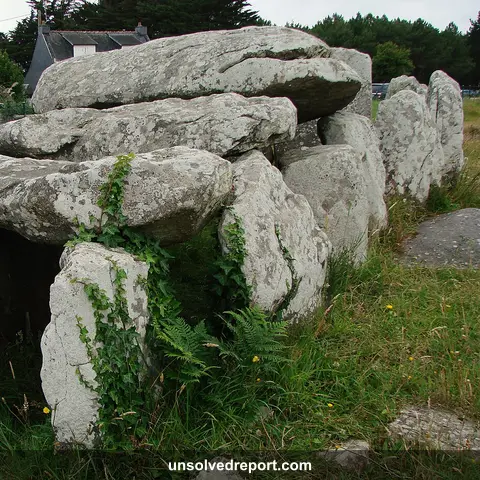
Carnac Stones: 3,000 Megaliths That Beat Stonehenge
Over 3,000 megaliths line up across Brittany, older than Stonehenge by 1,000 years. A 2025 dig finally dated them - so why does no one know what they were for?
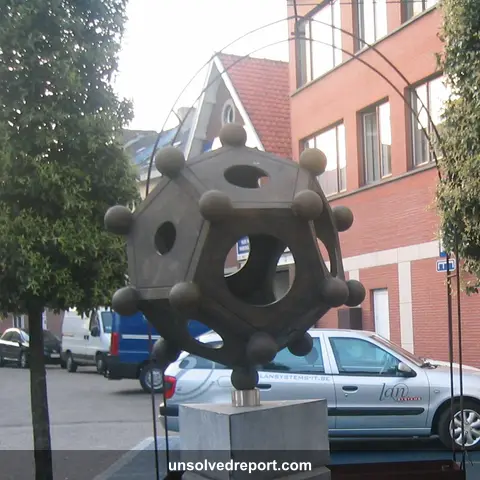
Roman Dodecahedron: 200 Years, Still No One Can Explain It
More than 130 Roman dodecahedra have been dug up across Europe. No Roman text ever mentions them. After 200 years, historians still can't agree why.

Sea Peoples: The Invaders Nobody Can Explain
Around 1200 BCE, a whole civilization went dark overnight. Egypt blamed the Sea Peoples—150 years later, no one can say who they really were.