Roman Dodecahedron: 200 Years, Still No One Can Explain It
More than 130 Roman dodecahedra have been dug up across Europe. No Roman text ever mentions them. After 200 years, historians still can't agree why.
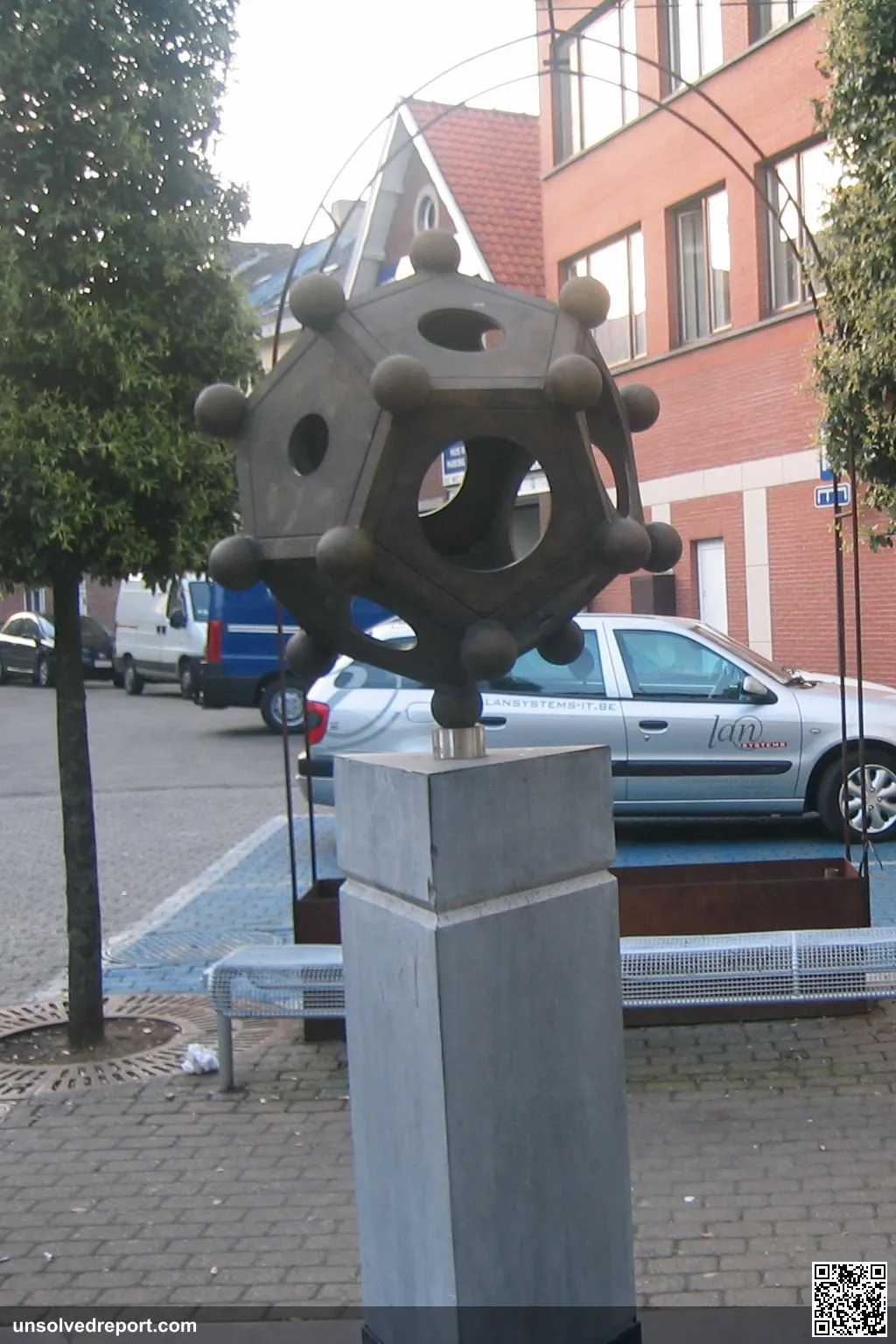
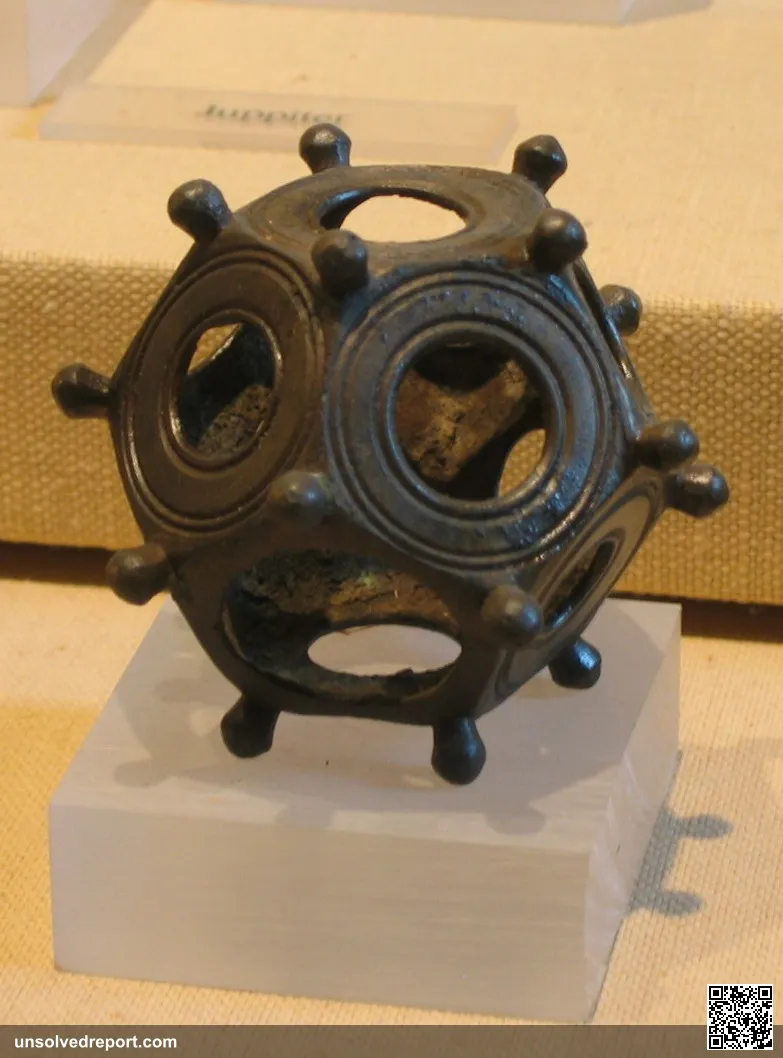
Hold out your hand. Now imagine a hollow bronze shell dropped into your palm, about the size of an orange. Twelve flat faces, each one a perfect pentagon. Every face is drilled with a round hole — and no two holes are the same size. Every corner wears a tiny knob, like a stud. It is beautifully made. It is roughly 1,700 years old. And here is the part that should give you a chill: hundreds of these things have come up out of the dirt of old Roman Europe, and after more than two centuries of poking, measuring, and arguing, nobody on Earth can tell you what it was for.
Not a hoax. Not a fringe internet theory. Not a funny-shaped rock somebody mistook for treasure. The Roman dodecahedron is the real deal — catalogued, photographed, sitting behind museum glass right now — and the best minds in archaeology still shrug.
What we actually know
Let's pin down the solid ground first, because there is plenty of it.
These are real, catalogued artifacts, and you can go look at them. Small hollow objects, usually cast in a copper alloy — bronze — with twelve pentagonal faces, those circular holes of different sizes, and knobs at the corners. The British Museum holds examples. So do dozens of regional museums scattered across Europe (British Museum).
And there are a lot of them. More than 100 have turned up — most counts land somewhere between roughly 100 and about 130 specimens, pulled from the ground over the past few centuries. They come in different sizes, generally somewhere between 4 and 11 centimeters across (Wikipedia).
Now here's the first oddity. They don't show up everywhere the Romans went. They cluster — stubbornly — in the northwestern provinces: Gaul, the Germanic frontier lands, and Roman Britain. Not the sunny Mediterranean heartland where the empire was born. The cold, rainy edge of the Roman world (Smithsonian Magazine).
When archaeologists can date them, they point to the later years of the empire — roughly the 2nd to 4th centuries AD. They've been dug out of military camps, settlements, and now and then a grave or a buried stash of coins (Wikipedia).
And then the strangest fact of all. The Romans were chatterboxes. They wrote about everything — siege engines, plumbing, farming, gods, gossip. Soldiers, engineers, and naturalists left mountains of text behind. Yet not one surviving Roman word describes this object. No manual. No drawing. No offhand mention. Nothing that anyone can confidently match to the thing in your palm (Smithsonian Magazine).
The mystery isn't going stale, either. In 2023, amateur archaeologists digging near Norton Disney in Lincolnshire, England, pulled up a beautifully preserved one — and instead of finally cracking the case, it just got people talking all over again. Even the experts standing over the freshly dug hole couldn't agree on what they were looking at (BBC).
The one question nobody can answer
It's a short question. It refuses to die.
What were these things for?
Nobody doubts that the objects exist. They're real, they're plentiful — on the order of 100 to 130 known across northwestern Europe — and they're alike enough in shape that this was clearly a type, a thing Romans deliberately made again and again and recognized when they saw one. These weren't random one-off doodads.
What's missing is everything we'd normally use to crack the code. No inscription scratched on the side. No surviving letter, manual, or carved scene that points at one and explains the job it did. The Romans documented surveying, war, religion, craft, daily life in exhausting detail — and this object hides in every one of those records. That silence? That's the whole problem, right there.
And the people who actually handle these things know it. Curators and archaeologists keep saying, plainly, that no single answer has ever been proven and that every proposed use is still just a guess. As the Smithsonian and museum experts have pointed out, dozens of theories have piled up over the years, and not one has won the field (Smithsonian Magazine). The honest line isn't "we have a strong lead." It's "we genuinely don't know."
The theories — and why each one wobbles
Everything below is a guess. A hypothesis. Each idea has fans, and each one has serious holes. None has been proven. Keep that in mind as we walk through them.
Maybe it was a knitting tool
A favorite modern idea: the dodecahedra were used to make textiles — knitting little tubes, like the fingers of gloves, with the different holes and knobs acting as a frame. Hobbyists have filmed surprisingly convincing demos. It looks great on camera.
But it stays unproven. Critics point out that knitting like this isn't well documented in Roman times at all — and these objects are too finely cast, and too unworn, to look like the everyday workhorse tool of someone churning out gloves.
Maybe it was a surveying or range-finding gadget
Because the holes are all different sizes, some have proposed an optical or measuring device — squint through two holes lined up, gauge how far away something is or how tall it stands. Handy for a Roman army surveyor, maybe.
It's speculation, and the objects fight back against it. A real precision instrument needs to be standardized, made to spec, identical batch after batch. These aren't. No two seem calibrated the same way — which is exactly what you don't want in a measuring tool you can trust.
Maybe it held a candle
At least one example showed traces of wax, which lit up the idea that they were candle holders, or some kind of fitting, finial, or stand.
It's one reading among many. A single smear of wax hints at something, sure — but it doesn't prove it. And think about it: a candle holder would be an absurdly fancy, expensive thing to cast for such a dull job, with zero reason to drill twelve carefully graded holes into it.
Maybe it was sacred — a ritual, gaming, or calendar object
When the practical ideas keep falling over, some scholars reach for the symbolic: a ritual object, a piece for a game or for divination, or a device tied to the seasons, the farming year, or the calendar.
This is a guess too — and an honest look shows why. It's the answer that tends to fill the gap after every hands-on theory fails. But "it must have meant something" tells you exactly nothing about what it meant.
So why might we never crack this? Here's the cruel twist. The very thing that makes these objects so gripping is the same thing that may keep them locked forever. We have loads of examples — but no text, no inscription, and messy, inconsistent burial context. Until someone digs up a Roman source that names the thing, or an unmistakable picture of one being used, every future answer will be a clever inference, never a proof. New finds help. So far, none has broken the deadlock.
Why this little bronze ball still matters
The dodecahedra matter because they beat us.
They're a humbling slap to our confidence. We think we know the Romans inside out — their roads, their laws, their baths, their poems. And yet a plain, well-made, everyday object slipped right through our fingers and carried its secret into silence. It shows just how fragile the written word really is. Lose the one manual that explained these, and a common household item becomes an unsolvable riddle in a couple of centuries.
There's a lesson buried in here too, about how to think. These objects are catnip for loud, confident over-claimers — the internet is stuffed with people who'll tell you flatly what these things "were." The evidence simply doesn't back that swagger. Holding the line — here are the documented facts, here are the labeled guesses, and the honest answer is we don't know — isn't a failure of curiosity. It's curiosity done right.
The mystery is real. The objects are real. And the not-knowing might just be the truest, most haunting part of the whole story. Somewhere out there, in a field nobody has dug yet, the next one is still waiting — and maybe, just maybe, the answer is waiting with it.
Sources & further reading
- https://en.wikipedia.org/wiki/Roman_dodecahedron
- https://www.britishmuseum.org/collection/term/x12289
- https://www.smithsonianmag.com/smart-news/why-this-mysterious-roman-object-puzzles-archaeologists-180984074/
- https://www.bbc.com/news/uk-england-lincolnshire-68185383
- https://www.history.com/news/roman-dodecahedron-mystery
- https://www.atlasobscura.com/articles/what-is-a-roman-dodecahedron
Sea Peoples: The Invaders Nobody Can Explain
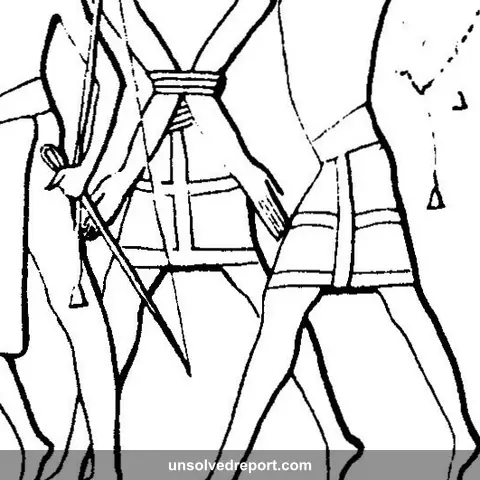
Around 1200 BCE, a whole civilization went dark overnight. Egypt blamed the Sea Peoples—150 years later, no one can say who they really were.
Phaistos Disc: We Have It. We Just Can't Read It.
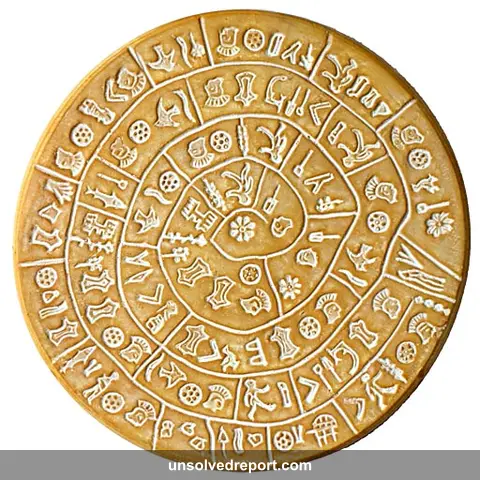
The Phaistos Disc: 4,000 years old, fully cataloged, completely unread. Every symbol is counted, every theory tested — so why can't anyone crack it?
Niya: The Silk Road Town the Desert Ate Alive
Niya ruins: a Silk Road town frozen mid-life in the Taklamakan Desert—houses standing, letters still legible after 1,700 years. So why did everyone just... walk away?