Plain of Jars: 3,000 Stone Vessels Nobody Can Explain
Plain of Jars: thousands of stone vessels, no inscriptions, no tools, no known builders. 2021 dating tests only made the mystery stranger. Here's why.
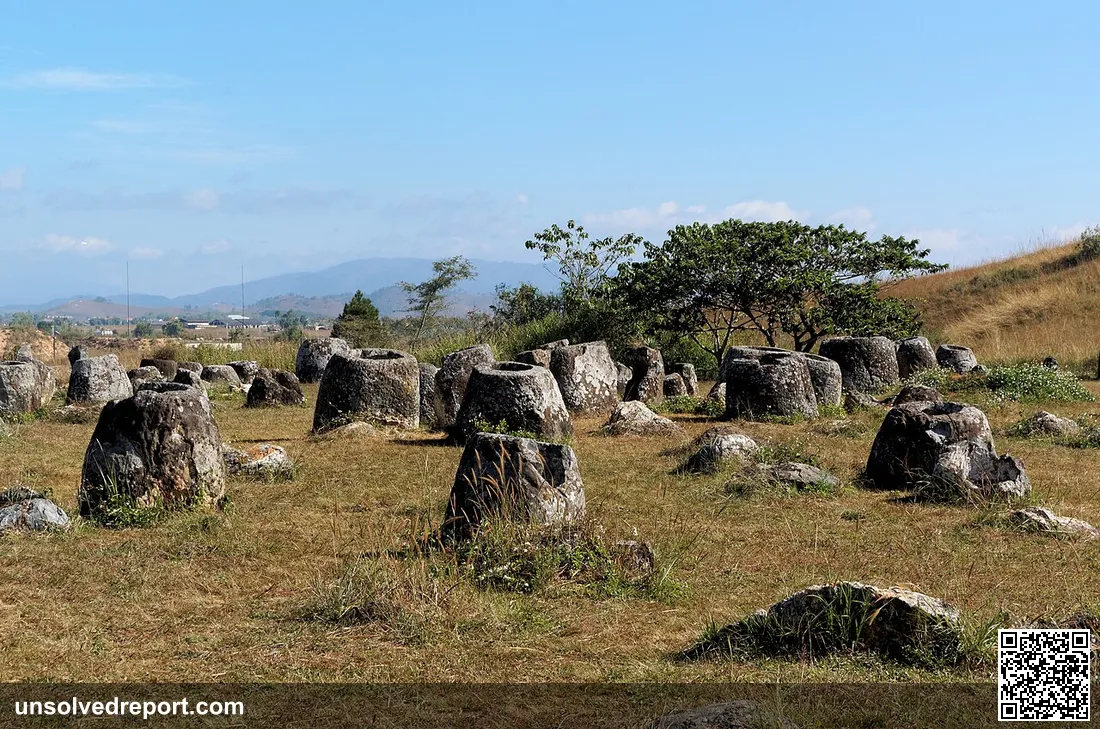
Walk into the green upland meadows of central Laos and you'll find them everywhere: thousands of stone jars, some taller than you, some heavier than a car. They are carved from solid rock. Monsoon rain has worn them smooth for centuries. And here's the unsettling part — there are no inscriptions on them, no tools left lying beside them, and not one living soul who can tell you who made them. People have called this place the Plain of Jars for more than a hundred years. For just as long, the same three questions have hung in the air: Who carved these things? How on earth did they move them? And what were they for? Let's separate what we actually know from what is only a story.
What We Actually Know
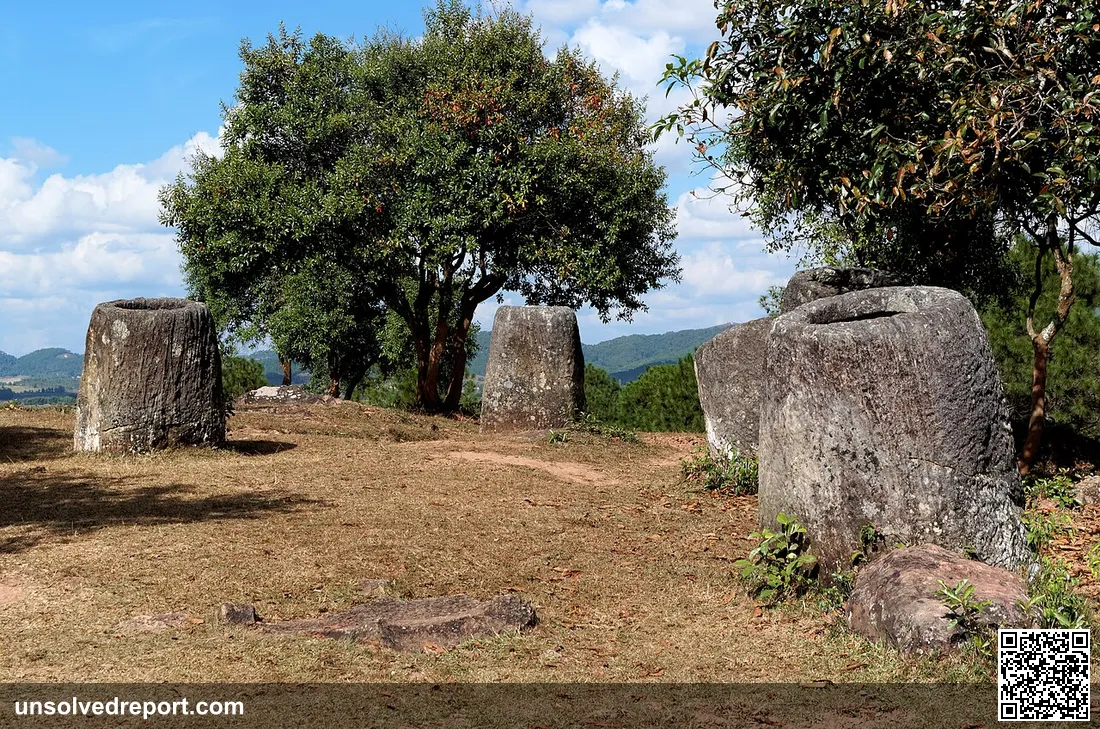
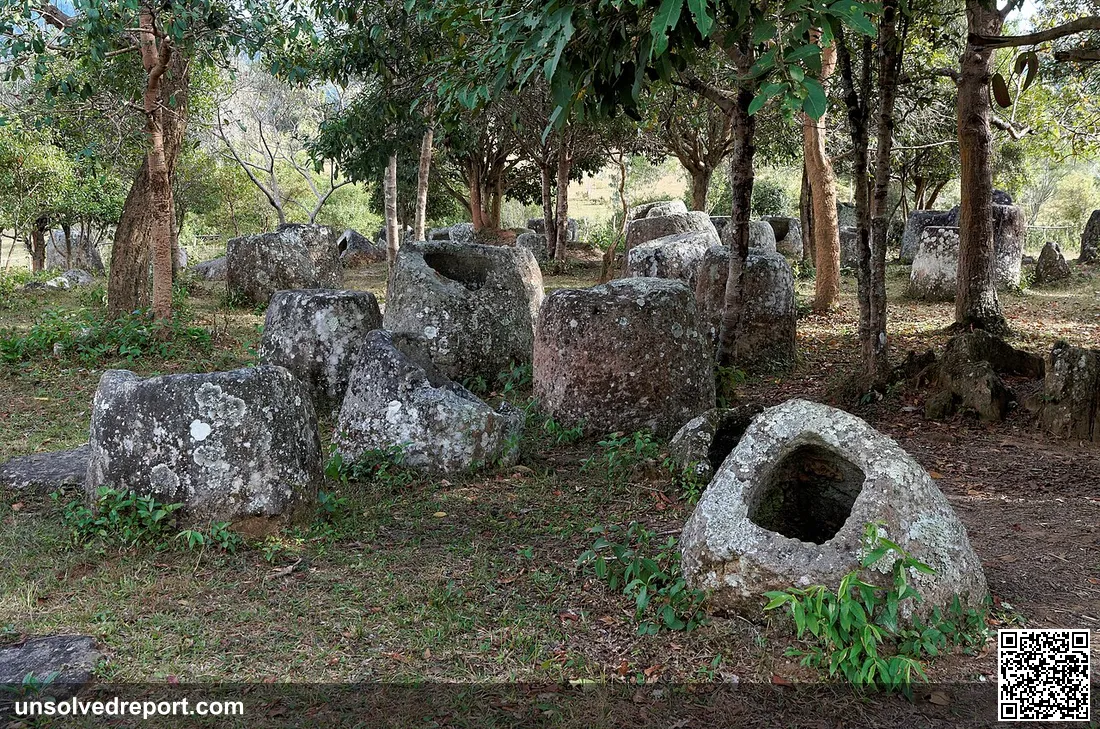
First, forget the idea of a single field. The Plain of Jars is a whole landscape — a real, mapped, surveyed sweep of the Xiangkhoang Plateau in northern Laos, not unlike the landscape-wide survey that uncovered Cambodia's lost mountain city of Mahendraparvata not far away. In 2019, UNESCO made it official, inscribing the "Megalithic Jar Sites in Xiengkhuang" as a World Heritage Site. It's a serial property of 15 components, and inside them sit roughly 1,325 carved stone jars, plus stone discs, burials, grave markers, the quarries the stone came from, and the workshops where it was shaped (UNESCO World Heritage Centre). Step beyond those protected zones and the count balloons: surveys have logged more than 2,100 jars across over 120 recorded sites. That's why you'll often hear the total rounded up toward three thousand (Wikipedia, "Plain of Jars"; Archaeology magazine).
These are not little pots. They were hewn from several kinds of rock — mostly sandstone, but also granite, conglomerate, limestone, and a strange coral-like breccia — and they stand anywhere from one to three meters tall. How heavy is the heaviest? Sources don't fully agree. UNESCO puts the biggest at around six tons; Archaeology magazine reckons the largest tips fourteen (UNESCO; Archaeology magazine). Pick either number and the conclusion is the same: making and placing these monsters "required technological skill to produce and move from the quarry locations to the funerary sites" — and some of those quarries sit several kilometers away, a transport puzzle not unlike the one still debated over how Easter Island's moai reached their platforms (UNESCO).
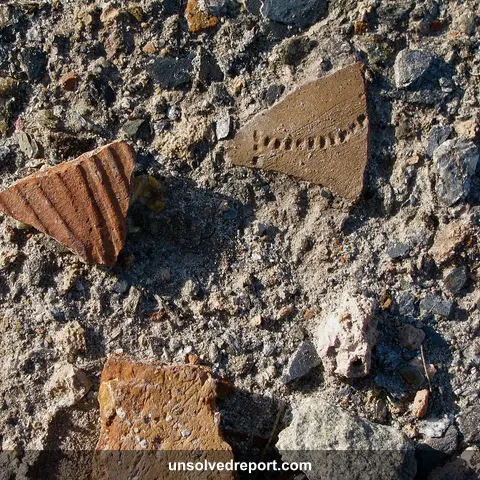
So what were they for? On that, the dirt keeps pointing the same direction: these were monuments for the dead. The first serious digging was done by French researcher Madeleine Colani, who recorded and excavated a dozen jar sites in the early 1930s and published two thick volumes of her findings in 1935. Inside and around the jars she found human teeth, bone fragments, and colored glass beads, all sunk in dark, organic soil (Wikipedia; Archaeology magazine). Later excavators only deepened that reading. In the 1990s, Japanese archaeologist Eiji Nitta and Lao archaeologist Thongsa Sayavongkhamdy uncovered burial pits with human bone, and concluded the sites were used for secondary burials — meaning the dead were laid here only after their bodies had already decayed somewhere else (Archaeology magazine). UNESCO sums it up the same way: this was a civilization that made and used the jars for funerary rites.
Then, in 2021, science put real dates on the stones — and the dates were a shock, echoing the same dating whiplash that has split experts over Thailand's Ban Chiang Bronze Age site. A peer-reviewed study in PLOS One by Louise Shewan, Dougald O'Reilly, and colleagues used two independent methods. The first, optically stimulated luminescence (OSL), measures the last time buried sediment saw sunlight. It said the jars at Site 2 were set on the land startlingly early — somewhere between about 1240 and 660 BC. But radiocarbon dating of the human remains told a completely different story: the burials clustered around the jars were far younger, from roughly the late ninth to the thirteenth centuries AD. The team even matched a jar fragment, by uranium-lead zircon analysis, to a quarry about eight kilometers away (Shewan et al., PLOS One, 2021).
The Part Nobody Can Answer
Here's where we have to be straight with you. A full century of study, and the most basic questions are still wide open. Archaeology magazine doesn't dress it up: "no one knows for sure their precise age, who built them, or why" (Archaeology magazine). No written record names the carvers. No village has been firmly pinned as the builders' home. A people who quarried, shaped, and dragged multi-ton stone vessels across these hills left us the vessels — and almost nothing else that speaks for them.
And that 2021 dating? It didn't close the case. It cracked it open wider. If the OSL ages are right, the jars may have stood on the land more than a thousand years before the burials archaeologists keep finding beside them (Shewan et al., 2021). Sit with that gap for a second. It forces a question with no settled answer: were the jars carved very early and then reused, generation after generation, by later peoples? Or do the dating methods simply have limits that future digging will tighten up? The study's authors lean toward long-term reuse and an "enduring ritual significance" — but they're careful to call it an interpretation, not a verdict. As for how anyone hauled these things from quarry to hilltop? Undocumented. The skill is obvious. The method is gone.
Theories, Legends, and One Sobering Truth
Like so many of the world's other megalithic mysteries, what follows are proposed explanations and local traditions — interpretation and legend, not settled fact. Here's how the leading ideas stack up.
The crematorium-and-cemetery theory (scholarly, partly supported). At Site 1 there's a limestone cave with two man-made holes punched through its roof. Colani's read: the cave worked as a crematorium, the surrounding jars as vessels for the dead, the fields as cemeteries (Wikipedia). The funerary framing rests on solid ground — bone, teeth, beads all back it up. The specific crematorium claim is a reasonable reading of that evidence, but not everyone is convinced.
The food-and-drink storage idea (speculative). They're shaped like jars, so for ages people have wondered: did they hold food, water, maybe fermented drink? It's an easy guess — and that's all it is. There's no firm archaeological case for storage as the main purpose, and the weight of evidence still says burial. File this one under folk intuition, not finding.
The legend of the giants (folklore). Lao tradition tells of a race of giants ruled by a king named Khun Cheung. After winning a long, brutal war, the story goes, he carved the jars to brew and store enormous quantities of lau hai — rice wine — for the victory feast (Wikipedia). The name lau hai, "alcohol jar," still lingers in the telling. This is cultural legend, not history: a window into how the people who live alongside these stones have made sense of them, not a record of who actually carved them.
And one last fact casts a long shadow over everything ahead. Between 1964 and 1973, this region was bombed, heavily, and large amounts of unexploded ordnance still lie hidden in the ground — so much that it dictates where archaeologists and visitors are even allowed to set foot (UNESCO; Wikipedia). Clearance teams have made only part of the landscape safe. Until more ground can be carefully swept, the people who shaped three thousand stone vessels and carried them up into the hills of Laos will keep most of their secret. The jars have waited this long. They can wait a little longer — and the answers, for now, stay buried in the earth beside them.
Sources & Further Reading
- UNESCO World Heritage Centre, "Megalithic Jar Sites in Xiengkhuang – Plain of Jars" — https://whc.unesco.org/en/list/1587
- Shewan, L., O'Reilly, D., Armstrong, R., et al., "Dating the megalithic culture of Laos," PLOS One (2021) — https://journals.plos.org/plosone/article?id=10.1371/journal.pone.0247336
- Archaeology magazine, "Plain of Jars" feature — https://archaeology.org/issues/online/features/plain-of-jars/
- Wikipedia, "Plain of Jars" — https://en.wikipedia.org/wiki/Plain_of_Jars
Unexplained Ancient Artifacts: 10 Objects That Baffle Scientists
Unexplained ancient artifacts that are real, studied, and still unsolved — a 2,000-year-old computer, a glowing Roman cup, a disc no one can read. What were they for?
Meroe Pyramids: How Kush Out-Built Egypt by 100+ Tombs
Sudan has more pyramids than Egypt — 200+ steep stone spikes hiding a looted queen's gold and a script scholars can read aloud but still can't translate. Why?
Khami Ruins Zimbabwe: The Stone City With a Cross Nobody Can Explain
Great Zimbabwe fell, and 250km west a new stone city rose, traded with three continents, then fell to a warlord — leaving one granite cross nobody has ever explained. Why?