Bir Hima Petroglyphs: The 7,000-Year Wall Nobody Can Fully Date
Bir Hima's rock art spans 7,000 years - cattle, camels, a war dated to the month. So why can't experts agree how old the oldest carvings really are?
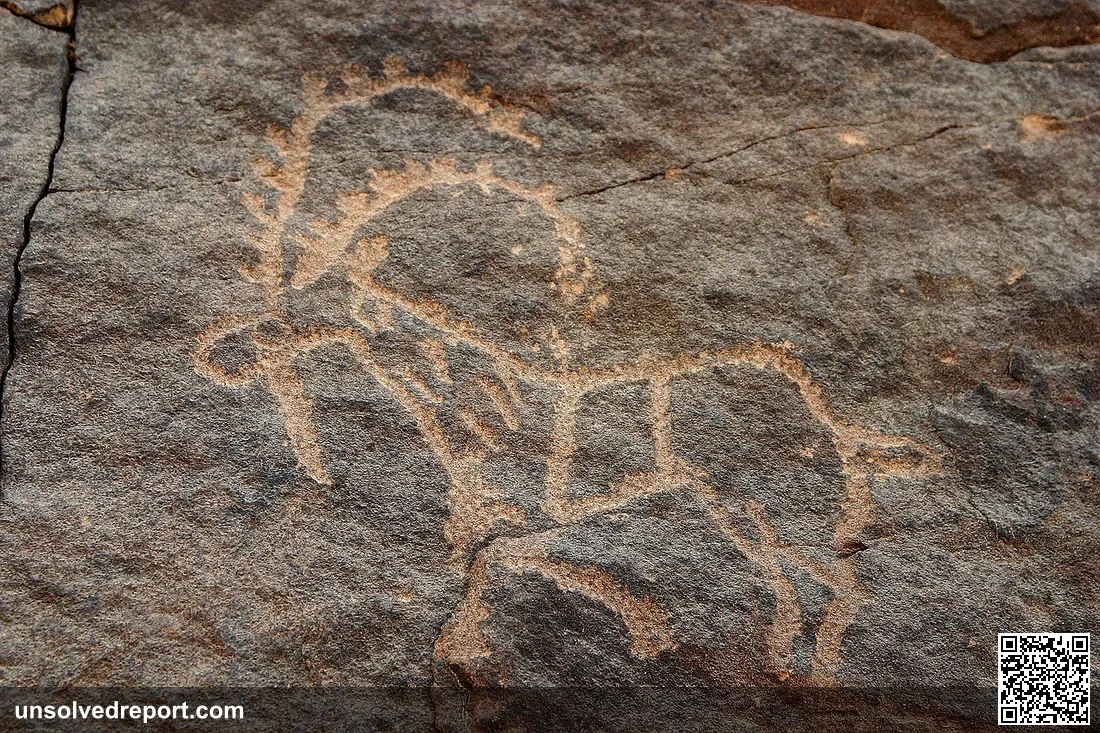
Picture a wall of stone in the desert, taller than a man, and every inch of it covered in pictures. Long-horned cattle. People with their arms flung up, dancing. Hunters drawing bows. Whole caravans of camels marching nowhere. And over all of it, scratched in neat rows, lines of writing in alphabets nobody has said out loud in centuries.
This is Bir Hima, north of Najran in southwestern Saudi Arabia — the "wells of Hima." The sandstone here rises from the desert floor like pages left open to the sky, and for roughly seven thousand years people stopped, drank, and carved. It's one of the largest open-air galleries on Earth. But here's the strange part: it isn't how much they left behind that haunts you. It's how much of their world we still can't read.
What we actually know
Bir Hima sits in the Ḥimā Cultural Area, about 120 kilometers (roughly 75 miles) north of the city of Najran, in a dry, mountainous corner of the Arabian Peninsula that's also home to other strange stone puzzles, like Al Naslaa's boulder split clean in two (Wikipedia: Bir Hima Rock Petroglyphs and Inscriptions). In July 2021, at the 44th session of the World Heritage Committee meeting in Fuzhou, China, UNESCO put it on the map for good — inscribing the Ḥimā Cultural Area as Saudi Arabia's sixth World Heritage property, under cultural criterion (iii) (Arab News; The Art Newspaper).
UNESCO's own words say it plainly. The area "contains a substantial collection of rock art images depicting hunting, fauna, flora and lifestyles in a cultural continuity of 7,000 years" (Arab News). The numbers are hard to hold in your head. The complex spans some 557 square kilometers and includes hundreds of rock-art panels along with tens of thousands of inscriptions (Saudi Gazette). Across the broader Najran area, researchers have logged thousands of individual images — more than 1,800 camels, over a thousand human figures, hunting scenes bristling with daggers, swords, bows, and throw-sticks, and even creatures that have since vanished from this land entirely, like giraffes (Wikipedia).
Now here's what makes Hima different from almost any other ancient site: the carving never really stopped. This was a crossroads. Travelers, pilgrims, and whole armies passed through this junction of caravan and Hajj routes — the roads tying southern Arabia to Mesopotamia, the Levant, and Egypt — and each one left a mark in their own script: Musnad (Ancient South Arabian), Thamudic, Aramaic-Nabataean — the same people who carved Hegra's tombs into the desert cliffs — Greek, early Arabic (Arab News). Why did they all keep coming back to this exact spot? The answer is simple, and it still holds today: water. The wells at Hima are more than three thousand years old, and — astonishingly — they still hold fresh water (Arab News).
One carving, in particular, reaches straight out of the rock and into recorded history. Scholars call it Ja 1028. It's a Sabaic text, cut by a commander of the Himyarite king Dhū Nuwās, and it carries a date you could mark on a calendar: July 523 CE. It records a military campaign against the Christian community of Najran — a grim event that independent written sources of the era describe too (Wikipedia: Ja 1028). Think about that. A few lines scratched into desert stone, confirming a chapter of late-antique history written somewhere else entirely.
The question nobody can answer
Here's the heart of it: we can read the words at Hima far better than we can date the pictures.
Writing gives itself away. Alphabets change shape over the centuries, and historians know roughly when each script was in fashion — so an inscription can often be slotted into its era. Ja 1028 even hands you the month. But the oldest marks at Hima aren't writing. They're images. And images keep their secrets, joining the world's stubborn pile of undeciphered texts and codes no one can read. A petroglyph carries no caption, no signature, no year. Popular accounts often throw out a range of roughly 7000 BC to 1000 BC for the engravings (Wikipedia) — but the specialists are blunt about it. Much Arabian rock art "has not been precisely dated," and for many compositions the exact age "cannot be precisely determined" (Bradshaw Foundation).
So the mystery splits in two. First: how old, really, are the earliest carvings — and who held the tool? And second, the one that lingers: these panels show a landscape that doesn't exist anymore. Herds of cattle. Hunters chasing big game. Giraffes. That's not the Arabia of today — that's a wetter, greener world from the Holocene "humid period," when this desert was savanna and grassland. The art is a window onto a place that dried up and blew away. But exactly when that green world bloomed here, when it died, and how the people carving it survived the change — that timeline is still being pieced back together.
What the experts think — carefully
What follows is scholarly interpretation and working hypothesis — careful reading of the evidence, not settled fact. Keep that in mind.
Theory 1: the rock is a climate diary. Many researchers read the imagery as a layered record of a changing world — from a life of hunting and gathering, to one propped up by herding and early farming, as the region drifted "from more verdant to arid conditions" over thousands of years (Bradshaw Foundation). On this reading, the cattle and wild game on the stone aren't make-believe. They're memory — a faithful portrait of a green Arabia the desert later swallowed.
Theory 2: Hima was a message board that lasted millennia. Because the carving kept going for thousands of years in the same spot, some see Hima less as random graffiti and more as a place whose meaning piled up over time. Maybe travelers added their marks precisely because others already had — a watering stop that doubled as a communal logbook, each generation answering the one before. UNESCO's whole framing of "cultural continuity" points this way (Arab News).
Theory 3: the first dogs on a leash (with a big caveat). This one isn't about Hima at all — it's about sister sites, and that distinction matters. At Shuwaymis and Jubbah in northwestern Saudi Arabia, archaeologist Maria Guagnin and colleagues documented hundreds of carvings of dogs hunting beside bow-wielding humans, some of the animals tied to their handlers by lines that might be leashes. The work, published in the Journal of Anthropological Archaeology and estimated at roughly 8,000 years old, made the case that these could be among the earliest known images of domesticated dogs helping hunters (National Geographic; Science/AAAS). The dating and the "leash" reading are still argued over by specialists, and again — these panels are not at Bir Hima. But they show exactly what Arabian rock art can pull out of deep human history, and why scenes at places like Hima reward such patient, careful looking — the same patience researchers bring to Africa's Python Cave rock art at Tsodilo Hills, another site where old stone keeps outrunning its own dating.
What stays with you isn't one breathtaking image. It's the sheer stubbornness of human hands. For seven thousand years, in a place defined by the hunt for water, people kept deciding to be remembered in stone. We can date some of their words down to the month. The rest is still talking — and we're still learning how to listen.
Sources and Further Reading
- Arab News — Ancient rock art in Hima listed as Saudi Arabia's sixth UNESCO World Heritage Site
- The Art Newspaper — Ancient rock art complex Hima listed as Saudi Arabia's sixth UNESCO World Heritage site
- Saudi Gazette — Hima, a rock art site in Najran, added to UNESCO's World Heritage List
- Wikipedia — Bir Hima Rock Petroglyphs and Inscriptions
- Wikipedia — Ja 1028 inscription
- Bradshaw Foundation — The Rock Art of Saudi Arabia
- National Geographic — Are These the Oldest Images of Dogs?
- Science/AAAS — These may be the world's first images of dogs—and they're wearing leashes
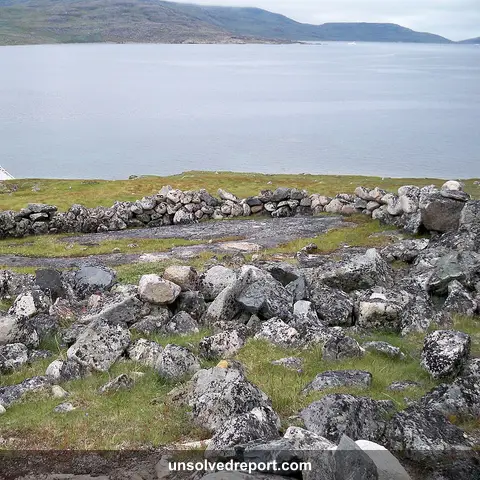
Hvalsey Church: 400 Years of Norse Vanished, No Note
Hvalsey Church still stands 600 years later — the people who built it don't. A 1408 wedding was Norse Greenland's last recorded word, then total silence. What happened to them?

Mysterious Disappearances: 12 People History Couldn't Find
12 mysterious disappearances history never solved — a vanished colony, a missing aviator, three lighthouse keepers gone overnight. What really happened?
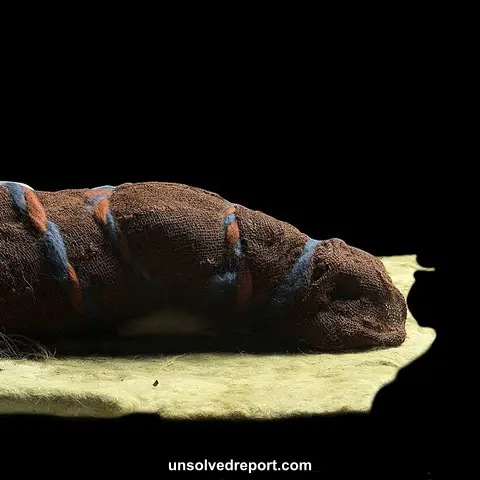
Tarim Basin Mummies Mystery: The DNA Twist Nobody Predicted
Their faces looked distinctly European. Then a 2021 DNA study on the Tarim Basin mummies revealed a twist nobody predicted. So who were they?