Kruger Millions: The Lost Gold Nobody Can Fully Account For
A republic loaded its gold onto a train and fled the British army. The treasure was real — but a quarter-million ounces still won't add up. Here's why.
First week of June, 1900. A whole country is loading its money onto a train.
Crates of gold coin, hauled out of the Mint and the National Bank, thumping into railway cars one after another. British columns are marching on Pretoria — capital of the gold-rich South African Republic, the place everyone called the Transvaal, or the ZAR. The clock is running. And the Boer government has to decide, right now, what to do with everything in its vaults.
What happened over the next few weeks turned into one of southern Africa's most stubborn treasure stories: the "Kruger Millions." A fortune in gold, the legend says, buried somewhere out in the Lowveld bush — still down there, still waiting, just under the wrong thorn tree, for somebody with the right shovel.
Here's the strange part. The gold was real. The frantic evacuation was real. And most of the paperwork actually survived. Clerks wrote things down. Diaries got kept. You can follow the convoy on paper for a long way.
And yet — when you add it all up, the numbers don't quite balance. There's a hole. A gap where the totals should meet and simply don't. That gap, that one unbalanced column, is exactly where the whole legend lives. So let's pull the records apart from the campfire stories, one at a time.
What We Actually Know Happened
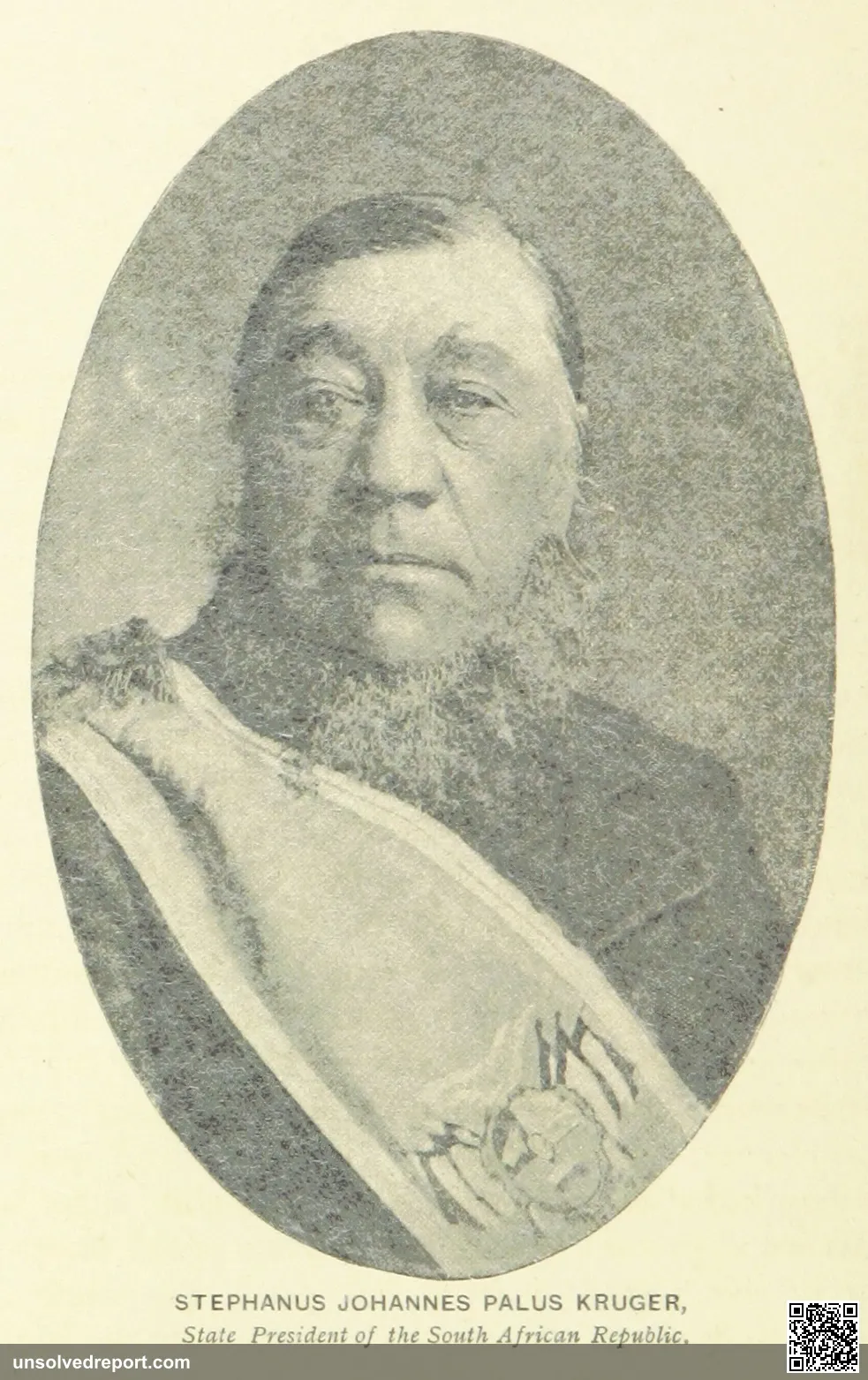
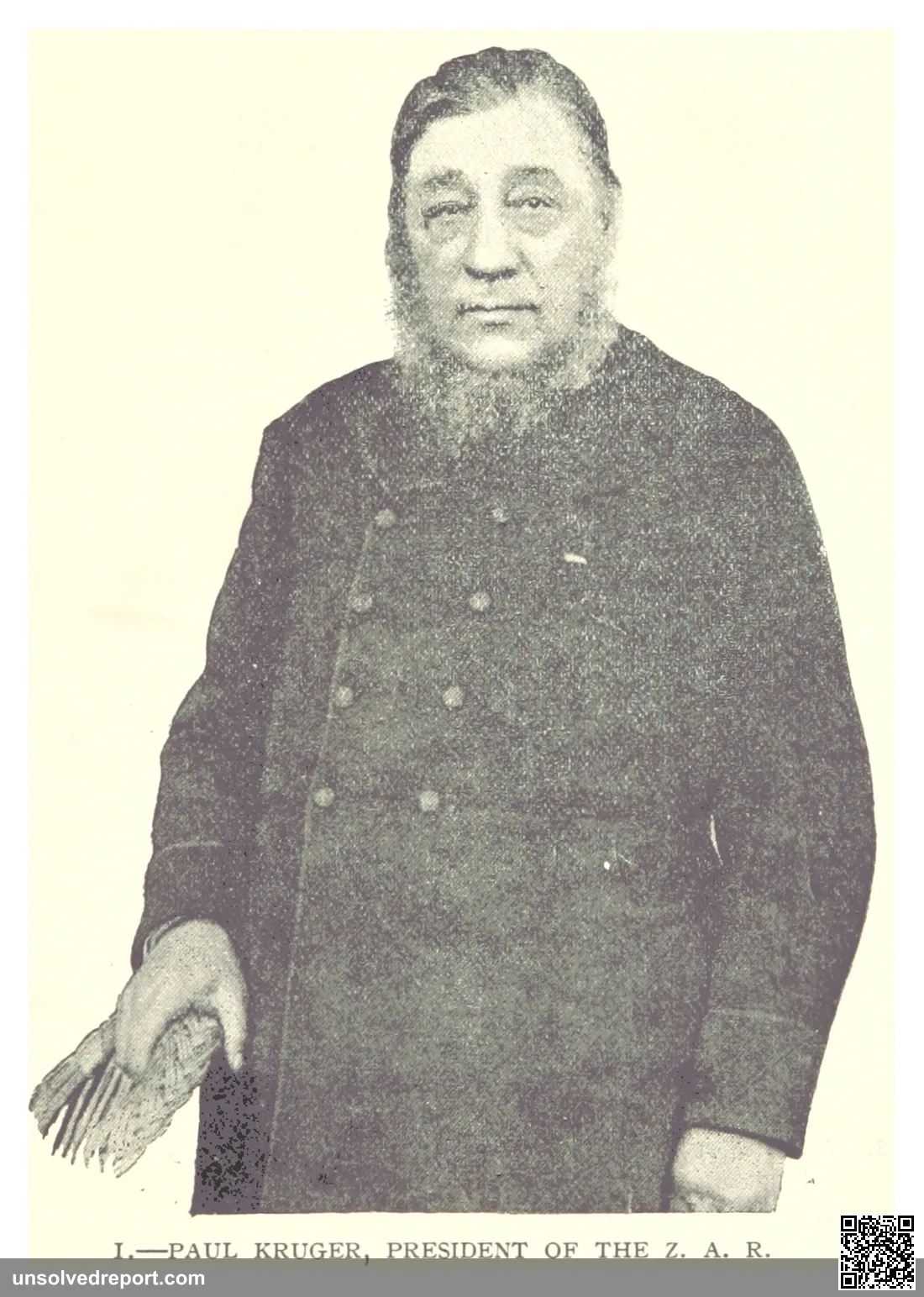
Start with the man whose name is on the gold. Paul Kruger was State President of the South African Republic from 1883 until he fled into exile, his term officially ending in 1902 (Wikipedia, "Paul Kruger"). The Second Anglo-Boer War burned from 1899 to 1902, and by the middle of 1900, the British advance under Lord Roberts had pushed right into the Transvaal heartland. The capital was next.
Kruger didn't stay to watch. He slipped out of Pretoria in the dark on the night of 29 May 1900, riding a Cape cart out to Koedoespoort Station and boarding a train heading east toward Machadodorp, where the government set up shop on the run (The Heritage Portal, "The Fall of Pretoria, June 1900"). Days later the British took Proclamation Hill on 4 June. Then, on 5 June 1900, Lord Roberts rode in triumph through Church Square. Pretoria had fallen (Heritage Portal).
But the treasury was already gone. A young state attorney named Jan Smuts — yes, the same Smuts who'd grow into a world statesman — had his orders: take the gold from the State Mint before the British could. And he did. By the Heritage Portal's account, he carried off roughly £400,000–£500,000 in gold coin, plus about £25,000 set aside to pay government salaries (Heritage Portal). Remember, the Pretoria Mint wasn't some sleepy office. It was a busy factory, stamping out hundreds of thousands of Kruger gold sovereigns — the famous "ponds" — in exactly these years (Wikipedia, "Kruger Millions"), gold pulled from the same southern African earth that once produced Mapungubwe's golden rhino centuries before any republic existed to mint it.
From there, the gold rolled east with the collapsing republic, heading for Portuguese territory and the port of Lourenço Marques — what's now Maputo, in Mozambique. And here's a real, hand-written trace of it: a government official named Meindert Noome kept a diary, and he wrote that on 31 August 1900, gold was handed over to a German firm, Wilken and Ackerman, at Lourenço Marques. Sixty-two cases (Wikipedia, "Kruger Millions"). Sixty-two cases, counted and recorded.
Kruger himself kept going, all the way out of the country. Held for a while under restriction in Portuguese territory, he was finally carried off to Europe aboard a Dutch warship, *HNLMS Gelderland, sent by Queen Wilhelmina of the Netherlands herself (Wikipedia, "Kruger Millions"). He died far from home, in Clarens, Switzerland, on 14 July 1904* — then made one last journey back to Pretoria, for burial (Wikipedia, "Paul Kruger").
Read it back, and none of that is mysterious. A government emptied its vaults, loaded the contents onto its own railway, and shipped most of it abroad. Sensible. Documented. Almost boring.
The mystery isn't in the story. It's in the math.
The Hole in the Ledger
No one has ever produced a single, clean, fully-reconciled accounting of the gold that left Pretoria. And the estimates that do survive flatly contradict each other.
Watch the numbers swing. British accounts written after the war throw out a figure as high as £2.4 million said to have been confiscated from the Rand mines. An early chronicler, Hedley Chilvers, guessed around £2 million. But Smuts — the very man who hauled the gold out — remembered only about £750,000 worth actually reaching Middelburg (Wikipedia, "Kruger Millions"). Pick a starting number, any number, and the total changes by millions. Working through those clashing figures, Wikipedia's reconstruction lands on something like a quarter-million ounces of gold that nobody can fully account for — and the exact size of that hole depends entirely on which figure you decide to believe.
That leftover, that stubborn unaccounted remainder, is the engine that drives the entire legend.
Be clear about what "open question" means here, though. It's open because the records are patchy and don't agree — not because historians actually think a buried fortune is waiting out there. The mainstream view, all through the source material, is plain: the gold was mostly spent funding two more grinding years of war, and the rest was shipped off to Europe. Not buried in some lonely Lowveld hill. But because the paperwork never quite snaps shut — because there's that one column that won't add up — the door to wild speculation has stayed open for more than a century.
So Where Did It Go? The Theories
Three serious explanations, and one persistent legend. Let's line them up.
Theory one: it was spent and shipped, and nothing is buried. This is the historians' consensus, and it's the simplest reading. The gold paid for the war and kept the government-in-exile alive, and whatever was left flowed quietly into European banks. Historian Eric Rosenthal, in his book From Barter to Barclays, wrote that much of the Rand gold was carried into Portuguese territory and "ultimately shipped to Europe" (News24, "In search of Kruger's millions"). If he's right, there's nothing out in the bush to find. The chest is a ghost.
Theory two: there was barely anything to bury in the first place. In 1929, Colonel Deneys Reitz — son of the ZAR's secretary of state — said the whole "treasure" came to only about £80,000 in gold bars, which simply traveled with Kruger and was later sold off in France to help Boer refugees (News24). Worth a small catch, though: by several accounts, Reitz was partly trying to stop treasure hunters from ripping up the countryside chasing a fantasy. Which is a useful reminder — even the person debunking a legend can have a reason to shrink it. So take his figure as one man's memory, decades after the fact, not a closed case.
The legend: the buried Lowveld hoard. Here's the version everyone wants to be true. As the republic crumbled, wagons heavy with gold were supposedly buried near the Blyde River, or somewhere out in the eastern Transvaal, marked and abandoned — the same shape of story that surrounds the Nazi gold train hidden as another regime collapsed decades later. Where does this come from? Mostly from colorful figures who turned up later — a 1905 tale pinned to a horse thief named John Holtzhausen, who spoke of "two million pounds in buried gold and diamonds," and a 1930s retelling by the journalist Gustav Preller (Wikipedia, "Kruger Millions"). Lovely stories, cut from the same cloth as Yamashita's Gold in the Philippines — a wartime retreat, a buried fortune, decades of hunters with shovels. But that's what they are — folklore and uncorroborated personal claims, not documented events. No verified buried hoard has ever been dug up. Not once. And when a "Kruger pond" find surfaced near Ermelo in 2001, it turned out to be a tourism hoax: the coins carried an impossible 1889 date, a year that gives the whole thing away (Wikipedia, "Kruger Millions").
The Twist Nobody Saw Coming — In a Swiss Vault
February 2021. Inside a vault in Switzerland, someone opens a parcel — and out come 910 genuine Kruger ponds, dated 1893 to 1900. Real ones.
The South African Mint, a subsidiary of the South African Reserve Bank, put them up for release (Mining Weekly; TimesLIVE). And the story of where they'd been is its own quiet thriller: stored in the Netherlands in the early twentieth century, then quietly moved to Switzerland for safekeeping before World War II, and left to sit there for decades. They even named it "The Lost Hoard."
It's the closest thing to physical evidence anyone has ever put on a table. And notice which way it points — not down, into a buried chest, but out, toward Europe. Exactly the route the historians always described.
Now, the honest caveat: nobody has fully proven these specific 910 coins are literally part of the evacuated reserves. What we can say is that their paper trail — Netherlands, then Switzerland, then a vault — fits the European-transfer theory far better than the buried-treasure one.
And that's the unglamorous truth at the bottom of it all. A gold-rich republic, staring down conquest, did the coldly rational thing: it melted its reserves into a war chest and an escape fund, and it sent the rest abroad. The "Kruger Millions" don't survive because a chest is waiting under a thorn tree. They survive because a few columns, in a few old ledgers, never quite added up — and the human mind simply cannot leave a gold-shaped gap alone.
Which makes you wonder how many other "lost fortunes" are really just bad bookkeeping — half-true the way Lake Toplitz's Nazi treasure legend turned out to be — and how many are still out there, genuinely waiting.
Sources & Further Reading
- Wikipedia — "Kruger Millions"
- Wikipedia — "Paul Kruger"
- The Heritage Portal — "The Fall of Pretoria, June 1900"
- News24 — "In search of Kruger's millions"
- Mining Weekly — "Some of Kruger's 'lost hoard' up for sale through SA Mint"
- TimesLIVE — "'The lost hoard' of rare SA gold coins found in a Swiss vault released"
Antikythera Wreck: 9 Bronze Statues Still Buried Below
Antikythera wreck: a diver surfaced screaming about corpses on the seabed. It was bronze masterpieces — and up to 9 statues are still buried down there. Which ones?

Lake Toplitz: The Nazi Treasure Lake That's Half True
A diver died searching Lake Toplitz. Nazi forgeries really did surface from its depths. But the gold everyone whispers about? Still unaccounted for.

The Honjo Masamune: Japan's Greatest Sword Just Vanished
A national treasure of Japan was handed across a police counter to an American soldier in 1946. Then the trail went cold on a misspelled name. Here is what we know.