Lost Peacock Throne: Gone Since 1747, Not One Piece Survives
Nader Shah looted the most jeweled throne on Earth in 1739 — then it vanished. Not one verified piece survives. Where did Shah Jahan's Peacock Throne go?
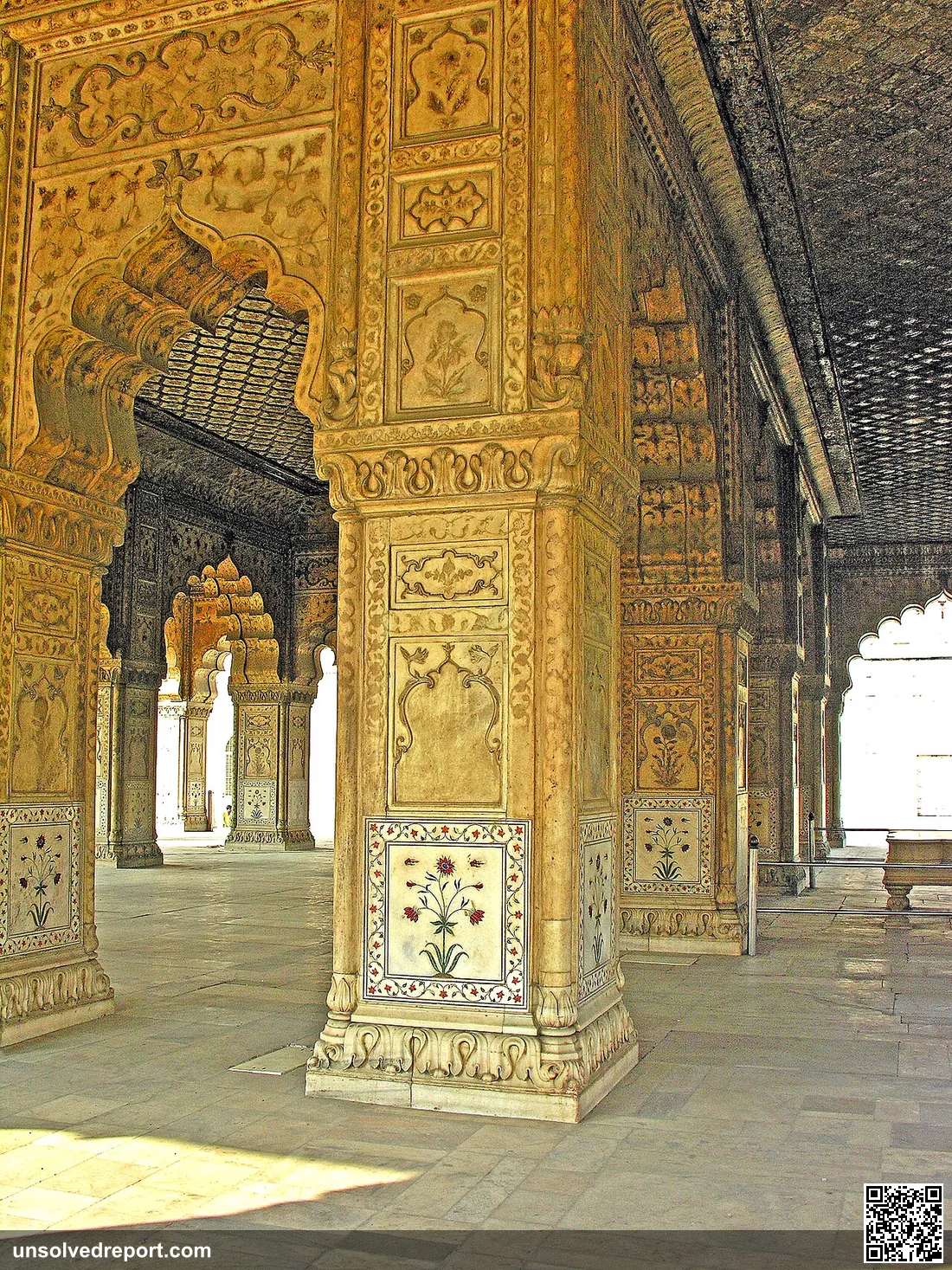
The most expensive chair on Earth wasn't really a chair. It was a jeweled platform, so packed with rubies, emeralds, diamonds, and pearls that the one French jeweler who studied it up close reckoned it cost about as much as the Taj Mahal. For roughly a hundred years it blazed inside the Red Fort in Delhi. Then, in one savage season in 1739, a Persian conqueror strapped it to an elephant and hauled it west.
Within ten years, it was gone.
Not stolen again. Not buried in a secret vault. It was apparently taken apart — piece by piece — until nothing you could recognize remained. And here's the part that won't let go of you: this thing was far too famous to simply misplace. Yet not one verified scrap of it is known to exist anywhere on the planet today.
What We Actually Know
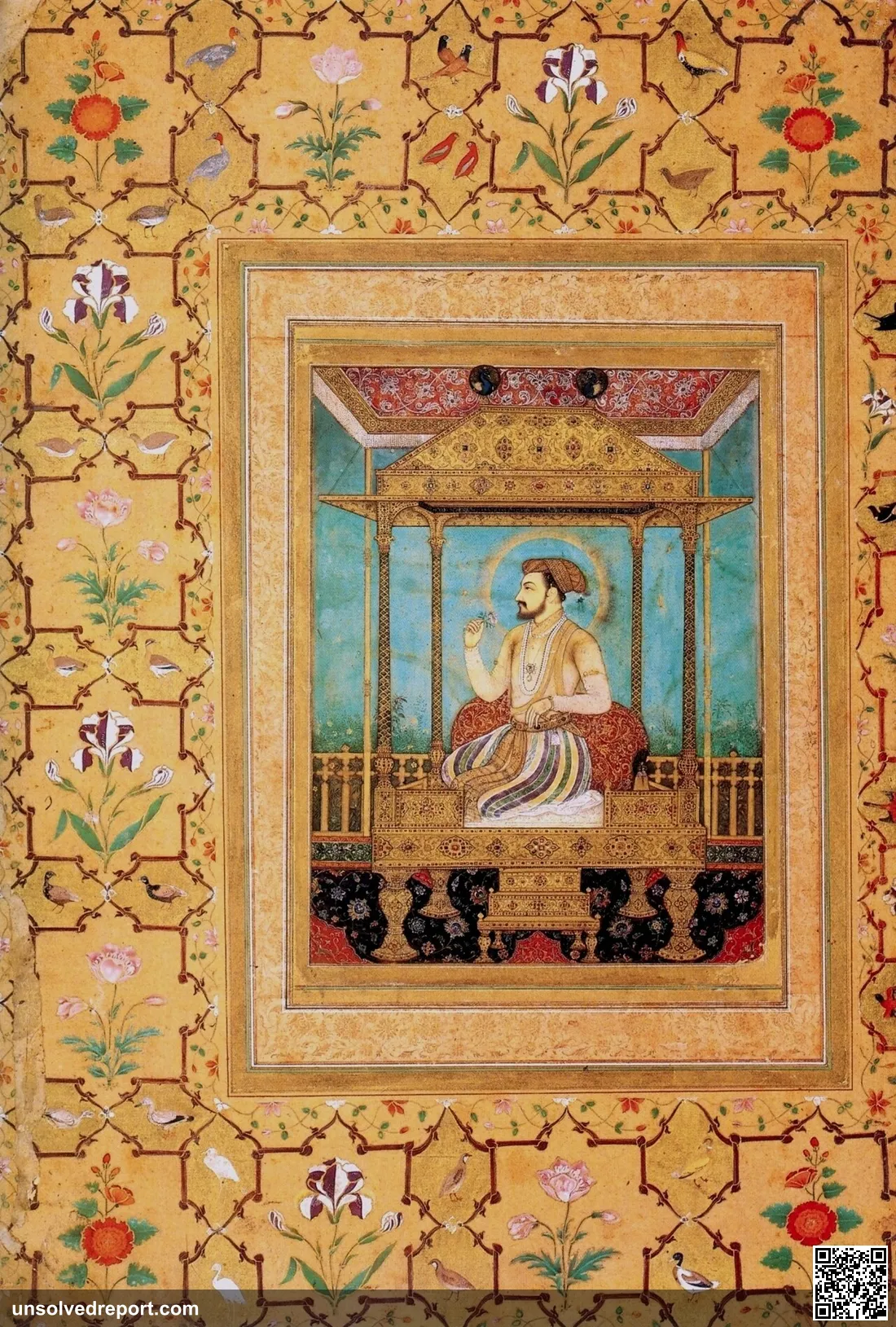
Start with the man who built it. Shah Jahan — yes, the same emperor who raised the Taj Mahal — ordered the throne soon after he took power. His goldsmiths and jewelers labored on it for about seven years and finished around 1635. The name came from two gilded, enameled, gem-studded peacock tails fanning out behind the seat (Britannica). In Persian they called it the Takht-e-Taus — the Throne of the Peacock.
Now meet the one man who looked at it closely and wrote it all down. Jean-Baptiste Tavernier, a French gem merchant, stood in the Mughal court in 1665 and studied the throne up close. Picture roughly the shape of a bed, lifted on golden feet, with twelve columns climbing toward a canopy. He counted something like 108 rubies — not one under 100 carats. Around 160 emeralds — none below 30 carats. Then heaps of diamonds and pearls piled on top of all that. The single most valuable feature, he said, was the canopy's rows of pearls. And the peacock itself? Worked in sapphires, its body beaten gold, a fat ruby on its breast, a lone pearl dangling beneath (InternetStones, citing Tavernier; Daily Art Magazine). His price tag landed around a crore of rupees — which people at the time put in the same league as the Taj Mahal itself.
Hold that image in your head. Now watch it fall apart.
The year is 1739. The Persian ruler Nader Shah pours into Mughal India, shatters Emperor Muhammad Shah's army at the Battle of Karnal in February, and marches into Delhi. The city rises against his soldiers. His answer is monstrous: on March 22, 1739, he orders a general massacre that kills tens of thousands (Britannica; News24). Then he leaves — and takes two centuries of stacked-up Mughal wealth with him. Historian William Dalrymple, in The Anarchy, describes the baggage train it took to drag it all home: hundreds of elephants, thousands of camels, thousands of horses, groaning under gold, silver, and gemstones rolling west (Asian Review of Books on Dalrymple's The Anarchy). Somewhere in that river of treasure rode the Peacock Throne — and some of the most famous stones on Earth, including the Koh-i-Noor and the Darya-i-Noor diamonds (Britannica). The name "Koh-i-Noor" — "Mountain of Light" — is usually credited to Nader Shah himself.
And then the story turns on the conqueror. In 1747, Nader Shah was cut down by officers of his own guard, and his empire splintered almost overnight. That exact moment is where the documented trail of the real throne goes cold.
The Question Nobody Can Answer
Here's the honest heart of it: no one can say for certain what physically happened to Shah Jahan's Peacock Throne after 1747, and no authenticated piece of it has ever been recovered.
Most historians agree on a grim, simple sketch. In the chaos after Nader Shah's murder, rival commanders ransacked his treasury, and the throne was almost certainly broken up — its gold frame melted, its gems pried loose and scattered to the wind (Britannica; Prdaily/Pratha cultural account). But notice how much weight "almost certainly" is carrying there. The exact date, the place, the way it died — none of it is written down in any single reliable source. The object just drops out of history. Was it dismantled in one night, or slowly cannibalized over years of warlord fighting? We don't know. Nobody does.
And now, a correction — because this is the single most common mistake people make about the throne. Those grand jeweled thrones you can see today in Tehran's Treasury of National Jewels — the Sun Throne and the so-called Naderi Throne — are not Shah Jahan's Peacock Throne. The Naderi Throne was built much later, under the Qajar ruler Fath-Ali Shah around 1812. Its name comes from the Persian word nader, meaning "rare," and despite the look-alike vibe, it has no direct link to Nader Shah at all (Wikipedia: Naderi Throne). Later Persian and Iranian dynasties built their own glittering thrones and sometimes slapped the "Peacock Throne" label on them — but those are different objects (Britannica). The original never came back in one piece.
So Where Did It Go? Three Ideas
Everything below is informed speculation — keep it firmly apart from the documented facts above.
Idea 1: It's still here — just scattered through Iran's Crown Jewels. (Plausible, partly supported.) This much is solid: several gems Nader Shah carried out of Delhi still sit in Iran's national collection. The star is the Darya-i-Noor, a pale-pink Golconda diamond of roughly 182 to 186 carats (surfiran guide to the Treasury of National Jewels). So it's reasonable — and people say it often — that individual stones once set in the Peacock Throne were later reused in Persian regalia. The catch you have to be honest about: tying any one surviving stone to one specific spot on Shah Jahan's throne is mostly inference, not proof. Nobody ever checked the throne gem-by-gem against the later collections.
Idea 2: Pieces got absorbed into the Sun Throne. (Folklore, weakly supported.) Some popular stories claim fragments or stones were folded into Persia's later "Sun Throne." You'll find this repeated in travel writing and enthusiast articles, but no primary document backs it up — and it bumps against the more careful view that the Qajar thrones were brand-new builds.
Idea 3: It was simply melted down for the gold. (The unromantic one — and probably the truth.) When an empire is collapsing, soldiers care about portable gold and loose gems, not a heavy ceremonial showpiece. Stripped of meaning and smashed for parts, the throne may have stopped existing as anything but raw material within a few violent years.
But here's the thing that really gnaws at you. The mystery isn't where the gold went. It's how something so utterly one-of-a-kind could vanish this completely. Seven years to build. A fortune to make. Admired by emperors and merchants alike. And it left behind no confirmed splinter — just Tavernier's astonished list of carats, a handful of legendary diamonds still drifting through the world's crown jewels, and an empty space in the record where one of history's greatest treasures used to sit.
Some treasures get stolen. This one was unmade — and somehow the world let it slip its mind.
Sources & Further Reading
- Encyclopaedia Britannica — "Peacock Throne"
- Jean-Baptiste Tavernier's description of the Takht-e-Taus (InternetStones.com)
- Daily Art Magazine — "The Peacock Throne of Shah Jahan"
- Asian Review of Books — review of William Dalrymple's The Anarchy
- News24 — Nader Shah and the Peacock Throne
- Wikipedia — Naderi Throne
- Treasury of National Jewels, Tehran — visitor guide (SurfIran)
- Pratha Cultural School — "The Mystery of the Lost Peacock Throne"
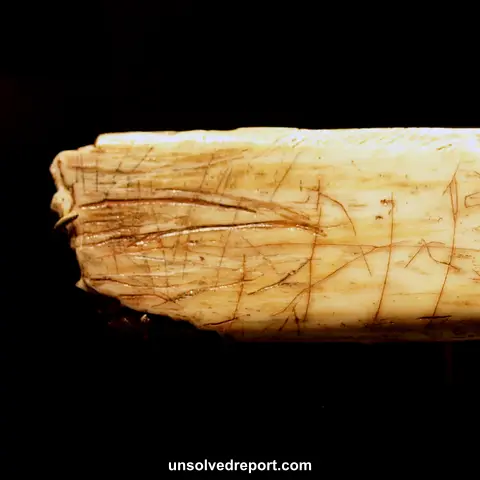
The Sherborne Bone: A 700-Year-Old Lie
The Sherborne Bone fooled Britain's top scientists for 80 years as genuine Ice Age art. Then radiocarbon exposed a 700-year-old fake — so who really carved it?
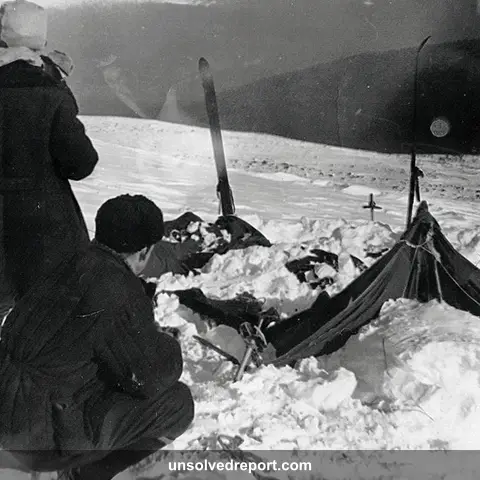
Dyatlov Pass Incident: The Tent Nobody Could Explain, Until 2021
Nine hikers fled barefoot into a fatal night on Dead Mountain. A 2021 model finally explains the Dyatlov Pass incident — but not everything. Here is why.
Phobos Grooves: The Claw Marks No One Can Explain
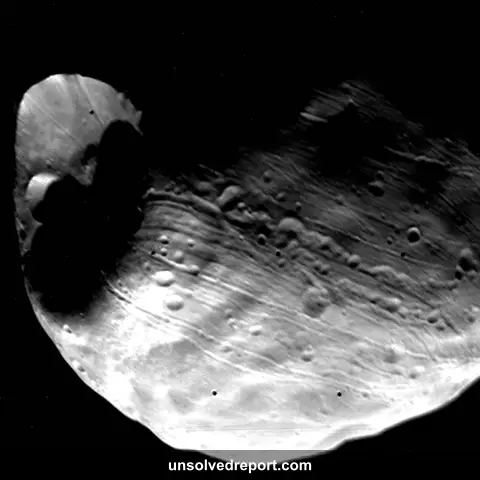
Phobos grooves: ruler-straight scars raking across Mars' dying moon. Four rival theories, zero proof — so what really carved these claw marks?