The Sherborne Bone: A 700-Year-Old Lie
The Sherborne Bone fooled Britain's top scientists for 80 years as genuine Ice Age art. Then radiocarbon exposed a 700-year-old fake — so who really carved it?
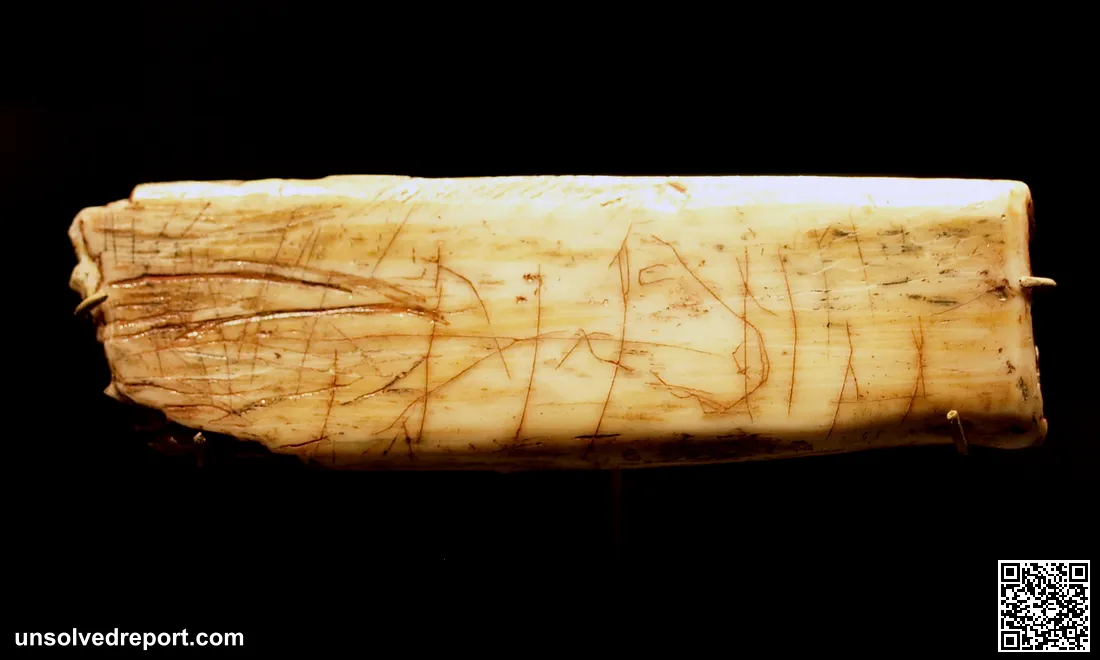
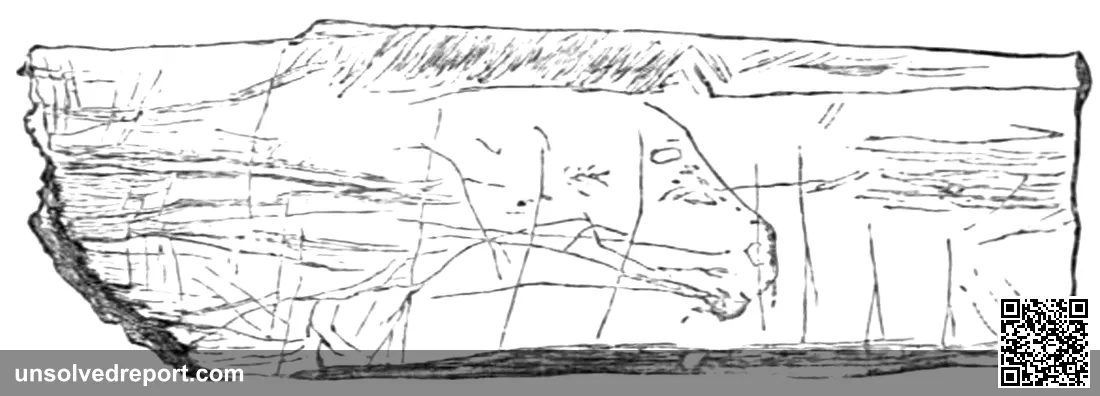
A horse's head, scratched into a sliver of old rib. That's what two boys carried out of a Dorset quarry in October 1911 — and it would fool the smartest scientists in Britain for the next eighty years.
The boys were pupils at Sherborne School. Their science teacher had pointed them toward the quarry, told them it might hold fossils. They came back with something far stranger than a fossil: a fragment of animal rib, and on its surface, the delicately engraved head of a horse. Within a few years one of Britain's most respected scientists would show it to the world as genuine Ice Age art. Within a few decades, others would call it a fraud. And for nearly a century, nobody could prove who was right — the same tug-of-war still playing out over the Sinaia Lead Plates.
No monster lurks in this story. No curse. This is a quieter, creepier kind of mystery — a small object sitting on the exact crack between real prehistoric art and a clever human lie, much like the disputed Lady of Elche, fooling experts on both sides until modern chemistry finally broke the tie. Here's the part that still gives you chills: even after the verdict came in, the evidence kept one secret it would never give up.
What We Actually Know
Two Sherborne boys found it in 1911. Later research names them as Philip Grove and Arnaldo Cortesi (Wikipedia, "Sherborne Bone"; Dorset Ancestors). Their science master, Robert Elliot Steel, was the one who'd suggested the quarry might give up fossils. The boys handed him the engraved rib. From his desk it traveled up the chain until it reached Arthur Smith Woodward — the powerful Keeper of Geology at the Natural History Museum in London.
Woodward took the bait completely. In 1914 he published a paper through the Geological Society of London with a mouthful of a title: "On an apparently Palaeolithic Engraving on a Bone from Sherborne (Dorset)" (Quarterly Journal of the Geological Society, 1914). He called it an apparent Palaeolithic engraving of a hog-maned, Mongolian-type wild horse. And he noted something that should have set off alarm bells: it looked an awful lot like the Robin Hood Cave Horse.
Why does that resemblance matter so much? Because the Robin Hood Cave Horse is the real thing. It's a genuine engraved rib fragment, dug from Creswell Crags and described back in 1877 by William Boyd Dawkins. It is the only piece of Upper Palaeolithic portable art showing an animal ever found in Britain — roughly 12,500 years old, now sitting in the British Museum (Wikipedia, "Robin Hood Cave Horse"). And the Sherborne horse looked, to more than a few sharp eyes, suspiciously like that one famous, widely-published example. Almost as if someone had a picture to copy from.
The doubts came fast. In the 1920s, the geologist William Sollas started asking questions. Then, in 1926, his assistant C. J. Bayzand dropped a bombshell: schoolboys, he said, had confessed the whole thing was a hoax. Steel pushed back in public, writing a letter to Nature and blaming the forgery rumor on mischief among the older pupils (Wikipedia, "Sherborne Bone"). And there it sat — accusation, denial, no proof either way, not unlike the confession that never quite came in the Cottingley Fairies hoax — simmering for decades.
Science kept trying to settle it, and kept half-failing. In 1957 the Natural History Museum's Kenneth Oakley ran the fluorine dating method on it and decided the bone could be Upper Palaeolithic after all (Dorset Ancestors) — a point for the believers. Then in 1980 Ann Sieveking looked closely at the cracks running through the bone and noticed something damning: the engraving had been cut after the cracks formed. That's a fingerprint of recent work, not ancient art.
The knockout blow landed in the 1990s. A team including Christopher Stringer of the Natural History Museum published "Solution for the Sherborne problem" in Nature in 1995, then followed up with a detailed study — "AMS dating and microscopic analysis of the Sherborne bone," by Francesco d'Errico, C. T. Williams, and Stringer — in the Journal of Archaeological Science in 1998 (Nature 378, 1995; d'Errico et al., 1998). Radiocarbon dating — the same kind of forensic work that later exposed the Crystal Skulls as 19th-century fakes — dropped the bone squarely into the 14th century AD. About 700 years old. Not 12,500. Far, far too young to be Ice Age art. In the team's own blunt words, "it now seems inescapable that the Sherborne engraving is a recent fake." And the horse itself? Most likely copied straight from the published picture of the Robin Hood Cave Horse — which boxes in the moment of forgery to sometime between that image appearing in 1877 and the bone landing on Steel's desk in 1911.
The Question Chemistry Couldn't Answer
This is where the trail goes cold. The science is locked tight: the rib is medieval, the carving is modern. Case closed — except for the one thing that actually keeps you up at night.
Who carved the horse? And why?
Radiocarbon can pin down when the bone lived and died. It cannot point a finger at a person. The whole "who" rests on circumstance, on memories that don't agree, on accusations gone gray with age. Even the researchers who cracked the dating refused to claim the rest. D'Errico and colleagues said the hoax was most likely the work of schoolboys at Sherborne — but "most likely" is a careful guess, not a confession. No forger ever stepped forward in any believable way. The two boys who found it. The older pupils Steel pointed at. Some forgotten artist with an old bone and a museum catalogue in front of him. Every one of them fits the evidence, and none of them is proven. The motive is just as lost: a prank on a teacher? A dare to fool a trusting expert? Or maybe something that was never meant to fool anyone at all, until it slipped loose and took on a life of its own.
Three Suspects, Three Stories
Story one: an innocent schoolboy prank — the view most scholars back. The leading take, from d'Errico, Williams, and Stringer, is that Sherborne pupils carved the bone, probably never dreaming it would reach the Natural History Museum or be taken so deadly seriously. How it holds up: this is the best-supported reading. The dating, the resemblance to a published picture, and those early confession reports all point this way — though it's still an inference, not a signed admission.
Story two: one specific student did it. One account fingers Arnaldo Cortesi — described as a skilled draughtsman, who went on to become a New York Times journalist and reportedly denied any forgery — as the possible hand behind the engraving (Dorset Ancestors). How it holds up: tempting and vivid, but naming a real, then-living person leans on guesswork and a disputed memory. Treat it as speculation, not settled history.
Story three: it's the real deal — now dead and buried. For most of the 20th century, supporters including Woodward (and, briefly, the 1957 fluorine numbers) insisted the bone could be authentic Palaeolithic art. How it holds up: it doesn't anymore. The 1990s radiocarbon results flatly destroy any Ice Age date.
So what's left, once the lab work is done? Not a scandal, really. A lesson in patience. The Sherborne Bone fooled careful, brilliant people for generations for one simple reason — it copied something genuine. And it took nearly a hundred years of sharper tools to read the truth written in the bone itself. The forger pulled off a strange kind of immortality: no name, no face, no confession, just one unforgettable horse and a mystery that refuses to fully close. Somewhere out there, the next fake is probably waiting for its own century to pass.
Sources & Further Reading
- Wikipedia, "Sherborne Bone"
- Wikipedia, "Robin Hood Cave Horse"
- A. Smith Woodward, "On an apparently Palaeolithic Engraving on a Bone from Sherborne (Dorset)," Quarterly Journal of the Geological Society, 1914
- Stringer et al., "Solution for the Sherborne problem," Nature 378, 1995
- "Solved! – the Sherborne Horse-Bone Mystery," Dorset Ancestors
- Find Spot record MDO20259, Dorset Council Historic Environment Record
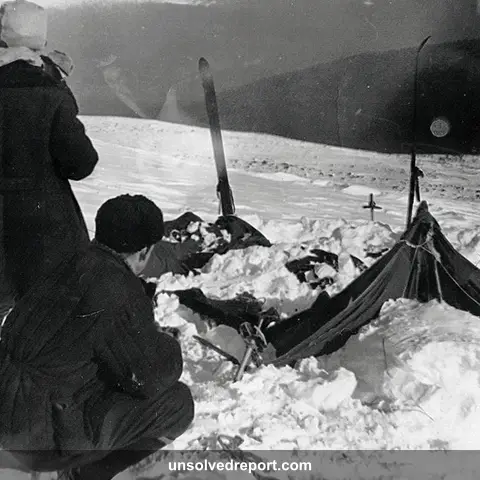
Dyatlov Pass Incident: The Tent Nobody Could Explain, Until 2021
Nine hikers fled barefoot into a fatal night on Dead Mountain. A 2021 model finally explains the Dyatlov Pass incident — but not everything. Here is why.
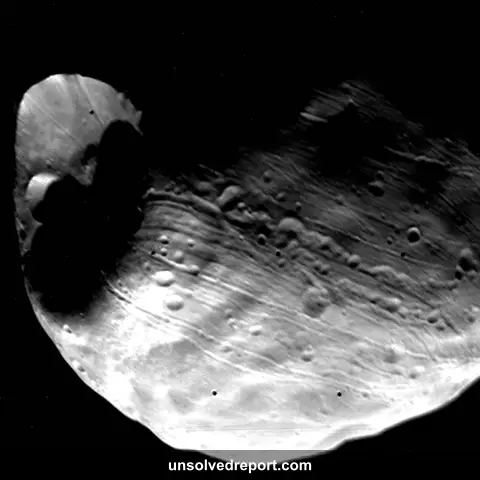
Phobos Grooves: The Claw Marks No One Can Explain
Phobos grooves: ruler-straight scars raking across Mars' dying moon. Four rival theories, zero proof — so what really carved these claw marks?
Gonur Depe: The Lost City a Whole Civilization Forgot
One piece of pottery in the Karakum sands exposed a vanished Bronze Age capital with plumbing, gold-packed tombs, and no name anyone remembers. What happened here?