Oxus Civilization: The Bronze Age Empire With No Name
Oxus Civilization (BMAC): a lost Bronze Age empire dug from the desert sand. It traded across Asia, left no name or writing behind. So who were they?
For a hundred years, the textbooks agreed: the Bronze Age had four great cradles. Mesopotamia. Egypt. The Indus. China. Four river valleys, four civilizations, end of list. Then a Soviet archaeologist pushed his spade into the Karakum Desert of Turkmenistan and hit a wall. A real wall, buried under the sand of the Murghab delta. Behind it came more: palaces, irrigation canals, metal workshops, tombs heavy with gold. A whole fifth civilization that the world had simply forgotten existed.
And here is the strange part. These people left us their cities. They left us their treasure. They left us their dead. But they left us no name for themselves, no records we can read, and almost no echo in human memory. We had to make up a label for them. Archaeologists call it the Bactria–Margiana Archaeological Complex, or BMAC. The prettier name is the Oxus Civilization, after the ancient name of the Amu Darya river. It thrived. It traded across half of Asia. Then it slipped back under the sand. And to this day, nobody can say for certain who these people were or what they called home.
What We Know for Sure
Start with the map. The Oxus people spread across a huge stretch of southern Central Asia, touching parts of what is now Turkmenistan, northern Afghanistan, southern Uzbekistan, western Tajikistan, and northeastern Iran, all hugging the upper Amu Darya, the river the ancients called the Oxus. Their main city-building boom ran from roughly 2250 to 1700 BC, though some specialists push the start back near 2400 BC (Wikipedia, summarizing Lyonnet, Dubova, and Salvatori).
The man who named them was Viktor Sarianidi, a Soviet–Greek archaeologist who coined the term "BMAC" in 1976. He dug in northern Afghanistan from 1969 to 1979, then crossed into Turkmenistan and never looked back (Facts and Details). His great find has a name like a spell: Gonur Depe. He spotted it in 1972, out in the Murghab delta, and it turned out to be the biggest and most thoroughly dug BMAC site of all, sprawling across roughly 55 hectares and lived in from about 2400 to 1600 BC. Inside: a fortified stronghold called Gonur North, a monumental palace, temples with ritual hearths and altars, homes, workshops, and a vast city of the dead (Wikipedia: Gonur Depe).
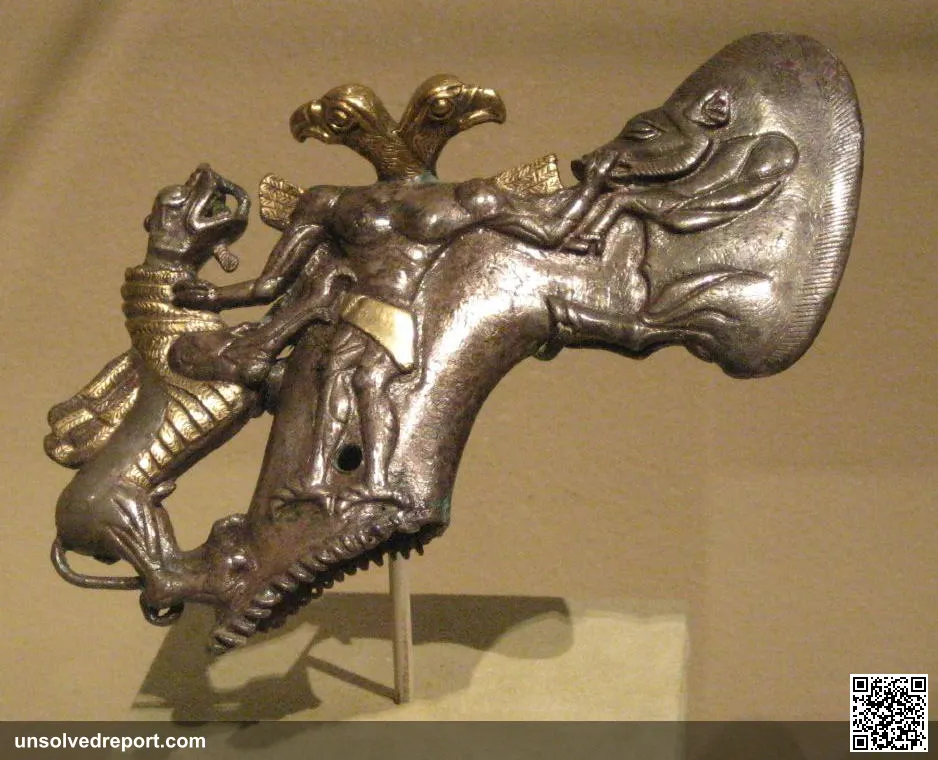
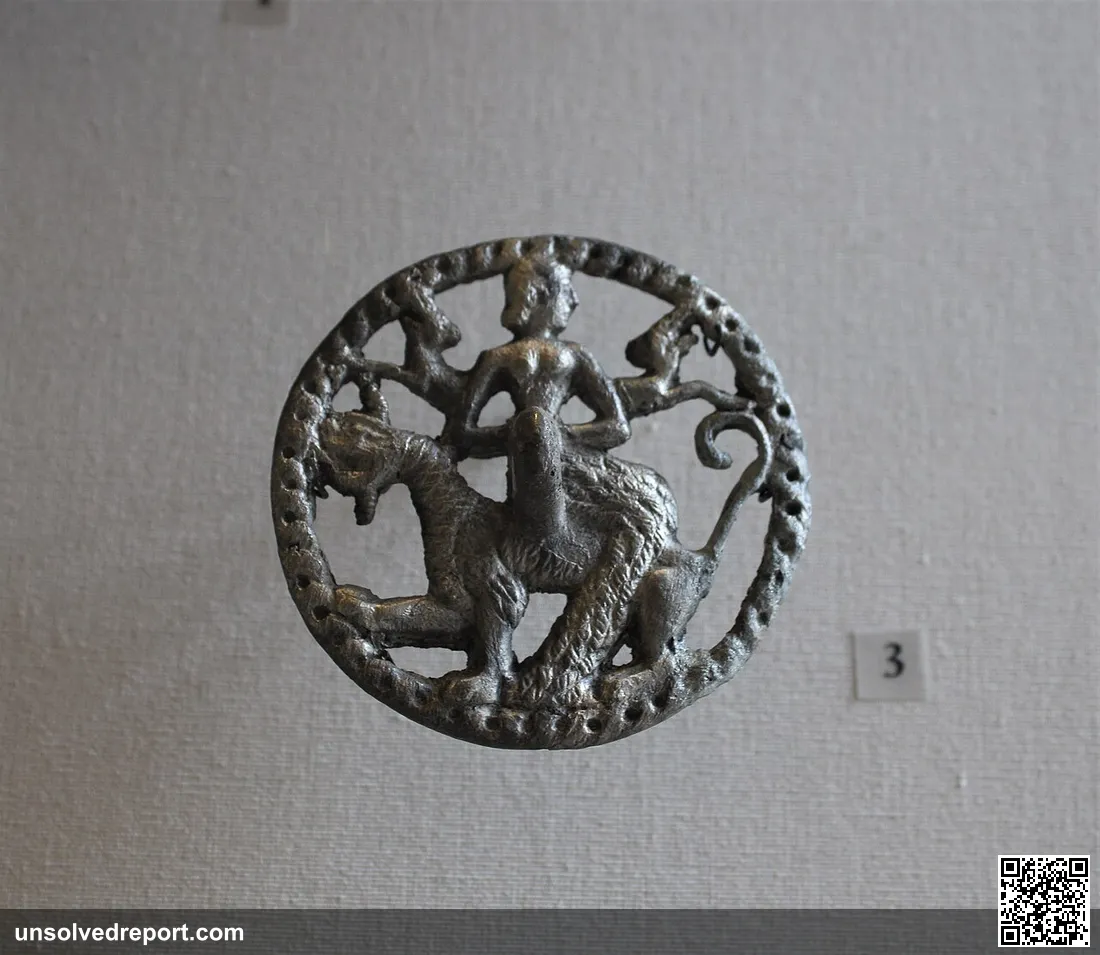
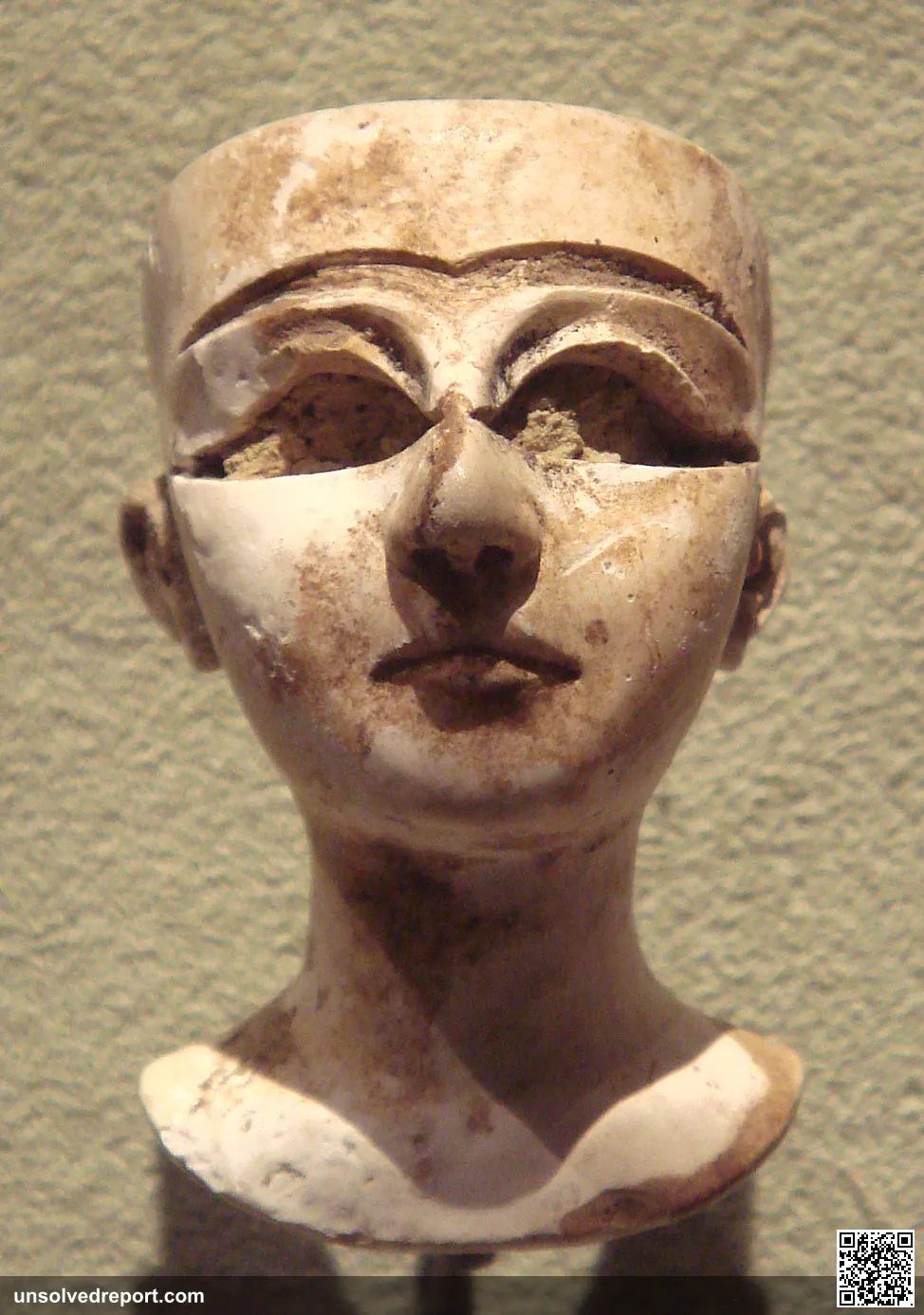
Forget any image of wandering tent-dwellers. These were rooted people. They farmed wheat and barley with engineered irrigation and raised proto-cities big enough for thousands, with clear ranks and order baked into how they lived (Wikipedia). And they made beautiful things: bronze tools, fine pottery, worked gold and silver, jewelry cut from semiprecious stones, and stamp seals carved with creatures out of myth. The eeriest objects of all are the "Bactrian princess" figurines, small seated women built from snap-together parts, dark green chlorite or steatite for the body, pale white limestone for the face. They turn up mostly in graves, which is why many scholars think they were made for the dead (Met Museum collection record 329073; Musacchio).
These people were not alone out there in the desert, either. They sat inside a sprawling web of trade that researchers call the "Middle Asian Interaction Sphere," linking them to the Indus Valley, Mesopotamia, the Iranian Plateau, and the Syro-Anatolian world. Dig at a BMAC site and you might pull out a Harappan seal, its markings as unreadable today as the Indus script itself, or an Elamite-style artifact, carried in from a thousand miles away (Wikipedia). Then, around 1700 BC, the walled centers shrank, fast, in the same rough window that swallowed up the Sea Peoples' Bronze Age world further west. And in the very same layers, archaeologists start seeing more and more gear from the steppe Andronovo culture pressing in (Wikipedia). Something was changing. Hold that thought.
The Question Nobody Can Answer
Here is the part that keeps archaeologists up at night. Who were these people? What language did they speak? And could they write?
So far, no one has confirmed a writing system for the BMAC. There is one tantalizing scrap: a single stone seal from Anau, scratched with a handful of geometric marks that some have compared to early Chinese seal-script. It set off a fight over whether these people could read and write at all. But its meaning is hotly contested, and one little inscribed object is nowhere near proof of a written language (Wikipedia). Without texts we can read, the whole civilization is mute. We can stand inside their temples and lean over their tombs, and still we cannot hear a single word they said.
The "who" is just as slippery. For years, a tidy theory held sway: that Indo-Iranian speakers swept south, picked up BMAC culture along the way, and used it as a stepping stone toward the later Iranian and Indo-Aryan worlds. Then ancient DNA crashed the party, the same kind of evidence that has already rewritten the story of the Tarim Basin mummies further east. A genetic study of one person from the BMAC site of Ulug-depe found ancestry that came mostly from local Central Asian farming populations going back to the Chalcolithic, with a dash of Iranian-related and Indus-fringe heritage, and, crucially, none of the western steppe ancestry everyone expected to find sitting at the heart of the culture (Guarino-Vignon et al., peer-reviewed, NCBI/PMC). The steppe genes, the study found, mostly arrive later, around 1500 BC and after. In plain terms: the Oxus people look less like newcomers off the grasslands and more like the children of farmers who had been there a very, very long time. Which blows the neat origin story wide open, and leaves the link between the BMAC and the spread of Indo-Iranian languages a live, unsettled mystery.
The Theories, Laid Out Plainly
Were they really a fifth great civilization? This is the widely cited reading. Western popularizers, including archaeologist Fredrik Hiebert, who helped carry Sarianidi's work onto the world stage, have called the Oxus Civilization a true equal of Mesopotamia and the Indus. Hiebert reached for a striking comparison: think of Polynesia, he said, a single culture scattered far and wide yet stitched together over enormous distances, held together, in his words, by camels rather than canoes (Discover Magazine). Other scholars push back gently, pointing out that the word "complex" was picked on purpose over "civilization," because whether all these far-flung oasis towns were ever truly one unified state is still up for debate.
Did they brew a sacred, mind-altering drink? This one is genuinely contested. Sarianidi argued that certain rooms and vessels at Gonur and the nearby Togolok sites were workshops for making a holy intoxicating beverage, and he tied it straight to the Soma of the Indian Rigveda and the Haoma of the Iranian Avesta. Early reports of plant residues poured fuel on the idea. But later testing knocked down the specific chemical claims, and plenty of archaeologists flat-out doubt that these structures were "temples" at all (Heritage Institute, translating Sarianidi; Journal of Psychedelic Studies, 2019). Call it a thrilling idea that nobody has been able to prove.
Why did it all collapse? No one knows for sure, and that is the honest answer. After 1700 BC the cities contracted, and the suspects are many: rivers wandering off course and starving the dry delta of water, trade routes shifting underfoot, and those steppe newcomers pressing in ever harder. None of it is a verdict. All of it is still under study.
So the Oxus Civilization sits at the crossroads of a continent and at the crossroads of what we can actually know. We have dug up enough of it to fill museums. We are still missing the one thing that would let it finally speak. Until a readable script turns up, or some untouched royal tomb gives up its secrets, the people of the Oxus stay exactly what they are: among the best-documented strangers the Bronze Age ever left behind. And somewhere under that desert, the rest of the story is still waiting.
Sources and Further Reading
- Bactria–Margiana Archaeological Complex, Wikipedia
- Gonur Depe, Wikipedia
- Genetic analysis of a Bronze Age individual from Ulug-depe (Turkmenistan), Guarino-Vignon et al., NCBI/PMC
- Central Asia's Lost Civilization, Discover Magazine
- Soma and Haoma, Journal of Psychedelic Studies (2019)
- Margiana and Soma-Haoma (Sarianidi), Heritage Institute
- Bactria-Margiana (Oxus Civilization), Facts and Details
Loropéni Ruins: The 6-Meter Fortress With No Door In or Out
A six-meter stone fortress in Burkina Faso has no door, no known builder, and most of it has never been dug up. So how did anyone get inside Loropéni?
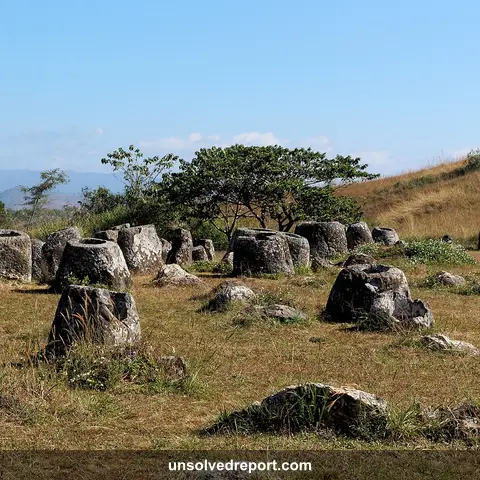
Plain of Jars: 3,000 Stone Vessels Nobody Can Explain
Plain of Jars: thousands of stone vessels, no inscriptions, no tools, no known builders. 2021 dating tests only made the mystery stranger. Here's why.
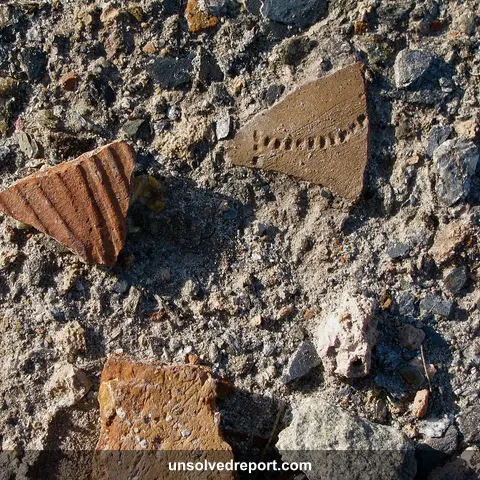
Unexplained Ancient Artifacts: 10 Objects That Baffle Scientists
Unexplained ancient artifacts that are real, studied, and still unsolved — a 2,000-year-old computer, a glowing Roman cup, a disc no one can read. What were they for?