15 Ancient Mysteries Archaeologists Still Can't Explain
A 2,000-year-old computer. A temple older than farming. A book no one can read. Fifteen real ancient mysteries, all documented, all still wide open.
We like to imagine archaeology as a finished puzzle: dusted pottery, tidy labels, everything explained. It isn't. The deeper anyone digs, the longer the list of genuine head-scratchers grows. Some sites were built with a precision that shouldn't have been possible with the tools of the time. Some objects look like they fell out of the wrong century. Others are covered in writing no living person can read, or were simply walked away from for reasons the dirt won't give up.
What follows are fifteen real cases. Every one is anchored in documented fact, and every one ends in a question that working archaeologists are still arguing about right now. No aliens required. No lost super-civilizations. Nothing supernatural. The honest mysteries are strange enough on their own. Read on.
1. The Antikythera Mechanism: a computer 1,000 years too early
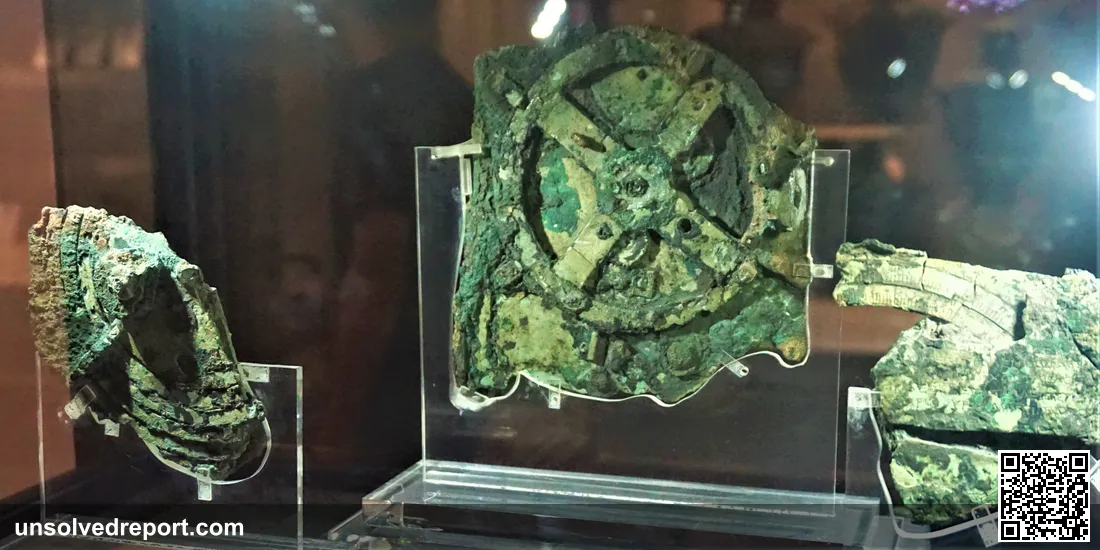
In 1901, sponge divers hauled a corroded green lump of bronze out of a Roman-era shipwreck off the Greek island of Antikythera. The lump turned out to be the oldest known geared analog computer on Earth. More than thirty interlocking gears, modeling the movements of the Sun, the Moon, and probably the planets, dated to roughly 150 to 100 BC.
Here's the part that keeps people up at night: nothing else this mechanically clever shows up again for well over a thousand years. Who built it? Who taught them? And why did the whole tradition seemingly vanish without a trace? Nobody knows.
2. Gobekli Tepe: a temple older than farming
Picture massive carved stone pillars, arranged in rings, standing on a hilltop in southeastern Turkey. Now picture them going up around 9600 BC, thousands of years before Stonehenge or the pyramids. The builders had no pottery. No metal tools. Supposedly no agriculture. And yet they quarried, carved, and raised multi-ton megaliths covered in animal reliefs.
So how do hunter-gatherers organize the labor and the know-how for monumental architecture before they've even started farming? And here's the twist archaeologists still can't shake: at some point, the entire site was deliberately buried.
3. The Voynich Manuscript: the book no one can read
Radiocarbon dating pins this illustrated medieval codex to the early 1400s. Every cryptographer, linguist, and AI model that has taken a crack at its script has walked away beaten. The pages crawl with plants that match no real species, astronomical diagrams, and bathing figures, all captioned in flowing text that follows the statistical fingerprints of real language, yet matches no known tongue on the planet.
Is it an undeciphered language? An elaborate cipher? A very expensive hoax? A century of failed attempts later, no one can prove which.
4. The Nazca Lines: giant drawings you can only love from the sky
Across the dry plains of southern Peru, ancient people scraped away dark surface stones to expose the pale ground beneath, creating enormous figures: hummingbirds, monkeys, spiders, hundreds of feet across, made roughly 2,000 years ago. The catch? The figures are so big that you can only take in their full shape from the air, something the Nazca had no way to do.
Researchers mostly agree on how the lines were made. The why is the hard part. Astronomical calendars? Ritual pathways for worshipping water? The debate is still very much alive.
5. The Walls of Sacsayhuamán: stone that swallows a knife blade
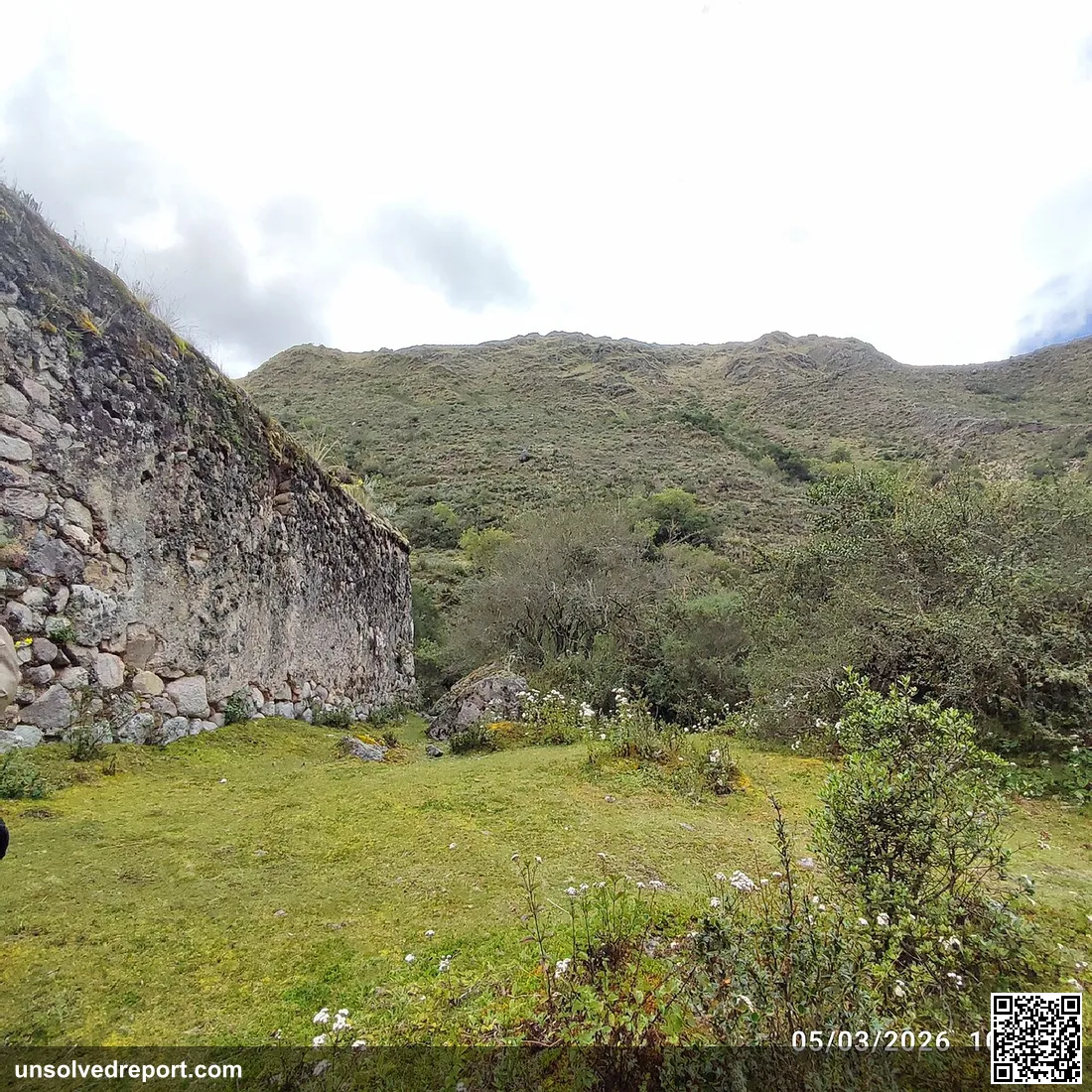
Above Cusco, Peru, the Inca fitted colossal limestone blocks together, some weighing over 100 tons, so tightly that you can't slip a sheet of paper into the seams. No mortar. The stones are irregular, polygonal, interlocking like frozen puzzle pieces, and the joints have ridden out centuries of earthquakes without budging.
The mystery is method. Archaeologists believe the Inca used hammerstones and patient, painstaking trial-and-error fitting. But exactly how they pulled off such flawless precision at that scale? Still up for debate.
6. The Baghdad Battery: a 2,000-year-old AA cell?
Found near Baghdad: clay jars, each holding a copper cylinder and an iron rod, possibly dating to the Parthian or Sasanian era. They look unnervingly like simple galvanic cells. And when researchers built replicas and filled them with something acidic, like vinegar, the jars actually produced a small electrical voltage.
So were these used to generate electricity, maybe for electroplating? Or are they just ordinary storage jars that happen to look like a battery? Scholars are still firmly split down the middle.
7. The Sanxingdui Bronzes: a civilization history forgot to mention
In 1986, pits in China's Sichuan province coughed up something astonishing: bronze masks and figures with exaggerated, otherworldly faces, bulging eyes, towering forms, from a civilization roughly 3,000 years old that appears in no historical text whatsoever. The artistic style looks like nothing else in ancient China. A sophisticated culture that left no written word about itself.
And it gets stranger. Why were the treasures ritually broken, burned, and buried? Why did this entire civilization seemingly vanish? The pits aren't telling.
8. The Phaistos Disc: movable-type printing, 3,700 years early
This fired clay disc from Crete likely dates to the Minoan Bronze Age, around 1700 BC. Both sides are stamped with 241 symbols spiraling inward, and here's the remarkable bit: each symbol was pressed in with an individual punch. That's an astonishingly early form of movable-type printing. The 45 distinct signs show people, animals, plants, and tools, but they match no known writing system.
More than a century of study, and the disc is still undeciphered. Scholars can't even agree on whether it's language, prayer, or something else entirely.
9. The Longyou Caves: a million cubic meters of missing rock
In 1992, villagers in China's Zhejiang province drained a pond and found something enormous underneath: artificial caverns carved straight out of solid siltstone, with striking symmetry and parallel chisel tooling running across the walls and ceilings. The scale is staggering. Carving them would have meant removing nearly a million cubic meters of rock, and yet not a single historical document so much as mentions the project.
Who carved them? When? Why? No tools, no debris, no records have turned up. Just the caves.
10. Puma Punku: stones cut like machine parts
Part of the Tiwanaku site in highland Bolivia, Puma Punku is a field of andesite and sandstone blocks cut with crisp right angles, precise drill holes, and standardized H-shaped stones that snap together like machined components. The stonework is so exact that it has fueled endless speculation, though the andesite was clearly shaped by skilled human hands over a millennium ago.
The real questions are method and meaning: how did a pre-iron Andean culture hit that kind of precision, and why was the complex toppled before it was ever finished?
11. The Stone Spheres of Costa Rica: perfect balls in the jungle
Starting in the 1930s, workers clearing jungle in Costa Rica's Diquís Delta kept hitting stone spheres, hundreds of them, some nearly perfectly round and over six feet across, carved by the ancient Diquís people. Many were originally set out in deliberate alignments and groupings. But here's the heartbreak: the ones that got moved before anyone studied them lost whatever pattern they once held, forever.
So how were such near-perfect spheres shaped, and what were they meant to mean? Archaeologists are still arguing both points.
12. The Roman Dodecahedra: beautiful objects with no instructions
Across former Roman territory in northwestern Europe, more than a hundred of these have turned up: hollow bronze objects with twelve pentagonal faces, each face pierced by a hole of a different size, with little knobs studding the corners. They're beautifully made. And not one single Roman text mentions them or says what they were for.
Surveying instruments? Candle holders? Knitting aids for making glove fingers? The theories pile up, but after centuries of digging these things out of the ground, their true purpose is genuinely unknown.
13. The Plain of Jars: thousands of stone giants
Across the highlands of Laos lie thousands of huge carved stone jars, some taller than a person, scattered in clusters across dozens of sites and dated to the Iron Age. Excavations have turned up human remains nearby, and the leading idea points to ancient funerary practices, but no one knows for certain what the jars were actually for.
Who carved them? How were they hauled into place? And how exactly did this mortuary system work across such a vast landscape? Those questions are what keep researchers coming back.
14. The Cochno Stone: a 5,000-year-old message we can't read
Near Glasgow, Scotland, lies a flat rock surface covered in around 90 carved cup-and-ring marks, swirling grooves, and geometric motifs, all created some 5,000 years ago in the Neolithic. To protect it from vandalism, it was reburied for decades and only fully re-examined in recent years. It's one of the finest examples of prehistoric rock art in all of Europe.
And nobody knows what any of it means. Maps? Star charts? Ritual markings? Something we haven't even thought to imagine? The symbols keep their secret.
15. The Disappearance of the Indus Valley Cities: a million people, gone
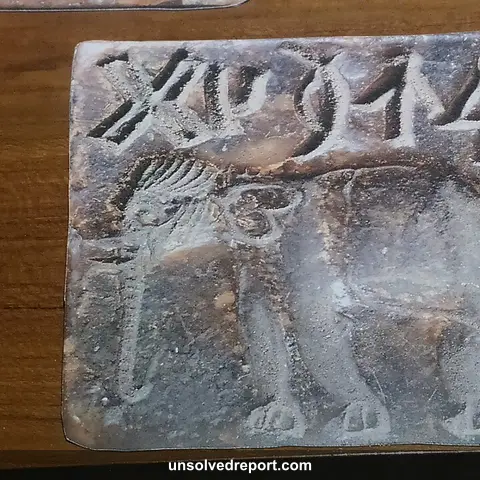
The Bronze Age cities of the Indus Valley, Mohenjo-daro and Harappa among them, were marvels of urban planning: grid streets, standardized bricks, sophisticated drainage, all serving a civilization of perhaps a million people. Then, slowly, over centuries, the great cities emptied out. Their script was never deciphered. Their decline was never fully explained.
Why did one of history's most advanced early civilizations quietly fade? Climate shift and shifting rivers are the leading suspects, but they remain unproven. The cities aren't done puzzling us yet.
These fifteen cases all share a quiet honesty. In each one, the facts are solid, the artifacts are real, and the open question is one that careful researchers are still chasing today. That's what separates a true mystery from a tall tale: the ground keeps handing us evidence faster than we can explain it.
And every one of these has a deeper case-file, still waiting.
What these fifteen cases actually share
Line them up and the fifteen stop feeling like a random grab-bag. Nearly every one is a variation on just three kinds of unanswered question, and sorting them that way shows where the real mysteries live.
The "how did they build it" cases — method, not magic. Sacsayhuamán, Puma Punku, the Longyou Caves, the Costa Rican spheres, and the Antikythera Mechanism all pose the same puzzle: the finished object is more precise, more massive, or more mechanically clever than the known toolkit seems to allow. Notice what these cases have in common beyond the awe. In every one, archaeologists already accept a human, pre-industrial explanation — hammerstones and trial-and-error fitting at Sacsayhuamán, skilled hands on the andesite at Puma Punku. The open question is narrow: not whether people did it, but exactly how they hit that tolerance at that scale. The mystery is engineering, and it is shrinking, not growing.
The "we can't read it" cases — silence written down. The Voynich Manuscript, the Phaistos Disc, and the Cochno Stone are locked for the same reason: symbols survive, but the key does not. These are the most stubborn of the fifteen, because unlike a construction method, a script can be truly undecipherable without more text to work from — and the Phaistos Disc is a single object, the Voynich a single book. There is no second sample to cross-reference.
The "why did they walk away" cases — the deliberate ending. This is the pattern the roundup keeps circling back to, and it is the eeriest. Göbekli Tepe was intentionally buried. The Sanxingdui bronzes were ritually broken, burned, and interred. Puma Punku was toppled before completion. The Indus Valley cities and the Sanxingdui culture both simply emptied out. Across two continents and thousands of years, sophisticated societies chose to end, hide, or abandon their greatest works — and left no note explaining why.
A fourth, smaller thread runs underneath: the "misfiled" objects. The Baghdad Battery and the Roman Dodecahedra aren't undated or unbuildable — we know roughly when and how they were made. What's missing is purpose. They could be batteries or storage jars, surveying tools or candle holders, and no ancient text settles it. Set against the deciphering cases, that's a reminder that "unexplained" covers two very different failures: sometimes we can't read the evidence, and sometimes we can read it fine and still can't say what it was for.
Sources & further reading
Indus Script Undeciphered: The 4,000-Year Code Nobody Can Crack
Thousands of Indus Valley seals. Over 100 failed attempts. A $1 million prize still unclaimed. So what is this ancient script actually hiding?

Classic Maya Collapse Mystery: 90% Gone, No One Agrees Why
Classic Maya collapse: Tikal and Copán emptied by 900 CE, population fell 90%. Drought data, four rival theories, still no verdict. So what really happened?
Cleopatra's Tomb: The 20-Year Hunt That Found Everything But Her
A lawyer-turned-archaeologist has spent 20 years hunting Cleopatra's tomb at Taposiris Magna—finding coins, a tunnel, a sunken port. So where is she?